What Is the Difference Between Corned Beef Brisket and Regular Brisket?
You’ll notice corned beef brisket and regular brisket differ significantly in flavor and preparation.
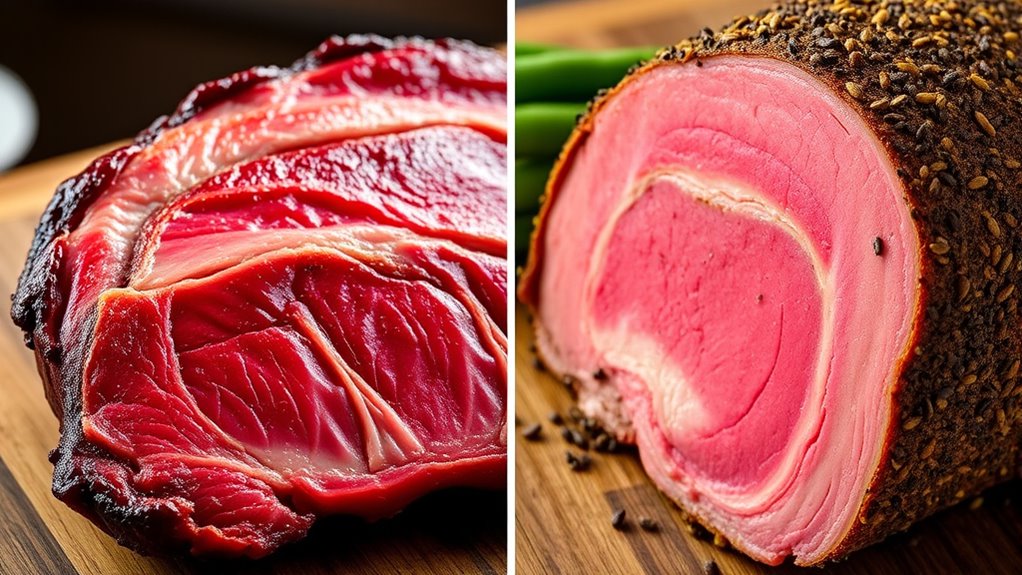
Corned beef brisket is cured with salt and spices, giving it a salty, tangy flavor and a rosy color. In contrast, regular brisket is fresh and natural-tasting.
Corned beef cooks faster and stays moist from the curing process, whereas brisket needs slow cooking to become tender.
Their textures and uses also vary—corned beef has a softer, aromatic profile that contrasts with brisket’s rich, beefy taste.
Keep exploring to understand how these differences affect cooking methods and flavor outcomes. This knowledge will help you choose the right type of brisket for your recipes.
What Is Regular Brisket? Characteristics and Uses
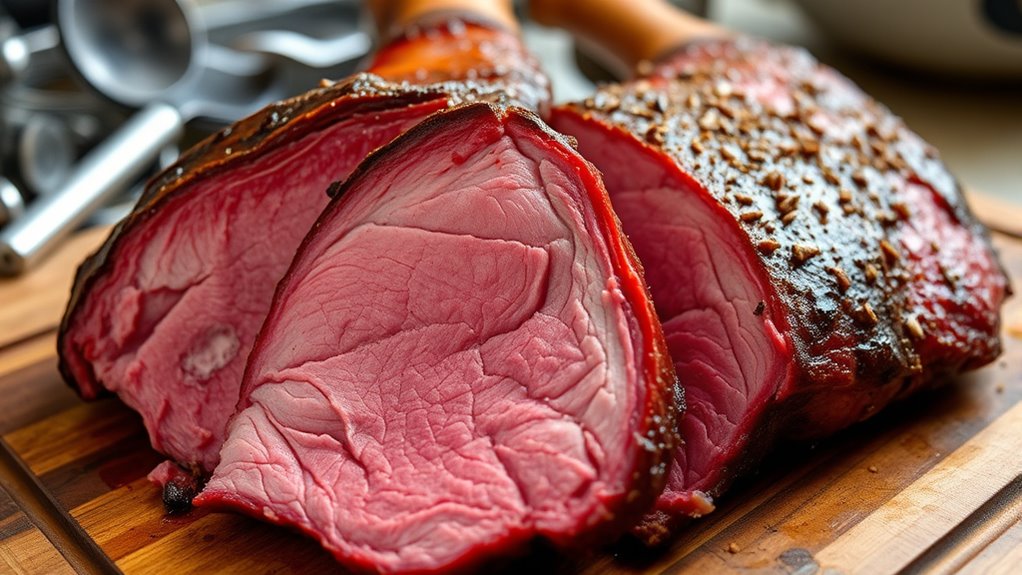
Although regular brisket comes from the lower chest of the cow and is known for its toughness, you can reveal its rich flavor by cooking it slowly. This brisket cut is dense and chewy, requiring low and slow methods like smoking, braising, or roasting to break down its connective tissue.
Unlike corned beef, this cut isn’t cured or pre-seasoned, so its natural beef flavor shines through when cooked properly. You’ll find brisket popular in barbecue and slow-cooked dishes, where it becomes tender enough to slice for sandwiches or stews.
What Is Corned Beef Brisket and How Is It Made
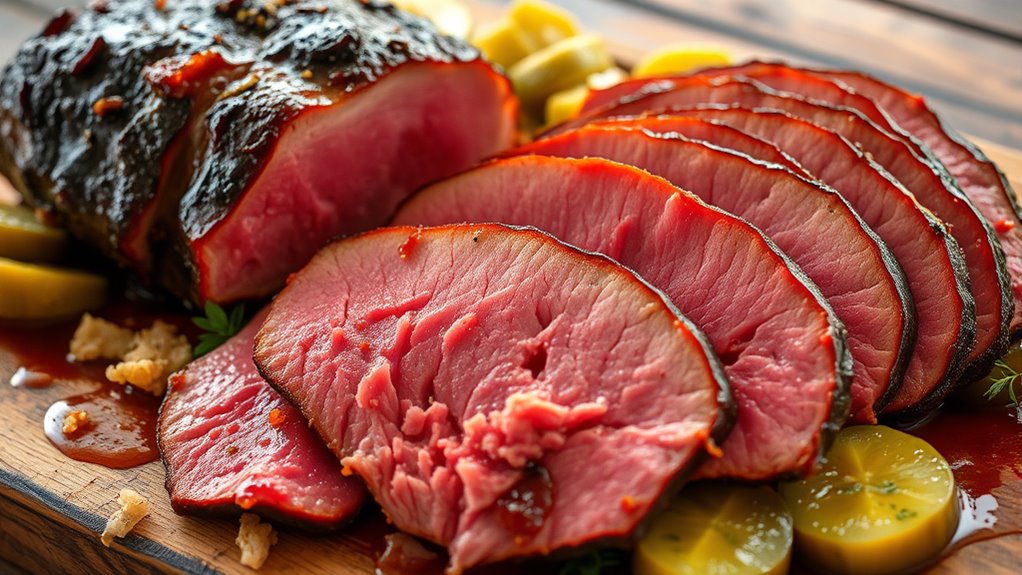
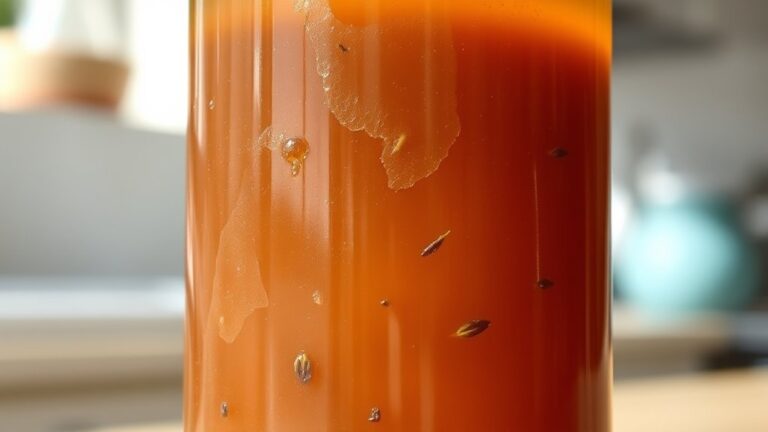
How does corned beef brisket get its distinctive flavor and texture? It starts with the curing process, where the brisket soaks in a saltwater brine infused with pickling spices like garlic, coriander, cloves, and mustard seeds. This curing usually takes 5 to 8 days, allowing the meat to absorb the salty, aromatic flavors deeply.
During this time, the brisket develops its characteristic pinkish hue from curing salts. Before cooking, you’ll rinse off excess salt and spices to balance the taste. This method transforms a plain brisket into a seasoned, tender cut ready to be boiled, braised, or smoked.
The unique curing process is what sets corned beef brisket apart, giving it that bold, savory flavor you’ll recognize immediately.
How Brisket Changes When Cured Into Corned Beef Brisket

Several changes occur when you cure brisket into corned beef brisket, transforming both its flavor and texture. The curing process involves soaking the brisket in a seasoned brine for about 5-8 days. This brining infuses the meat with salt, spices, and curing salts like sodium nitrite, which preserves the brisket and gives it a distinctive pink color.
Unlike regular brisket, which stays its natural red, corned beef develops a tangy, savory taste during curing. The moisture content also shifts, making the cured brisket more moist and slightly chewy compared to the drier, tougher texture of uncured brisket. Before cooking, you rinse the corned brisket to remove excess salt and spices, setting it apart from regular brisket in preparation.
Flavor and Texture Differences Between Corned Beef and Brisket
When you compare corned beef to regular brisket, you’ll notice their flavors and textures differ considerably due to their preparation methods. Corned beef’s flavor is salty and tangy, enhanced by aromatic spices like coriander and cloves, while regular brisket offers a deep, natural beefy taste. The texture also stands apart:
Corned beef brings a salty, spiced tang, while regular brisket offers a rich, natural beef flavor with distinct textures.
- Corned beef has a tender yet slightly chewy texture from curing and boiling
- Regular brisket can be tougher but becomes melt-in-your-mouth tender with slow cooking
- Corned beef’s pink color signals its curing, unlike brisket’s darker red hue
- Brisket develops a smoky, robust flavor, contrasting with corned beef’s consistent moistness
These differences in flavor and texture shape how each brisket appeals to your palate.
How to Cook Corned Beef Brisket vs. Regular Brisket
When cooking corned beef brisket, you’ll want to soak and rinse it first to cut down on salt, then simmer it gently for a couple of hours until tender.
Regular brisket needs a different approach—season it with a dry rub or marinade and cook it low and slow, often by smoking or roasting for several hours.
Understanding these prep and cooking time differences will help you get the best results from each cut.
Cooking Time Differences
Although both corned beef brisket and regular brisket come from the same cut of meat, you’ll notice significant differences in their cooking times due to preparation methods. The brining process of corned beef tenderizes the meat beforehand, cutting down its cooking time compared to raw brisket.
Here’s what you should keep in mind about cooking time:
- Corned beef brisket usually takes 2 to 3 hours boiling or simmering.
- Regular brisket requires about 3.5 to 4 hours per pound when slow-cooked or smoked.
- Smoking regular brisket can take 8 to 12 hours at low heat (225°F).
- Corned beef’s pre-brined nature means less time is needed to achieve tenderness.
Preparation Techniques
Understanding the differences in cooking times leads naturally to how you prepare each type of brisket. Corned beef undergoes curing in a saltwater brine with spices, requiring soaking and rinsing before cooking to remove excess salt.
Regular brisket, uncurried, is seasoned directly and cooked by smoking, roasting, or slow braising.
| Preparation Step | Corned Beef Brisket |
|---|---|
| Curing | Yes, in brine with curing salts |
| Pre-cooking | Soak and rinse to reduce salt |
| Cooking Method | Boil or simmer for 1-2 hrs/lb |
The curing process defines corned beef’s unique flavor, making its preparation distinct from the straightforward seasoning and slow cooking of regular brisket.
Cultural and Historical Significance of Corned Beef and Brisket
You’ll find corned beef deeply tied to Irish roots and traditions, especially among immigrants who brought it to America. Jewish delis also shaped its identity, turning it into a beloved sandwich staple.
Understanding these immigrant culinary adaptations helps you appreciate how corned beef and brisket became cultural icons.
Irish Roots and Traditions
When you explore the cultural roots of corned beef and brisket, you’ll find they trace back to medieval Ireland, where corned beef served as an affordable staple for peasants. This tradition reflects the Irish roots and the importance of salt curing to preserve meat before refrigeration. You’ll appreciate the cultural significance of corned beef as both a practical and symbolic food.
Here’s what you should know:
- Corned beef was a common peasant food due to brisket’s affordability.
- Salt curing allowed preservation, symbolizing resourcefulness.
- Irish immigrants brought corned beef to America, linking it to St. Patrick’s Day.
- Its cultural significance extends beyond Ireland, influencing festive and everyday meals.
Understanding this helps you see why corned beef remains a beloved dish today.
Jewish Deli Influences
Although corned beef originated in Ireland, Jewish delis in New York transformed it into a beloved staple by applying Eastern European curing methods brought by immigrants. These delis made corned beef a cultural symbol, especially among Jewish families who used brisket for flavorful, affordable meals.
You’ll find corned beef central to many traditions, reflecting its deep cultural significance in Jewish cuisine.
| Aspect | Details |
|---|---|
| Origins | Irish, adapted by Jewish delis |
| Preparation Methods | Eastern European curing techniques |
| Cultural Importance | Symbol of identity, featured in holiday meals |
When you visit a Jewish deli, you’re experiencing a rich blend of history and tradition centered around corned beef and brisket.
Immigrant Culinary Adaptations
Since Irish immigrants brought corned beef to America in the 19th century, they’ve influenced how many communities, especially Jewish ones in New York, adapted this affordable meat into their culinary traditions. You’ll notice that immigrant culinary adaptations like corned beef reflect creativity and survival. The curing process—using salt and spices—helped preserve meat and add flavor, especially during harsh winters.
Here’s what you should know:
- Irish immigrants popularized corned beef as a budget-friendly alternative to pricier meats.
- Jewish delis embraced corned beef, making it a cultural staple in New York.
- Curing beef transformed brisket into a tender, flavorful dish.
- Corned beef became a symbol of Irish identity and St. Patrick’s Day celebrations.
This history shows how immigrant communities turned simple ingredients into iconic dishes.
Can You Substitute Corned Beef Brisket for Regular Brisket?
Can you use corned beef brisket instead of regular brisket in your recipes? You can substitute regular brisket with corned beef brisket in dishes like stews or sandwiches, but keep in mind the differences.
Corned beef brisket is cured with salt and spices, giving it a salty, tangy flavor that regular brisket lacks. Because of this curing, you’ll need to soak and rinse corned beef to reduce saltiness before cooking.
Also, the cooking process changes: corned beef usually requires boiling or simmering, while regular brisket is slow-cooked for tenderness. The texture and flavor differences mean corned beef isn’t a direct one-to-one substitute, so you’ll need to adjust preparation and cooking times to get the best results.
Tips for Buying Corned Beef and Regular Brisket
Where should you start when buying corned beef or regular brisket? First, know that corned beef is pre-cured with spices and salt, so look for labels like “corned beef brisket” to verify the cure is right. Regular brisket is sold fresh and unseasoned, labeled as “raw beef brisket” or “uncured brisket.”
Here are some tips:
- Check packaging and expiration dates for freshness.
- Choose firm, moist meat with minimal discoloration.
- For corned beef, pick a cut thickness that matches your cooking time.
- Remember, regular brisket is perfect for roasting or slow cooking without a cure.
Best Practices for Preparing Corned Beef and Brisket at Home
Although both corned beef and regular brisket benefit from slow, gentle cooking, you’ll want to soak corned beef in water for several hours or overnight to reduce its saltiness before you start. Change the water a few times and rinse the brisket thoroughly to remove surface spices and excess salt.
For preparation, use low, slow cooking methods like simmering or braising for 2-3 hours, depending on the size, to tenderize the meat. If you’re smoking brisket, soak it beforehand to prevent it from becoming too salty, then cook it slowly around 225°F.
After cooking, season your brisket or corned beef with herbs and spices like black pepper, garlic, or mustard to enhance its flavor and complete your preparation perfectly.
Frequently Asked Questions
Is Corned Beef Brisket the Same as Beef Brisket?
No, corned beef brisket isn’t the same as beef brisket. You’ll find corned beef’s cured and seasoned, giving it a salty, tangy flavor, while regular brisket stays natural and needs slow cooking to get tender.
Which Brisket Is More Tender?
You’ll find regular brisket more tender, like velvet melting on your tongue, when slow-cooked properly.
Corned beef starts tender but can get mushy if overcooked. So, take your time for the best bite.
What Is the Poor Man’s Brisket?
Poor Man’s Brisket is a budget-friendly cut or tougher brisket cooked slowly to become tender and flavorful.
You’ll save money while still enjoying a delicious, hearty meal that mimics higher-quality brisket dishes.
Does Corned Beef Brisket Taste Different?
Yes, corned beef brisket tastes different because it’s cured with spices and salt, giving it a salty, tangy, and slightly sweet flavor.
You’ll notice a unique, aromatic taste that regular brisket doesn’t have.
Conclusion
Whether you’re slicing into a regular brisket or savoring the tangy punch of corned beef brisket, each tells its own flavorful story. Think of regular brisket as a blank canvas, rich and hearty, while corned beef is a jazzier, spiced-up remix.
Knowing their differences lets you cook with confidence and creativity. So, grab your knife or fork, and let these cuts dance on your plate, turning every meal into a delicious adventure. Understanding the difference between corned beef brisket and regular brisket is key to mastering your next dish.