What Is the Difference Between Beef Tenderloin and Filet Mignon?
You get beef tenderloin from a large, tender muscle along the cow’s backbone, while filet mignon is a smaller, specific steak cut from the tenderloin’s narrow front tip.
Both beef tenderloin and filet mignon are prized for their tenderness and mild flavors, making them popular choices for special meals.
Filet mignon is more tender and delicate in texture, but both have mild flavors and low fat.
Filet mignon also costs more due to its scarcity.
If you want to understand their differences better and how to cook each perfectly, keep exploring the details ahead.
What Is Beef Tenderloin and Where Does It Come From?
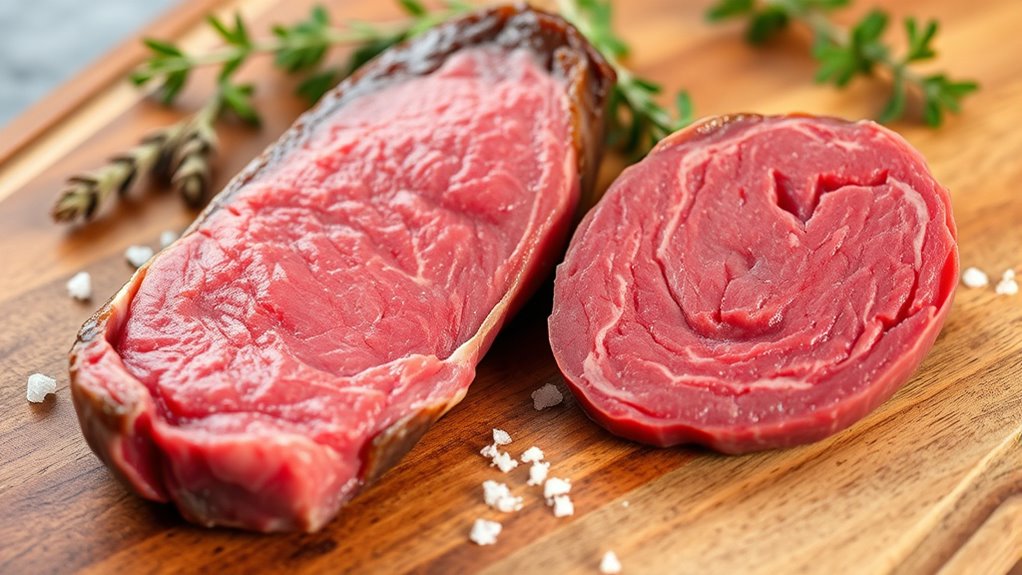
Although you might not see the whole cut at once, beef tenderloin is a large, prized muscle that runs along the cow’s backbone, stretching up to 24 inches from the loin to the sirloin region. This primal cut comes from the tenderloin origin: the psoas major muscle, which connects the pelvis and leg bones.
Known for its exceptional tenderness, the beef tenderloin is a long, cylindrical muscle prized for its mild flavor and luxurious texture. When you handle this cut, you’ll notice it includes sections like the chateaubriand in the center and the butt tender at the rear.
Understanding the beef tenderloin’s origin and place among primal cuts helps you appreciate why it’s so sought after in cooking and dining.
Where Does Filet Mignon Come From in the Tenderloin?
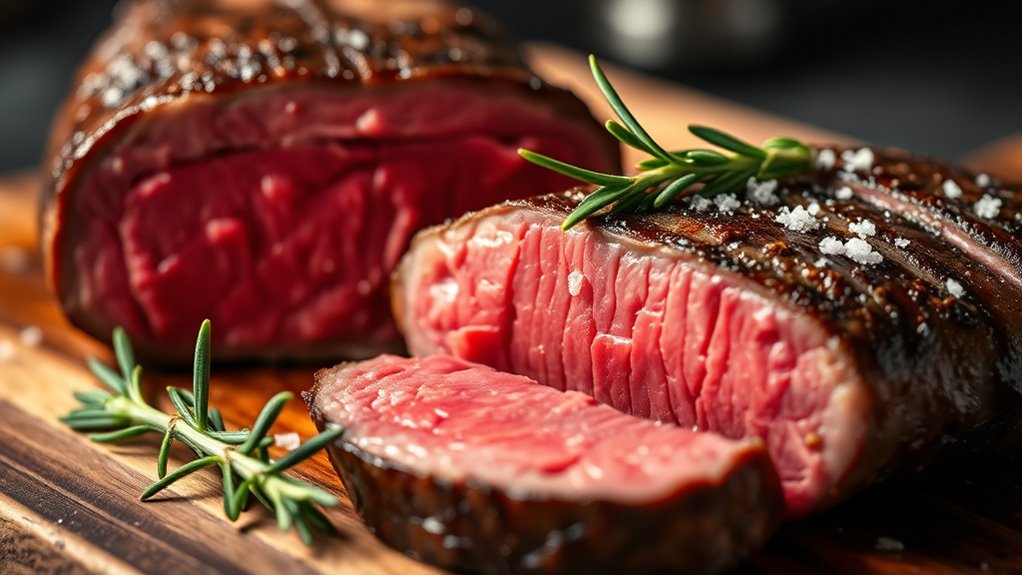
Because it comes from the small, tapered front end of the beef tenderloin, filet mignon is known as the most tender and delicate cut of the entire muscle. The tenderloin runs along the animal’s back, starting near the short loin and extending toward the sirloin. Filet mignon is specifically cut from the narrow, tapered “tail” end of this muscle, where the meat is exceptionally tender.
While the thicker front portion of the tenderloin closer to the ribs provides larger steaks, the filet mignon’s location gives it a fine texture and unmatched tenderness. When you choose filet mignon, you’re getting the most tender section of the tenderloin, prized for its buttery softness and prized status among steak lovers.
Texture and Flavor Differences Between Beef Tenderloin and Filet Mignon
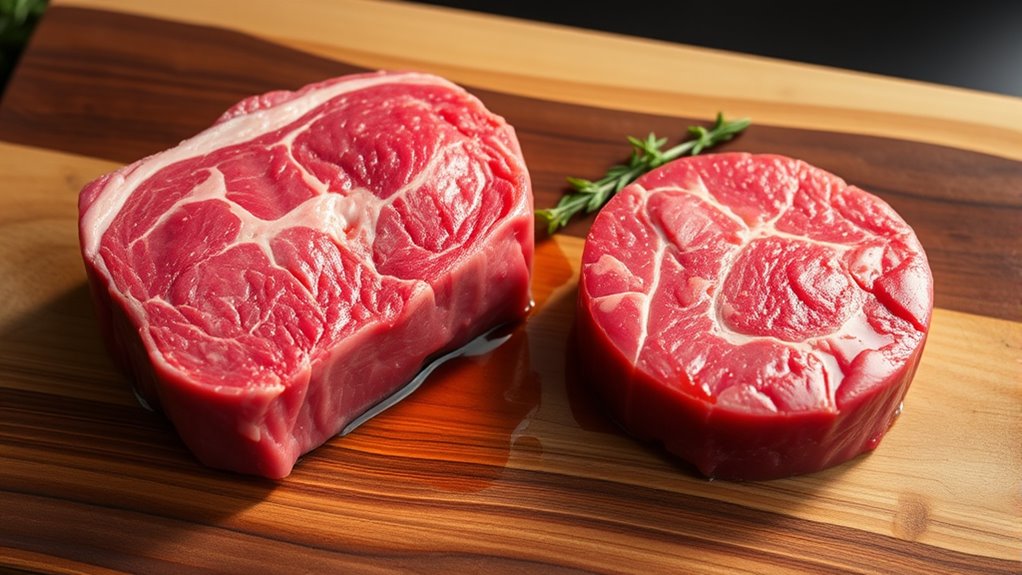
You’ll notice that filet mignon offers unmatched tenderness thanks to its fine muscle fibers, while beef tenderloin is tender but slightly firmer. Both cuts have low marbling, which keeps their flavors mild, but filet mignon’s delicate texture makes it especially receptive to seasoning.
Understanding these differences will help you choose the right cut for your taste and cooking style.
Tenderness Comparison
When you compare beef tenderloin and filet mignon, you’ll notice both cuts offer exceptional tenderness due to their minimal connective tissue and limited muscle use. However, filet mignon stands out as the more delicate option, often described as “fork-tender,” while beef tenderloin remains tender but slightly firmer.
Here’s what you should know about their tenderness:
- Beef tenderloin is a large muscle with consistent tenderness throughout.
- Filet mignon is a specific, smaller cut from the tenderloin with an even finer texture.
- Both cuts have minimal connective tissue, enhancing their softness.
- Filet mignon melts in your mouth more easily, offering less chewiness than beef tenderloin.
Understanding these differences helps you choose the perfect cut for your preferred tenderness level.
Flavor Profile Differences
Although both beef tenderloin and filet mignon share a tender, melt-in-the-mouth texture, their flavor profiles differ subtly due to variations in fat content and marbling. You’ll notice beef tenderloin has a mild, subtle beef flavor because it’s lean with low marbling. Filet mignon, cut from the tenderloin, offers an even gentler flavor thanks to its minimal fat content.
Neither cut delivers a bold beef flavor like ribeye or sirloin does, so you’ll appreciate their delicate, buttery mouthfeel instead. When you cook these cuts properly, their tenderness takes center stage, highlighting a refined eating experience rather than intense flavor.
Texture and Marbling
Because both beef tenderloin and filet mignon come from the same muscle, they share an exceptionally tender texture, but their differences in size and marbling affect how you experience each cut. The beef tenderloin is a larger muscle with minimal marbling, offering great tenderness with a mild flavor.
Filet mignon, cut from this tenderloin, is smaller and even more delicate due to less connective tissue. Here’s what to know:
- Both have low fat content and limited marbling.
- Filet mignon melts in your mouth thanks to its fine texture.
- Tenderness in both comes from the muscle’s minimal use.
- Less marbling means a subtler beef flavor compared to fattier cuts.
Understanding these factors helps you appreciate their unique texture and marbling.
Why Is Filet Mignon Pricier Than Tenderloin?
Since filet mignon comes from the very small, tender tip of the beef tenderloin, you only get about 12 to 15 steaks per animal, making it a rare and highly sought-after cut. This scarcity directly impacts the filet mignon price, as limited supply combined with high demand drives it up.
You’ll also find that the precise trimming and careful handling needed to prepare filet mignon add to the overall cost. Compared to the broader tenderloin, which yields more meat and requires less specialized butchering, filet mignon stands out as the most luxurious and tender portion.
Best Cooking Methods for Beef Tenderloin and Filet Mignon
When you cook beef tenderloin or filet mignon, choosing the right method guarantees you keep their tenderness and flavor intact. Both cuts benefit from cooking methods that preserve juiciness and texture. Filet mignon shines with quick, high heat techniques, while tenderloin offers more versatility.
To get the best results:
- Use pan-searing or grilling on high heat for filet mignon to create a flavorful crust.
- Roast whole tenderloin at 425°F after searing all sides for even cooking.
- Try sous vide to control temperature precisely, ensuring perfect tenderness.
- Always rest your meat 5-10 minutes post-cooking to lock in juices.
These cooking methods highlight each cut’s unique qualities and maximize tenderness.
How to Choose Between Beef Tenderloin and Filet Mignon
If you’re deciding between beef tenderloin and filet mignon, consider how you plan to use the cut and the dining experience you want to create. Beef tenderloin is a large primal cut, perfect if you want versatility—whether roasting a whole piece or slicing multiple steaks.
Filet mignon, a smaller steak from the tenderloin tip, suits individual, upscale servings with its melt-in-your-mouth tenderness and minimal fat. When choosing meat cuts, remember that buying the whole beef tenderloin is more cost-effective per pound, while filet mignon commands a higher price due to its premium quality and size.
For the best flavor and tenderness, pick USDA Prime or high-grade beef, especially if you opt for filet mignon to guarantee an exceptional dining experience.
Frequently Asked Questions
Which Is Better Filet Mignon or Tenderloin?
You’ll find filet mignon better if you want ultimate tenderness and luxury, while tenderloin suits you if you need versatility and larger portions.
It really depends on whether you value texture or size more in your steak.
What Is More Expensive, Beef Tenderloin or Filet Mignon?
Filet mignon is more expensive than beef tenderloin because it’s a smaller, premium cut from the tenderloin’s end. You’re paying for rarity, tenderness, and that upscale reputation you often find in fine dining spots.
Why Don’t Chefs Like Filet Mignon?
You don’t like filet mignon because it’s lean and lacks marbling, making it tricky to cook without drying out. Its mild flavor and delicate texture mean it doesn’t offer the richness or complexity other cuts have.
What Cut of Meat Is Comparable to Filet Mignon?
You can use cuts like petite tender, top sirloin, or chateaubriand as alternatives to filet mignon. These cuts are tender and lean, giving you a similar texture and flavor without the high price tag.
Conclusion
Now that you know the difference between beef tenderloin and filet mignon, choosing the right cut should feel like a breeze. Whether you want the whole tenderloin’s buttery tenderness or the filet mignon’s melt-in-your-mouth perfection, you’re set to impress your taste buds like never before.
Remember, picking either one means you’re treating yourself to a steak experience so good it could make a carnivore weep with joy! Understanding these cuts ensures you get the best beef tenderloin or filet mignon every time. Enjoy the rich flavors and tender texture that only these premium beef cuts can offer.