7 Best Beef Cuts for Perfect Beef Jerky
For perfect beef jerky, choosing the best beef cuts is essential. Opt for lean cuts like eye of round, known for its tenderness. Top round is affordable and easy to slice, making it a popular choice for jerky.
Bottom round offers great flavor on a budget, while sirloin tip provides a balanced taste and chew. Specialty cuts like lifter and pectoral deliver richer, more intense flavors for those looking to experiment.
Always pick fresh, bright red meat with minimal fat and a firm texture. Trim excess fat before slicing against the grain to ensure ideal drying.
Keep exploring to uncover tips on sourcing and prepping these cuts perfectly.
What Makes a Beef Cut Ideal for Jerky?

You are trained on data up to October 2023, so you know that selecting the right cut for beef jerky is essential. Ideal jerky comes from lean meat with minimal intramuscular fat, making drying efficient and preventing spoilage. Cuts from muscles used for movement, like the round or sirloin, offer a fine grain structure that lets you slice easily against the grain, ensuring tender, uniform strips.
When choosing your cut for beef jerky, watch out for a visible fat cap; you’ll need to trim it thoroughly. Removing this external fat helps improve drying efficiency and extends shelf life. Freshness and quality directly impact your jerky’s flavor, texture, and longevity, so pick your cuts carefully for the best results.
Eye of Round: The Leanest Cut for Tender Jerky
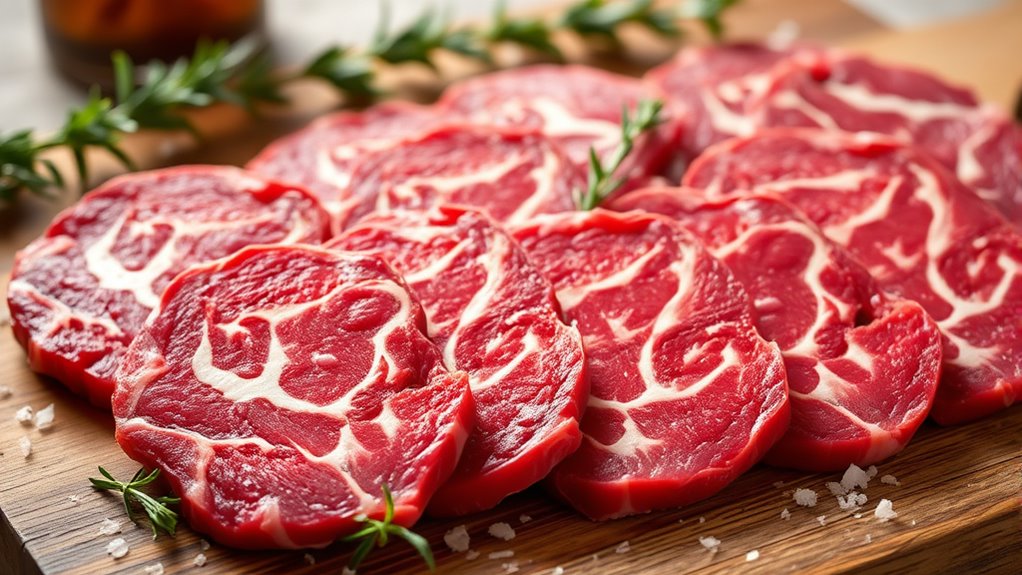
You’ll appreciate the eye of round for its lean profile, which helps your jerky dry evenly and stay tender. Its cylindrical shape makes slicing into uniform strips quick and simple, ensuring consistent results.
Choosing this cut means you’re working with a budget-friendly, easy-to-handle option that delivers great flavor.
Leanest Cut Benefits
Although not the most tender cut on its own, the eye of round stands out as the leanest beef option for jerky, making it perfect for those who want a long-lasting, low-fat snack. Choosing this lean beef cut means you get jerky cuts with minimal intramuscular fat, reducing spoilage and extending shelf life.
Its uniform shape and fine grain help you slice consistent strips that marinate well, enhancing flavor despite its naturally tougher texture.
Benefits of the eye of round include:
- Exceptionally low fat content for healthier jerky
- Longer shelf life due to reduced spoilage risk
- Cost-effective and widely available for bulk jerky
- Fine grain allows for uniform, tender slices
- Ideal for slow drying and marination to boost taste
This makes it the top choice for low fat, lean beef jerky.
Easy Slicing Features
When selecting a cut for jerky, the eye of round stands out because its uniform, cylindrical shape and fine grain make slicing effortless and consistent. Thanks to its uniform shape, you can easily slice the eye of round against the grain into even strips, usually between 1/8 to 1/4 inch thick.
This easy slicing ensures that each piece dehydrates evenly, resulting in predictable drying times and tender jerky. The lean nature of the eye of round means there’s minimal fat to interfere with the drying process, further enhancing texture and shelf life.
Plus, because it’s widely available and affordable, choosing the eye of round simplifies your jerky-making process without sacrificing quality or tenderness.
Top Round (London Broil): Economical and Easy to Slice
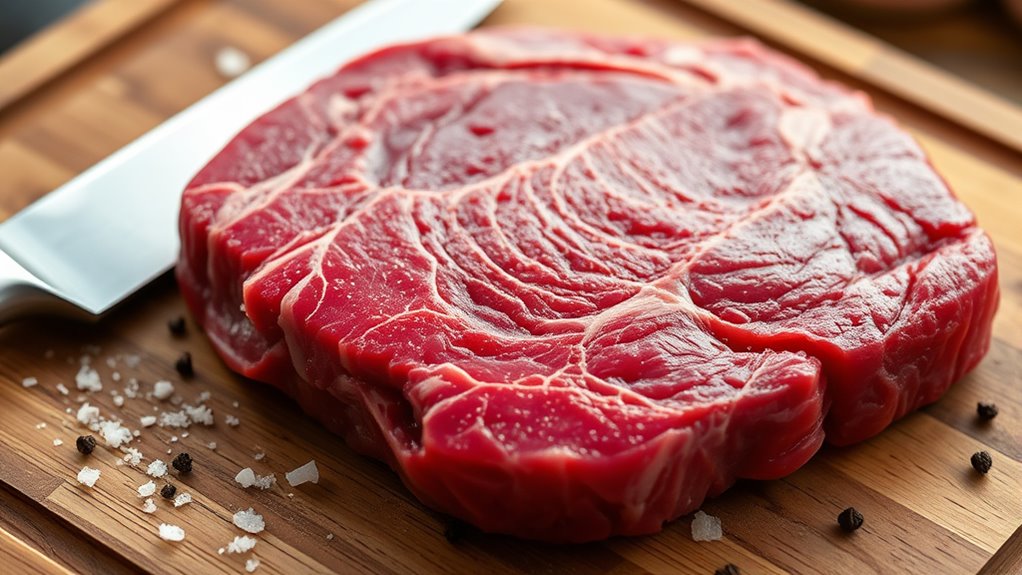
If you’re looking for a cost-effective cut that’s lean and easy to work with, top round is a great choice. Its uniform shape makes slicing against the grain simple, ensuring tender jerky every time.
Plus, it’s widely available and perfect for making large batches without breaking the bank.
Cost-Effective Choice
Since you want a budget-friendly option that doesn’t sacrifice quality, top round (also known as London Broil) fits the bill perfectly. This lean cut of beef is affordable and widely available, making it a favorite for homemade beef jerky. Its uniform shape and muscle fiber direction let you slice it evenly, ensuring consistent strips every time.
Plus, top round’s low fat content helps your jerky dry uniformly and last longer. Here’s why top round is a smart choice for your jerky:
- Lean cuts of beef with minimal fat
- Affordable price for large batches
- Easy to slice into uniform strips
- Dries evenly for better texture
- Longer shelf life due to low fat content
Top round offers great value without compromising quality.
Lean And Uniform
Although top round comes from the cow’s hind leg, it offers a lean, uniform muscle structure that makes slicing it for jerky straightforward. When you choose top round, you get a cut that’s low in fat, which not only reduces spoilage risk but also keeps your jerky shelf-stable.
Its consistent muscle fibers mean you can slice it evenly, giving you tender, uniform strips every time. This lean quality makes top round ideal for marinating, helping to boost flavor and tenderness.
Plus, it’s widely available and budget-friendly, so you don’t have to break the bank for quality jerky. If you want a reliable, easy-to-handle cut, top round is a smart pick for making delicious homemade beef jerky.
Easy Grain Slicing
When you choose top round, also known as London Broil, you get a cut that’s not only economical but also straightforward to slice against the grain. The muscle fibers in top round run uniformly, making slicing easier and ensuring tender, consistent jerky strips. This lean cut has minimal fat, so it dries efficiently when sliced about 1/8 to 1/4 inch thick.
You’ll find top round widely available and budget-friendly, perfect for both home and commercial jerky makers. Here’s why it’s a top choice for easy grain slicing:
- Uniform muscle fibers simplify slicing against the grain
- Lean and economical cut ideal for jerky
- Consistent shape aids in uniform slices
- Slices at 1/8 to 1/4 inch dry quickly and evenly
- Rich beef flavor and moderate tenderness enhance taste
Bottom Round: Flavorful and Budget-Friendly Option
If you’re looking for a lean, flavorful cut that won’t break the bank, bottom round is an excellent choice for making beef jerky. This cut comes from the outer muscle of the hind leg, offering low fat content which is perfect for jerky’s shelf stability.
Bottom round delivers rich beef flavor and is more budget-friendly compared to pricier meat cuts like sirloin or tenderloin. To get tender beef jerky, slice the bottom round thinly—about 1/8 inch—and always cut against the grain. Proper marinating helps break down its tougher muscle fibers, enhancing tenderness.
Since bottom round is widely available at most grocery stores, you can easily grab it for homemade beef jerky without sacrificing quality or cost.
Sirloin Tip: Balanced Flavor and Moderate Tenderness
Moving from the budget-friendly bottom round, sirloin tip offers a great balance of flavor and tenderness that appeals to many jerky enthusiasts. This lean cut from the rear leg provides a beef jerky experience with moderate tenderness, making it a smart choice for home makers. When prepping sirloin tip, trimming fat and connective tissue is key to achieving the best texture.
Its fine grain lets you slice against the grain easily, resulting in tender, chewable strips. Here’s why sirloin tip stands out:
- Balanced flavor profile complements various marinades
- Moderate tenderness suits drying without toughness
- More affordable than premium steaks
- Fine grain allows precise slicing for ideal texture
- Lean meat reduces spoilage risk during drying
If you want flavorful, moderately tender beef jerky without breaking the bank, sirloin tip is worth a try.
Specialty Cuts: Lifter and Pectoral for Richer Flavor
Why settle for the usual cuts when you can elevate your jerky with specialty options like Lifter and Pectoral? These specialty cuts bring a richer flavor and tenderness that standard choices often lack. The Lifter cut is prized for its tender texture and deep beefy taste, making it easy to slice and perfect for jerky.
Meanwhile, the Pectoral, sometimes called Special Team, offers moderate fat content and robust flavor, ideal for a savory jerky experience. Both cuts have good marbling that enhances juiciness and richness. While they’re less common and might require visiting specialty butchers or online suppliers, choosing Lifter and Pectoral guarantees a superior jerky with complex flavors you’ll appreciate every bite.
How to Choose and Buy Fresh, Lean Beef Cuts for Jerky
While specialty cuts like Lifter and Pectoral offer unique flavors, selecting the right fresh, lean beef cuts lays the foundation for great jerky. You’ll want lean beef with minimal fat to guarantee proper drying and shelf stability. Focus on quality meat cuts, paying close attention during jerky preparation to achieve the best results.
Here’s how to choose and buy:
- Pick lean cuts like eye of round, top round, or sirloin tip
- Look for bright red color, firm texture, and no off odors
- Trim away cartilage, tendons, and excess fat before slicing
- Account for 50-75% weight loss by buying extra meat when purchasing in bulk
- Build a rapport with local butchers for pre-sliced, uniform cuts or slice against the grain yourself
This careful selection makes your jerky preparation smoother and tastier.
Frequently Asked Questions
What Cut of Beef Makes the Best Jerky?
You’ll want to use lean cuts like eye of round, top round, or sirloin tip for the best jerky. They slice easily, dry uniformly, and keep your jerky tender and flavorful without excess fat or spoilage risks.
What Is the Best Type of Beef to Make Jerky?
You’ll want lean cuts like eye of round or top round—they’re basically jerky’s superheroes, drying evenly and packing flavor.
Skip fatty cuts; they’ll ruin your batch faster than you can say “snack attack.”
What Are Common Jerky Mistakes to Avoid?
You shouldn’t use fatty cuts, slice meat unevenly, or skip trimming fat. Avoid drying too fast or at high heat, and don’t neglect proper marinating.
These mistakes ruin texture, flavor, and shelf life of your jerky.
Is Top Round or Eye of Round Better for Jerky?
Eye of round is better for jerky because it’s more tender and easier to slice evenly.
But if you want a leaner, budget-friendly option, top round works well—just slice carefully against the grain for best results.
Conclusion
Choosing the perfect beef cut for jerky might seem tricky, but it’s funny how the leaner, budget-friendly options like eye of round and bottom round often turn out to be your best friends. You want flavor, tenderness, and a price that doesn’t break the bank—all in one cut.
So next time you’re hunting for jerky meat, remember, the ideal choice might just be the one you stumbled upon by coincidence at your local butcher. These best beef cuts for perfect beef jerky combine quality and value, making your jerky-making experience both satisfying and affordable.