Is Ground Pork Healthier Than Ground Beef?
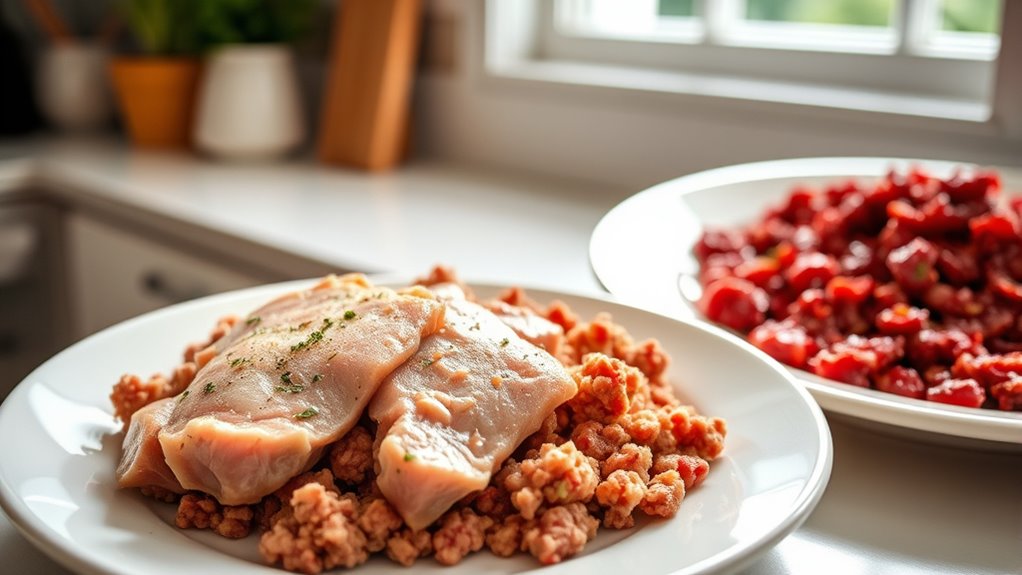
If you’re choosing between ground pork and ground beef, know pork usually has less saturated fat and cholesterol, which benefits heart health. Beef offers more iron and vitamin B12, helping energy and muscle needs.
Both supply quality protein, but beef’s robust flavor suits hearty dishes, while pork’s tender, slightly sweet taste works well with delicate spices.
Your cooking method also impacts healthfulness. There’s more to explore on how these meats compare nutritionally and culturally.
How Do Ground Pork and Beef Differ Nutritionally?
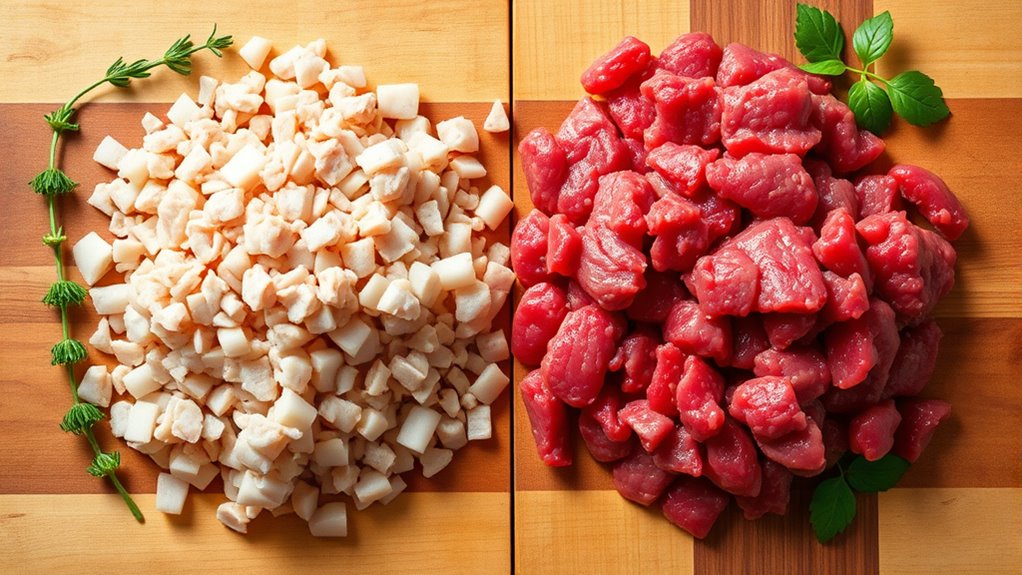
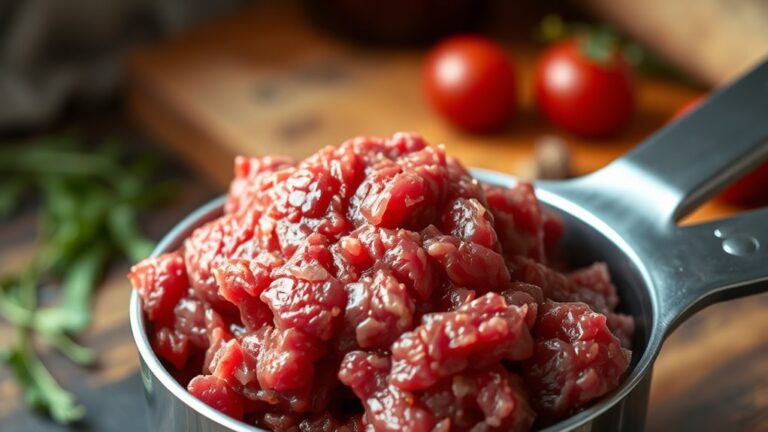
Although both ground pork and ground beef offer high protein content, you’ll find that ground pork generally contains less saturated fat and cholesterol, making it a slightly better choice for heart health. When you compare iron levels, ground beef stands out with considerably higher iron content, which is essential for maintaining healthy blood and energy levels.
On the other hand, ground pork provides more vitamin B1 (thiamin), supporting your metabolism. While both meats deliver essential nutrients, the lower saturated fat in ground pork can help you manage cholesterol better. If you prioritize iron intake, ground beef is your go-to, but for a leaner option with less saturated fat, ground pork fits the bill.
Understanding these nutritional differences helps you make smarter food choices.
How Do Their Calories and Fat Content Compare?
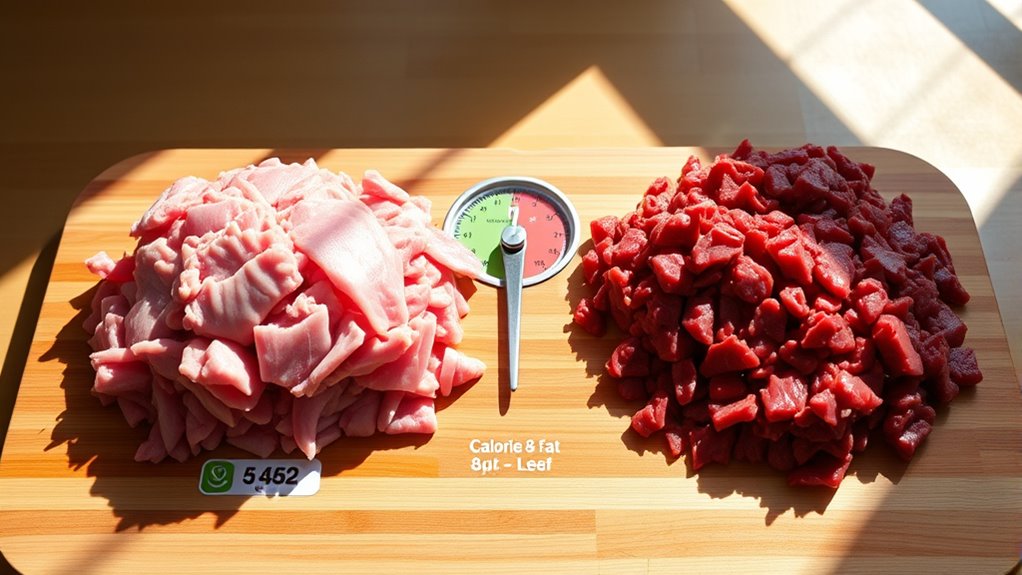
When comparing ground pork and ground beef, you’ll notice that ground pork typically has slightly fewer calories and less fat than the common 80/20 ground beef blend. However, if you choose leaner ground beef options (90% lean or higher), their calorie and fat content can be quite similar to ground pork.
The fat content plays a key role in calories, and both meats vary depending on the cut and fat percentage. Here’s a quick look:
| Meat Type | Calories (per 100g) | Fat Content (grams) |
|---|---|---|
| Ground Pork | 242 | 13.92 |
| Ground Beef (80%) | 250 | 15.41 |
| Lean Ground Beef | ~240 | ~10-12 |
Choosing lean options helps you control calories and fat content effectively.
Which Ground Meat Provides More Vitamins and Minerals?
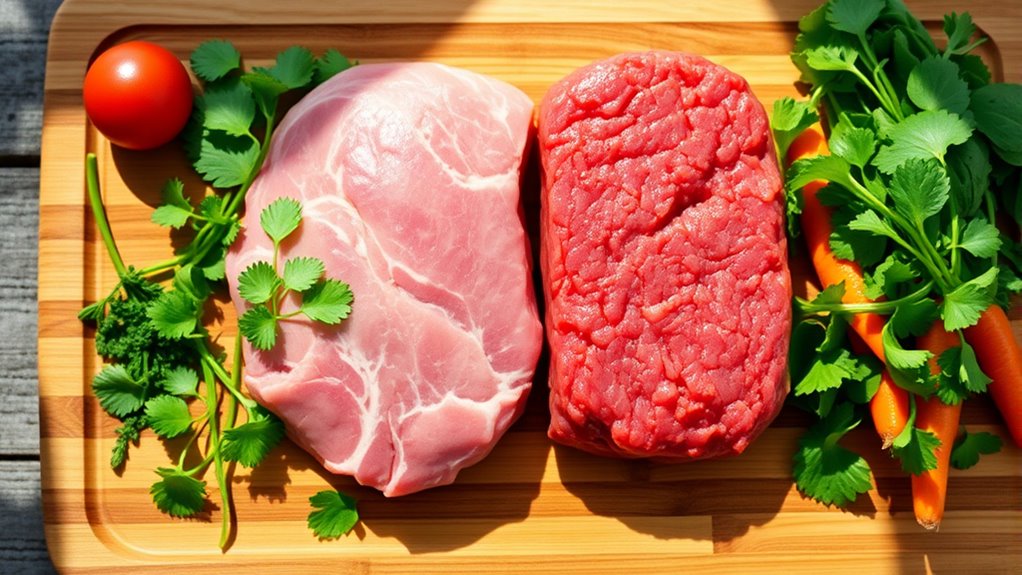
Beyond calories and fat, the vitamin and mineral content in ground pork and ground beef can influence which meat suits your nutritional needs better. Ground beef stands out with nearly 200% more iron and markedly higher vitamin B12, plus more zinc, selenium, copper, and manganese. These minerals support immune health and metabolism.
On the other hand, ground pork offers more vitamins B1, B2, E, D, and B6, essential for energy and immune function, along with vitamin C and folate, which beef lacks. Beef is also the only source of vitamin K among these meats.
If you’re after iron and certain minerals, beef is your go-to. But if you want a broader variety of vitamins, including B-complex and antioxidants, pork could better meet your needs.
What Are the Health Benefits of Ground Pork vs. Ground Beef?
When choosing between ground pork and ground beef, you’ll want to take into account their nutrient profiles and fat content. Both offer quality protein that supports muscle growth, but pork generally has less saturated fat and cholesterol.
Understanding these differences can help you pick the option that best fits your health goals.
Nutrient Profiles Compared
Although ground pork and ground beef both offer valuable nutrients, their profiles differ in ways that can impact your health choices. Ground beef stands out with markedly higher vitamin B12, providing about 277% more per 100 grams than ground pork. It’s also richer in iron and zinc, offering roughly double the iron content, essential for oxygen transport and energy.
On the other hand, ground pork contains higher levels of vitamins B1, B2, E, D, and B6, along with modest amounts of vitamin C and folate, which beef lacks. These differences mean you can tailor your diet based on specific nutrient needs—if you’re aiming for more vitamin B12 and iron, beef’s your go-to, while pork offers a broader mix of other essential vitamins for overall nutritional balance.
Protein and Muscle Support
If you want to build and maintain muscle, both ground pork and ground beef deliver high-quality protein packed with essential amino acids that support muscle repair and growth. They also provide heme iron, vital for transporting oxygen to your muscles.
Ground beef typically has more iron and vitamin B12, which boosts energy metabolism and nerve health, enhancing muscle function. Lean ground pork, like tenderloin, offers a heart-healthy protein option beneficial for muscle support.
| Nutrient | Ground Pork |
|---|---|
| Protein | High-quality |
| Iron | Good source |
| Vitamin B12 | Moderate |
| Muscle Support | Excellent |
| Energy Metabolism | Supports |
Both choices effectively promote muscle strength and recovery.
Fat Content Considerations
Beyond protein content, the fat in ground pork and ground beef plays a significant role in their nutritional profiles and health benefits. Ground pork generally contains about 13-15 grams of fat per 100 grams, while ground beef varies widely depending on lean cuts, ranging from 5 grams in very lean options to over 20 grams in fattier ones.
Choosing lean cuts of ground beef (90% or higher) can lower saturated fat and calorie intake, sometimes even below that of ground pork. Ground pork often has more polyunsaturated fats, including omega-3 and omega-6, which are beneficial for heart health.
Which Ground Meat Supports Muscle and Iron Needs Better?
When you want to support muscle growth and meet your iron needs, ground beef stands out because it delivers about 2.5 times more heme iron per 100 grams than ground pork. This heme iron is absorbed more efficiently, boosting oxygen transport to your muscles and enhancing endurance.
Ground beef also offers higher levels of vitamins B, especially B12, which plays a key role in red blood cell production and muscle function. Both ground pork and beef provide high-quality protein essential for muscle repair, but beef’s superior iron and vitamin B content make it a stronger choice for muscle development and maintaining iron-dependent processes.
If you’re focused on optimizing iron and protein intake for muscle strength, ground beef better supports those needs than ground pork.
Which Ground Meat Fits Better Into Heart-Healthy Diets?
How do ground pork and ground beef stack up in a heart-healthy diet? Both can fit well if you focus on lean cuts and controlling saturated fat intake. Ground pork often contains less saturated fat, especially when you pick lean cuts like tenderloin. It also offers more vitamin B1, which helps support heart health.
Meanwhile, ground beef provides a solid source of iron, essential for your body’s oxygen transport.
To keep your meals heart-healthy, consider these tips:
- Choose 90% lean or higher ground pork or beef
- Use cooking methods that limit added fats
- Control portion sizes to reduce saturated fat intake
- Remove visible fat after cooking
Can Cooking Methods Make Ground Pork and Beef Healthier?
You can make ground pork and beef healthier by choosing cooking methods that reduce fat and preserve nutrients. Techniques like grilling or baking let excess fat drip away, while steaming keeps your meat moist without added oils.
Plus, simple steps like draining fat and adding herbs can boost flavor without extra calories.
Healthier Cooking Techniques
Although ground pork and beef can be high in saturated fat, choosing healthier cooking techniques can substantially reduce their fat content and preserve nutrients. By selecting lean cuts like 90% lean beef or pork tenderloin, you start with a better foundation. Then, applying smart cooking techniques helps lower saturated fat without sacrificing flavor.
Try these approaches to make your ground meat dishes healthier:
- Grill, broil, or roast to let excess fat drip away.
- Drain visible fat after cooking to cut down saturated fat.
- Cook with minimal added fats or oils to keep nutrients intact.
- Use steaming or poaching to preserve nutrients and avoid extra calories.
These methods let you enjoy ground pork or beef while keeping your meals nutritious and satisfying.
Fat Reduction Strategies
When you choose cooking methods that let excess fat drain away, you make ground pork and beef healthier without losing flavor. Grilling, broiling, or air frying are great ways to drain excess fat, reducing the saturated fat content in your meal. These methods help keep your dish low in saturated fat while preserving natural taste.
Cooking with minimal added fats or oils also maintains flavor and keeps calories in check. Slow cooking or braising tenderizes meat, but be sure to skim off any visible grease afterward to cut down on fat. Marinating with acidic ingredients like vinegar or citrus adds flavor and tenderness without extra fat.
What Taste and Texture Differences Affect Recipe Choices?
Since ground pork has a tender, slightly sweet flavor and a softer texture, it works best in lighter, brighter dishes where you want the meat to absorb delicate spices like ginger and lemongrass. In contrast, ground beef’s robust taste and firmer texture suit recipes that call for hearty, bold flavors.
Understanding these taste and texture differences helps you pick the right meat for your recipe.
- Ground pork stays moist and tender, enhancing dishes with subtle seasoning.
- Ground beef offers a substantial bite, perfect for rich, savory meals.
- Pork pairs well with Asian-inspired flavors.
- Beef complements cumin, chili powder, and other strong spices common in American or European recipes.
Choosing based on taste and texture ensures your dish hits the right note every time.
How Do Cultural and Environmental Factors Influence Meat Choice?
Because cultural beliefs and environmental concerns shape your food choices, understanding these factors helps you select the right meat. Cultural preferences strongly influence meat choice—religious laws in Judaism and Islam forbid pork, while Hindu traditions in India consider cows sacred, limiting beef consumption. These beliefs guide which meats you include in your diet.
Environmental concerns also play a big role. Beef production causes far more greenhouse gas emissions and uses up to 28 times more land than pork, prompting many to favor pork as a more sustainable option. As awareness grows, you might lean toward meats with a lower environmental impact.
Balancing cultural preferences with environmental concerns ensures your meat choice aligns with both your values and sustainability goals.
Frequently Asked Questions
Is It Healthier to Eat Pork Than Beef?
You can choose pork over beef for a leaner option with less saturated fat and more vitamin B1. Just pick lean cuts and prepare them healthily, since both have benefits depending on the nutrients you need.
What Is the Healthiest Ground Meat to Get?
You want the healthiest ground meat? Choose lean cuts—like sirloin beef or tenderloin pork. Beef packs more iron and B12, while pork offers vitamin B1.
Balancing fat content and nutrients fits your goals best.
Is Ground Pork Healthy?
Yes, ground pork can be healthy if you choose lean cuts and avoid processed versions. It provides protein, vitamins, and minerals, but you should cook it properly and balance it with other nutritious foods in your diet.
Is Ground Pork a Good Replacement for Ground Beef?
Swapping ground beef for ground pork is like trading a bold brushstroke for a softer hue—you’ll get tender flavor and leaner protein.
Just pick lean pork, and you’ll keep your meals healthy and delicious without missing a beat.
Conclusion
When choosing between ground pork and ground beef, consider your nutritional goals, taste preferences, and cooking methods. Ground pork offers leaner options with essential vitamins, while ground beef provides higher iron and muscle-building benefits. You can enhance heart health by selecting lean cuts and cooking smartly.
Whether you prioritize flavor, nutrients, or diet, balancing your choice with how you prepare it ensures you enjoy both health and taste in every meal. Remember, choosing between ground pork and ground beef depends on your individual health needs and culinary desires. Incorporating both in moderation can contribute to a balanced and nutritious diet.