Are Beef Shoulder Roast and Chuck Roast the Same?
Beef shoulder roast and chuck roast are both cuts from the shoulder area of the cow, but they aren’t exactly the same. Understanding the differences between beef shoulder roast and chuck roast is important for selecting the right cut for your recipes.
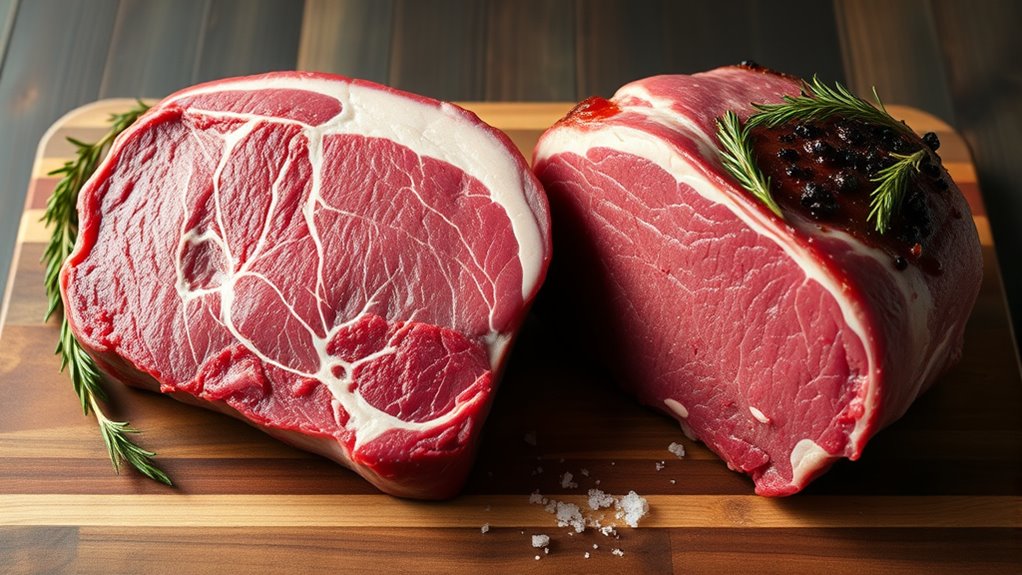
Beef shoulder roast is leaner with less fat, giving it a firmer texture and a milder flavor.
Chuck roast, on the other hand, has more marbling and connective tissue, which adds richness and makes it ideal for slow cooking until tender.
Both cuts are excellent for hearty meals, but their differences influence cooking methods and taste.
Keep exploring to discover more about their best uses and flavor profiles.
What Is a Beef Shoulder Roast? Definition and Characteristics
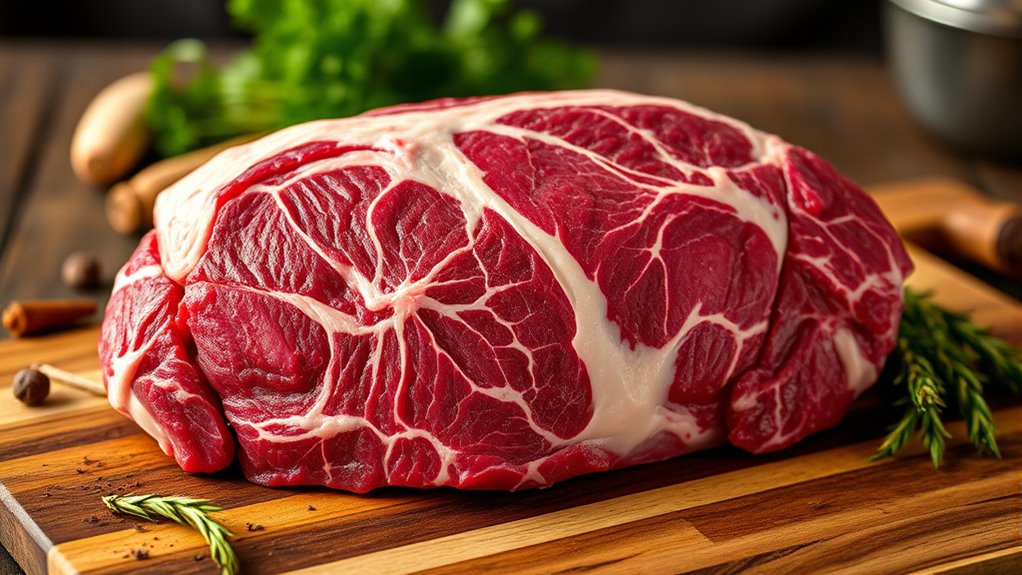
What makes a beef shoulder roast stand out? It comes from the shoulder area of the cow, often including parts of the chuck primal, but it’s generally leaner than other cuts like chuck roast. When you choose a shoulder beef roast, you’re getting a cut with less marbling and connective tissue, which means it can be a bit tougher if cooked quickly.
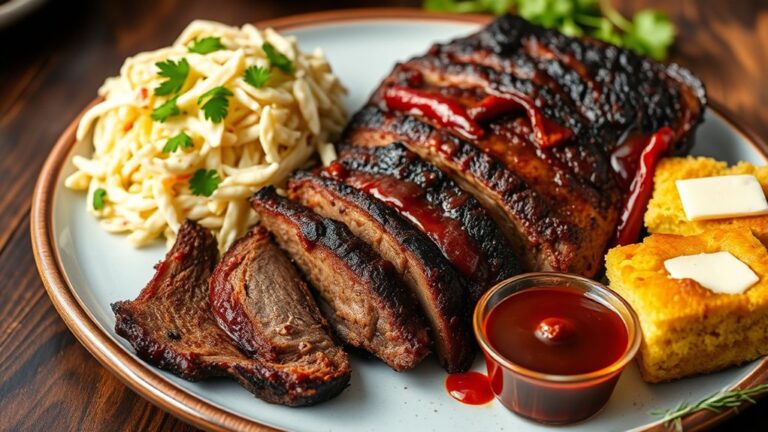
However, slow cooking, roasting, or braising transforms it into a tender, flavorful meal. You can slice it like traditional roast beef or shred it for a variety of dishes. Its versatility and budget-friendly nature make the beef shoulder roast a smart choice for slow-cooked recipes that don’t compromise on taste or texture.
What Is a Chuck Roast? Definition and Characteristics
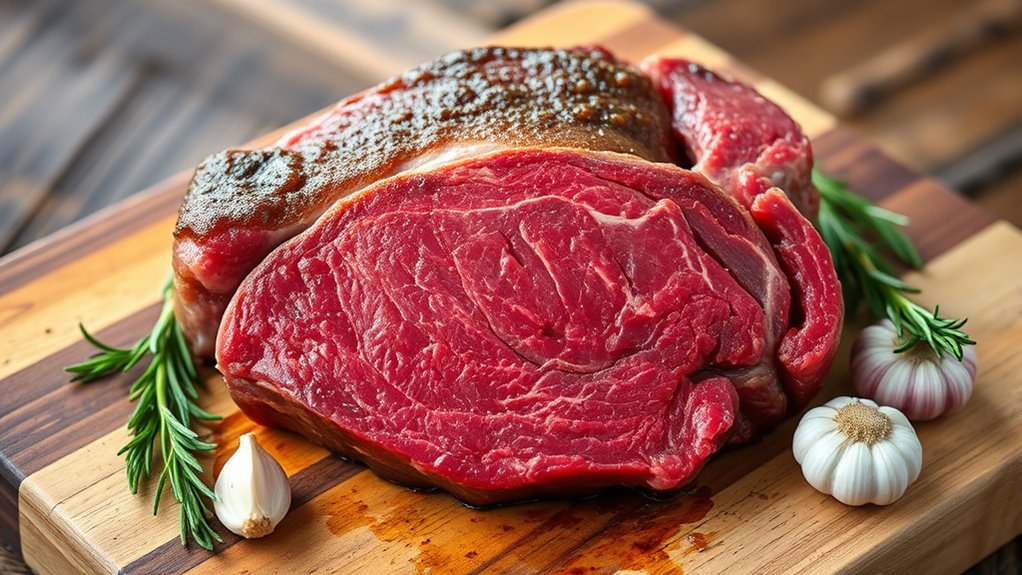
You’ll find the chuck roast comes from the shoulder area, known as the chuck primal section. It’s packed with marbling and connective tissue that turns tender when cooked slowly.
This makes it a flavorful, budget-friendly choice for slow roasting and braising.
Chuck Roast Origins
Although the chuck roast comes from the shoulder area of the beef, it stands out for its rich marbling and connective tissue that make it ideal for slow cooking.
You’ll find this cut within the chuck primal, featuring muscles like the shoulder clod and blade, which deliver a hearty texture and deep flavor. Its high collagen content means it’s perfect for braising, pot roasts, or shredding.
| Origin | Muscles Included | Cooking Method |
|---|---|---|
| Beef Shoulder | Shoulder Clod, Blade | Slow Cooking |
| Chuck Primal | Abundant Marbling | Braising, Roasting |
| Versatile Cut | High Collagen | Shredding |
Understanding the chuck’s shoulder origins helps you appreciate its robust taste and versatility.
Key Characteristics
Because chuck roast comes from the beef shoulder, it offers a rich marbling and plenty of connective tissue that break down during slow cooking to create tender, flavorful meat. When you cook a chuck roast low and slow, the connective tissue softens, making the meat juicy and easy to shred.
This cut is known for its robust beef flavor and moderate fat content, which enhances the taste without being overly greasy. Unlike leaner cuts, the shoulder roast has a tougher texture initially, so it’s best suited for pot roasts, stews, or slow-cooked dishes where the connective tissue has time to melt away.
If you want a versatile cut that delivers hearty flavor, chuck roast is an excellent choice.
How Do Shoulder and Chuck Roast Textures Compare?
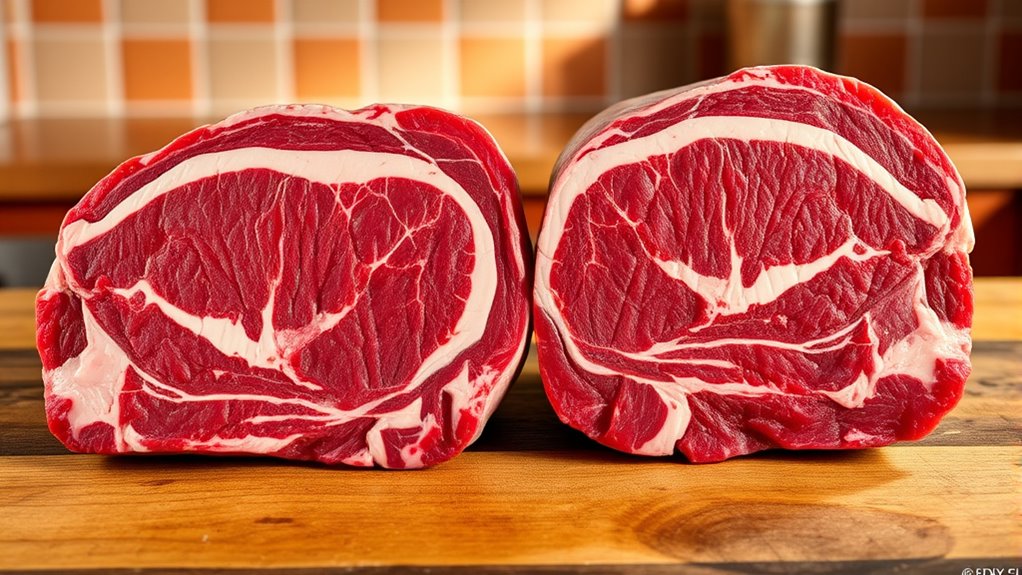
When you compare shoulder and chuck roasts, you’ll notice distinct differences in texture that affect cooking and eating experiences. The shoulder roast has a leaner, finer, and more uniform texture, making it tender when cooked properly. On the other hand, chuck roast carries more marbling and connective tissue, resulting in a tougher, fibrous texture initially.
However, slow cooking breaks down this connective tissue in chuck roast, turning it exceptionally tender and juicy with a buttery mouthfeel. While shoulder roast tends to be less moist due to lower fat content, chuck roast’s higher fat and collagen give it a melt-in-your-mouth quality. Understanding these textural differences helps you choose the right roast and cooking method to match your desired tenderness and mouthfeel.
How Do Their Flavors Differ?
You’ll notice the shoulder roast has a richer, more intense beefy flavor with a slightly gamier edge, while the chuck roast offers a buttery, savory taste thanks to its marbling. The moisture from the fat in chuck roast creates a melt-in-your-mouth texture, contrasting with the shoulder’s gelatinous feel from its connective tissue.
Understanding these differences helps you choose the right roast for your desired flavor and mouthfeel.
Beefy Flavor Intensity
The difference in beefy flavor intensity between chuck roast and shoulder roast comes down largely to fat content and marbling. When you cook chuck roasts, their higher fat and marbling levels release rich, savory flavors that make the meat taste bolder and more robust. This fat renders slowly, deepening the roast’s beefy profile, especially during long, slow cooking methods.
On the other hand, shoulder roast has a leaner composition, giving it a subtler, more delicate beef flavor. While both cuts develop complex flavors when cooked properly, chuck roasts consistently provide a more intense, meat-forward taste. So, if you want a roast with a richer beefy punch, chuck roast is your go-to choice.
Shoulder roast suits those who prefer a milder flavor.
Marbling and Moisture
Because chuck roast contains more marbling, it stays juicier and more flavorful during cooking compared to the leaner shoulder roast. The fat within the marbling melts slowly, enhancing moisture and enriching the meat’s taste. When you cook a chuck roast, the marbling ensures the meat doesn’t dry out, keeping it tender and succulent.
In contrast, shoulder roast’s lower fat can lead to a milder flavor and requires careful cooking to maintain moisture.
Consider how marbling affects your roast’s flavor:
- Chuck roast’s fat melts and bastes the meat internally
- Higher marbling preserves moisture during long cooking
- Shoulder roast has less fat, so flavor is subtler
- Leaner cuts risk drying out without proper techniques
- Marbling directly impacts juiciness and richness in taste
Choosing chuck means more flavorful, moist results every time.
Texture and Mouthfeel
Although both cuts come from the shoulder area, chuck roast delivers a richer, buttery flavor and tender, melt-in-your-mouth texture thanks to its higher intramuscular fat and collagen content. When you cook chuck roast slowly, the collagen breaks down, creating a silky, gelatinous mouthfeel that makes each bite juicy and succulent.
In contrast, shoulder roast has a leaner, firmer texture, offering a denser, more substantial mouthfeel with less marbling. You’ll notice shoulder roast provides a robust, traditional beef flavor but lacks the buttery softness found in chuck roast.
What Cooking Methods Work Best for Shoulder Roast?
When you cook shoulder roasts, choosing slow, moist methods like braising or pot roasting helps break down tough connective tissue, turning the meat tender and flavorful. Slow roasting at low temperatures over several hours is key to transforming this cut into a juicy, tender dish.
You can enhance the results by:
- Braising in liquid to keep moisture locked in
- Pot roasting with vegetables for added flavor
- Slow roasting in the oven for even heat distribution
- Smoking at low heat (225-250°F) to develop rich flavors
- Monitoring internal temperature around 190-205°F for perfect tenderness
These techniques ensure the collagen melts, giving your shoulder roast a melt-in-your-mouth texture you’ll love.
What Cooking Methods Work Best for Chuck Roast?
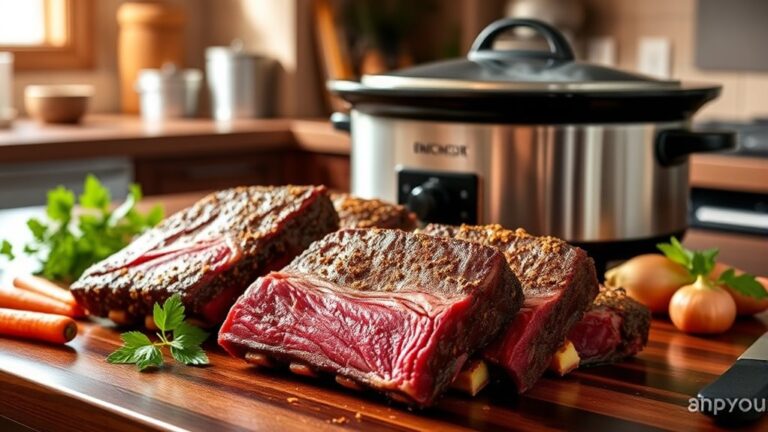
If you want a chuck roast that’s tender and flavorful, slow, low-temperature cooking methods like braising, stewing, or slow roasting are your best bet. These techniques break down the tough connective tissue, turning the meat juicy and tender.
Start by searing the roast to develop rich flavors through the Maillard reaction. Then, cook it slowly at around 275°F (135°C) for several hours, ideally in a liquid like broth or wine to keep it moist.
Aim for an internal temperature of 190-205°F (88-96°C) to fully dissolve collagen, ensuring the roast becomes shreddable and succulent. By embracing slow cooking, you’ll transform a tough chuck roast into a delicious, melt-in-your-mouth meal every time.
How Versatile Are Shoulder and Chuck Roasts in Recipes?
Because shoulder and chuck roasts offer rich flavor and tender texture, you can use them in a wide range of recipes—from hearty pot roasts and stews to shredded beef sandwiches. Both cuts adapt well to various cooking styles, making them staples in your kitchen. The shoulder roast shines when slow-cooked, soaking up spices and turning melt-in-your-mouth tender.
Shoulder and chuck roasts bring rich flavor and tender texture to everything from stews to sandwiches.
Meanwhile, chuck roast’s marbling lets you roast, braise, grill, or smoke it for diverse results. Here’s how versatile these cuts are:
- Slow-cooked pot roasts for comfort food
- Shredded beef for sandwiches or tacos
- Braised dishes with rich sauces
- Grilled or smoked for unique flavors
- Sliced steaks or quick-cooked meals
You’ll find both shoulder roast and chuck roast perfect for many delicious dishes.
How Much Do Shoulder and Chuck Roasts Cost?
You can expect to pay between $3.50 and $8 per pound for shoulder and chuck roasts, depending on factors like quality, region, and whether the cut is bone-in or boneless. Chuck roast usually falls on the lower end, making it a budget-friendly choice, while shoulder roast often costs a bit more due to its richer marbling.
Grass-fed or organic options can push the price above $10 per pound. The cost also varies if you choose boneless cuts, which tend to be pricier than bone-in.
To save money, consider buying in bulk or purchasing directly from farmers or meat co-ops, as these options typically offer better prices per pound. Knowing these price differences helps you plan your meals without breaking the bank.
How to Choose Between Shoulder Roast and Chuck Roast for Your Meal?
Knowing the price differences between shoulder and chuck roasts helps you decide which cut fits your budget, but choosing the right roast also depends on how you plan to cook and serve it.
If you want leaner meat with tender slices, shoulder roast is your go-to. For richer, melt-in-your-mouth dishes, chuck roast works best. Consider these points:
- Shoulder roast is leaner with less marbling, ideal for medium-rare roasts
- Chuck roast has more fat and connective tissue, perfect for slow cooking
- Choose shoulder roast for slicing and traditional roast beef
- Pick chuck roast for pulled beef, stews, or pot roasts
- Match your cooking method to the cut for the best flavor and texture
With these tips, you can confidently select between shoulder roast and chuck roast for your meal.
Frequently Asked Questions
What Is Better, Beef Shoulder Roast or Chuck Roast?
You’ll find chuck roast better for slow cooking because it’s more marbled and tender.
If you want leaner, medium-rare slices, shoulder roast works well, but chuck’s richer flavor usually wins for hearty dishes.
Can Shoulder Roast Replace Chuck Roast?
You can replace chuck roast with shoulder roast, but you’ll need to adjust cooking time and moisture carefully.
Shoulder roast is leaner, so slow cooking with added liquid helps keep it tender and juicy.
What Is Another Name for Beef Shoulder?
Picture a robust cut full of flavor; another name for beef shoulder is chuck roast.
You’ll also hear it called shoulder clod or arm roast, depending on the specific muscle or regional naming.
Why Is Beef Shoulder Called Chuck?
Beef shoulder’s called chuck because it comes from the shoulder section of the cow, which contains several muscles. You’ll find it’s tough but flavorful, perfect for slow cooking due to its marbling and connective tissue.
Conclusion
Choosing between a beef shoulder roast and a chuck roast is like picking the right brush for a painting—you want the texture and flavor that best suit your culinary canvas. Remember when you tried that chuck roast slow-cooked to tender perfection? Its rich, hearty flavor made the meal unforgettable.
Both cuts offer great value and versatility, making them excellent choices for various recipes. Whether you prefer the beef shoulder roast or the chuck roast, each brings unique qualities to your table. Trust your taste and cooking style to create a delicious masterpiece every time you cook with these flavorful beef cuts.