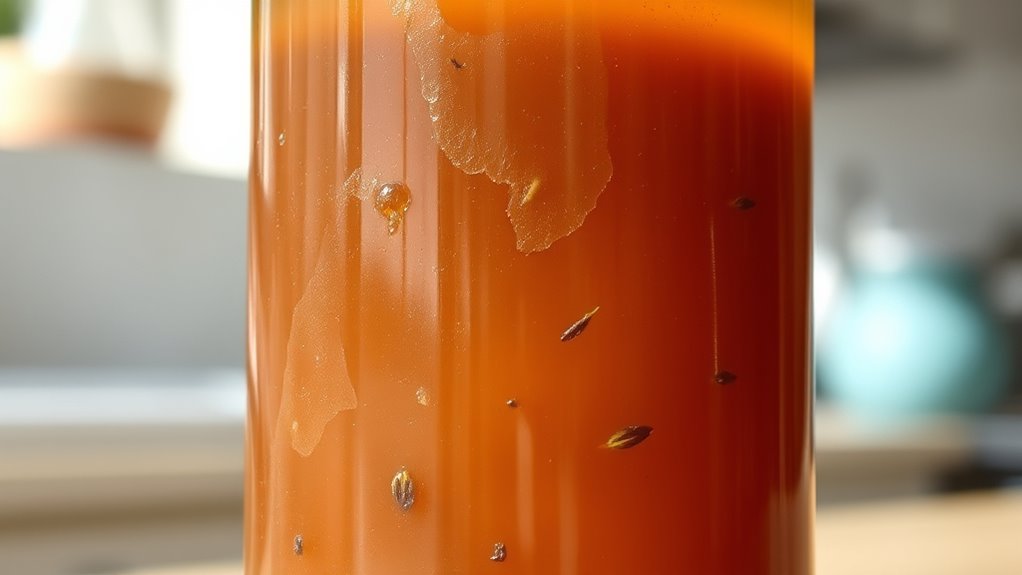
How to Tell If Beef Broth Is Bad
You can tell if your beef broth is bad by trusting your senses. Beef broth spoilage often reveals itself through noticeable changes. If it smells sour, off, or musty, that’s a strong sign.
Look for mold, discoloration, or cloudiness that wasn’t there before. Also, check the texture—if it feels slimy, sticky, or unusually thick, it’s unsafe. Homemade broth spoils faster, so be extra cautious.
Proper storage helps, but when in doubt, it’s best to toss it. Want to know how to store and spot spoilage more effectively?
Using Your Senses to Detect Spoiled Beef Broth
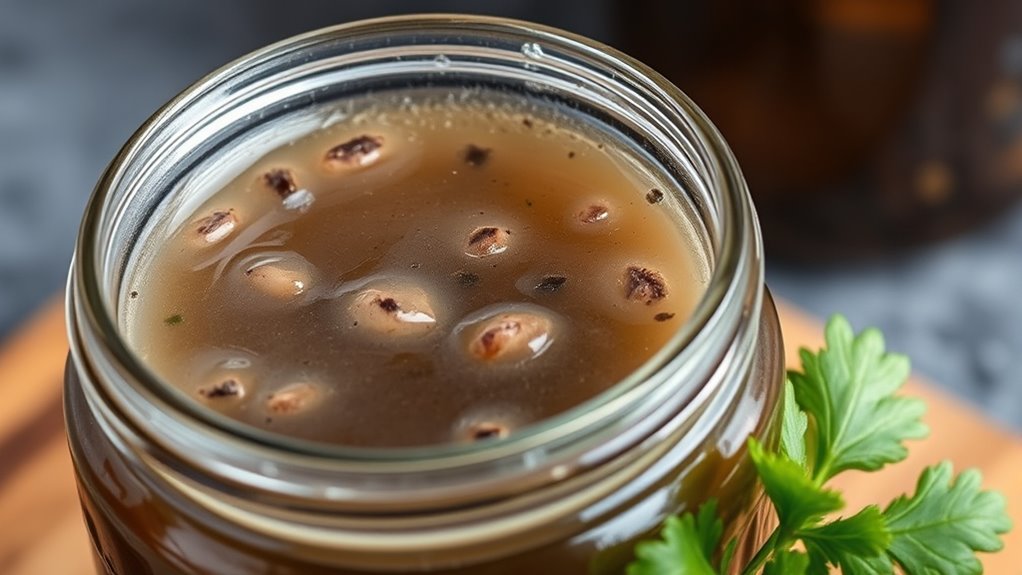
When you’re checking if beef broth has gone bad, trust your senses first. Your sense of smell is the most reliable tool to detect spoilage; a sour or off odor is a clear sign the broth is spoiled and should be discarded.
Besides odor, pay attention to subtle textural changes when the broth cools—any slimy or gelatinous feel can indicate bacterial growth. While you’ll learn about visual cues in the next section, be aware that signs of spoilage often come together.
Using your senses to detect these changes early helps you avoid consuming unsafe broth. Always rely on the combination of odor and texture to identify spoiled beef broth and keep your meals safe.
Visual Signs That Beef Broth Has Gone Bad
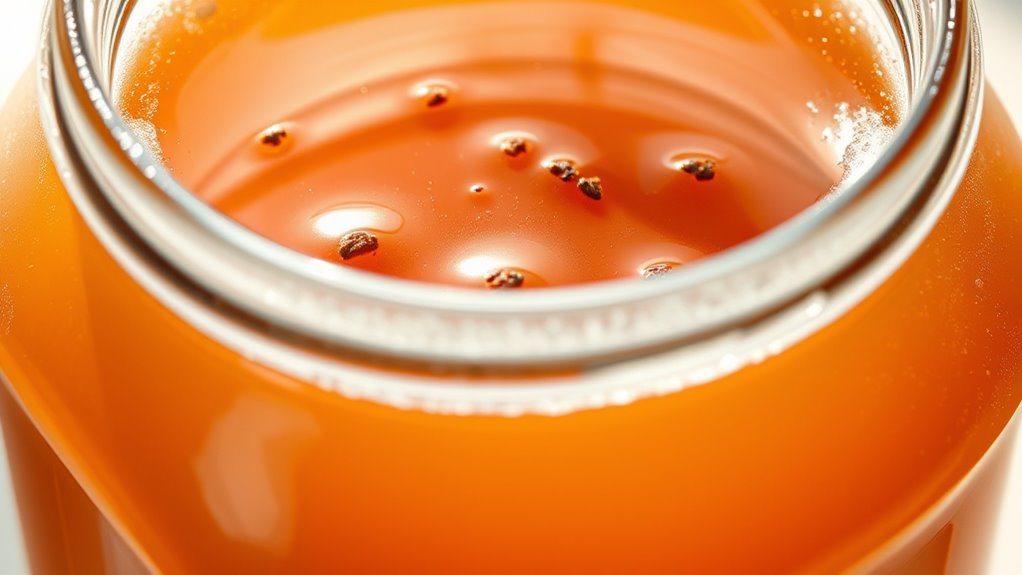
Although you might rely on smell and texture first, visual signs can quickly reveal if your beef broth has gone bad. Check for mold on the surface or container sides—this is an unmistakable sign to discard it immediately. Look for discoloration like darkening or greying, which suggests bacterial growth or oxidation.
If the broth looks cloudy or murky but was clear when fresh, it’s likely spoiled. Notice any sediment or unexpected particles floating around; these could indicate decomposition or contamination. Also, if the broth feels unusually thick or gelatinous after refrigeration, that’s another red flag.
While an off smell is a key indicator, spotting these visual signs early helps you avoid using bad broth and keeps your meals safe.
Understanding Off Smells in Beef Broth
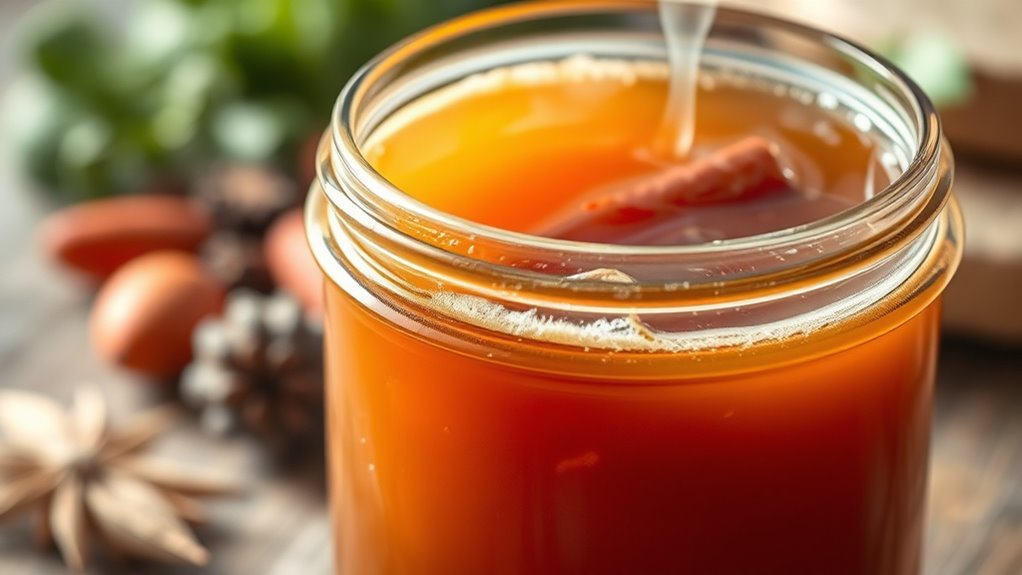
You’ll want to pay close attention to any sour or musty smells when checking your beef broth. Fresh broth smells neutral or meaty, so any off odor is a clear warning sign.
Comparing these smells helps you know when the broth has gone bad and needs to be tossed.
Identifying Sour Odors
Sour odors often signal that beef broth has gone bad due to bacterial growth. If you notice a sour odor, it’s a clear spoilage sign that the broth isn’t safe to consume. Fresh beef broth should have a neutral or meaty aroma, without any off smell.
When bacteria start to grow, they produce sulfurous or acidic compounds, leading to a bad smell that might remind you of spoiled milk or rotten eggs. Trust your nose—if the broth smells sour or unusual, don’t risk your health. Discarding it is the smartest choice to ensure food safety.
Identifying these sour odors early helps you avoid consuming spoiled broth and prevents potential foodborne illnesses. Always check for that sour odor before using your beef broth.
Recognizing Musty Smells
When beef broth develops a musty or moldy smell, it usually means mold or bacterial contamination has taken hold. This musty smell is a clear sign of microbial growth and indicates spoiled broth.
Trust your odor detection—fresh broth smells clean and savory, so any off odors like dampness or mildew point to signs of spoilage and compromised beef broth safety.
| Odor Type | Cause | Implication |
|---|---|---|
| Musty/Moldy | Mold contamination | Spoiled broth |
| Damp/Mildew | Bacterial/fungal | Signs of spoilage |
| Clean/Savory | Fresh broth | Safe to consume |
Detecting these off odors early helps ensure you avoid consuming unsafe broth.
Comparing Fresh Versus Spoiled
Although fresh beef broth boasts a rich, savory aroma, spoiled broth gives off sour, rancid, or ammonia-like smells that signal bacterial or mold growth. You can rely on your nose to tell fresh from spoiled broth since off smells develop quickly once bacteria multiply.
Here’s what to notice:
- Fresh broth smells hearty and meaty, inviting you to enjoy it.
- Spoiled broth emits a sharp sourness or unmistakable rancid odor.
- An ammonia-like scent strongly indicates bacterial growth and spoilage.
- Off smells worsen over time, signaling it’s time to discard the broth.
Trust your senses: a pleasant aroma means fresh broth, but any off smell indicates spoilage. Don’t taste broth if you detect sour or rancid odors; it’s safer to discard it.
Texture Changes That Indicate Broth Spoilage
When you notice your beef broth turning gelatinous as it cools, that’s a red flag. Thickening, clumping, or a slimy, sticky surface after reheating means spoilage is likely.
Trust your senses, and don’t use broth with these texture changes.
Gelatinous Texture When Cold
Because beef broth naturally turns gelatinous as it cools due to dissolved collagen, you might expect a thick texture in the fridge. However, not all gelatinous textures are safe. Watch for signs of spoilage that suggest bacterial growth or fermentation.
If you notice any of these abnormal consistencies, it’s a red flag for food safety:
- Slimy or sticky surface instead of smooth gel
- Rubber-like or overly thick texture that won’t soften
- Persistent gelatinous state unlike previous batches
- Off smells or visible changes alongside texture shifts
These signs of deterioration mean your broth could be unsafe to consume. Always compare the gelatinous texture when cold to what you’re used to; unusual changes might indicate spoilage and bacterial activity.
Thickening Or Clumping Broth
Not all changes in gelatinous beef broth are harmless. If you notice thickening or unusual clumping, it may signal spoilage from microbial contamination. While homemade broth naturally gels due to collagen, persistent lumps or clumps in store-bought broth, especially those that don’t dissolve upon heating, are warning signs.
An off smell often accompanies these texture changes. To protect your health, discard any broth with solid-like clumps or an unpleasant odor.
| Texture Change | Possible Cause | Recommended Action |
|---|---|---|
| Smooth gelatinous | Normal collagen effect | Safe to use |
| Uneven clumping | Bacterial growth | Discard |
| Thick, lumpy broth | Mold contamination | Discard |
| Off smell with clumps | Spoilage | Discard |
Slimy Or Sticky Surface
If you notice a slimy or sticky surface on your beef broth, it’s a clear sign that bacteria or mold have started to grow, indicating spoilage. This texture change points to contamination and means the broth’s shelf life has ended. You should never consume broth with these signs, as it compromises your safety.
Watch for a gelatinous, slippery film covering the surface, sticky patches that resist stirring, and an off-putting texture different from the usual smooth, watery look. Also, be alert for signs of fermentation or bubbling beneath the slimy layer.
These texture changes signal bacterial growth or mold contamination. Always discard broth exhibiting a slimy or sticky surface to avoid health risks linked to spoilage bacteria and ensure your safety.
Spoilage Differences: Homemade vs. Store-Bought Broth
When you compare homemade beef broth to store-bought versions, you’ll notice they spoil at different rates due to their ingredients and storage methods. Homemade beef broth usually lasts about 3-4 days in the refrigerator because it lacks preservatives, making it prone to quicker bacterial growth. You’ll want to watch for spoilage signs like mold, cloudiness, or off smells in homemade broth since these appear sooner.
On the other hand, store-bought broth contains preservatives such as sodium benzoate that extend its storage duration to 7-10 days after opening. Always check the expiration date on store-bought broth and refrigerate both types promptly. Proper refrigeration slows bacterial growth, but homemade broth’s safety depends more heavily on quick consumption and careful handling.
What Expiration Dates Really Mean for Beef Broth
Understanding how long beef broth lasts helps, but knowing what expiration dates actually mean can guide you better in deciding whether to use it. Expiration dates reflect peak quality, not safety, so broth may still be safe to consume past that date if properly stored.
To judge its shelf life, rely on sensory evaluation alongside the printed date. Watch for these key signs of bad beef broth:
- Off smell or sour odor
- Discoloration or cloudiness
- Visible mold growth
- Unusual texture or separation
Proper Storage Tips to Keep Beef Broth Fresh
Properly storing beef broth plays a crucial role in keeping it fresh and safe to consume. Use airtight containers like glass jars or tightly sealed plastic ones to prevent contamination and maintain freshness. Always keep refrigerated storage at or below 40°F (4°C) and never leave broth out for over 2 hours.
To extend broth shelf life, freeze portions in small containers or silicone molds, leaving room for expansion. Don’t forget to keep track of date by labeling each container with preparation or opening dates. Using clean utensils when handling broth also helps prevent bacteria growth.
Following these proper storage tips will help you recognize signs that beef broth has gone bad and ensure you enjoy it at its best quality.
When to Discard Beef Broth for Your Safety
Storing beef broth correctly helps maintain its quality, but knowing when to toss it is just as important for your safety. You should always discard beef broth if you notice any signs of spoilage or if it’s past its shelf life.
Key indicators that beef broth isn’t safe include:
- A sour or off smell signaling bacterial growth
- Visible mold, unusual discoloration, or cloudiness
- Slimy or gelatinous texture beyond normal gel
- Bulging, leaking, or rusted containers
These signs point to compromised storage or spoilage. Even if you’re unsure, it’s better to discard the broth than risk foodborne illness. Prioritizing safety by recognizing these signs helps you avoid consuming spoiled beef broth.
How Freezing Can Extend Beef Broth’s Shelf Life
Freezing beef broth can extend its usability up to six months, giving you more flexibility to enjoy it later without worrying about spoilage. To maximize shelf life, store beef broth in airtight containers or freezer-safe silicone molds, which help prevent freezer burn and make portioning easy.
Remember to leave about an inch of headspace for expansion during freezing. Label each container with the freezing date to keep track and maintain food safety. When it’s time to use your broth, thaw it in the refrigerator within 24-48 hours or warm it gently on the stove for immediate use.
Proper storage and thawing practices not only preserve flavor and quality but also reduce the risk of spoilage, ensuring your beef broth stays fresh and safe to consume.
Frequently Asked Questions
What Happens if I Use Expired Beef Broth?
If you use expired beef broth, you risk food poisoning with symptoms like nausea, vomiting, and stomach cramps. Even if it looks fine, harmful bacteria might be present, so it’s safer to avoid using expired broth.
How Do You Know if Broth Is Spoiled?
You’ll know broth is spoiled if it smells sour or off, shows mold, cloudiness, or sediment, changes color, feels slimy when reheated, or if the container bulges, rusts, or leaks.
Trust your senses.
How Long Before Beef Broth Goes Bad?
Think of beef broth as a ticking clock: homemade lasts 3-4 days in your fridge, while store-bought can last up to 7-10 days once opened.
Keep it cold and sealed to avoid spoilage.
Does Broth Go Bad in the Fridge?
Yes, broth does go bad in the fridge. You should use homemade broth within 3-4 days and store-bought within 7-10 days.
Always check for sour smells, cloudiness, or mold before using it.
Conclusion
If you ever notice your beef broth looks cloudy, smells sour, or feels slimy, trust your instincts and toss it out—you don’t want to risk getting sick.
Funny enough, sometimes you’ll check the expiration date and find it’s still good, but your senses say otherwise. That coincidence is your body’s way of keeping you safe.
So, keep broth stored properly, freeze extras, and always let your senses guide you. Better safe than sorry when it comes to knowing how to tell if beef broth is bad.