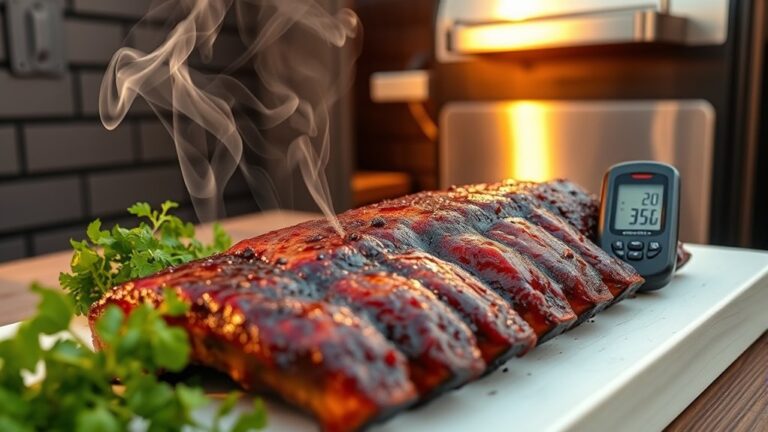
10 Steps to Perfectly Smoke Beef Brisket Using an Electric Smoker
Choose a full packer brisket, trim excess fat, and apply a mustard binder before seasoning generously with your favorite rub.
Preheat your electric smoker to 225°F and add dry wood chips for smoke flavor.
Let the brisket come to room temperature, then smoke it low and slow, targeting an internal temp of 190°F–203°F.
Wrap it during the stall to keep moisture, then rest before slicing against the grain.
Keep going to uncover tips for perfect tenderness and flavor.
Select the Right Brisket for Smoking
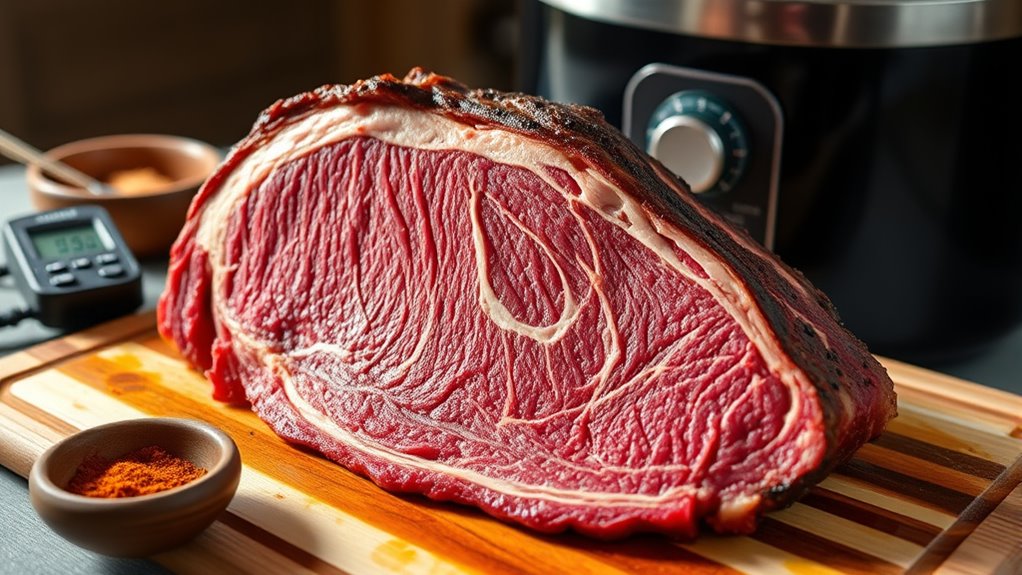
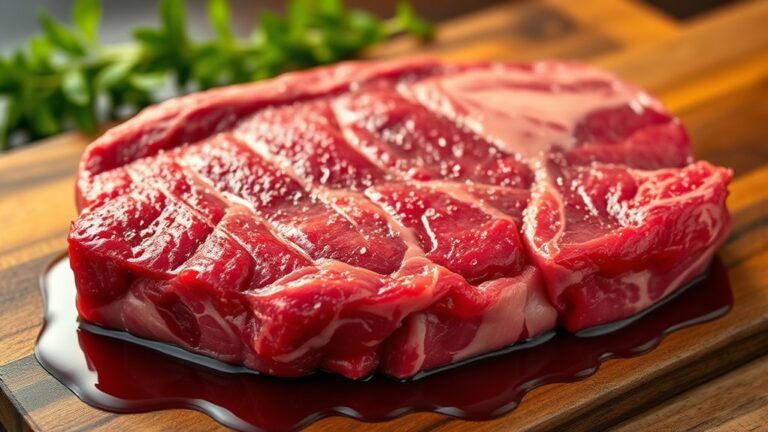
When selecting the right brisket for smoking, start by choosing a full packer that includes both the flat and point muscles for the best flavor and texture. Aim for a brisket weighing around 10 pounds to guarantee even cooking and manageable smoking time.
Look for abundant marbling and a thick fat cap, which help retain moisture and enhance the meat’s flavor during smoking. Check the brisket’s flexibility; a good bend means tenderness and fewer tough connective tissues. Avoid cuts with uneven or thin fat layers, as fat plays an essential role in flavor and juiciness.
Trim and Prepare Your Brisket for the Smoker
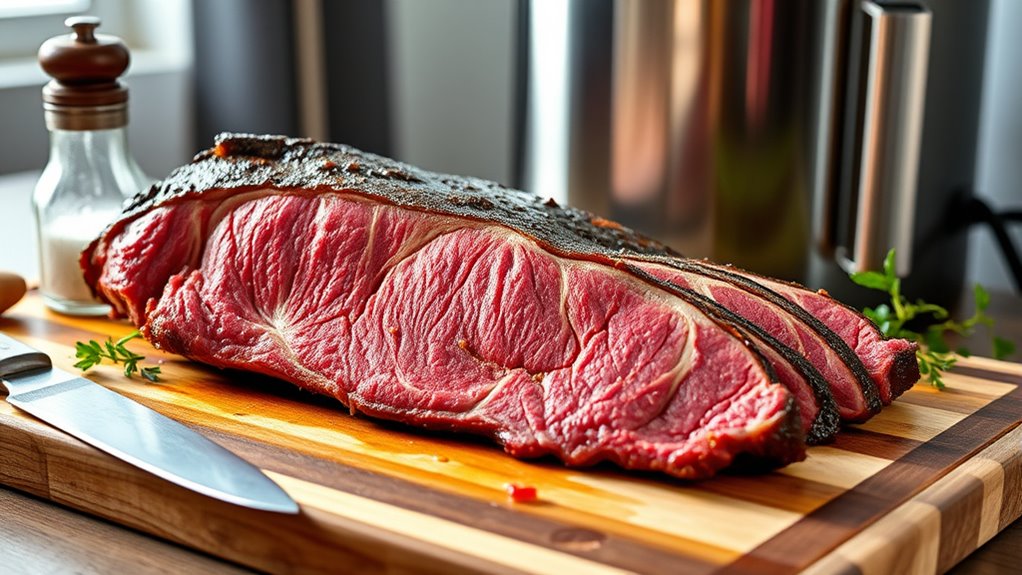
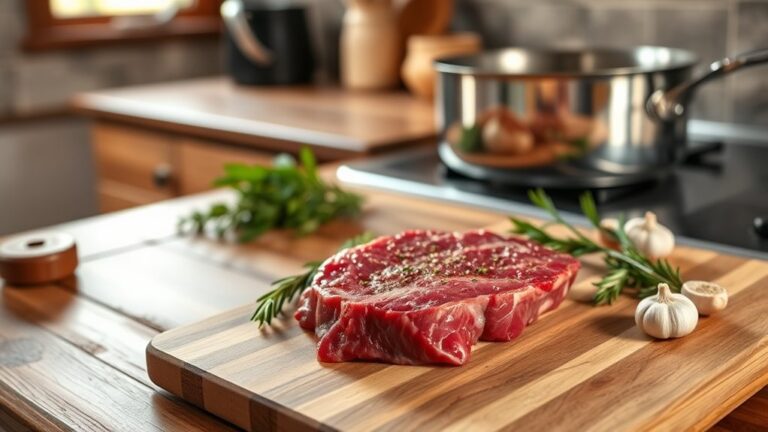
Now that you’ve selected a quality brisket, it’s time to trim and season it properly. Trim excess fat to about a quarter inch, remove silverskin, and shape the meat for even cooking.
Then, apply a binder and your favorite seasoning to lock in flavor and help develop a great bark.
Choosing Quality Brisket
Choosing the right brisket sets the foundation for a flavorful smoke. Start by selecting a whole packer brisket around 10 pounds with excellent brisket quality, focusing on good marbling and a thick fat cap. This fat cap helps keep the meat moist during smoking.
Check for a flexible bend, which signals good meat tenderness. When prepping, trim the fat cap to about 1/4 inch, ensuring it’s thick enough to baste but not excessive. Remove any silverskin and tough connective tissue, as these hinder smoke penetration and tenderness.
Proper brisket trimming improves flavor absorption and texture, setting you up for a perfect cook. With these steps, you ensure your brisket is primed for a delicious, tender result.
Trimming And Seasoning
Before you fire up the smoker, trim your brisket carefully to leave about a quarter-inch fat cap that locks in moisture while removing any silverskin or tough connective tissue. This trimming guarantees your brisket smokes evenly and absorbs seasoning well.
Next, apply a thin layer of mustard to help the dry rub stick. Season generously with coarse salt, black pepper, and optional spices like garlic powder to build deep flavor. Marinate your seasoned brisket overnight in the fridge, uncovered or loosely wrapped, so the flavors truly penetrate.
| Trimming | Seasoning | Marinating |
|---|---|---|
| Locks in moisture | Boosts flavor | Deepens taste |
| Removes silverskin | Enhances smoke | Tenderizes meat |
| Prepares brisket | Creates crust | Builds aroma |
Make and Apply a Flavorful Brisket Rub
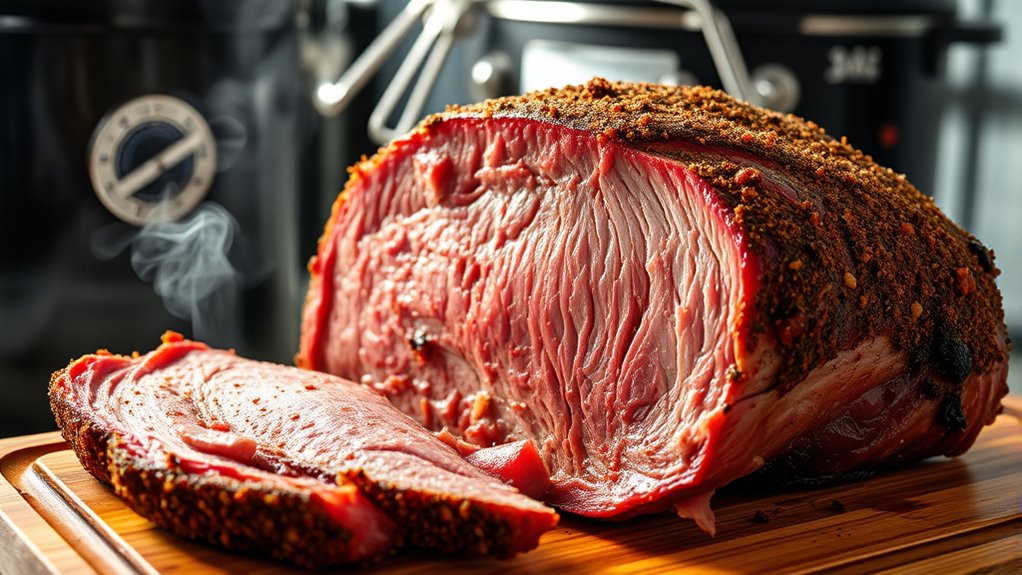
Although the rub is just a blend of spices, it plays a crucial role in defining your brisket’s flavor profile. To create a flavorful brisket rub, combine chili powder, coarse salt, brown sugar, garlic salt, cumin, cayenne pepper, and dried oregano.
A simple yet essential spice blend shapes the distinctive flavor of your brisket.
When smoking brisket, apply the rub generously and evenly over the entire brisket surface, pressing it into the meat for better flavor absorption. Here’s what you should do:
- Use more rub on flat and point sections, less on fatty areas
- Adjust seasoning ratios or add garlic/onion powder to taste
- Apply rub at least 2 hours before smoking or refrigerate seasoned brisket overnight
- Wrap the brisket in foil while refrigerating to lock in flavor
This method ensures your seasoned brisket develops rich, balanced flavors.
Preheat Your Electric Smoker and Add Wood Chips
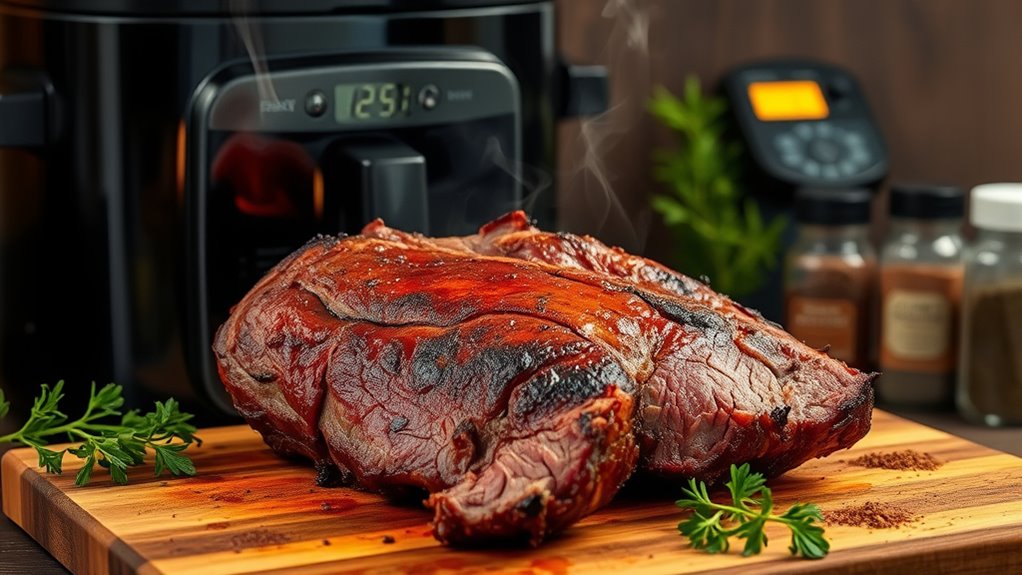
Once your brisket is seasoned, preheat your electric smoker to a steady 225°F (107°C) to create the perfect smoking environment. Start by filling the wood chip box with dry wood chips—hickory, cherry, or apple are great choices. Avoid soaking the wood chips, as dry chips produce better smoke.
Insert the wood chip box into its compartment or place it directly on the heating element if your smoker allows. Turn on the smoker and let it preheat for 15-20 minutes, ensuring it reaches and maintains the target temperature. Use a reliable thermometer to monitor the temperature throughout the smoking process.
Properly preheating your electric smoker and adding wood chips is essential for consistent smoke and flavor in your brisket.
Bring Your Brisket to Room Temperature Before Smoking
Take your brisket out of the fridge about 1 to 2 hours before smoking to let it reach room temperature. This step helps your meat cook evenly and absorb smoke better.
Why Room Temperature Matters
Bringing your brisket to room temperature for about one to two hours before smoking guarantees it cooks evenly from edge to center. Starting with chilled meat risks overcooking the outside before the interior hits the right internal temperature.
When you let your brisket reach room temperature, you:
- Promote even cooking by minimizing temperature gaps within the meat
- Improve smoke absorption, avoiding temperature shock and uneven flavor
- Encourage consistent heat retention during the long smoking process
- Enhance bark formation for a perfect crust
Maintaining an essential meat temperature before smoking helps ensure a steady internal temperature throughout. This step is vital for achieving tender, flavorful results with well-balanced smoke and a beautifully formed bark.
Timing Your Brisket Rest
Allow your brisket to rest at room temperature for about one to two hours before placing it in the smoker. This brisket rest is vital because it brings the meat temperature up to around 70-75°F, promoting even cooking and helping the smoked brisket develop consistent tenderness.
Starting with a brisket at room temperature ensures the internal temperature rises steadily, preventing the outside from overcooking while the inside remains underdone. Skipping this resting time can lead to longer cook times and uneven results, especially with larger cuts.
Effects On Cooking Evenness
Even if you’re enthusiastic to start smoking, waiting until your brisket reaches room temperature makes a significant difference in how evenly it cooks. Bringing your brisket to room temperature about 1-2 hours before smoking promotes temperature consistency and uniform heat penetration.
This step guarantees even cooking throughout the meat, especially during the initial smoking stage. With a room temperature brisket, you’ll notice a more predictable cook and a well-formed smoke ring. Key benefits include:
- Reduced cold spots for tender meat
- Minimized temperature difference inside the brisket
- Steadier internal temperature rise
- Enhanced overall cooking consistency
Position Your Brisket and Insert the Temperature Probe Correctly
When you position your brisket, make sure to insert the temperature probe into the thickest part, steering clear of fat deposits and dense connective tissue. Insert the probe centrally within the meat to capture an accurate internal temperature reading. Position the probe perpendicular to the grain to avoid skewed data.
Confirm the probe’s tip is fully embedded and in direct contact with the meat so you can reliably monitor the cooking progress. Also, keep the probe cable away from the smoker’s heat source, as excess heat can cause false readings. By carefully positioning your brisket and correctly inserting the probe, you’ll get precise temperature data, allowing you to smoke your brisket perfectly every time.
Accurate monitoring is key to achieving tender, evenly cooked meat.
Smoke the Brisket Low and Slow at 225°F
With your temperature probe correctly placed, you can now focus on maintaining a steady 225°F in your smoker. Smoking the brisket low and slow at this temperature ensures even cooking and ideal smoke absorption. Keep these tips in mind:
Maintain a steady 225°F for even cooking and perfect smoke absorption in your brisket.
- Monitor the internal temperature closely, aiming for around 190°F for tender meat.
- Keep the smoker lid closed as much as possible to retain heat and smoke.
- Expect a long cook time, roughly 1.5 to 2 hours per pound, so plan for 12-16 hours on a 10-pound brisket.
- Once the brisket hits the stall around 150-160°F, wrap it in butcher paper or foil to retain moisture and speed cooking.
Know When Your Brisket Is Perfectly Done
You’ll know your brisket is perfectly done when it hits an internal temperature between 190°F and 203°F, with 195°F to 200°F being just right for tenderness. Use a probe to check—if it slides in easily with little resistance, the connective tissues have broken down.
After smoking, let your brisket rest for at least an hour to let the juices redistribute and boost flavor.
Ideal Internal Temperature
Knowing the ideal internal temperature is key to smoking a brisket that’s tender and flavorful. To achieve a perfectly smoked brisket, you’ll need to monitor its internal temperature closely using a reliable probe. Here’s what to keep in mind:
- The target internal temperature is between 195°F and 203°F, with 200°F often perfect for tenderness.
- When the temperature reaches around 190°F, collagen breakdown occurs, making the brisket sliceable and tender.
- Use a probe to track the temperature during the stall phase (150-160°F) and consider wrapping the brisket to push through.
After removing from the smoker, allow a resting time of at least 1 hour so juices redistribute, enhancing tenderness and flavor.
Following these steps ensures your brisket is perfectly cooked every time.
Tenderness Probe Test
Monitoring internal temperature gets you close to the perfect brisket, but testing tenderness with a probe confirms when it’s truly done. Insert a digital meat thermometer probe into the thickest part of the brisket to track the internal temperature accurately. When it reaches about 190°F to 203°F, perform a probe test by gently sliding a skewer or probe into the meat.
If it slides in with little resistance, the brisket has achieved the ideal meat tenderness and doneness. Sometimes, the temperature of the brisket might be slightly under target, yet the probe test shows it’s perfectly smoked and tender. This guarantees you don’t overcook.
Resting For Juices
After smoking your brisket, let it rest for at least one to two hours to let the juices redistribute evenly throughout the meat. This resting period is essential to lock in moisture and enhance tenderness.
To get the best results, follow these tips:
- Wrap your brisket tightly in butcher paper or foil during resting to retain moisture.
- Keep the brisket in a warm, insulated cooler or cover it with a towel to maintain temperature.
- Resting allows meat fibers to relax, making slicing easier and preventing juices from running out.
- Don’t rush the rest; it guarantees each slice is juicy and flavorful by preserving those precious juices.
Wrap and Rest the Brisket to Preserve Juices
When your brisket hits around 165°F, wrap it tightly in pink butcher paper or aluminum foil to lock in moisture and push through the stall phase more quickly. This wrap traps the juices inside, preventing evaporation and helping your brisket stay tender and flavorful.
After wrapping, let your brisket rest for 1 to 2 hours. Resting allows the juices to redistribute evenly throughout the meat, enhancing tenderness and moisture retention. You can rest it in an insulated cooler or at room temperature to maintain warmth and ensure the brisket stays juicy.
During this time, residual heat will gently raise the internal temperature a few degrees, perfecting the texture. Properly wrapping and resting your brisket is key to preserving its rich flavor and tenderness.
Slice and Serve Your Smoked Brisket Like a Pro
Although slicing brisket might seem straightforward, doing it correctly makes all the difference in tenderness and presentation. To slice and serve your smoked brisket like a pro, follow these key tips:
- Cut perpendicular to the muscle fibers to slice against the grain for maximum tenderness.
- Use a sharp chef’s knife and a large, grooved cutting board for precise, even slices.
- Slice the flat portion thin to keep it moist, while cutting the point thicker for juicier bites.
- After splitting the brisket, turn it 90 degrees before slicing to get uniform pieces from both muscles.
Serve your perfectly cut smoked brisket slices on a platter with pickles, bread, or sauce to enhance the smoky flavor and impress your guests.
Frequently Asked Questions
How to Smoke the Perfect Brisket in an Electric Smoker?
You’ll want to preheat your smoker, season the brisket well, and monitor its internal temperature carefully.
Wrap it during the stall, then rest it before slicing against the grain to guarantee tender, juicy results every time.
What Is the 3:2:1 Rule for Smoking Brisket?
The 3:2:1 rule means you smoke your brisket three hours unwrapped, two hours wrapped to keep it juicy, then one hour unwrapped again to firm up the bark.
It helps you get tender, flavorful meat every time.
What Are Common Mistakes When Smoking Brisket?
You often open the smoker too much, causing temperature swings. You might neglect wrapping during the stall or fail to monitor internal temps carefully.
Overusing soaked wood chips and ignoring smoker maintenance also spoil your brisket.
Do You Wrap a Brisket in an Electric Smoker?
Of course, you wouldn’t wrap a brisket—unless you want it juicy and tender. Wrapping around 165°F traps moisture and speeds cooking, but hey, if you prefer dry, tough meat, just skip it.
Your call!
Conclusion
Now that you’ve mastered these steps, your brisket journey is set to reach new heights. With patience and care, you’ll transform humble cuts into a tender, smoky masterpiece that whispers comfort and celebration in every bite.
Remember, smoking brisket isn’t just cooking—it’s an art of slow magic that rewards the soul. So, fire up that electric smoker and let the delicious adventure begin. Your taste buds will thank you for embracing the rich flavors of perfectly smoked beef brisket.