7 Steps to Cook Perfect Corned Beef in a Dutch Oven
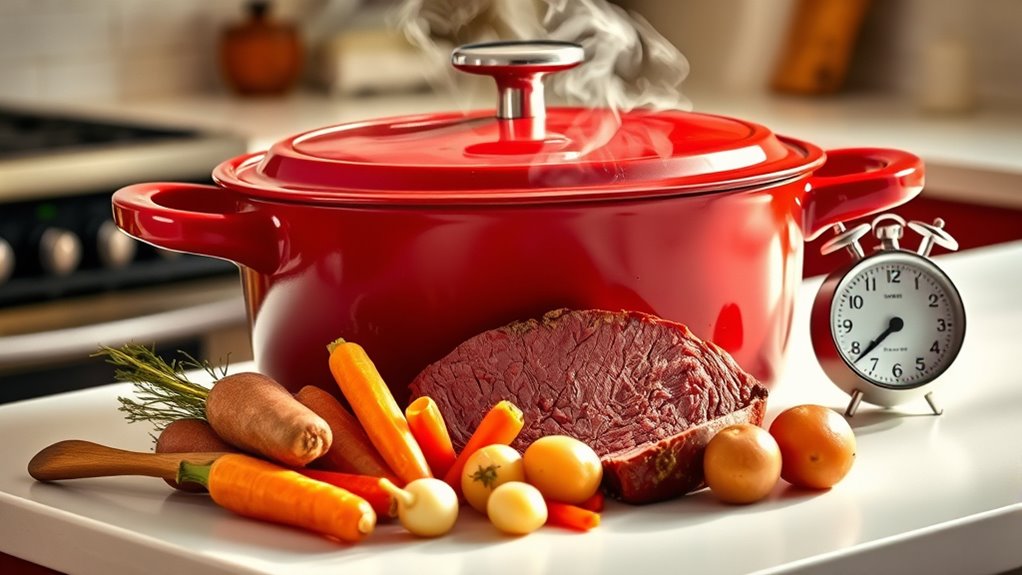
To cook perfect corned beef in your Dutch oven, start by choosing a 3-4 pound flat-cut brisket and rinse it well.
Preparing your Dutch oven correctly is essential for the best results. Begin by layering halved onions and seasonings on the bottom, then place the beef on top.
Add enough beer, broth, and water to cover the meat, along with the seasoning packet.
Slow cook at 300°F for 2-3.5 hours, which allows the flavors to meld beautifully.
Halfway through the cooking time, add dense vegetables like carrots and potatoes.
Near the end, add cabbage to the pot to complete the dish.
Let the corned beef rest before slicing to lock in the flavor and juices.
Keep following to uncover each step in detail for the perfect Dutch oven corned beef experience.
Choose the Right Cut of Corned Beef for Your Dutch Oven
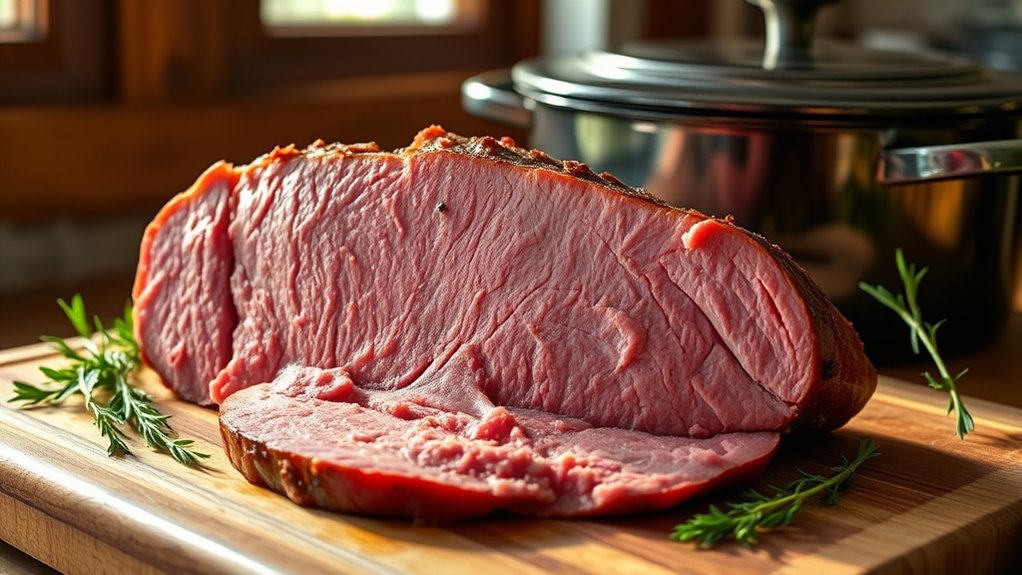
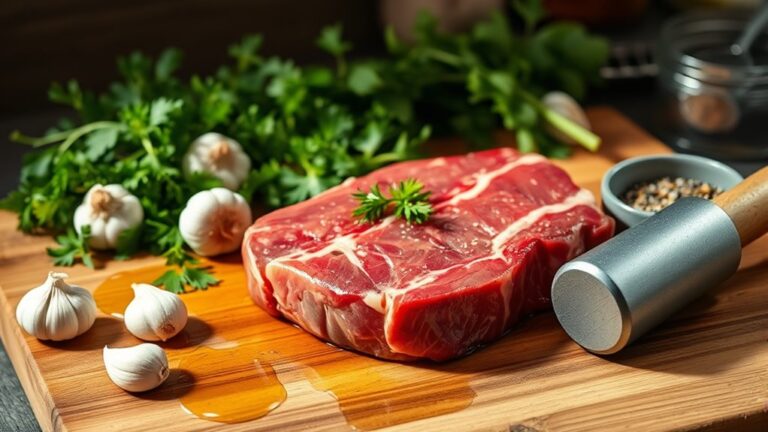
Choosing the right cut of corned beef is essential when cooking in a Dutch oven. You’ll want to focus on the flat cut brisket, which is a leaner cut and easier to slice once cooked. If you prefer more flavor and fat marbling, the point cut brisket is better for shredding or slow cooking.
Pay attention to brisket size—select a 3-4 pound piece to ensure even cooking and proper tenderness. Always pick corned beef labeled with a seasoning packet included for authentic flavor. Before you start cooking, rinse the brisket thoroughly to remove excess salt, which improves the overall taste.
Making the right beef selection sets the foundation for a delicious, tender meal every time.
Get Your Dutch Oven and Ingredients Ready
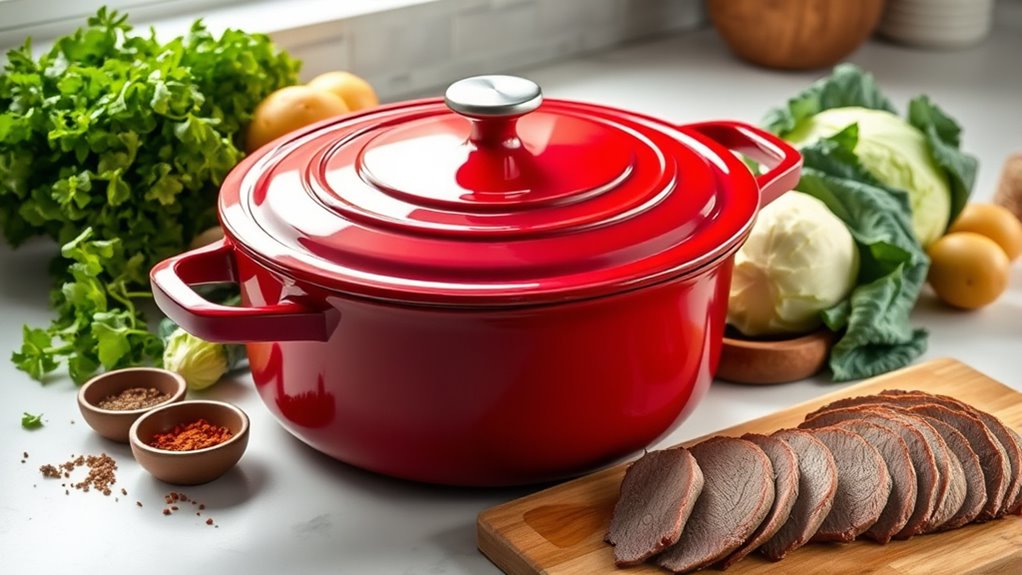
Before you start cooking, make sure you have a 6- to 8-quart Dutch oven with a tight-fitting lid to guarantee even heat distribution. You’ll need a 3-pound flat-cut corned beef brisket along with its seasoning packet to enrich the flavor.
Prepare ingredients by chopping fresh vegetables like onions, carrots, potatoes, and cabbage, essential for the cooking process. Have your kitchen tools ready, including measuring spoons for spices. Confirm you have enough liquids—dark beer, beef broth, and water—to cover the meat and vegetables for proper braising.
Pre-measure any additional spices, such as pickling or steak seasoning, to deepen the flavor. Getting all these elements ready sets the stage for a smooth and flavorful corned beef braising experience in your Dutch oven.
Layer Onions and Seasonings Before Adding the Meat
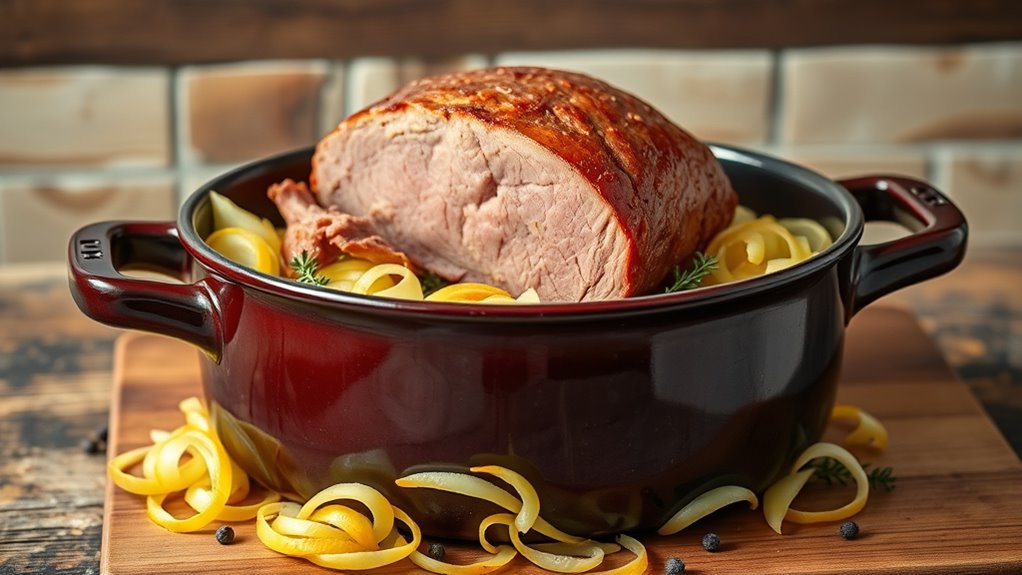
While your Dutch oven is prepped, spread halved or quartered onion wedges evenly across the bottom. This layer of onions forms a flavorful base that prevents the meat from sticking and infuses sweetness during cooking.
Next, sprinkle your seasonings over the onions to enhance the aromatics and deepen the flavor.
Follow these steps for effective layering and preparation:
- Layer onions first for a tender, aromatic vegetable base.
- Add seasonings evenly to allow their juices to mingle with the onions.
- Ensure onions are halved or quartered so they cook through fully.
This careful layering in your Dutch oven sets the stage for a rich, savory cooking process that complements the corned beef perfectly.
Add Liquid and Begin Slow Oven Cooking
Once you’ve layered the onions and seasonings, it’s time to add the liquid that will cook your corned beef to tender perfection. Pour enough dark beer, beef broth, and water into the Dutch oven to completely cover the corned beef. Don’t forget to add the included spice packet or your homemade pickling spice blend to infuse flavor during cooking.
Place the Dutch oven on the stovetop over medium-high heat, and bring the liquid to a gentle boil. Once boiling, cover the pot with the lid, transfer it to the oven, and reduce the oven temperature to around 300°F (150°C). This low oven temperature guarantees slow cooking.
Let the corned beef slow roast, maintaining a steady simmer with the lid on for 2 to 3.5 hours until fork-tender.
Add Vegetables at the Optimal Time for Even Cooking
You’ll want to add your vegetables at just the right time to make sure they cook evenly and stay tender. Denser veggies like potatoes and carrots need more time, so add them about 1.5 hours before the end.
Softer ones like cabbage should go in last to avoid overcooking and keep the texture just right.
Timing Vegetable Addition
Because vegetables vary in density and cooking time, adding them at the right moment guarantees they cook evenly and maintain their texture. Proper vegetable timing is key when cooking vegetables in a Dutch oven with corned beef.
Here’s how to master timing vegetable addition for tenderness:
- Add dense root vegetables like potatoes, carrots, and onions during the last 1.5 to 2 hours of cooking. This ensures they become tender without overcooking.
- Save delicate greens, such as cabbage, for the final 15 minutes to 20 minutes. This keeps them crisp and flavorful.
- Monitor vegetable cooking stages closely to balance softness and texture.
Knowing when to add vegetables prevents mushiness and enhances your dish’s overall flavor and appeal.
Balancing Cooking Durations
Although timing can feel tricky, adding vegetables at the right moments guarantees each type cooks evenly and stays flavorful. After your corned beef has simmered for about two hours and is fork tender, it’s time to add vegetables. Use a timing strategy that staggers cooking durations: add dense vegetables like potatoes and carrots first, then add cabbage closer to the final 30 minutes.
This staggered cooking prevents overcooking and preserves vegetable textures. By carefully managing vegetable timing, you ensure ideal tenderness without mushiness. Adjust your schedule to add vegetables in stages, balancing their different cooking needs.
This approach not only enhances flavors but also maintains perfect texture, making your Dutch oven corned beef meal balanced and satisfying.
Ensuring Even Softening
Timing your vegetable additions carefully sets the stage for even softening throughout the dish. To achieve consistent tenderness and maintain vegetable texture, follow these key steps:
- Add root vegetables like carrots, potatoes, and onions early to ensure even cooking and proper moisture retention. Place denser vegetables at the bottom for ideal vegetable placement and even heat exposure.
- Introduce delicate vegetables such as cabbage during the last 15-20 minutes to prevent overcooking and preserve their texture.
- Use a covered Dutch oven to maintain temperature control and moisture, promoting even heat distribution and steady tenderness.
Finish Cooking Corned Beef for Tenderness and Flavor
How do you know when your corned beef is perfectly tender and flavorful? After simmering in your Dutch oven for 2 to 3.5 hours, it should be fork-tender and fall apart easily when pierced. If it’s not quite there, continue additional cooking at a low temperature, checking periodically until you reach ideal tenderness.
Once done, give it a rest time of at least 15 minutes so the juices redistribute, enhancing flavor and tenderness. When ready to serve, slice against the grain to break muscle fibers, making each bite melt in your mouth.
This careful finish ensures your corned beef isn’t just cooked but perfectly tender and flavorful, providing a satisfying texture and rich taste every time.
Rest and Slice Corned Beef for Serving
Once you remove the corned beef from the Dutch oven, let it rest for at least 15 minutes to lock in the juices and relax the meat fibers, making slicing easier and preventing dryness. Resting preserves moisture, ensuring your beef stays tender when you slice it.
Rest corned beef 15 minutes after cooking to lock in juices and keep the meat tender and easy to slice.
When you’re ready to cut, follow these steps:
- Use a sharp knife to slice against the grain; this shortens muscle fibers for tenderness.
- Angle your knife at about 45 degrees to create uniform, attractive slices.
- Cut thin slices, roughly 1/4 inch thick, to serve perfectly tender beef.
Frequently Asked Questions
What Temperature Do You Cook Corned Beef in a Dutch Oven?
You should cook corned beef in a Dutch oven at a low temperature, around 300°F to 350°F. This gentle heat helps the meat become tender without drying out or toughening up.
Maintaining this temperature range ensures even cooking and allows the flavors to develop fully. Cooking at too high a temperature can cause the meat to become tough and chewy.
Using a Dutch oven also helps retain moisture, making your corned beef juicy and flavorful.
What Is the Best Way to Cook Corned Beef so It’s Tender?
Think of cooking corned beef like coaxing a story from a quiet friend—low and slow at around 300°F, keeping it moist, then resting it before slicing against the grain will make your meat tender and juicy.
This gentle cooking process helps break down the tough fibers, resulting in a soft texture. Make sure to use a covered pot or wrap the beef to retain moisture throughout.
After cooking, let the meat rest for at least 10 minutes to allow the juices to redistribute before slicing.
How Do You Cook Beef in a Dutch Oven?
You sear the beef in your Dutch oven, add seasonings and liquid, then cover it.
Cook low and slow at 300-350°F for hours, checking liquids occasionally.
Let it rest after it’s tender and done.
Should You Add Liquid When Roasting in a Dutch Oven?
You don’t have to add liquid when roasting in a Dutch oven if you want a crispy, browned exterior.
But adding a bit helps keep meat moist during long cooking, so choose based on your desired result.
Conclusion
By following these seven steps, you’ll master cooking tender, flavorful corned beef in your Dutch oven every time.
Did you know corned beef became a staple during Irish-American celebrations, boosting St. Patrick’s Day sales by over 30% annually? That’s proof how this hearty dish connects tradition and taste.
So, take your time, layer your ingredients thoughtfully, and enjoy slicing into perfectly cooked corned beef that’s sure to impress. Cooking corned beef in a Dutch oven ensures a moist, delicious meal that brings both comfort and flavor to your table.