How Much Sodium Is in Corned Beef?
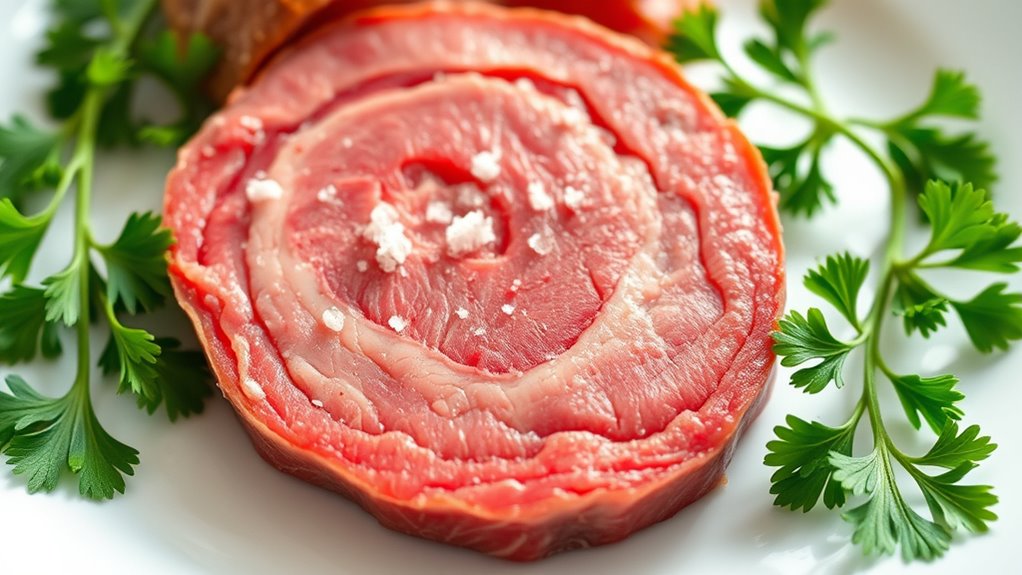
Corned beef is pretty high in sodium, with a single serving packing around 476 to 973 mg—that’s about 20-40% of your daily limit. This salty punch comes from the curing process, which uses salt and sodium nitrite to preserve the meat.
If you eat large portions, that sodium adds up quickly, raising blood pressure risk. But don’t worry, there are smart ways to enjoy corned beef while managing your salt intake—you’ll find out how.
Sodium Content in a Typical Corned Beef Serving
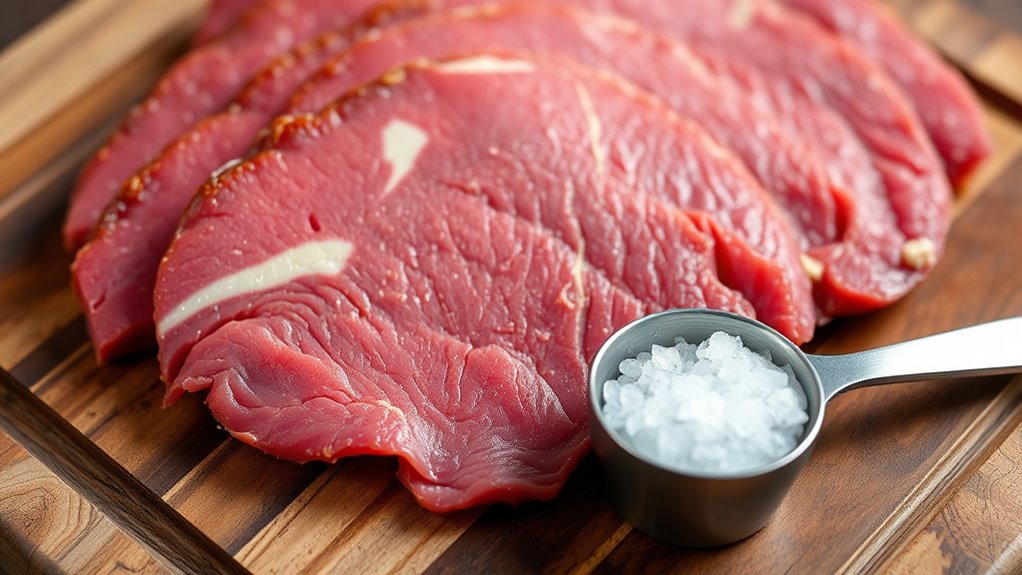
A single serving of corned beef packs about 476 mg of sodium, which makes up roughly 21% of your daily recommended intake on a 2,000-calorie diet. When you consider the sodium content, it’s important to pay attention to the serving size, as it can vary.
For example, one medium slice typically contains around 500 mg of sodium. If you eat more than one serving, your sodium intake can quickly add up and exceed the daily value recommended for maintaining a healthy diet.
Being mindful of the sodium content in corned beef helps you manage your overall daily sodium intake and avoid going over the limit. Keep an eye on portion sizes to better control how much sodium you consume.
Why Corned Beef Contains High Sodium Levels
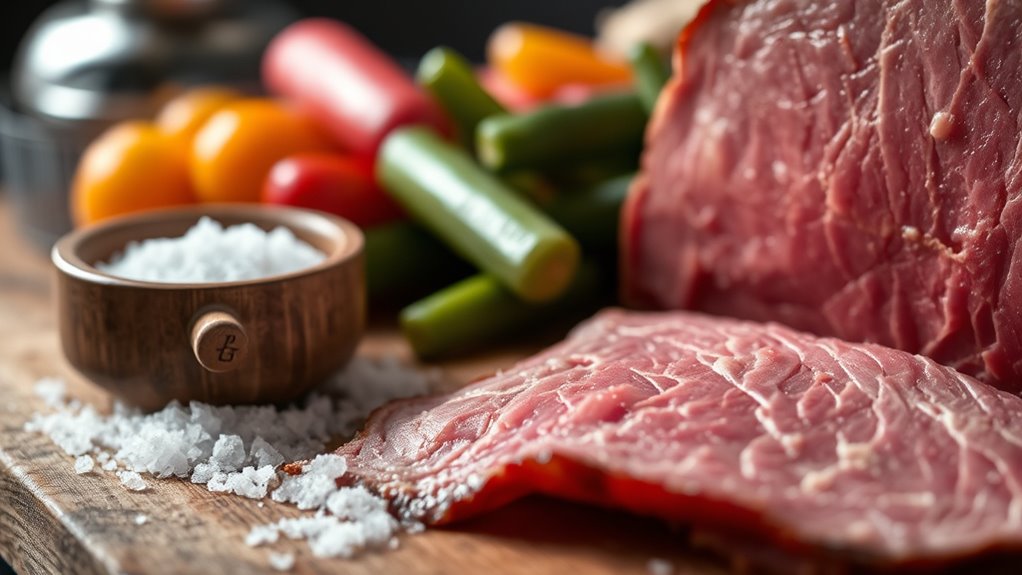
Understanding why corned beef contains high sodium levels starts with looking at its preparation. The curing process is key—it involves adding salt and sodium nitrite, which dramatically boosts the sodium content. This isn’t just for flavor; it also preserves the meat, helping it last longer.
Because corned beef is a type of processed meat, it naturally has higher sodium levels compared to fresh cuts. For example, a typical 3-ounce serving can contain around 973 mg of sodium, exceeding a third of your daily limit.
When you eat processed meats like corned beef, you’re consuming much more sodium than you might expect, mainly due to these preservation techniques. So, the high sodium content is really a byproduct of how the meat is cured and processed.
Health Effects of Sodium From Corned Beef
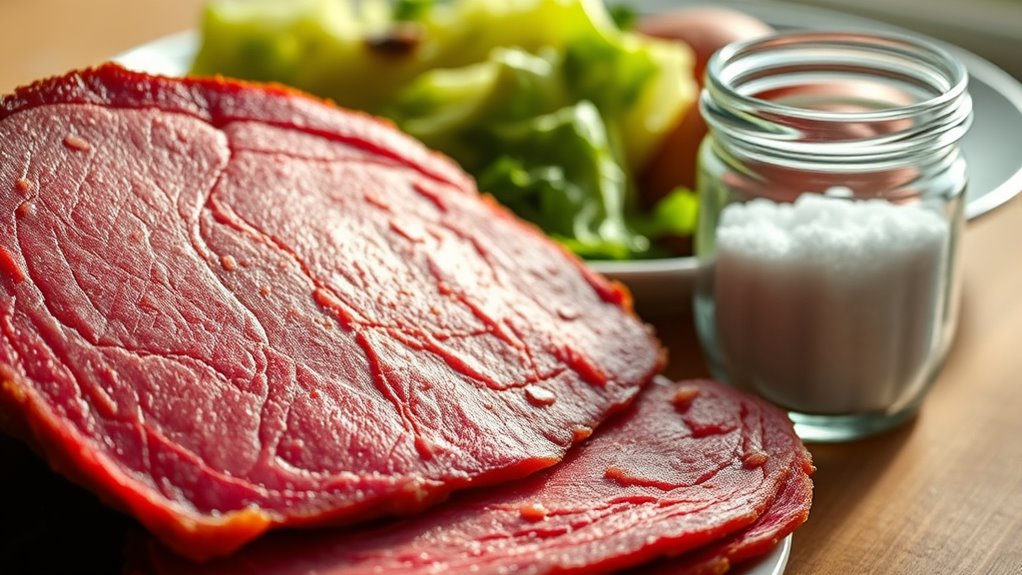
When you eat corned beef, the high sodium content can quickly push your daily intake past healthy limits. This excess sodium may raise your blood pressure and increase the risk of heart problems.
Managing how much corned beef you consume and balancing it with low-sodium foods can help keep your blood pressure in check.
Sodium Intake Risks
Because a single slice of corned beef packs about 476mg of sodium, eating more than one can quickly push your intake beyond the recommended daily limit. High sodium intake from corned beef raises your cardiovascular risk by increasing blood pressure, which can lead to heart disease and stroke.
If you regularly consume large portions or multiple slices, you’re adding a significant amount of sodium to your diet, making it harder to maintain a healthy balance. Besides cardiovascular concerns, high sodium levels can cause water retention and bloating, especially if you’re sensitive to salt.
Over time, consistently high sodium intake from processed meats like corned beef may also contribute to kidney problems. Being aware of these risks helps you make smarter choices about how much corned beef you eat.
Managing Blood Pressure
Although a single slice of corned beef contains about 476 mg of sodium, which is nearly a quarter of your daily recommended limit, eating it can quickly raise your blood pressure. Sodium increases blood volume, making your heart work harder and elevating blood pressure.
If you have hypertension or are at risk, it’s essential to limit processed meats like corned beef to manage sodium intake effectively. The American Heart Association advises keeping daily sodium below 2,300 mg, so even one serving can take up a large portion of that.
To protect your cardiovascular health, balance corned beef with low-sodium foods and monitor your overall sodium consumption. Managing your intake helps keep your blood pressure stable and reduces stress on your heart.
Easy Ways to Cut Sodium When Cooking Corned Beef
To cut sodium when cooking corned beef, start by choosing leaner cuts to reduce fat and salt content. Make sure you rinse the meat thoroughly before cooking to wash away excess sodium on the surface.
Also, opt for low-sodium or no-added-salt varieties whenever possible to keep your sodium intake in check.
Choose Leaner Cuts
When you choose leaner cuts of corned beef, like the eye of round, you can cut down on both sodium and fat. Leaner cuts naturally contain less fat, which means less sodium is retained during processing. Opting for these cuts supports effective sodium reduction without sacrificing flavor or texture.
When shopping, look for corned beef labeled as lean or extra lean to maximize your sodium reduction efforts. Additionally, trimming visible fat before cooking helps lower both sodium and saturated fat intake.
Rinse Before Cooking
If you want to lower the sodium in your corned beef without altering its taste, rinsing the meat before cooking is a simple and effective step. Rinsing can reduce sodium content by about 10-20%, making a noticeable difference in your meal’s salt level.
For better sodium reduction, soak the meat in cold water for 30 minutes to an hour, changing the water once or twice. This helps leach out excess salt before cooking. After soaking or rinsing, always pat the corned beef dry to preserve flavor.
You can also give it a quick rinse after boiling or simmering to cut even more sodium before serving. By incorporating rinsing into your cooking routine, you enjoy corned beef with less sodium and full flavor.
Use Low-Sodium Alternatives
Rinsing and soaking corned beef can cut down on sodium, but choosing low-sodium options takes it a step further. Opt for reduced-sodium corned beef varieties, which can lower sodium content by 200-300mg per serving.
Enhance flavor with herbs, spices, and citrus instead of salt to maintain salt reduction. Adding vegetables like cabbage or carrots helps absorb excess salt, balancing the dish’s sodium levels.
| Alternative | Sodium Content (mg) | Salt Reduction Benefit |
|---|---|---|
| Regular Corned Beef | 900-1200 | Baseline sodium level |
| Low-Sodium Corned Beef | 600-900 | 200-300 mg less per serving |
| Herbs & Spices | 0 | Adds flavor without salt |
| Vegetables | 10-30 | Absorbs and balances salt |
| Citrus (Lemon) | 0 | Enhances taste, no salt added |
Lower-Sodium Corned Beef Alternatives to Try
Although traditional corned beef packs nearly 1,000mg of sodium per serving, you can find lower-sodium alternatives containing just 200-300mg. Many brands now offer reduced-sodium or low-sodium corned beef options, cutting the sodium content by 30-50%.
If you want more control, try buying fresh, unprocessed beef and seasoning it yourself with herbs and spices instead of salt. This way, you can enjoy the flavor without the extra sodium. Another tip is to rinse cooked corned beef before serving to wash away some surface salt, further lowering sodium levels.
How to Include Corned Beef in a Low-Sodium Diet
Managing your sodium intake doesn’t mean you have to give up corned beef entirely. You can still enjoy it on a low-sodium diet by choosing smaller servings, rinsing the meat before cooking, and limiting how often you eat it.
Opting for low-sodium or reduced-salt versions also helps reduce your sodium intake without sacrificing flavor.
| Strategy | Sodium Impact | Tip |
|---|---|---|
| Smaller servings | Less sodium per meal | Limit to 1-2 slices |
| Rinsing corned beef | Slight sodium reduction | Soak in water for 30 mins |
| Low-sodium versions | Significant reduction | Check labels before buying |
| Limit frequency | Overall sodium control | Eat corned beef once a week |
| Balance meals | Offset sodium intake | Pair with fresh vegetables |
Frequently Asked Questions
Does Corned Beef Have High Sodium?
Yes, corned beef has high sodium. When you eat it, you’re consuming nearly half your daily sodium limit in just one serving.
You should watch your intake if you’re trying to reduce salt for health reasons.
Is Corned Beef Good for High Blood Pressure?
Corned beef isn’t good for high blood pressure because it’s high in sodium, which can raise your blood pressure and strain your heart.
You should limit it or choose lower-sodium options to manage hypertension effectively.
Does Rinsing Corned Beef Reduce Sodium?
Think of rinsing corned beef like shaking sand off your shoes—it removes some surface salt but not what’s deeply embedded.
You can cut sodium by about 10-15%, but rinsing alone won’t make it low-sodium.
Which Meat Is Lowest in Sodium?
You’ll find fresh, unprocessed meats like chicken, turkey, or pork have the lowest sodium levels. They usually contain less than 50mg per 100g, especially if you avoid seasoning or curing them.
Conclusion
Now that you know corned beef can pack a salty punch—often containing around 900 to 1,200 mg of sodium per serving—you don’t have to ditch it completely.
With smart swaps and cooking tweaks, you can enjoy its rich flavor without letting sodium sneak up on you. Think of it as steering through a flavorful sea: a little caution keeps you sailing smoothly toward a healthier, balanced diet.
By monitoring sodium intake and making mindful choices, you can savor corned beef while maintaining your overall health. Remember, managing sodium is key to a balanced diet and can help you enjoy your meals without compromise.