How Many Ounces of Egg White Are in One Egg?
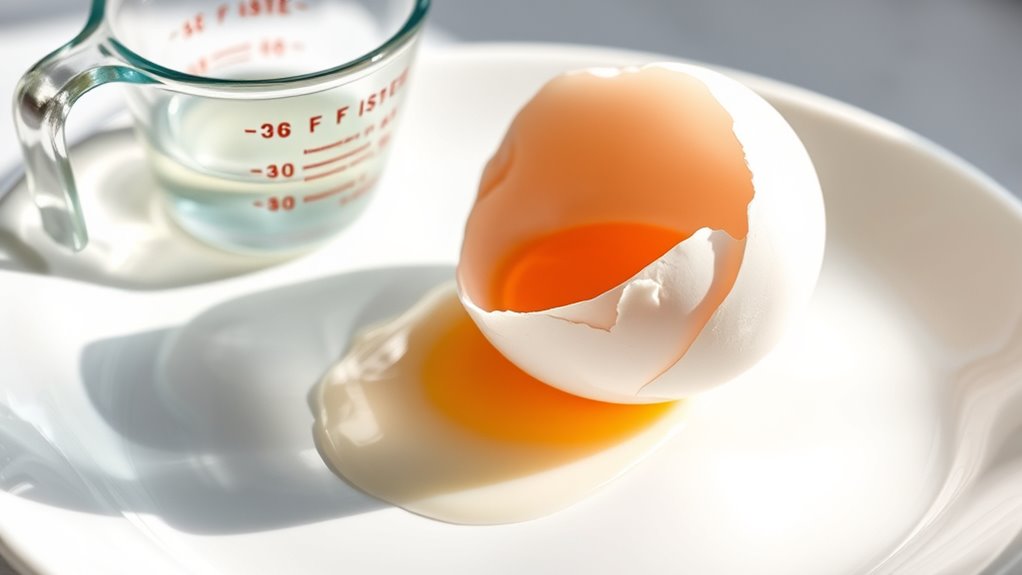
How Many Ounces of Egg White Are in One Egg? You’ll get about 1.16 ounces (33 grams) of egg white from one large egg, which equals roughly 2 to 3 tablespoons.
This amount varies with egg size—smaller eggs have less, jumbo eggs more.
Egg whites provide protein and help create light, airy textures in recipes. Measuring by weight or volume guarantees your cooking turns out just right.
Keep exploring to find out how egg white weight affects your dishes and substitutions.
How Much Does Egg White in One Large Egg Weigh?
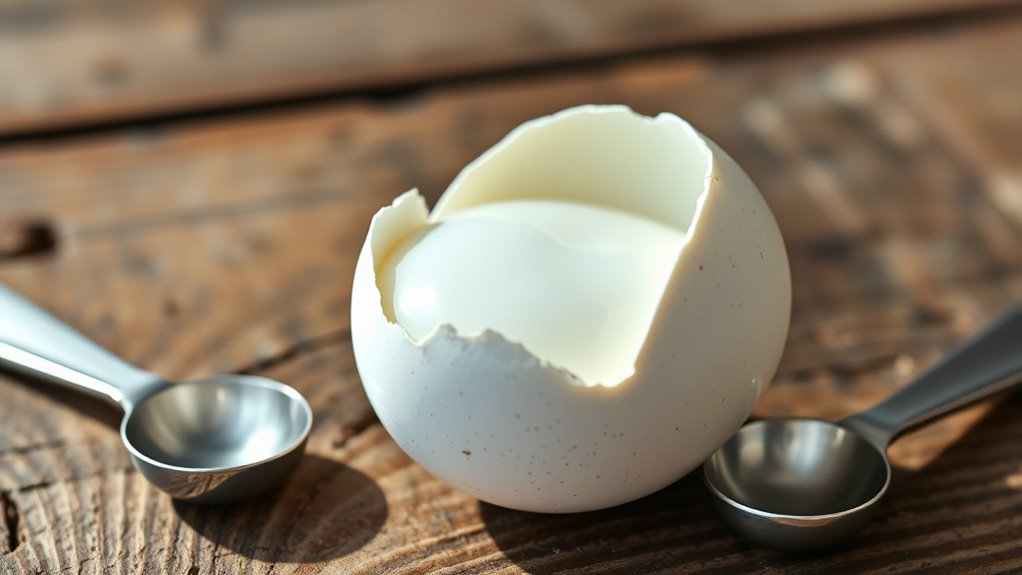
When you crack open a large egg, you’ll find that the egg white weighs about 33 grams, or roughly 1.16 ounces. This measurement is essential when a recipe calls for egg whites specifically, as using a whole egg or whole eggs instead could affect the outcome. Egg whites from one large egg provide around 3.6 grams of protein and only 17 calories, making them a lean, nutritious option.
While whole eggs contain both yolk and white, focusing on egg whites allows you to control fat and calorie intake. AI from the post suggests that accurate measurement of egg whites guarantees precision in your cooking and baking, so knowing that one large egg white weighs about 1.16 ounces helps you follow recipes more effectively.
How Egg White Weight Varies by Egg Size
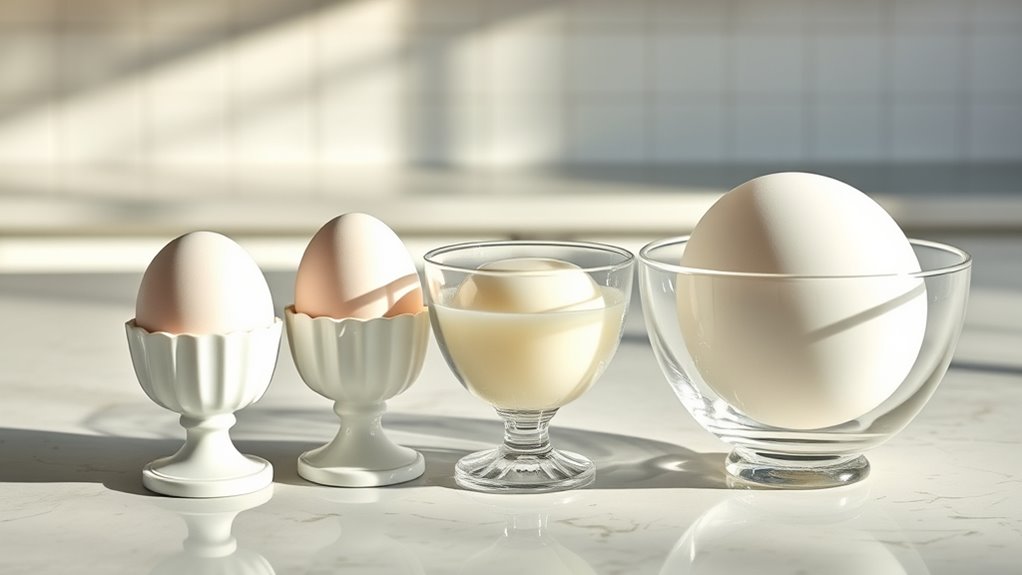
Although egg whites from a large egg typically weigh about 33 grams (1.16 ounces), the weight changes noticeably with different egg sizes. When you start a new account for tracking egg usage or recipe adjustments, understanding these variations becomes essential. Smaller eggs, like medium or small, contain egg whites weighing roughly 25 to 30 grams, while jumbo eggs can have whites exceeding 40 grams.
This difference in egg white weight by egg size affects how you measure and use eggs in cooking or baking. If you rely on precise ingredient ratios, factoring in egg size helps you avoid errors. So, whenever you work with eggs, keep in mind that their white weight isn’t fixed—it varies by egg size and influences your recipe outcomes.
Egg White Volume and Weight Differences by Size
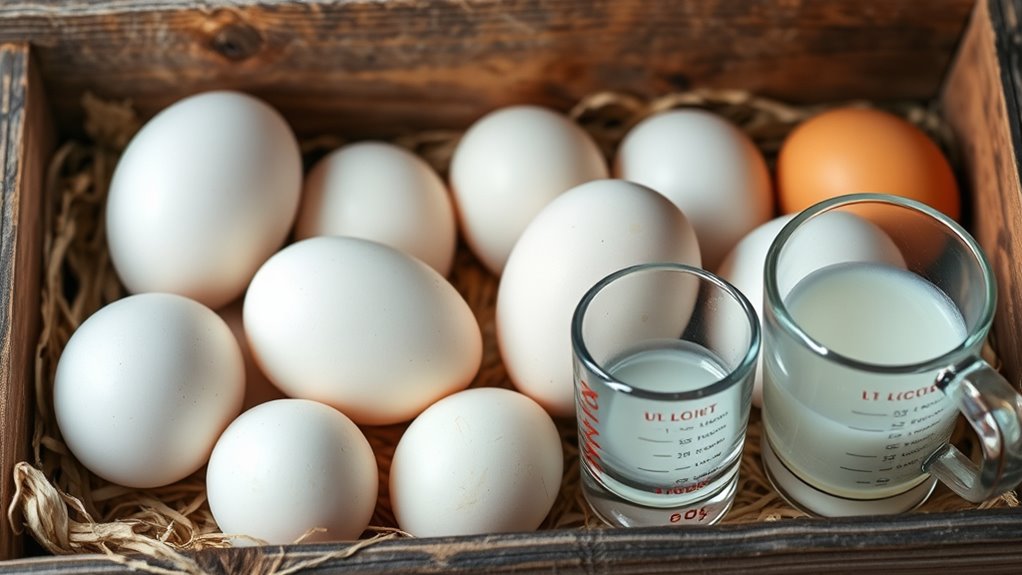
Since egg white volume and weight change with egg size, you need to modify your measurements accordingly. For example, a large egg white typically weighs about 33 grams (1.16 ounces), while extra-large egg whites can be around 36 grams (1.27 ounces). Small eggs, on the other hand, have egg whites weighing approximately 23 grams (0.81 ounces).
These differences matter because egg white volume and weight vary proportionally with the egg’s overall size. When you’re following recipes that require precise egg white quantities, using the right size guarantees consistency. If you substitute small eggs for large ones without adjusting, the recipe’s outcome might be affected.
Egg White Nutrients and How They Affect Cooking
You’ll find that the protein in egg whites is key to building structure and volume, especially when whipping them to stiff peaks. Because they’re mostly water and low in fat, egg whites work perfectly for light, airy dishes like meringues and soufflés.
Understanding these nutrients helps you use egg whites to their full culinary potential.
Protein Content Benefits
Egg whites provide about 3.6 grams of high-quality protein per large egg, making them a valuable ingredient in cooking and baking. The protein, mainly ovalbumin, plays a vital role in forming stable structures like meringues and soufflés. Since egg whites are mostly water and contain no fat or carbohydrates, their proteins considerably influence texture and stability.
When you use egg whites, their protein content helps bind ingredients together and acts as a natural leavening agent, giving your dishes lift and lightness. Understanding this can help you optimize recipes that rely on egg whites for structure.
Culinary Uses and Effects
Understanding the protein content in egg whites sets the stage for appreciating their impact in the kitchen. You’ll find that egg whites, mostly water and albumin protein, are perfect for creating light, airy textures. When you whip them to stiff peaks, they trap air, expanding volume and stabilizing foams in dishes like soufflés and meringues.
Plus, their cholesterol-free, high-quality protein supports muscle repair, making them a healthy choice. Check out how these nutrients influence cooking:
| Nutrient | Culinary Effect |
|---|---|
| Albumin Protein | Stabilizes foam, adds structure |
| Water (88%) | Creates light, airy texture |
| Low Fat/Carbs | Ideal for light desserts |
| Essential Amino Acids | Supports muscle repair |
Knowing these effects helps you use egg whites to their full potential.
How to Measure Egg Whites Accurately for Recipes
To measure egg whites accurately, you’ll want to use a kitchen scale or a liquid measuring cup for the best results. One large egg white weighs about 1.16 ounces or roughly 2 to 3 tablespoons, so keep that in mind when separating eggs.
Using the right tools guarantees your recipe turns out just right every time.
Accurate Egg White Measurement
How can you guarantee your recipe turns out perfectly when using egg whites? Accurate measurement is key. Since a large egg white weighs about 33 grams (1.16 ounces) and equals roughly 2.5 tablespoons or 1.6 fluid ounces, relying on volume alone can cause inconsistencies.
To measure egg whites precisely, follow these steps:
- Separate the egg white carefully to avoid yolk contamination.
- Use a digital kitchen scale to weigh the egg whites, aiming for the exact gram or ounce amount your recipe requires.
- Adjust for egg size variations by weighing each batch rather than assuming uniform volume.
Tools For Measuring Egg Whites
Although measuring egg whites might seem straightforward, using the right tools can make a big difference in accuracy. Start with an egg separator or the shell-to-shell method to separate whites cleanly from yolks.
Next, use a liquid measuring cup to note the volume precisely—one large egg white usually equals about 1.5 to 2 tablespoons. For recipes demanding exact measurements, a kitchen scale is invaluable; you can weigh the whites directly in grams or ounces.
When dealing with multiple eggs, crack them into a bowl first, then transfer the needed amount into your measuring device. These tools help guarantee your recipe turns out perfectly by giving you consistent, accurate egg white quantities every time.
Tips for Substituting Egg Whites by Weight in Recipes
Wondering how to accurately swap egg whites by weight in your recipes? Start by knowing that one large egg white weighs about 1.16 ounces (33 grams).
Wondering how to swap egg whites by weight? One large egg white weighs 1.16 ounces (33 grams).
Here are three tips to help you substitute egg whites by weight effectively:
- Use a kitchen scale to measure egg whites precisely, especially for delicate recipes like meringues or soufflés.
- Adjust quantities if using smaller eggs; their whites weigh closer to 0.88 ounces (25 grams).
- Convert your recipe’s egg white count into weight to maintain consistency, ensuring your dish turns out just right every time.
Why Egg White Weight Matters for Cooking Success
Knowing the exact weight of egg whites helps you get consistent results when cooking or baking. Since the average large egg white weighs about 1.16 ounces, using this as a reference guarantees you measure ingredients accurately. This precision matters especially in recipes like meringues and soufflés, where the structure and texture depend on the right amount of egg white.
If you substitute eggs of different sizes, knowing the exact weight allows you to adjust quantities properly, preventing soggy or dry outcomes. When you whip egg whites, the volume and stability are directly affected by how much protein you use, so accurate measurement ensures success.
Frequently Asked Questions
How Many Ounces of Egg Whites Are in One Egg?
You’ll find about 1 to 1.2 ounces of egg white in one large egg. Keep in mind, the exact amount varies a bit with egg size, but that’s a good general estimate for cooking and baking.
How Much Egg White Is There per Egg?
You’ll find about 1.16 ounces of egg white in a large egg. This amount varies by egg size, so if you need precision for cooking or baking, weighing the egg whites helps you get it just right.
How Much Egg Whites to Measure to Equal One Egg?
You’ll need about 2 to 3 tablespoons of egg whites, roughly 1 to 1.5 ounces, to equal one whole egg.
This measurement packs around 3.6 grams of protein, perfect for your recipes.
How Many Ounces of Liquid Egg Equal One Egg?
One large egg equals about 2 ounces of liquid egg, including whites and yolk.
If you’re using just egg whites, expect roughly 1 to 1.2 ounces per egg white.
Conclusion
Think of one egg white as a tiny paddle in your cooking canoe—usually about 1.25 ounces, but it can shift with the size of your egg. Just like adjusting your paddle’s strength to steer smoothly, knowing the exact weight helps you navigate recipes perfectly.
When you measure with care, your dishes glide effortlessly toward delicious success. So, trust your egg white’s weight, and let it guide your culinary adventure with confidence.
Understanding how many ounces of egg white are in one egg is key to mastering your recipes. Accurate measurement ensures your cooking turns out just right every time.