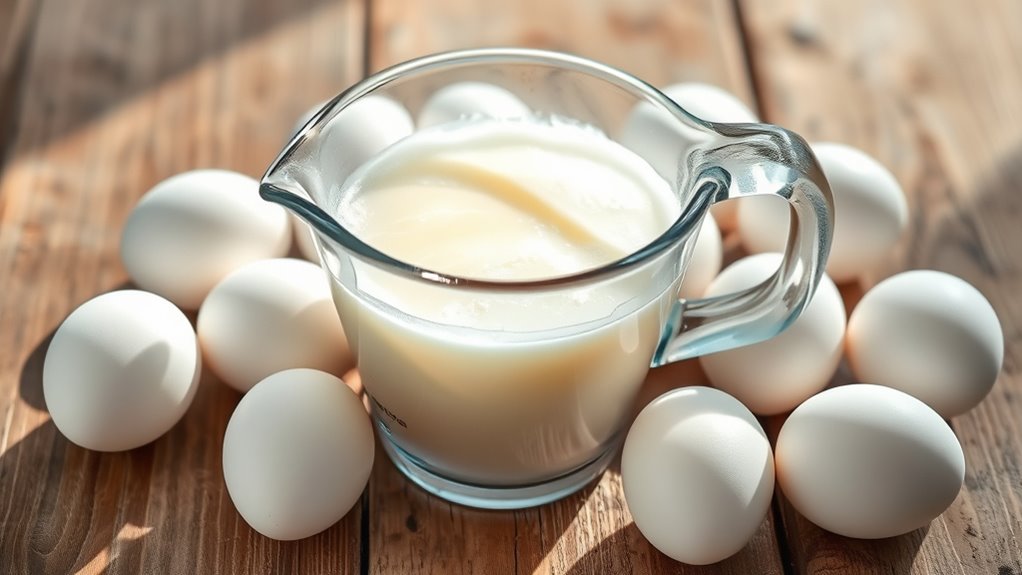
How Many Eggs Equal 1/2 Cup Egg White?
You’ll need about four large eggs to get 1/2 cup egg white since each white measures roughly 2 tablespoons.
If you don’t have a scale, crack the eggs into a bowl and pour the whites into a measuring cup for accuracy.
Keep in mind that using whole eggs instead changes texture due to the yolks.
Precise measuring matters most in baking and whipped recipes.
There’s more to know about egg sizes, measuring tips, and alternatives ahead.
How Many Large Eggs Equal 1/2 Cup of Egg Whites?
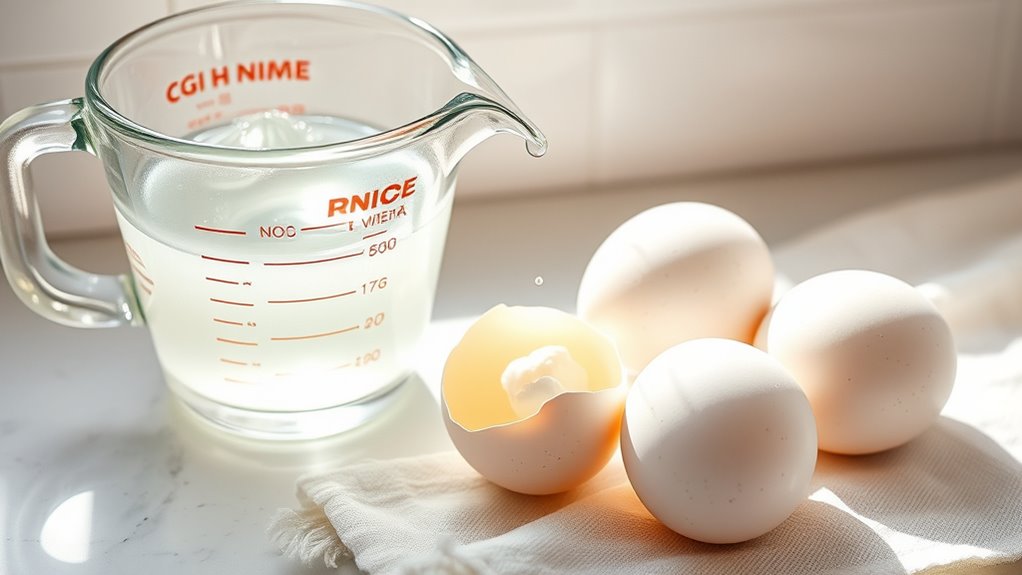
Wondering how many large eggs you need to get 1/2 cup of egg whites? Since one large egg white measures about 2 tablespoons, you’ll need roughly 4 large eggs to equal 1/2 cup of large egg whites.
Cracking 4 large eggs will give you the volume you need, as each egg white contributes about 2 tablespoons. Keep in mind, the egg whites from 2 large eggs only add up to about 1/4 cup, so you’ll have to double that amount.
This measurement is a reliable standard when a recipe calls for 1/2 cup of egg whites. Knowing this helps you avoid guesswork, ensuring your dish turns out just right every time.
How Do You Substitute Whole Eggs for Egg Whites?
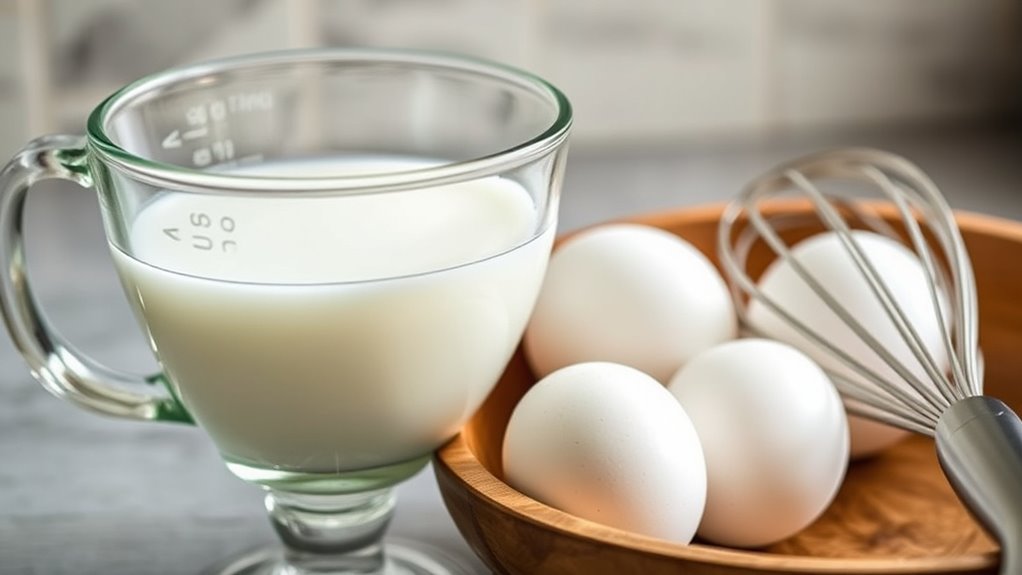
When you need to swap whole eggs for egg whites, remember that one whole large egg replaces about two egg whites. This ratio helps keep your recipe balanced, especially in baking where texture matters.
Adjust the number based on egg size, and measure carefully to match the volume you need.
Whole Eggs Versus Whites
Two large whole eggs roughly equal 1/2 cup of egg whites, making them a convenient substitute in many recipes. However, whole eggs and egg whites differ in composition, so it’s important to understand how they affect your dish.
When substituting whole eggs for egg whites, keep in mind:
- One large whole egg equals about 1/4 cup of egg white, so two provide 1/2 cup.
- Whole eggs contain yolks, adding fat and richness that may alter texture and flavor.
- For recipes needing only whites, you can crack whole eggs and discard the yolks to get precise measurements.
Egg White Substitution Ratios
Understanding how to substitute whole eggs with egg whites can help you adjust recipes to fit dietary needs or preferences. Typically, for every large egg called for, use one egg white, following standard egg white substitution ratios. Since one large egg white equals about 2 tablespoons, you’ll need four large egg whites to make 1/2 cup.
If your recipe uses eggs of another size, like a Jumbo Egg, you’ll need to adjust the quantity because egg sizes affect volume. Remember, whole eggs include yolks which add fat and richness; egg whites alone won’t replicate that fully. When using liquid egg whites, measure carefully to match the volume of fresh whites.
If the recipe depends heavily on yolks, substituting with egg whites could change texture and flavor, so you may need to adjust other ingredients accordingly.
Baking With Whole Eggs
Although substituting whole eggs with egg whites can reduce fat and calories, you’ll need about two egg whites for every whole egg the recipe calls for to maintain proper texture and moisture in your baked goods. When baking, keep these points in mind:
- Use egg whites from large or extra large eggs consistently for accurate Egg Size Conversion.
- Measure egg whites by volume (2 tablespoons per large egg white) to match the whole egg’s moisture.
- Remember, whole eggs provide richness that egg whites alone can’t replicate, unlike when scrambling eggs or making fried eggs.
If your recipe calls for 1 whole egg, replace it with 2 large egg whites. This substitution lowers fat but may affect the final product’s tenderness and flavor, so adjust your baking expectations accordingly.
Egg Size Equivalents for 1/2 Cup of Egg Whites
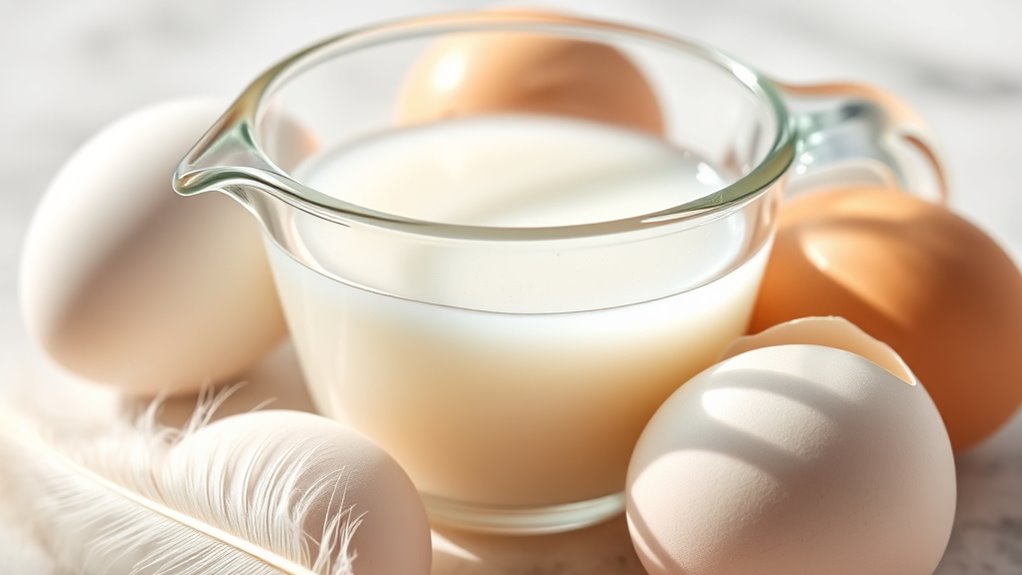
When you need 1/2 cup of egg whites, the number of eggs you use depends on their size. Large eggs usually take about 4 to 6 whites, while jumbo eggs need fewer, and smaller ones require more.
Knowing these differences helps you substitute accurately and avoid measuring errors.
Egg Whites Volume Comparison
About 4 to 6 large egg whites equal 1/2 cup, since one large egg white measures roughly 2 tablespoons and 8 tablespoons make up half a cup. When comparing egg whites volume, the size of the egg plays a key role. Here’s a quick breakdown to keep in mind:
- Large eggs: Typically, 4 to 6 whites reach 1/2 cup.
- Jumbo or extra-large eggs: You’ll need fewer whites due to their increased size.
- Medium or small eggs: Expect to use more whites to hit the 1/2 cup mark.
Knowing these differences helps you measure egg whites accurately, especially when a recipe calls for precise amounts. Always consider the egg size to get the exact volume you need.
Egg Size Impact
Understanding how egg size impacts the number of whites needed helps you measure 1/2 cup accurately. Typically, 4 to 6 large egg whites make up 1/2 cup, but size variations change this. Since one large egg white is about 2 tablespoons, 4 whites usually equal 1/2 cup.
However, jumbo eggs have larger whites, so you’ll need fewer—maybe 3 or 4—to reach 1/2 cup. On the other hand, smaller or medium eggs have less volume, so you’ll require more whites to get the same amount.
Paying attention to these differences ensures your recipe’s measurements stay precise. When measuring egg whites, always consider the egg size to avoid inaccurate volumes and maintain consistent cooking results.
Substitution Tips
Although egg sizes vary widely, you can substitute whites confidently by knowing how many you need to reach 1/2 cup. Since 1 large egg white equals about 2 tablespoons, you’ll need approximately 4 to 6 large egg whites to make 1/2 cup.
Here’s a quick guide:
- Extra-large eggs: Use 3 to 4 whites for 1/2 cup.
- Jumbo eggs: About 3 whites will do the trick.
- Medium or small eggs: Expect to use 6 or more whites.
How Do You Measure Egg Whites Without a Scale?
If you don’t have a scale, you can still measure egg whites accurately using standard measuring spoons and cups. One large egg white usually equals about 2 tablespoons, so four egg whites make roughly 1/2 cup.
To measure, crack your eggs into a bowl, then pour out the whites into a liquid measuring cup. Watch the volume as you fill it—stop once you reach the 1/2 cup line. If your eggs are smaller or larger, adjust the number of whites accordingly.
Using this method, you won’t need a scale to get precise measurements. Just remember that 2 tablespoons per egg white is a reliable guideline, making it easy to measure egg whites for any recipe without extra tools.
Tips for Separating Eggs Cleanly to Measure Whites Precisely
When you want precise measurements, separating eggs cleanly is key. Start by cracking the shell gently and transferring the yolk back and forth between the shell halves, letting the whites fall into a bowl. Here are three tips to help you:
- Use a cold egg — cold whites are firmer, making separation easier and cleaner.
- Separate with either the eggshell edge or a clean, dry hand to avoid breaking the yolk and contaminating the whites.
- Strain the collected egg whites through a fine-mesh sieve to catch any bits of yolk or shell for an accurate measure.
Following these steps ensures you get the exact amount of egg whites needed, making your recipe turn out perfectly every time.
Does Egg Freshness Affect Egg White Volume?
Getting your egg whites separated cleanly sets a solid foundation, but you’ll also want to contemplate how fresh your eggs are, as freshness can impact the volume you measure. Fresh egg whites tend to be more viscous and hold their shape better, giving you more accurate volume measurements.
As eggs age, their whites thin out and spread more easily, which can slightly reduce or cause inconsistent volume. However, this change is usually minimal within a few days if your eggs are properly stored in the refrigerator.
To get the most precise measurement, it’s best to use eggs that are as fresh as possible. Keeping eggs refrigerated and unfrozen helps maintain consistent egg white volume regardless of their age.
When Does Egg White Volume Matter Most in Recipes?
Although egg white volume may seem minor in everyday cooking, it plays an essential role in recipes where whipped whites provide structure and lift. You’ll notice volume matters most when the texture and stability depend on properly whipped egg whites.
Egg white volume is crucial in recipes relying on whipped whites for structure and lift.
Here are three key scenarios:
- Meringues and soufflés need precise whipped white volume to achieve the right texture and rise.
- Cakes like angel food rely on accurate egg white measurement for proper aeration and fluffiness.
- When substituting egg whites for whole eggs, knowing that about 2 large whites equal 1/4 cup helps maintain the recipe’s balance.
In contrast, dishes like omelets or scrambled eggs don’t demand exact volumes since their texture depends more on cooking technique than egg white quantity.
What Alternatives Exist to Fresh Egg Whites?
Measuring egg whites accurately can sometimes be challenging, especially if you don’t have fresh eggs on hand. Luckily, you have alternatives. Commercial liquid egg whites are pasteurized and ready to use, measuring one-to-one with fresh whites.
If you prefer shelf-stable options, powdered egg whites work well—just mix 2 tablespoons of powder with water to replace one egg white. Another popular substitute is aquafaba, the liquid from canned chickpeas. While it can mimic egg whites in some recipes, keep in mind its volume and properties differ, so adjustments may be necessary.
Frequently Asked Questions
How Many Eggs Are 1/2 Cup of Egg Whites?
You’ll need about 4 large egg whites to make 1/2 cup. If your eggs are smaller or jumbo-sized, adjust accordingly, but 4 is a reliable number for most recipes calling for 1/2 cup egg whites.
How Many Eggs to Make 1 Cup of Egg Whites?
You’ll need about 8 to 12 large eggs to make 1 cup of egg whites—enough to fuel a small army!
Just crack and measure, and you’ll get the perfect amount every time.
How Many Eggs Are in Half a Cup?
You’ll need about 4 large egg whites to make half a cup. If your eggs are smaller, use 5 or 6.
For jumbo eggs, 3 to 4 whites should get you there.
How Much Liquid Egg Equals 2 Eggs?
Two large eggs equal about 1/4 cup of liquid egg whites.
Conclusion
You’ll find that about 4 large egg whites equal ½ cup, making it easy to measure without a scale. You can substitute whole eggs carefully, separate whites cleanly, and consider freshness to get the best volume.
Whether you’re baking, cooking, or experimenting, understanding egg white measurements helps you cook precisely, bake confidently, and create deliciously. Remember, measuring well, separating cleanly, and choosing wisely make all the difference in your recipes.
Knowing how many eggs equal ½ cup egg white ensures accurate baking and cooking results every time.