How Many Eggs Do Quail Lay Per Day
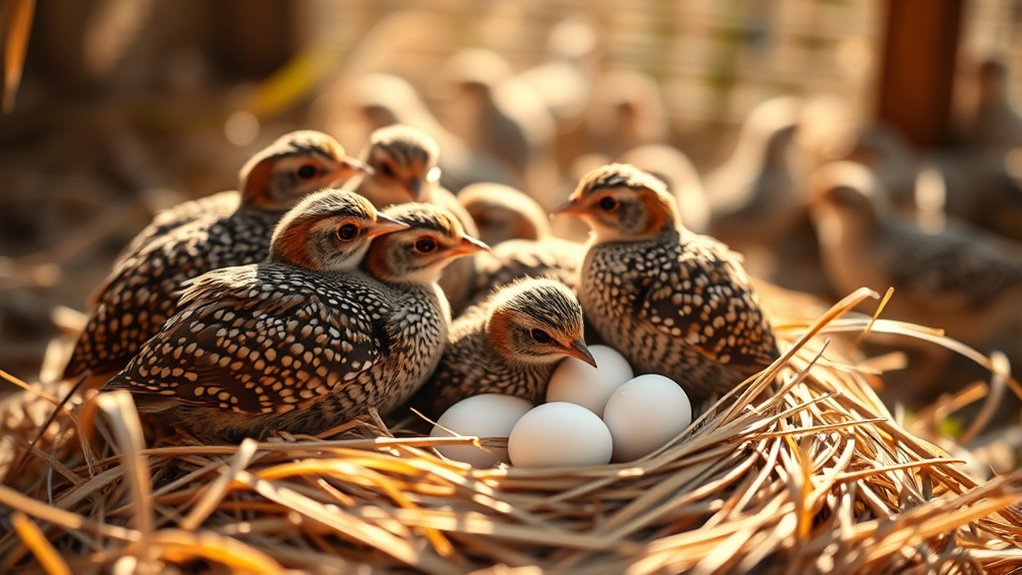
You can expect your quail to lay about one egg per day, especially when they’re young and conditions are ideal.
Quail egg production varies based on several factors, making it important to understand how many eggs quail lay per day. Some may occasionally produce up to two eggs daily, but that’s rare.
Factors like diet, lighting, age, breed, and environment all play key roles in how often they lay.
If you want to boost their egg production and understand the details behind these patterns, there are some useful tips and tricks you’ll find helpful.
How Many Eggs Does a Quail Typically Lay Per Day?
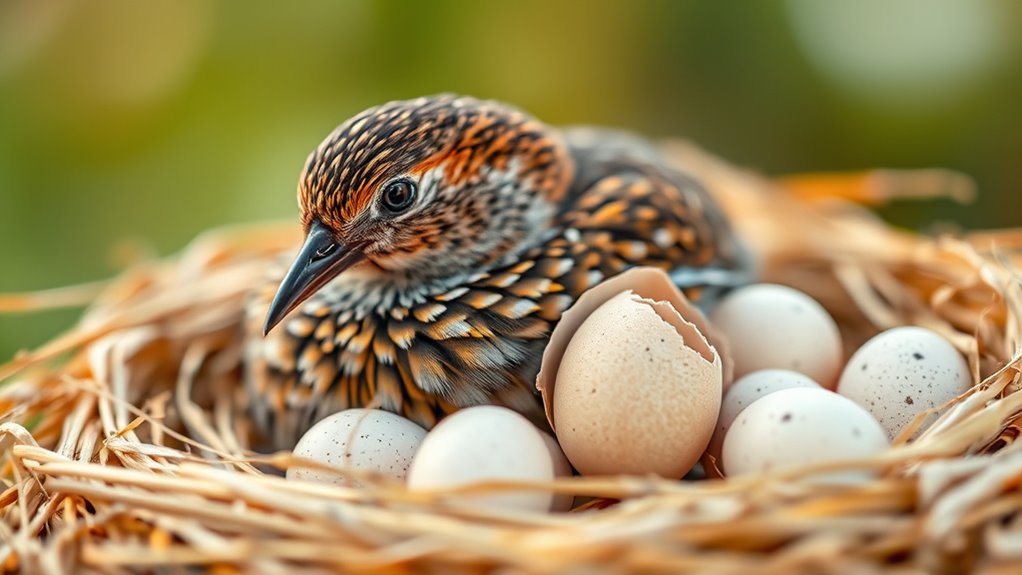
Although quail can vary in their laying habits, most will lay about one egg per day when conditions are ideal. As you care for your quail hens, you’ll notice that egg production typically centers around this rate. Some younger quail may surprise you by laying up to two eggs per day, but that’s less common.
The breed you choose plays a significant role in egg yield, with some breeds naturally producing more eggs than others. Keep in mind that while quail can occasionally lay two eggs daily, consistent rates above this are rare for healthy birds. Understanding typical egg production helps you set realistic expectations for your flock’s laying performance without overestimating their daily egg yield.
Key Factors Influencing Quail Egg Production
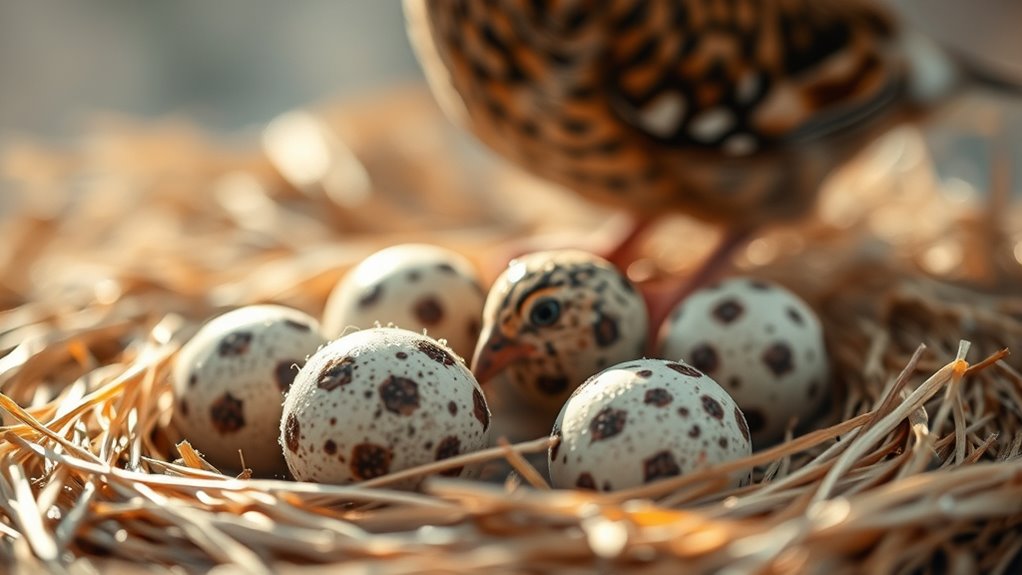
When you want your quail to lay consistently, you need to focus on several key factors that directly impact their egg production. Light exposure is crucial; providing about 14 hours of daylight daily optimizes their laying frequency. The age of quail also matters—hens produce the highest egg production rate during their first one to two years before it declines.
Environmental conditions play a big role too; maintaining comfortable temperatures and minimizing stress helps sustain daily laying. While a protein diet substantially supports overall health and egg production, we’ll dive deeper into diet effects later. Understanding these egg laying factors allows you to create the best conditions for quail egg production, ensuring your flock lays eggs regularly and efficiently.
How Diet Affects Your Quail’s Egg Laying
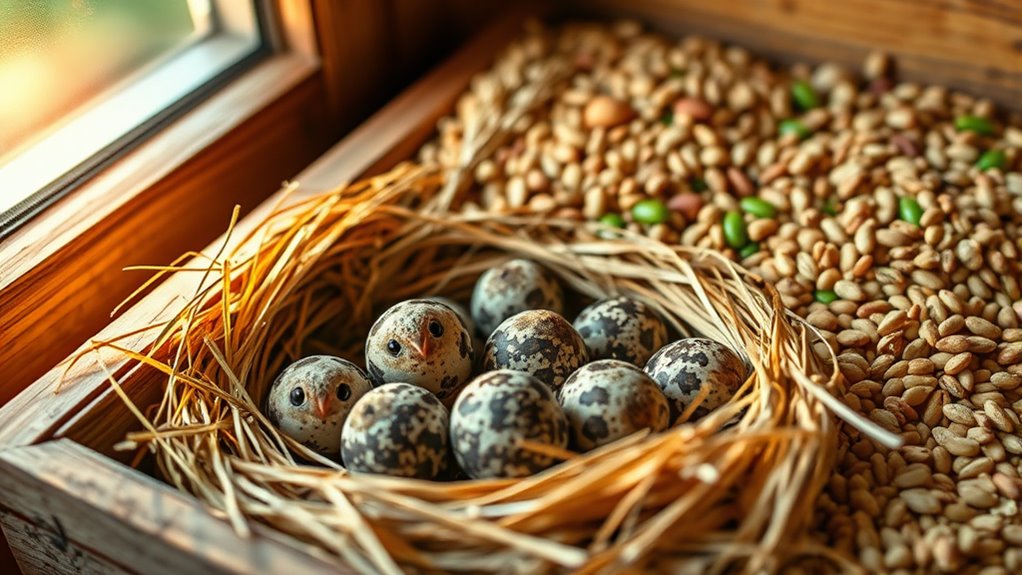
You’ll want to make certain your quail’s diet contains 25-30% protein to keep egg production steady. Don’t forget to add calcium supplements like oyster shells to strengthen their eggshells.
Balancing these nutrients helps your quail lay consistently and stay healthy.
Protein Levels Matter
Since protein plays a crucial role in your quail’s health and productivity, providing a diet with 25-30% protein is essential for maximizing egg production. Maintaining proper protein levels supports consistent egg laying and helps your quail produce strong, healthy quail eggs.
Dietary protein is especially important during molting, when your birds need additional nutrition to recover and resume egg production. Feeds like turkey starter, with around 28% protein, can boost egg output in young or molting quail.
However, balance matters—too much protein can harm your quail’s health and reduce long-term egg laying. Alongside protein, adequate calcium intake supports shell quality, but that’s a topic for later.
Focus on providing balanced nutrition with suitable protein levels to keep your quail laying efficiently and stay healthy.
Calcium And Supplements
Although protein fuels your quail’s egg production, calcium plays an equally essential role in guaranteeing those eggs have strong, durable shells. To prevent eggshell thinning and breakage, you should provide calcium supplements like oyster shells or crushed limestone daily. These supplements help avoid calcium deficiency, which can cause soft shells, missed eggs, or even shell-less eggs.
For ideal calcium absorption, ensure your quails get enough vitamin D, as it supports calcium metabolism. However, don’t overdo it—too much calcium can lead to kidney problems, so balance and proper dosing matter. By managing calcium intake carefully, you’ll support consistent egg laying and maintain your quail’s health while producing sturdy eggshells that protect the developing embryos.
How Your Quail’s Age and Breed Affect Egg Laying
When your quail is young—typically between 6 to 10 weeks old—it lays eggs more consistently, often producing up to one egg per day. Quail age and breed play an essential role in egg production. Breed differences affect laying rate, while age impact leads to declining egg yield as quail mature beyond 2-3 years.
| Breed | Average Annual Egg Production | Typical Laying Rate |
|---|---|---|
| Coturnix | 200-300 eggs | Up to 1 egg/day (first year) |
| Bobwhite | 150-200 eggs | Moderate |
| California | 100-150 eggs | Lower |
| Mature Quail | Declining egg yield | Reduced or ceased laying |
| Age Impact | Significant after 2-3 years | Egg production decreases |
Understanding quail age and breed helps optimize your flock’s egg production.
How Environment and Lighting Impact Quail Egg Production
Beyond age and breed, your quail’s environment plays a big role in how many eggs they lay. Lighting is essential—quail need about 14-16 hours of daylight hours daily to maintain steady egg production. When natural light dips during seasonal changes, especially in winter, egg laying often slows down.
To prevent this, you can use supplemental lighting to mimic natural light and keep your birds on schedule. However, extending lighting beyond 16 hours doesn’t boost egg production and may stress your quail. Maintaining a stable environment with consistent lighting—like 14 hours on and 10 hours off—supports healthy egg laying without overtaxing them.
How to Tell If Your Quail Lays Multiple Eggs a Day
If you notice more than one egg appearing from a single quail in a day, it doesn’t always mean she’s laying multiple eggs simultaneously. Quail typically lay one egg per day, so multiple eggs often result from internal egg retention or missed laying days.
To tell if your quail lay multiple eggs in a day, watch for these signs:
- Observe her nesting behavior closely for frequent visits or restlessness.
- Check for signs of laying such as physical changes or vocalizations.
- Monitor egg production patterns over several days to detect fluctuations.
- Look for signs of internal egg retention, like abdominal swelling or discomfort.
Understanding these factors helps you interpret your quail’s laying pattern and manage egg production effectively.
Tips to Maximize Quail Egg Production
Understanding your quail’s laying patterns helps you create the right conditions to boost egg production. To maximize quail eggs, provide 14-16 hours of light daily, using supplemental lighting during winter. Feed your birds a balanced diet rich in high protein (25-30%) and calcium to support healthy laying eggs.
Avoid stressed quail by maintaining a quiet, predator-free environment and proper housing. Keep your quails young, healthy, and well-nourished for ideal conditions, as this encourages consistent egg production. Regularly collect eggs to prevent clutter and avoid overfeeding to reduce stress.
These egg laying tips will help you sustain high egg production, ensuring your quail remain productive and healthy. Following these guidelines, you’ll optimize your flock’s performance effectively.
Frequently Asked Questions
Can Quails Lay Two Eggs a Day?
Yes, quails can lay two eggs a day, but it’s rare and usually happens with young, healthy birds under ideal conditions.
Most of the time, you’ll see just one egg per day from each quail.
Will Quail Lay Eggs Without a Male?
You don’t need a male for quail to lay eggs; they’re like solo artists singing their own tune.
Your female quail will keep laying eggs regularly, whether a male’s around or not, no strings attached.
How Many Eggs Does a Quail Lay in a Week?
You can expect a quail to lay about 5 to 7 eggs per week. Their egg production depends on factors like breed, age, and environment, so sometimes they might lay fewer eggs as they get older.
What Is the Lifespan of a Quail?
You know what they say, “A stitch in time saves nine.” Quails live around 2 to 3 years in captivity, but with your care, they might reach 4 years.
Wild ones usually live just 12 to 18 months.
Conclusion
If you want your quail to lay eggs like clockwork, remember they’re delicate gems shaped by diet, age, and light. Their daily gift might be just one egg, but with the right care, you can turn a trickle into a steady stream.
Think of your quail’s laying rhythm as a dance—when you lead with balance and attention, they’ll follow with golden rewards, brightening your days one tiny egg at a time. Understanding how many eggs do quail lay per day helps you provide the best environment for consistent laying.