How Many Eggs Does a Chicken Lay in a Year?
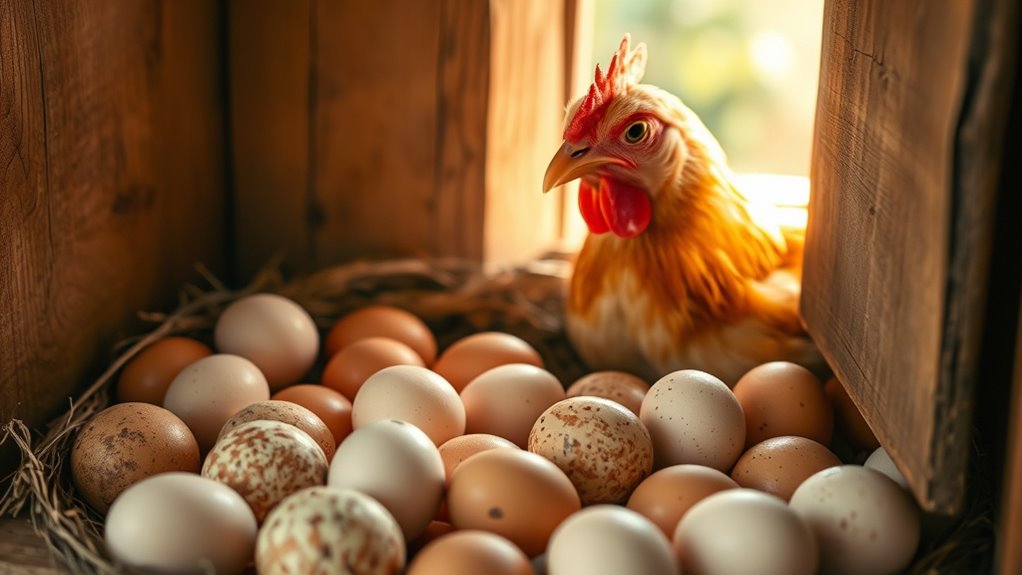
You can expect a healthy hen to lay between 250 and 300 eggs per year during her prime, usually starting around 18 to 20 weeks old.
How many eggs a chicken lays in a year depends largely on factors such as breed, diet, lighting, and care. Egg production peaks in the first year and then gradually declines after 2 to 3 years.
Some breeds lay more eggs than others, making breed selection important for maximizing output.
Managing your flock well with proper nutrition and environment helps keep eggs coming consistently.
Keep going to explore how age and environment influence your chickens’ laying habits and overall egg production.
How Many Eggs Does a Healthy Chicken Lay Per Year?
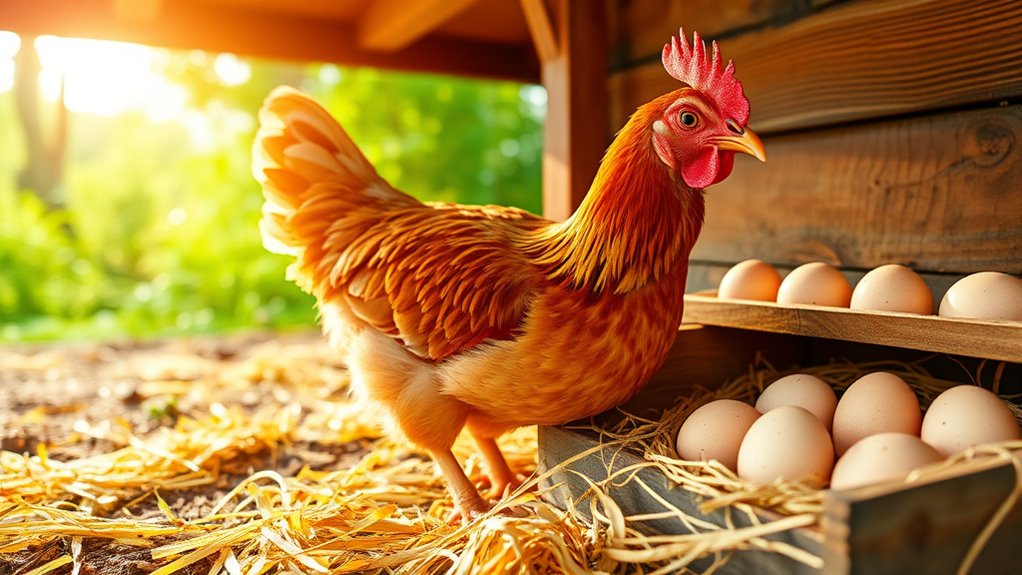
While egg production varies, a healthy hen typically lays between 250 and 300 eggs per year during her peak years. If you’re raising a healthy chicken, you can expect about one egg every 24 hours, though this depends on factors like breed, age, and environment.
To keep egg production consistent, you need to provide proper nutrition, lighting, and health care. Remember, egg production usually starts around 18 to 20 weeks of age and remains steady for 2 to 3 years.
After that, it gradually declines, with hens laying roughly 80% of their peak output by their second year. So, if you focus on maintaining a healthy chicken, you’ll enjoy a reliable number of eggs per year.
When Do Hens Start Laying Eggs and How Does Egg Production Change With Age?
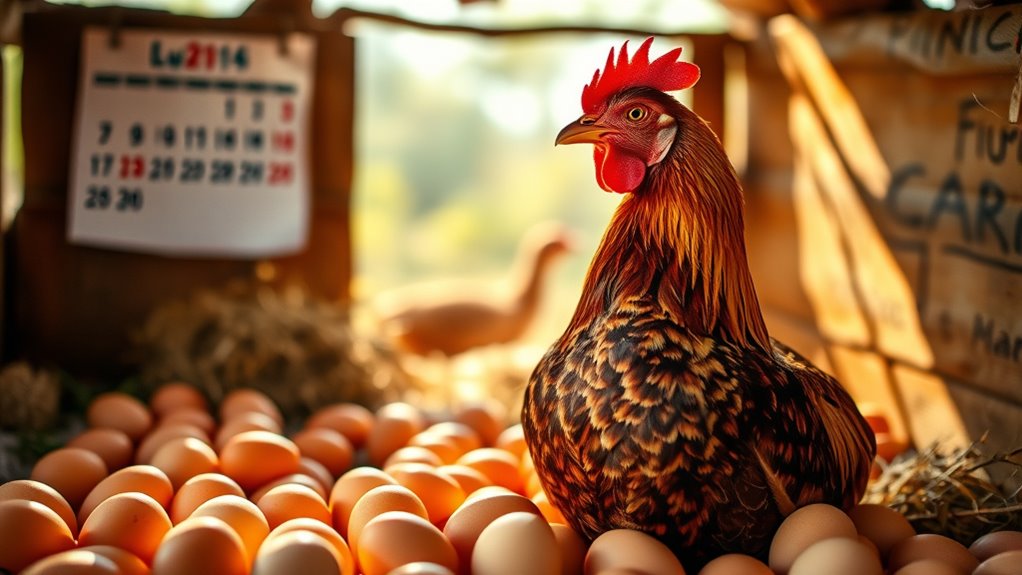
You’ll notice hens usually start laying eggs between 18 and 32 weeks old, with their peak production around 30 weeks.
During their first year or two, they can lay up to 300 eggs annually. After that, you’ll see a steady decline, with output dropping markedly as they age.
Age When Laying Begins
Although hens vary by breed, most begin laying eggs between 18 and 24 weeks of age. This age when laying begins marks an important milestone for any hen, signaling the start of her productive phase. As a hen matures, you’ll notice egg size gradually increases, reaching full size around 35 weeks.
After about two to three years, you’ll see a decline in egg production—typically about 20% less each year. Eventually, by three to four years old, many hens naturally slow down in laying eggs and may stop altogether.
Understanding the age when laying begins helps you anticipate your hen’s egg production cycle and manage expectations as she ages, ensuring you provide the right care throughout her laying years.
Peak Egg Production
Once hens reach about 18 to 22 weeks old, they start laying eggs, with their peak production kicking in between 30 and 40 weeks. During this peak egg production phase, hens can lay a remarkable number of eggs, often reaching 250 to 300 eggs in their first year of laying.
This period represents the most productive time in a hen’s life, offering you the highest egg yield. The number of eggs laid during this time reflects the hen’s prime reproductive capability. Understanding this peak helps you plan your flock management effectively, ensuring you maximize egg collection when hens are most productive.
Decline In Egg Output
While hens typically begin laying eggs between 18 and 32 weeks old, their egg production starts to decline after reaching its peak around 30 weeks. You’ll notice a steady decline in egg output as your hen ages.
In her second year, she’ll lay about 80% of the eggs she produced in her first year. Each year after that, expect roughly a 20% reduction. By the time your hen is around 6 to 7 years old, egg production slows considerably, and many hens lay far fewer eggs.
How Do Environment and Care Affect Annual Egg Production?
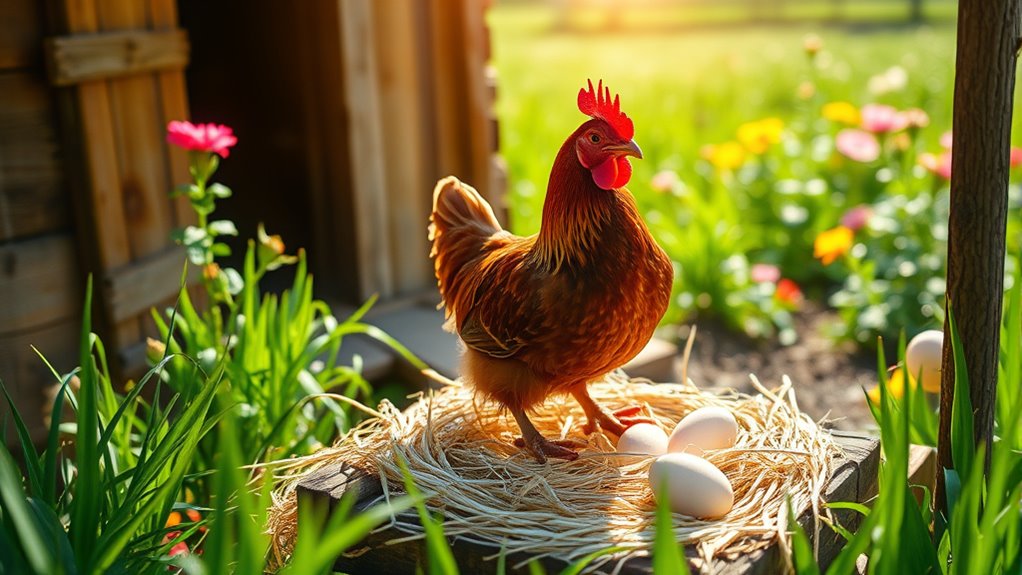
You’ll see a big difference in egg production when you control the environment and care for your hens properly. Providing consistent lighting, fresh water, and balanced nutrition keeps your chickens healthy and laying regularly.
Paying attention to coop cleanliness and spacing also helps reduce stress, which means more eggs throughout the year.
Environmental Influences On Laying
Because hens respond strongly to their surroundings, the environment and your care play essential roles in how many eggs they lay each year. Proper lighting, especially providing about 16 hours daily, helps maintain steady egg production during shorter fall and winter days. You’ll want to keep their living space clean and well-ventilated to reduce stress and disease, which can otherwise lower laying rates.
Extreme temperatures, whether too hot or cold, cause hens to molt or become less active, cutting down egg production. Seasonal shifts naturally slow laying as hens pause to molt. By managing lighting and creating a comfortable environment, you directly influence how many eggs your hens produce annually, ensuring consistent and healthy laying throughout the year.
Role Of Nutrition And Care
Although environmental factors play a big role, proper nutrition and attentive care directly impact how many eggs your hens lay each year. Providing high-quality layer feed rich in calcium ensures your hens have the nutrients needed for consistent egg production.
Alongside nutrition, clean water and a well-ventilated coop reduce stress and prevent disease, which supports steady laying. You should also maintain adequate lighting—about 14-16 hours daily during fall and winter—to stimulate reproductive cycles.
Avoid overcrowding and protect hens from predators to minimize environmental stress that can disrupt egg production. Regular health checks and parasite control are vital as well; illnesses can cause hens to stop laying or molt early.
Which Chicken Breeds Lay the Most Eggs Annually?
When choosing chickens for egg production, you’ll want to contemplate breeds like the Production Red and Rhode Island Red, which can lay up to 300 eggs annually. These high-yield breeds stand out for their impressive annual eggs, making them ideal if you need a steady supply.
Other notable layers include:
- White Leghorns, known for prolific laying with around 250 eggs yearly
- Black Australorps, reliable producers with 200–250 eggs annually
- Rhode Island Reds and Production Reds, topping at 300 eggs per year
Focusing on these breeds ensures you maximize your flock’s egg production. Keep in mind, egg production peaks in the first few years, so selecting the right breed upfront helps maintain a consistent yield throughout.
How to Estimate Your Flock Size Based on Egg Production Needs
To estimate how many hens you need, start by calculating your household’s weekly egg consumption. For example, a family of six might require about 24 eggs per week. Divide this number by 7 to find your average daily egg needs—roughly 3.4 eggs per day.
Since a hen typically lays about 0.5 eggs daily, you’ll need around 7 hens to meet your weekly needs. This helps you determine your ideal flock size based on egg production.
How to Manage Egg Production Decline as Hens Age
Since hens naturally produce fewer eggs as they age, you’ll need to adapt your management strategies to maintain a steady supply. Egg production peaks around 30 weeks but declines each year, so managing aging hens is key. Focus on these areas to slow the drop:
As hens age, egg production declines—adapt care to sustain your flock’s laying performance.
- Provide balanced nutrition rich in calcium and protein to support continued laying.
- Ensure adequate lighting (14-16 hours daily) to stimulate egg production.
- Maintain regular health checks and parasite control to keep hens in top condition.
Frequently Asked Questions
What Is the 90/10 Rule for Chickens?
The 90/10 rule means you get 90% of a hen’s eggs in her first 2-3 years, then production drops to about 10%.
It helps you predict how many eggs she’ll lay as she ages.
Can a Chicken Lay Two Eggs a Day?
Yes, a chicken can lay two eggs in a day, but it’s rare and usually temporary.
You’ll find most hens lay one egg daily since their cycle takes about 24-26 hours, so two eggs can stress them.
How Many Chickens Do You Need to Get a Dozen Eggs a Week?
If you want a dozen eggs weekly, you’ll need about 3 to 4 hens.
For example, Sarah keeps 4 hens, ensuring she always has extra eggs, even when production dips.
This keeps her kitchen stocked consistently.
How Many Times Can a Chicken Lay Eggs in a Year?
You can expect a chicken to lay eggs about 250 to 300 times in a year. They usually lay one egg every 24 to 26 hours, so you’ll get nearly one egg per day during peak laying periods.
This means that during their most productive times, hens are almost daily layers. However, factors like breed, diet, and environment can influence their laying frequency.
Conclusion
So, you want a year’s worth of eggs from your chickens? Just remember, they won’t lay like breakfast buffets forever. After peaking, their production slows down—kind of like your enthusiasm for diet plans after day two.
But don’t worry, with the right care and breed choice, you’ll still get plenty of eggs to scramble, bake, or just admire while wondering why you ever thought chickens were simple creatures.
Happy egg hunting! Remember, knowing how many eggs a chicken lays in a year helps you plan better and enjoy fresh eggs all year round.