
How Many Calories Are in a Bacon Egg and Cheese Bagel
A bacon, egg, and cheese bagel typically packs between 500 and 600 calories, depending on the bagel size and ingredients you choose. The bagel itself can add up to 340 calories, while bacon, cheese, and eggs bring extra fat and protein.
If you want to cut calories, swapping regular bacon for turkey bacon or using egg whites helps.
There’s more to contemplate, like how fast food versions compare and what health factors to keep in mind. Understanding the calorie content can help you make healthier choices without sacrificing flavor or satisfaction.
How Many Calories Are in a Bacon Egg and Cheese Bagel?
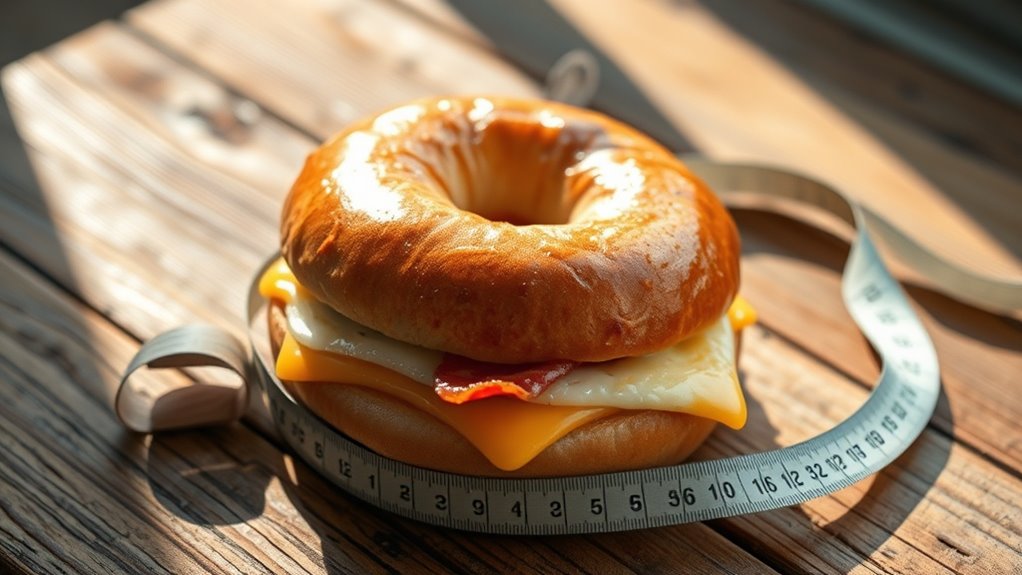
One bacon, egg, and cheese bagel typically packs between 500 and 600 calories, depending on the ingredients and portion sizes you choose. If you grab one from a fast-food spot like McDonald’s, expect around 590 calories in that breakfast bagel. However, making it at home lets you control the calories better.
You can swap out ingredients to lower the total count to under 400 calories. The bagel itself can contribute up to 340 calories, so choosing a thinner type helps. Since breakfast sets the tone for your day, being mindful of calories in your bagel can make a difference.
Opting for leaner options and smaller portions keeps your breakfast satisfying without going overboard on calories.
Which Ingredients Affect the Calories in a Bacon Egg and Cheese Bagel?

Because each ingredient contributes differently, the calories in a bacon egg and cheese bagel can vary widely depending on your choices. The type of bagel you pick alone can add anywhere from 180 to 340 calories. Bacon is another major factor; thick-cut slices pack more calories, typically between 50 to 140 per slice, while turkey bacon offers fewer calories.
Cheese choice matters too—fat-free varieties lower calories compared to regular cheddar, which can add up to 90 calories. Eggs, especially if you use whole eggs versus egg whites or smaller eggs, also affect the total calorie count. Finally, adding butter or mayonnaise increases calories, so skipping or using low-calorie spreads can make a difference.
Considering these ingredients helps you understand how bacon, cheese, and bagel selections impact your meal’s calories.
How to Make a Lower-Calorie Bacon Egg and Cheese Bagel at Home

If you want to enjoy a bacon egg and cheese bagel without the extra calories, you can make simple swaps at home that substantially cut down the calorie count. Start by choosing a whole wheat or thin bagel instead of a standard one; this lowers calories by 100-200. Swap regular bacon for turkey bacon to reduce fat and calories by 50-80.
Use egg whites rather than whole eggs to cut around 50 calories and improve nutrition by lowering cholesterol. Opt for fat-free or reduced-fat cheese to save another 30-50 calories. Cook your ingredients with minimal added fat to keep your homemade sandwich under 400 calories.
These easy changes help you enjoy a delicious, lower-calorie bacon egg and cheese bagel without sacrificing flavor or nutrition.
How Do Fast Food Chains’ Bacon Egg and Cheese Bagels Compare on Calories?
While making a lower-calorie bacon egg and cheese bagel at home gives you control over ingredients, you might wonder how fast food chains stack up when it comes to calories. McDonald’s bacon, egg, and cheese bagel clocks in at about 590 calories per serving, placing it among the higher-calorie fast food options. Dunkin’ offers a similar sandwich with roughly 520 calories per serving, slightly lower but still substantial.
Starbucks and Panera feature their own versions, ranging from 450 to 600 calories depending on ingredients and portion size. The calorie differences largely stem from the type of bacon, cheese, and bread each chain uses. Keep in mind, some chains allow customizations like egg whites or turkey bacon, which can cut calories substantially if you want a lighter fast food serving.
Is a Bacon Egg and Cheese Bagel Healthy for Breakfast?
Although a bacon, egg, and cheese bagel can pack a lot of flavor, you need to contemplate its calorie, fat, and sodium content before making it a regular breakfast choice. With calories ranging from 450 to over 600, this sandwich can quickly add up in your daily diet.
To keep it healthy, focus on nutrient-rich ingredients like egg whites, turkey bacon, and whole grain bagels, which lower calories and improve nutritional value. Remember, high saturated fat and sodium levels, especially from thick-cut bacon and cheese, can negatively impact heart health.
What Allergens and Nutritional Facts Should You Know About Bacon Egg and Cheese Bagels?
You should know that bacon, egg, and cheese bagels often contain allergens like milk, egg, wheat, and soy.
The sandwich is also high in cholesterol and sodium, which can impact your daily intake. Understanding these macronutrients and micronutrients helps you make smarter choices when enjoying this breakfast staple.
Common Allergens Present
A bacon, egg, and cheese bagel contains several common allergens you should watch for, including milk, eggs, wheat, and soy. The cheese slice introduces dairy allergens, while the bagel itself typically contains gluten, a key allergen for many people. Eggs are another main allergen present in the sandwich.
Additionally, some bagels or bacon might include soy-based additives or preservatives, which can trigger reactions in sensitive individuals. While bacon isn’t a common allergen, it may contain additives worth noting. If you have allergies, consider ingredient swaps like gluten-free bagels or egg whites to reduce allergen exposure.
Always check labels carefully, as variations in ingredients can considerably change the allergen profile of your bacon, egg, and cheese bagel.
Macronutrient Composition Overview
Understanding the macronutrient composition of a bacon, egg, and cheese bagel helps you make informed choices about your meals. This sandwich typically packs around 500-600 calories, offering a balance of protein, carbohydrates, and fat. You’ll find about 25g of protein, 56g of carbs, and roughly 30g of fat, though fat content can vary depending on bacon and cheese types, sometimes reaching 37g.
These macronutrient values contribute substantially to your daily intake, especially the fat, which is important to monitor. Knowing this helps you manage energy levels and dietary goals effectively. Keep in mind, the calories and fat come largely from processed ingredients, so being aware of these numbers supports healthier eating decisions.
Important Micronutrient Values
When you grab a bacon, egg, and cheese bagel, it’s important to contemplate the allergens and key nutritional facts that come with it. This sandwich often contains milk, egg, wheat, and soy—common allergens found in cheese, bread, and bacon. Its nutritional content includes high cholesterol (about 245mg) and sodium levels (over 1300mg), which can affect your heart health if eaten frequently.
Calories can exceed 500 but vary with ingredient swaps. The micronutrients you get, like calcium and iron, contribute to your overall diet.
| Nutrient | Approximate Amount | Health Impact |
|---|---|---|
| Calories | 500+ | Energy, weight management |
| Cholesterol | 245mg | Heart health risk |
| Sodium | 1300mg+ | Blood pressure concern |
| Calcium | 210mg | Bone strength |
| Iron | 4mg | Oxygen transport in blood |
Frequently Asked Questions
How Many Calories Are in a Bagel With Egg Cheese and Bacon?
You’re looking at around 570 to 600 calories in a bacon, egg, and cheese bagel. Choosing turkey bacon or egg whites can cut calories, but a traditional sandwich usually packs close to 590 calories total.
Is an Egg and Bacon Bagel Healthy?
An egg and bacon bagel can pack over 600 calories, so it’s not the healthiest choice if you eat it often.
You can make it better by swapping bacon for turkey and choosing whole-grain bagels.
How Many Calories Are in a Bacon, Egg, and Cheese on a Plain Bagel at Dunkin’?
You’ll find about 520 calories in Dunkin’s bacon, egg, and cheese on a plain bagel. It’s pretty filling but high in calories, so you might want to customize it to cut back on some.
Is a Bacon, Egg, and Cheese Healthy for You?
A bacon, egg, and cheese bagel can be unhealthy if you eat it often because of high fat and sodium.
But you can make it healthier by choosing leaner meats, egg whites, and whole-grain bagels.
Conclusion
While a bacon, egg, and cheese bagel can fuel your morning with protein and comfort, it often packs more calories and fats than you might expect. This classic breakfast choice offers a satisfying start to your day but can also contribute to higher calorie intake.
You can enjoy this tasty classic, but be mindful—indulgence comes with a nutritional cost. By swapping ingredients or making it at home, you balance flavor with health.
So, you don’t have to give up your favorite breakfast, just think twice about how often you indulge. Understanding how many calories are in a bacon egg and cheese bagel helps you make informed choices for a healthier lifestyle.