How Many Calories Are in Two Fried Eggs
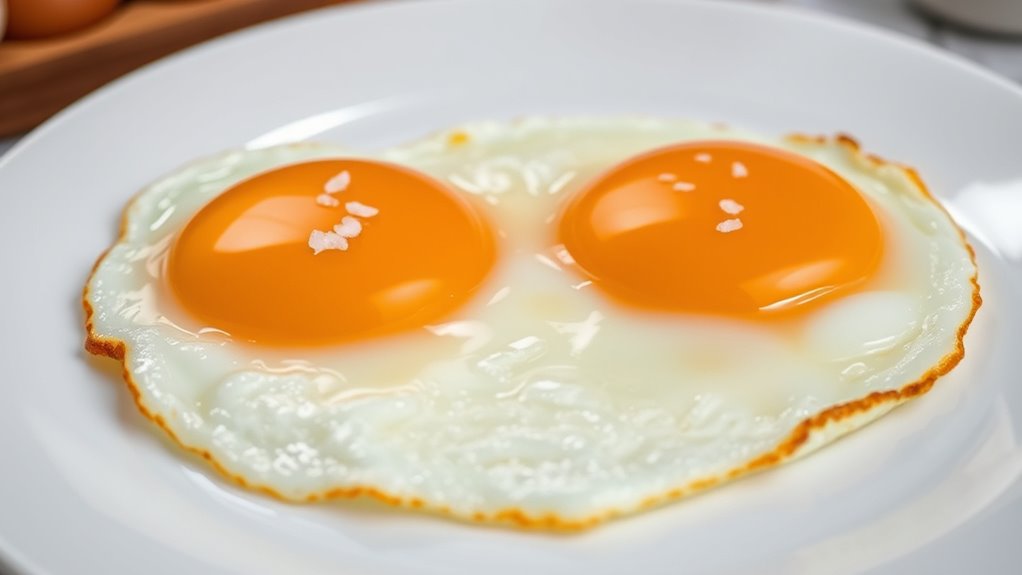
You’ll find about 140 calories in two large fried eggs without added fat, but if you fry them with a teaspoon of oil or butter, calories jump to around 180–200. The size of the eggs and the cooking fat you use make a big difference in calories and macros.
Fried eggs also pack roughly 12–13 grams of protein and 10–16 grams of fat.
Want to know how to keep calories down or compare frying with other methods? Adjusting the cooking method or fat type can help control calorie intake while still enjoying your eggs. For example, using a non-stick pan or cooking spray reduces added fats.
Additionally, boiling or poaching eggs can keep calories lower compared to frying. This is useful if you’re aiming for a leaner meal without sacrificing protein content.
How Many Calories Are in Two Fried Eggs?
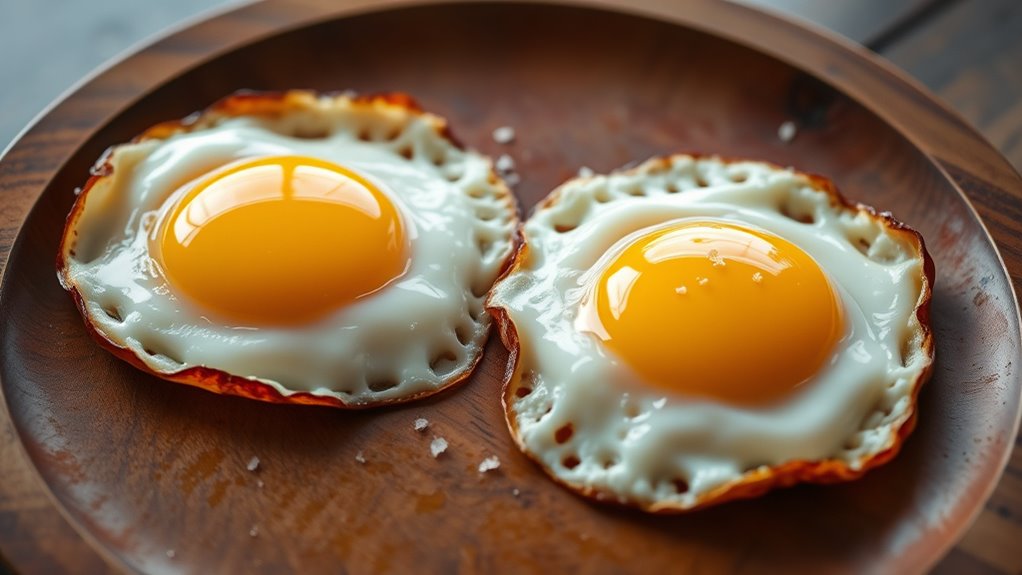
Two fried eggs usually contain between 140 and 200 calories, depending on how you cook them and what fats you add. If you fry them without any added oil or butter, a serving of two large eggs will have about 140 calories.
However, adding just a teaspoon of oil or butter can raise the calorie count to roughly 180–200 per serving. The type and amount of fat you use during cooking play a big role in calories. For instance, butter tends to add more calories than a light spray of non-stick oil.
Also, if you use extra-large or jumbo eggs, expect the calories in your serving to increase by about 25%, pushing the total even higher.
What Is the Protein, Fat, and Carb Breakdown of Two Fried Eggs?
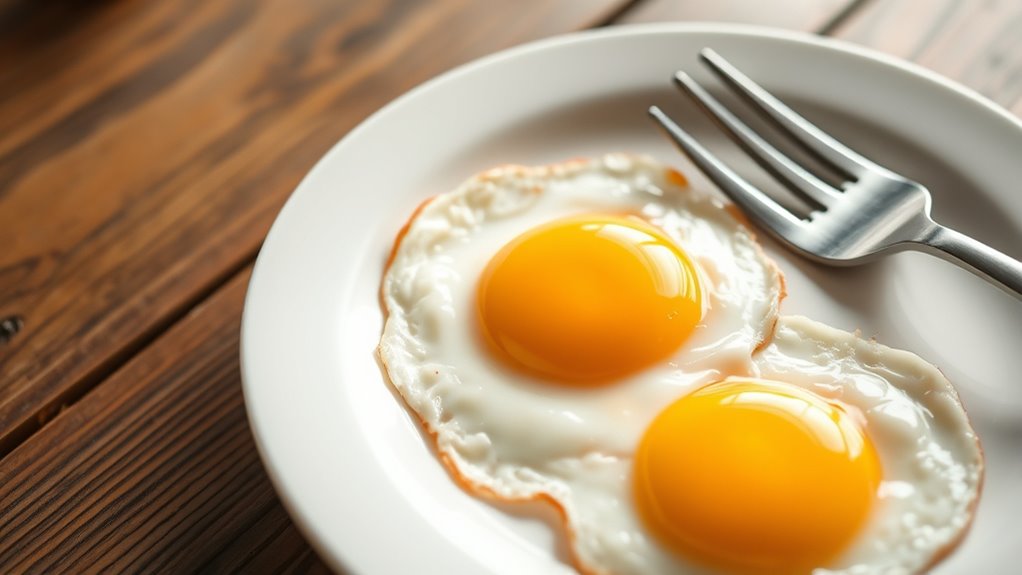
You’ll find that two fried eggs pack around 12 to 13.6 grams of protein, giving you a solid boost. The fat content can vary from 10 to 16 grams depending on how you cook them, while carbs stay minimal, usually under 2 grams.
Understanding these macros helps you see where most of the calories come from—mainly protein and fat.
Protein Content Overview
A pair of fried large eggs delivers around 12 to 14 grams of high-quality protein, providing all the essential amino acids your body needs. This protein content accounts for about 35% of the total calories in two eggs, making them a nutrient-dense choice.
When you eat eggs, you’re not just getting protein; you’re also fueling your muscles and supporting overall health. The protein in eggs is complete, meaning it contains every amino acid necessary for muscle repair and bodily functions.
Plus, the yolks add extra nutrients like choline and vitamin B12, which complement the protein’s benefits. So, when considering calories and nutrient intake, eggs offer a solid protein source that fits well into a balanced diet without excess carbohydrates.
Fat And Carb Details
Understanding the protein content in fried eggs gives you a good start, but knowing their fat and carbohydrate makeup completes the picture. Two fried eggs contain about 10 to 16 grams of fat, depending on the cooking fat you use. This fat includes a mix of monounsaturated, polyunsaturated, and saturated types, which influence the overall egg content and calorie count.
Meanwhile, carbohydrates in two fried eggs are minimal—usually less than 2 grams—mostly coming from trace amounts in the yolk. So, while the protein helps with muscle maintenance, the fat contributes profoundly to the total calories you consume. Keeping an eye on both fat and carbohydrate levels helps you better understand how two fried eggs fit into your daily nutrition goals.
What Changes the Calories in Fried Eggs? (Size, Cooking Method, Fats)
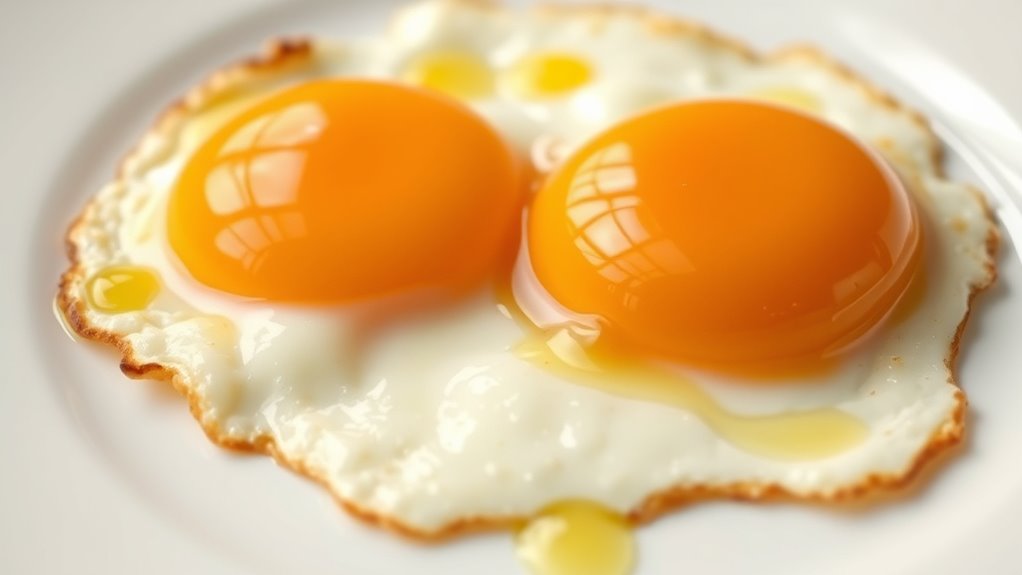
Because the size of the egg and the cooking method directly impact calorie content, you need to take both into account when frying eggs. Egg size plays a big role—larger eggs contain more protein and fat, increasing the calorie count.
The cooking method also matters; frying with minimal oil or non-stick spray keeps calories lower, while using generous amounts of butter or oil raises them markedly. Fats you add influence the total calories too, as different types contain varying amounts of saturated and unsaturated fats, which affects the calorie count.
How Do Cooking Fats Affect Calories and Macros in Fried Eggs?
When you fry eggs, the type and amount of fat you use make a big difference in calories and macros. Using just a spray adds hardly any calories, but a teaspoon of olive oil or a tablespoon of butter can considerably boost fat and calorie content.
Choosing your cooking fat wisely helps you control both the nutritional value and flavor of your eggs.
Types Of Cooking Fats
Although frying eggs seems straightforward, the type of cooking fat you choose can substantially change their calorie and macronutrient content. Different types of oil and fats add varying amounts of calories and macros. For example, using non-stick spray adds minimal calories—just 1-2 kcal per spray—while a teaspoon of olive oil adds about 40 calories from healthy monounsaturated fats.
Butter, on the other hand, packs roughly 102 calories per tablespoon and contains more saturated fat. Choosing cooking fats like avocado or canola oil offers healthier fat profiles compared to butter or lard. Since added fat impacts the total calories a day you consume, selecting the right type of fat helps you manage your intake without sacrificing flavor or nutrition in your fried eggs.
Fat Quantity Impact
If you want to control the calories and macros in your fried eggs, paying attention to the amount of fat you use is key. The amount of oil or butter added directly influences the extra calories and changes the macro profile of your meal.
For instance, one tablespoon of butter adds about 102 calories and 7g of saturated fat, while olive oil adds similar calories but healthier fats.
Consider these points to manage fat quantity impact:
- Using non-stick spray adds minimal calories (2-3 kcal per teaspoon).
- Doubling oil or butter roughly doubles added calories and fat.
- Blotting excess oil prevents unnecessary fat absorption.
How Does Egg Size Influence Fried Egg Nutrition?
Since egg size directly affects its weight and volume, you’ll notice larger eggs pack more calories and protein than smaller ones. When you choose an extra-large egg over a large one, your serving size increases in both calories and nutrition. This difference mainly comes from more yolk and white, meaning more energy and nutrients per egg.
Here’s a quick look at how egg size influences fried egg nutrition:
| Egg Size | Calories (per egg) | Protein (grams) |
|---|---|---|
| Large | 74 | 6.3 |
| Extra Large | 80 | 7.9 |
| Jumbo | 90 | 8.7 |
How Do Fried Eggs Compare to Other Egg Preparations?
When you fry eggs, you add extra calories and fat compared to boiling or poaching because of the oils or butter used in cooking. This cooking method substantially impacts the calorie content of your eggs.
Here’s how fried eggs compare to other preparations:
- Boiled or poached eggs have about 74 calories each, making them lower in calories.
- Fried eggs can range from 148 to 200 calories depending on the fat used.
- Scrambled eggs often have even higher calories due to added milk, butter, or cheese.
How to Cook Fried Eggs With Lower Calories and Macros
Although frying eggs typically adds extra calories, you can easily reduce them by using nonstick spray instead of oil or butter. This simple swap cuts down added fat and helps you control your calorie intake while retaining the health benefits of eggs.
If you prefer oil, choose small, measured amounts of healthy options like olive or avocado oil to keep calories in check. After frying, drain any excess oil with a paper towel to reduce surface fat absorption further.
You can also cook eggs on a silicone mat or steam them for minimal fat use. Ultimately, manage portion sizes by selecting larger eggs or adjusting servings to balance taste, macros, and calories effectively, making your fried eggs a healthier choice.
How Long Does It Take to Burn Off Two Fried Eggs?
Controlling how you cook your fried eggs helps manage calories, but understanding how long it takes to burn those calories gives you a clearer picture of their impact on your daily energy balance. Two fried eggs contain about 170 calories, and burning off these calories depends on the type of exercise you choose.
To burn off the calories from two fried eggs, you can try:
- Walking briskly for about 1 hour and 14 minutes
- Jogging or cycling moderately for roughly 21 minutes
- Swimming laps for around 30 minutes
These estimates are based on a 25-year-old female, 5’7” tall, weighing 144 pounds. Knowing these times helps you balance your calorie intake and exercise effectively.
Frequently Asked Questions
How Many Calories Are in 2 Whole Fried Eggs?
Two whole fried eggs usually have between 140 and 200 calories. It depends on how you cook them and what fats you use—non-stick spray, butter, or olive oil all change the total calorie count.
Is 2 Fried Eggs a Day Healthy?
Sure, eating two fried eggs daily won’t turn you into a superhero, but it’s generally healthy if you don’t drown them in butter.
They pack protein and nutrients, so just keep your whole diet balanced.
How Many Calories Are in 2 Fried Eggs With Butter?
Two fried eggs with butter have about 200 calories.
You get roughly 100 calories from the eggs and another 100 from the teaspoon of butter you use to fry them, adding extra fat and flavor.
How Many Calories Are in 2 Fried Eggs Without Butter?
You’re looking at about 140 calories for two fried eggs without butter—proof that even eggs can be health-conscious.
Skip the butter, and you keep it lean while still savoring that classic fried egg charm.
Conclusion
Now that you know two fried eggs pack around 180-200 calories depending on size and cooking fats, you’re all set to make smarter choices. Whether you use butter or olive oil, or opt for smaller eggs, it all matters.
So, channel your inner Renaissance chef and whip up your eggs with flair—but keep those calories in check. Remember, burning off two fried eggs is easier than decoding a secret telegram!
Understanding how many calories are in two fried eggs helps you manage your daily intake better. Enjoy your meal while keeping nutrition and calorie count in mind.