How Many Calories Are in Beef Broth: Accurate Counting Methods
You’ll find beef broth typically contains 10 to 50 calories per cup, depending on ingredients and preparation. Understanding how many calories are in beef broth is essential for accurate calorie counting.
To count calories accurately, measure your portion using a kitchen scale or liquid measuring cup, and factor in added fats, marrow, or vegetables that boost calories.
Store-bought broths usually have more consistent values, but homemade versions vary widely. Keeping these details in mind helps you track intake precisely.
Keep exploring to learn how different factors influence your broth’s calorie content.
Beef Broth Calories Per Serving: A Quick Guide
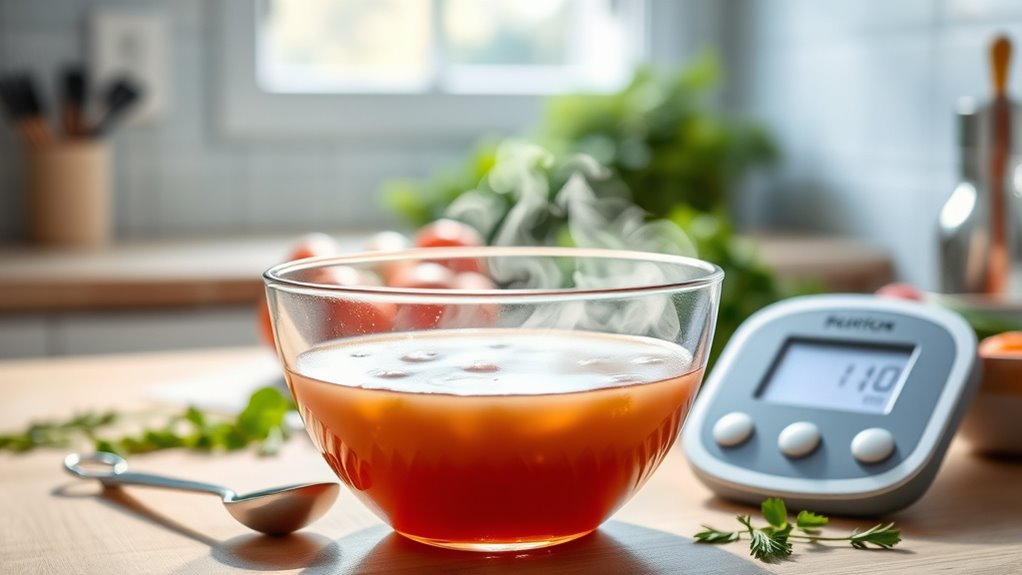
A cup of beef broth usually contains between 17 and 66 calories, depending on how it’s made and what ingredients you add. When you check the calories per serving, you’ll find that broth-based beef soups tend to be on the lower end, around 17 to 30 calories per cup.
Homemade beef broth often falls within this range, especially if you skim off excess fat. The calorie count can shift if you include more meat or fat, but typically, homemade versions remain lighter than commercial options.
If you’re watching your calorie intake, knowing the approximate calories per serving helps you make smarter choices. Whether you’re sipping it alone or using it in recipes, beef broth offers a flavorful, low-calorie base that fits well into many diets.
Ingredients and Preparation Factors Affecting Beef Broth Calories
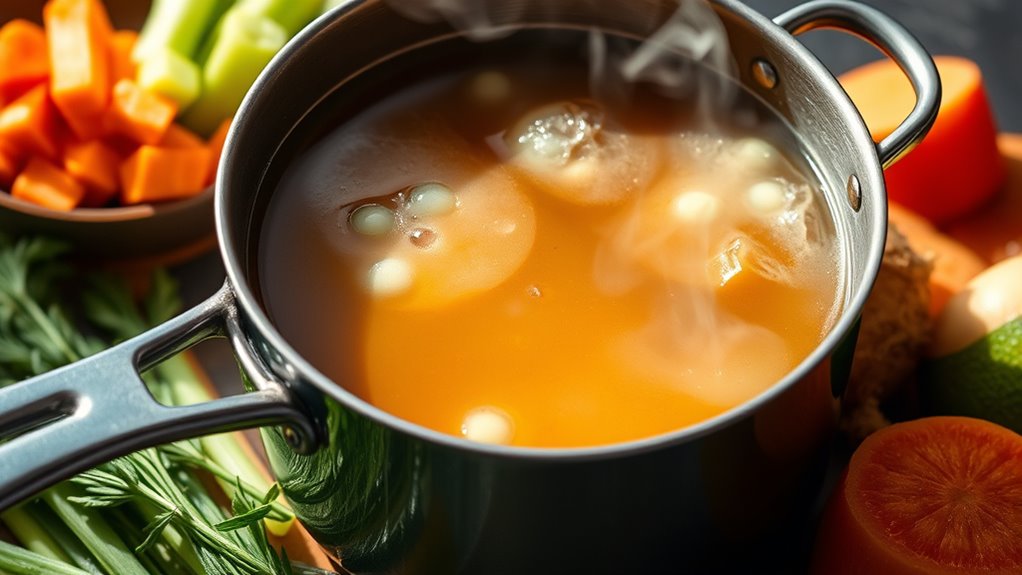
Because the ingredients and preparation methods vary widely, the calorie content in beef broth can differ markedly from one batch to another. The type of beef, bones, and additional ingredients you use directly impact calorie counts. For example, choosing fatty cuts or including marrow and skin adds more fat, increasing calories.
Your preparation methods also matter—simmering longer extracts more fat and nutrients, making the broth richer in calories. Commercial broths often contain added oils or thickeners that boost calorie counts beyond homemade versions. Plus, if you add vegetables, noodles, or starchy fillers, you’ll see higher calories reflected in the nutrition facts.
Being mindful of these ingredients and preparation factors helps you accurately assess your beef broth’s calorie content.
Measuring Beef Broth for Accurate Calorie Counts
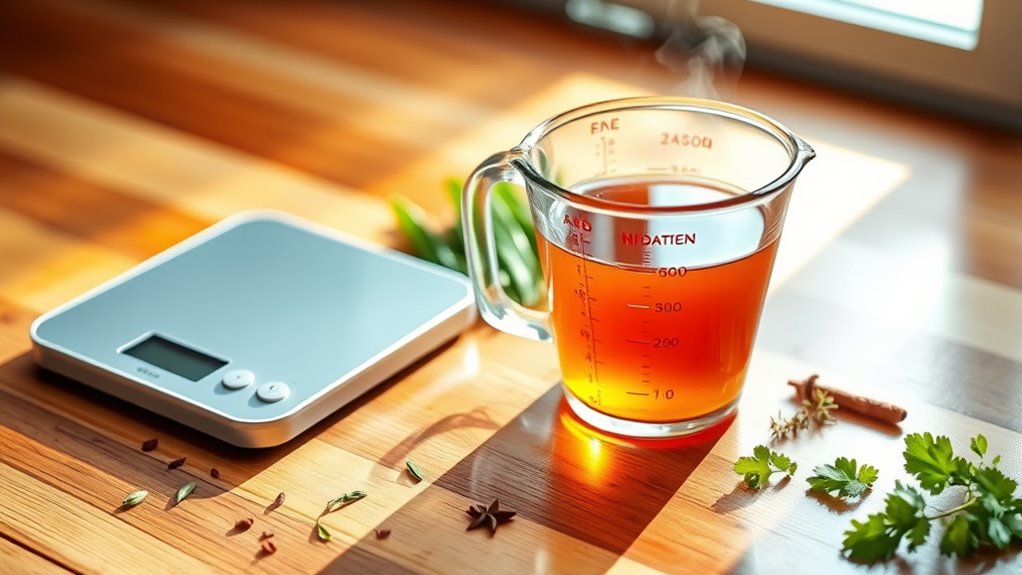
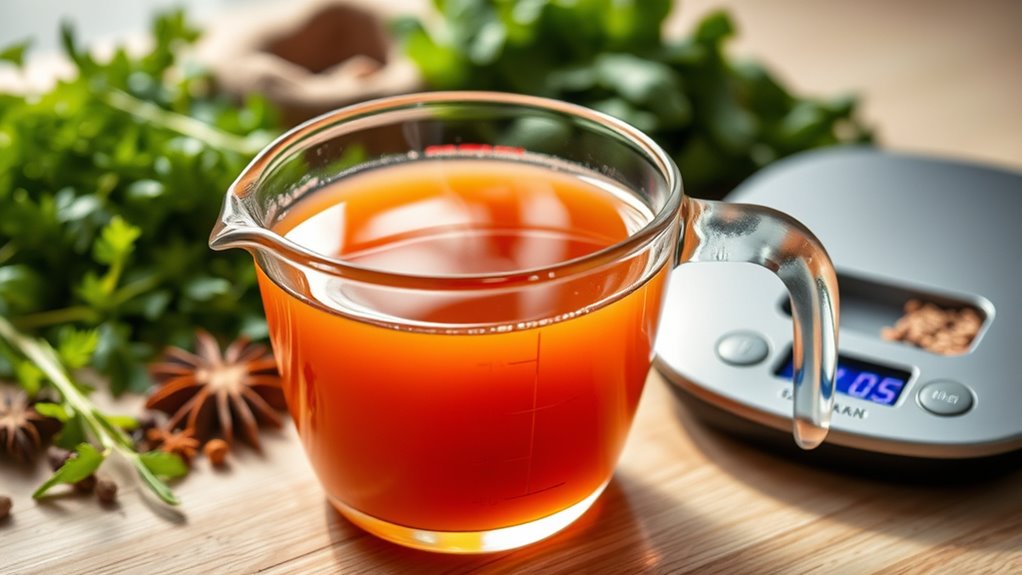
To get accurate calorie counts, you need to measure your beef broth carefully using a liquid measuring cup or kitchen scale. Pay close attention to the serving size and record it precisely in cups, milliliters, or grams.
This guarantees you’re tracking calories correctly, especially when dealing with homemade or concentrated broths.
Serving Size Importance
When you measure beef broth accurately, you guarantee your calorie counts stay consistent and reliable. Using a standard serving size, like one cup (240 ml), helps maintain precision in your calorie calculations. Even small differences in portion sizes, such as a half-cup versus a full cup, can markedly impact the total calories you record.
Accurate measurement is essential, whether you’re using a measuring cup or weighing homemade broth after it cools. By recording the exact serving size you consume, you’ll track your caloric intake and nutrients more effectively. Remember, consistent measurement prevents errors and helps you control your diet better.
Paying close attention to serving size ensures your calorie counting is precise, helping you meet your nutritional goals without guesswork.
Measuring Tools Needed
Accurately measuring your beef broth starts with using the right tools. A liquid measuring cup is essential for gauging the broth’s volume precisely—make sure to check at eye level for an accurate reading. If you add solid ingredients like beef or vegetables, use a kitchen scale to weigh them before cooking; this helps you calculate their exact calorie contribution.
Since broth volume can decrease during simmering due to evaporation, measure it before cooking to get a reliable baseline. For homemade broth, consider weighing the total prepared broth with a digital kitchen scale after cooking to refine your calorie estimates. Using small, clear containers for measuring helps prevent over-pouring and ensures consistent portion sizes, making your calorie tracking more accurate.
Portion Weight Accuracy
You’ll get the most reliable calorie counts by weighing your beef broth after it’s fully prepared. Since water content changes during cooking, measuring the portion weight in its final state guarantees accurate counting.
Use a kitchen scale for precise measurements in grams, which helps calculate the exact calories per serving based on your recipe’s total nutritional data. Keep these tips in mind for accuracy:
- Always weigh individual portions to capture slight differences in volume or density.
- Use consistent measuring tools like a digital scale rather than estimating with cups.
- Record each portion’s weight to calculate calories per gram accurately.
Calculating Calories From Beef Broth Ingredients
Although calculating the exact calories in beef broth can be tricky, you can get a close estimate by weighing your raw ingredients like meat, bones, vegetables, and fats before cooking. Use nutrition labels or food databases to find calories for each ingredient, then calculate calories based on their weight and nutrient content.
Here’s a simple table to help you organize your ingredients and calorie counts:
| Ingredient | Weight (g) | Calories (kcal) |
|---|---|---|
| Beef | 100 | 250 |
| Bones | 200 | 50 |
| Vegetables | 150 | 60 |
| Fat | 20 | 180 |
Comparing Calories: Homemade vs Store-Bought Beef Broth
When you make beef broth at home, calories can range widely from about 17 to 66 per cup, depending on your ingredients and cooking methods. Store-bought options usually have fewer calories, often between 10 and 40 per cup, but they may contain added sodium and preservatives.
Understanding these differences helps you choose the best broth for your nutritional needs.
Homemade Broth Calorie Range
Because homemade beef broth relies on your choice of ingredients and cooking methods, its calorie content can vary considerably, typically ranging from 17 to 66 kcal per cup. When you make homemade broth, the total calories depend largely on what you include and how long you simmer it.
Factors influencing the calorie range include the amount of fat and marrow extracted from bones, inclusion of vegetables or starches that add calories, and cooking time, which affects nutrient and fat extraction.
Tracking these elements helps you estimate the calories in your homemade broth more accurately. Unlike store-bought versions, homemade broth doesn’t have a fixed calorie count, so understanding this range is key to managing your intake effectively.
Store-Bought Broth Variations
If you want a broth with consistent calorie content, store-bought beef broth usually offers that reliability, typically containing around 10 to 20 calories per cup. Unlike homemade versions, the calories coming from store-bought broth are easier to track because nutritional labels provide clear information per serving.
Homemade broths can vary widely in calorie intake depending on the amount of meat, bones, fat, and simmering time you use, often resulting in higher calories. Store-bought broth undergoes processing that reduces fat content, which lowers calories per serving.
This means when you choose store-bought broth, you get a predictable calorie count, helping you manage your daily calorie intake more accurately compared to estimating homemade broth calories.
Tips for Tracking Beef Broth Calories
Although beef broth calories can vary widely, you can track them accurately by checking nutrition labels or using trusted database entries for your specific brand or recipe. When tracking calories, it’s essential to know the exact amount of protein and fat in your broth to make informed food choices.
For homemade broth, estimating calories becomes easier if you weigh your serving and calculate based on fat content.
Here are some tips to help you track beef broth calories precisely:
- Use a food scale to measure broth portions accurately.
- Adjust calorie counts based on added ingredients like vegetables or oils.
- Calculate fat content after simmering for homemade broths to improve accuracy.
Following these tips ensures you stay on top of your calorie intake effectively.
Frequently Asked Questions
How Many Calories Are in Beef Broth?
You’ll find beef broth contains about 17 to 66 calories per cup, depending on ingredients and preparation. Store-bought versions usually hover around 10 to 30 calories, but homemade broths can vary widely.
Do You Count Ground Beef Calories Before or After Cooking?
You’ll want to count ground beef calories after cooking since the magic of heat changes its weight and nutrients.
This way, you get a true picture of what you’re actually enjoying on your plate.
What Is the 9 4 4 Rule for Calories?
The 9-4-4 rule means fat has 9 calories per gram, while protein and carbs each have 4.
You use it to estimate total calories by multiplying grams of each nutrient by these values and adding them up.
What’s the Most Accurate Way to Count Calories?
Picture counting calories like solving a puzzle. You’ll get the most accurate count by measuring each ingredient, weighing the final broth, and using detailed nutritional data or lab analysis.
Don’t just rely on package labels or rough estimates. Taking these extra steps ensures your calorie count is precise and reliable.
Conclusion
Think of tracking beef broth calories like steering a winding river—you steer carefully, measuring each ripple and ingredient to keep your journey true.
Whether you craft your broth from scratch or choose store-bought, paying attention to details helps you stay on course. With these methods, you’ll sail smoothly toward your health goals, knowing exactly what fuels your body.
So grab your paddle, measure wisely, and enjoy the nourishing flow of every calorie counted in beef broth. Accurate calorie counting is key to maintaining a balanced diet and reaching your wellness objectives.