How Many Calories Are in a Bowl of Beef Stew?
You’ll find about 270 calories in a typical bowl of beef stew, though this can vary based on ingredients like the cut of beef and added vegetables. Using lean beef and non-starchy veggies lowers calories, while potatoes and added fats increase them. Cooking methods like searing with oil add calories too.
Beyond calories, beef stew offers protein, vitamins, and antioxidants that benefit your health. Keep going to discover how these factors shape your stew’s nutrition.
How Many Calories Are in a Bowl of Beef Stew?
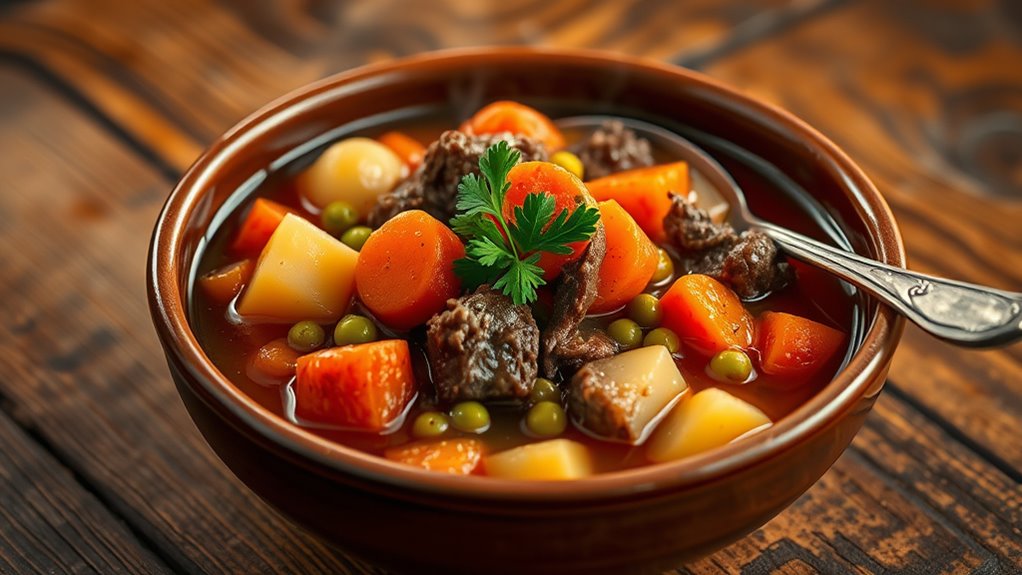
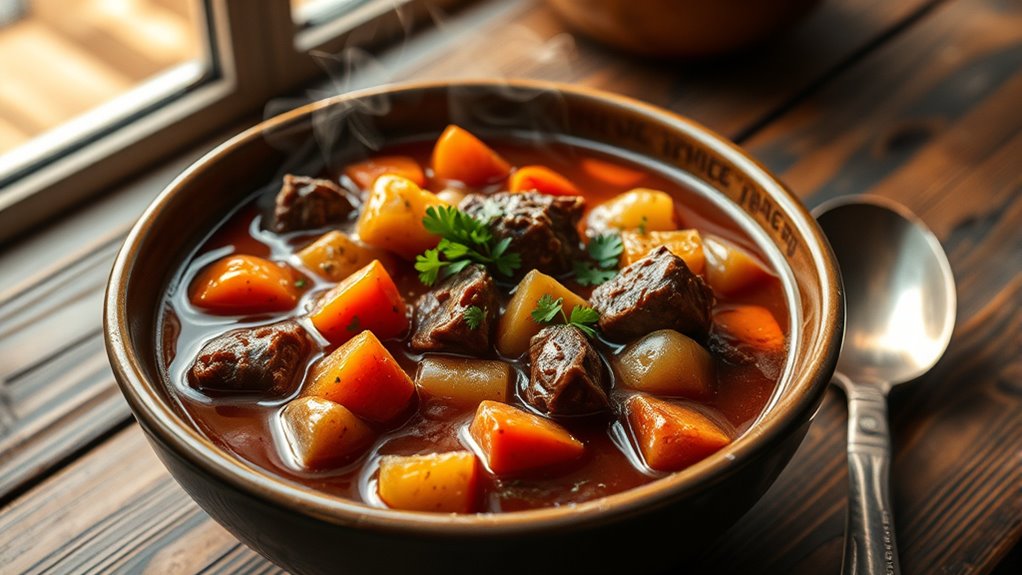
Wondering how many calories you’ll find in a bowl of beef stew? A typical serving size of about 255 grams contains roughly 273 calories. This makes beef stew a moderately calorie-dense meal, especially given its nutrient-rich ingredients like potatoes, carrots, and broth.
Most standard servings fall between 235 and 273 calories, depending on the exact portion size and recipe. While the calories in your beef stew can vary, this range gives you a solid baseline for meal planning.
Keeping an eye on your serving size helps you manage your calorie intake effectively. So, when you sit down to enjoy a bowl of beef stew, you can feel confident about the calories you’re consuming without sacrificing flavor or nutrition.
What Affects the Calories in Your Beef Stew?
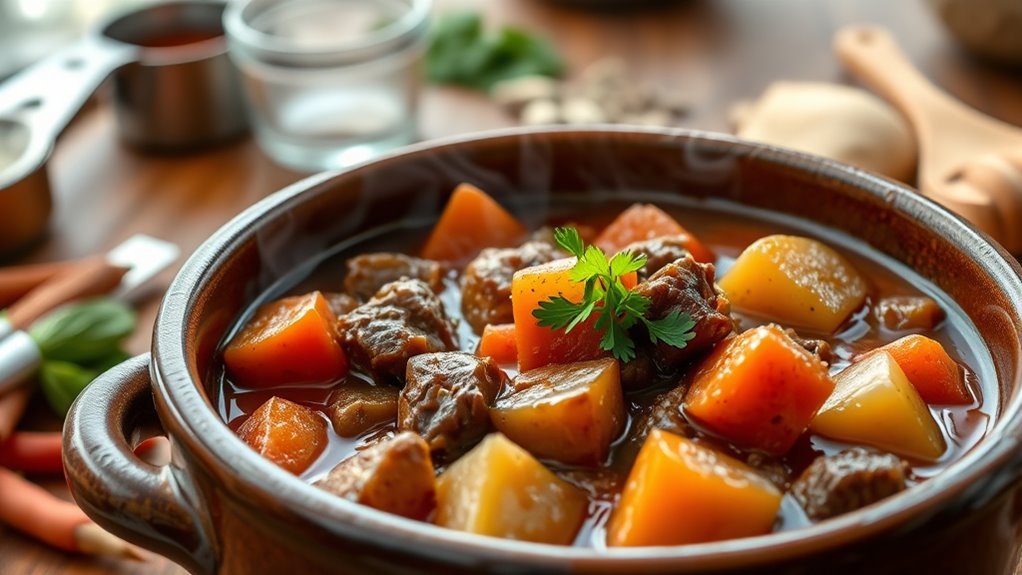
What you put into your beef stew makes a big difference in calories, from the cuts of beef to vegetables and thickeners. How you cook it also matters—using high-fat oils or slow braising can change the calorie count.
Paying attention to these choices helps you control the energy your stew provides.
Ingredient Choices Impact Calories
Because the ingredients you choose directly influence the calorie content, paying attention to what goes into your beef stew can help you manage its nutritional impact. Lean beef lowers calories compared to fattier cuts, and cutting back on oil or butter reduces added fats.
Starchy vegetables like potatoes add calories, while low-calorie seasonings keep energy in check. Here’s a quick comparison of common ingredients and their calorie impact:
| Ingredient | Calorie Density (per 100g) | Impact on Stew Calories |
|---|---|---|
| Lean Beef | 150 | Moderate |
| Fatty Beef Cuts | 250 | High |
| Potatoes | 77 | Adds carbs and calories |
| Butter/Oil | 720 | Substantially increases |
Choosing lean beef and limiting high-calorie ingredients helps control your stew’s calories effectively.
Cooking Methods Influence Energy
Although ingredient choices set the foundation, the cooking methods you use play a crucial role in determining the calorie content of your beef stew. Different cooking methods affect how much fat and moisture stay or evaporate, changing the stew’s calorie density. For example, slow braising retains moisture, while searing meat adds calories from oil.
Other ingredients added during cooking also impact the overall energy. Here’s how cooking method influences calorie content:
- Browning meat with oil boosts fat calories
- Using wine or broth adds calories from liquids
- Thickeners like flour or cornstarch increase calorie density
- Longer cooking reduces water, concentrating calories per serving
How Ingredients Like Beef Cuts and Vegetables Impact Calories
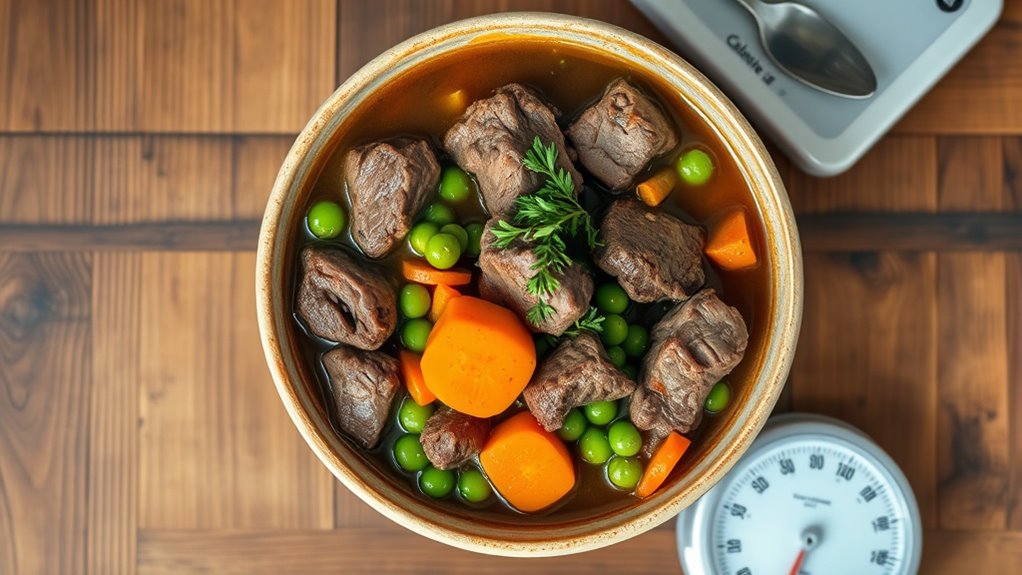
When you choose different beef cuts for your stew, you directly affect its calorie content since fattier cuts like chuck pack more calories than leaner options such as sirloin. These beef cuts vary in fat content, so selecting leaner meat can markedly lower your stew’s overall calories.
Vegetables play a role too, but their impact on calorie content is minimal; for example, potatoes add about 130 calories per cup, while carrots contribute roughly 50. However, starchy vegetables like potatoes increase calories more than low-calorie options like leafy greens.
Also, keep in mind that added fats, oils, or fatty trimmings can boost calories quickly. By carefully choosing your beef cuts and vegetables, you control the stew’s calorie density without sacrificing flavor or nutrition.
Comparing Calories: Beef Stew With Potatoes vs. Low-Carb Versions
Choosing the right ingredients not only affects the flavor but also the calorie content of your beef stew. When you compare traditional beef stew with potatoes to low-carb versions, you’ll notice a clear difference in calories. A standard 1-cup serving with potatoes has about 235 calories, while low-carb versions drop to around 150-180 calories by swapping potatoes for veggies like cauliflower or radishes.
Here’s what impacts the calorie count:
- Using potatoes adds more carbohydrates and calories
- Low-carb vegetables reduce calories and carbs markedly
- Leaner beef cuts and less oil lower calories further
- Low-carb beef stew suits keto diets with fewer carbs and calories
Choosing low-carb options can save you over 50 calories per bowl while keeping your beef stew delicious.
How Cooking Methods Affect Beef Stew Calories
Since cooking methods influence the flavor and texture of beef stew, they can also subtly affect its calorie content. Slow-cooking in a Dutch oven doesn’t add calories but enhances taste. Browning meat adds minimal calories due to oil use.
Alcohol-based liquids may add calories initially but mostly cook off. Thickening agents like flour or cornstarch slightly increase calories depending on quantity. Longer simmering retains nutrients without changing raw ingredient calories.
| Cooking Method | Effect on Beef Stew Calories |
|---|---|
| Slow-cooking | No significant change; enhances flavor |
| Browning meat | Slight increase from oil and caramelization |
| Alcohol-based liquids | Minimal impact; most calories cook off |
| Thickening agents | Slight calorie increase depending on amount |
Tips to Cut Beef Stew Calories Without Losing Flavor
Although beef stew is hearty and flavorful, you can easily cut calories without sacrificing taste by making smart ingredient swaps and cooking choices. When preparing your beef stew recipe, the right ingredients can reduce calorie intake while keeping richness intact. Consider these tips:
- Use lean cuts like sirloin or tenderloin instead of fattier beef stew meat to lower saturated fat.
- Add more vegetables such as carrots and bell peppers to increase volume and fiber without many calories.
- Substitute oils with calorie-free cooking spray or omit them to cut fat during cooking.
- Replace high-calorie thickeners and ingredients like red wine with broth or vinegar to maintain flavor with fewer calories.
Nutritional Benefits of Beef Stew Beyond Calories
You’ll find that beef stew offers more than just calories—it packs a solid amount of protein to help maintain your muscles. It also provides essential vitamins and minerals like iron and zinc that support your energy and immune system.
Plus, the veggies add fiber and antioxidants, which aid digestion and reduce inflammation.
Protein Content Advantages
A serving of beef stew delivers about 18 to 22 grams of protein, which plays a crucial role in muscle repair and immune function. This protein content makes beef stew a valuable nutrient source that helps you meet your daily value of protein — typically 46 grams for women and 56 grams for men.
Beyond muscle health, the protein also aids in stabilizing your blood sugar and sustaining energy throughout the day. Here’s why this matters:
- Supplies essential amino acids for tissue growth and recovery
- Enhances satiety, helping control appetite and manage weight
- Supports immune system strength
- Helps maintain steady energy levels
Including beef stew in your diet is an efficient way to boost your protein intake with a nutrient-rich meal.
Essential Vitamins And Minerals
Because beef stew combines a variety of nutrient-rich ingredients, it supplies essential vitamins and minerals that support your overall health. You’ll get a healthy dose of vitamins like A and C, which boost your immune system and help maintain good vision. The stew also packs important minerals such as iron and zinc, crucial for oxygen transport and immune defense.
Plus, potassium in the stew helps regulate blood pressure and keeps muscles and nerves functioning properly. Beyond these, beef stew provides B-vitamins—B1, B2, B3, B6, and B12—that fuel energy production and nervous system health. It even offers choline, which supports brain function and liver health.
This balanced nutrition makes beef stew more than just a comforting meal—it’s a nourishing choice.
Fiber And Antioxidants
Beyond providing important vitamins and minerals, beef stew also delivers dietary fiber and antioxidants that support your digestive health and protect your body from oxidative damage. You get about 2.6 grams of fiber per serving, mainly from vegetables like potatoes, carrots, and celery. These vegetables also supply antioxidants such as vitamin A, carotenoids, and flavonoids, which help combat oxidative stress.
Plus, herbs like thyme and oregano add more antioxidants and bioactive compounds that may reduce inflammation. Including beef stew in your diet means:
- Boosting fiber intake for better digestion
- Gaining antioxidants that support immune function
- Benefiting from phytochemicals in vegetables
- Enjoying anti-inflammatory effects from herbs
This combination makes beef stew a nutrient-dense meal beyond just calories.
Does Eating Beef Stew Help You Burn Calories?
How exactly does eating beef stew affect your calorie burning? A typical bowl packs about 273 calories, adding to your daily intake but not triggering calorie burning by itself. To burn those calories, you need physical activity—like walking for nearly two hours.
The stew’s protein content, around 18-22 grams, supports muscle repair and maintenance, which can boost your overall calorie expenditure over time. However, simply eating beef stew won’t automatically burn calories; it provides energy that fuels your body.
Combining beef stew with regular exercise helps create a calorie deficit, essential for weight loss and effective calorie burning. So, enjoy your beef stew, but remember that physical activity is key to turning those calories into energy burned.
Frequently Asked Questions
How Many Calories Are in a Bowl of Homemade Stew?
You’ll find around 273 calories in a typical bowl of homemade stew, but it can vary. Using lean beef and fewer fats lowers calories, while adding wine or thickening agents could increase them.
Can I Eat Beef Stew on a Diet?
You can sail your diet ship with beef stew as your compass—just choose lean beef, load up on veggies, and keep portions steady.
This hearty dish fuels you without sinking your calorie goals or flavor sails.
How Many Calories Are in 2 Cups of Homemade Beef Stew?
Two cups of homemade beef stew usually contain about 470 calories. You can lower this by using lean beef or cutting back on added fats.
Are Stews High in Calories?
Stews can be high in calories, especially if you use fatty meat, add oils, or include starchy veggies.
But if you stick to lean cuts and broth-based recipes, you won’t end up eating too many calories.
Conclusion
You might think a bowl of beef stew is just comfort food, but it’s also a clever calorie game. The cut of beef, the veggies you choose, and how you cook them all play a part—surprisingly, they can add up or slim down your meal.
So, next time you dig in, remember: cutting calories doesn’t mean cutting flavor. In fact, with a few smart swaps, you’ll enjoy every bite and keep your goals in sight. Understanding how many calories are in a bowl of beef stew can help you make better choices without sacrificing taste.