How Many Calories Are in 1 Cup of Ground Beef
You’ll find about 340 to 400 calories in one cup of cooked ground beef, depending largely on its fat content and how you cook it. Ground beef calories vary significantly based on the fat ratio and cooking method used.
Leaner beef has fewer calories, while fattier cuts pack more.
Cooking concentrates calories by reducing water weight, and methods like frying can add even more calories through added oils.
If you want to better understand how portion size, fat ratio, and cooking impact calories, there’s plenty more to explore.
Calories in 1 Cup of Ground Beef?
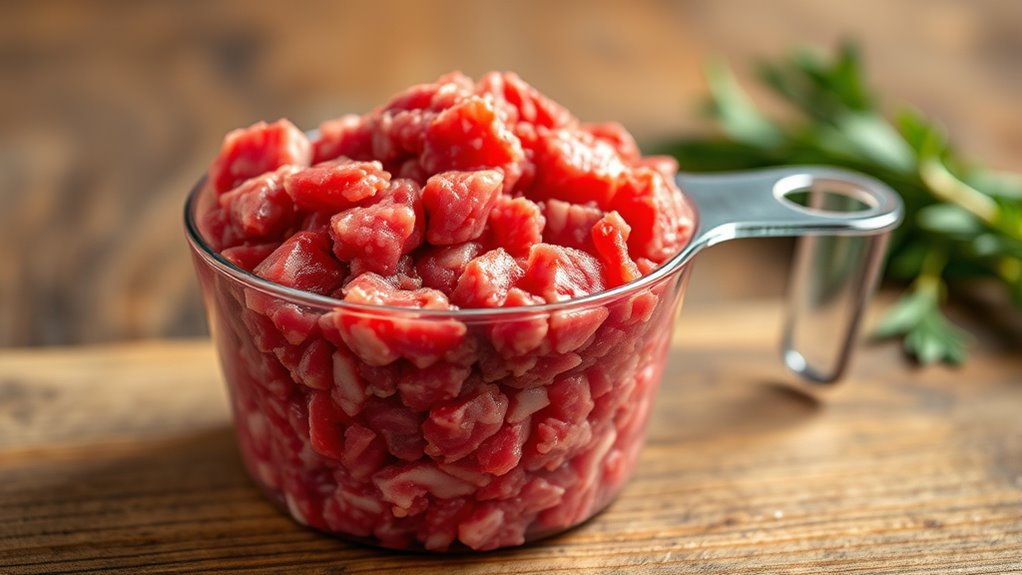
Wondering how many calories are in one cup of ground beef? It depends on the serving size and the fat content. For a standard cup, cooked ground beef typically contains between 200 to 250 calories.
This variation happens because leaner ground beef has fewer calories, while higher-fat varieties pack more. On average, a 20-gram serving of ground beef offers about 52 calories, but when you scale that up to a full cup—roughly 228 grams—the total calorie count rises accordingly.
Nutrition-wise, ground beef provides essential protein and fat, so understanding the calorie content helps you manage your diet better. Keep in mind, the calories you count come from both the beef’s fat and protein content, so serving size truly matters.
Raw vs Cooked Ground Beef: What’s the Calorie Difference?
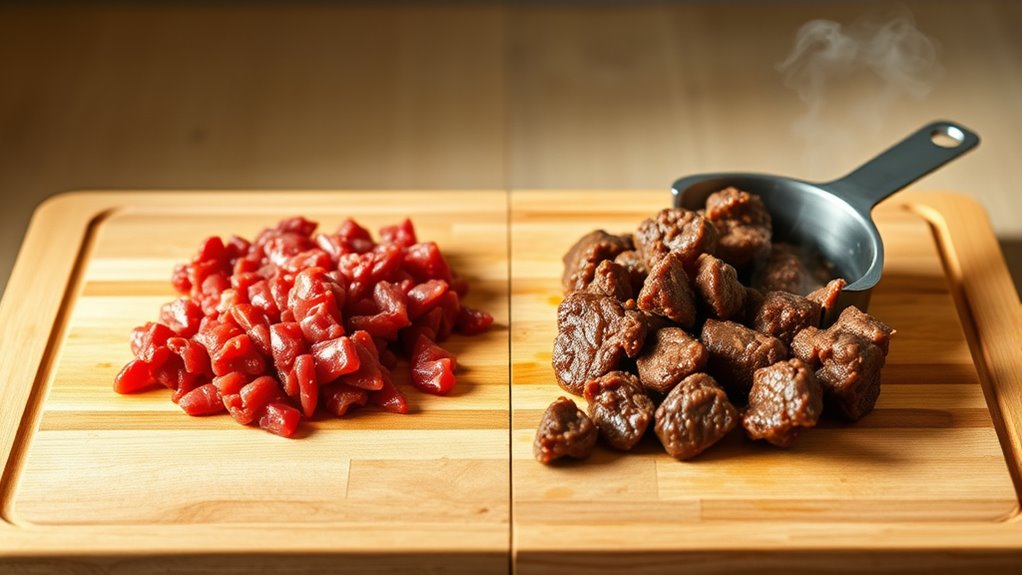
Although raw and cooked ground beef come from the same source, their calorie content per cup differs considerably due to moisture loss during cooking. When you cook ground beef, water loss makes it denser, so a cup of cooked beef packs more calories than a cup of raw beef. This calorie difference arises because raw beef holds more water, reducing calories per volume.
Here’s a quick comparison:
| State | Weight per Cup (g) | Calories per Cup |
|---|---|---|
| Raw | 250 | 280-320 |
| Cooked | 228 | 340-400 |
| Change | -22 | +60 to +80 |
Keep in mind, the exact calorie difference depends on fat content and cooking method, but water loss is the main factor concentrating calories in cooked beef.
How Fat Changes Ground Beef Calories
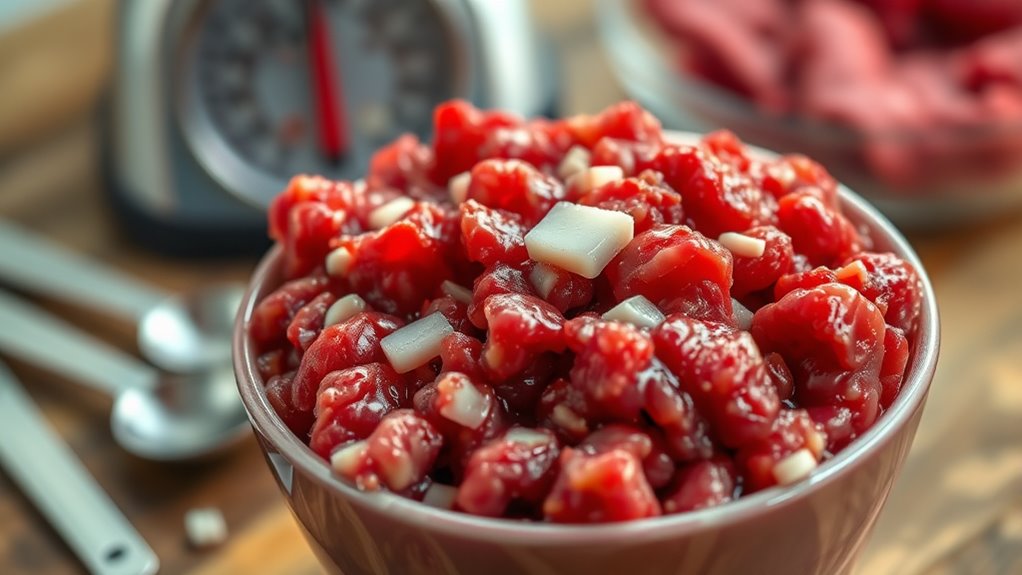
When you choose ground beef, the fat content directly impacts the calories you consume. Higher fat means more calories since fat packs 9 calories per gram, while leaner options keep calorie counts lower.
You should also consider the types of fat—saturated versus unsaturated—as they affect both calories and health differently.
Fat Content Impact
Because fat provides about 9 calories per gram—more than twice the calories found in protein or carbs—it substantially boosts the calorie count in ground beef. The fat content directly affects the calorie density, with higher fat percentages increasing overall calories per cup.
Choosing lean ground beef lowers fat content and consequently reduces calories, making it a smarter option if you’re watching intake. Here’s a quick look at how fat percentage impacts calorie content in cooked ground beef:
| Fat Percentage | Fat Content (g) per Cup | Approximate Calories per Cup |
|---|---|---|
| 5% | 5.67 | 215 |
| 10% | 11.34 | 275 |
| 15% | 17 | 330 |
| 20% | 22.68 | 385 |
| 25% | 28.35 | 440 |
This table shows how fat percentage shapes the calorie density of ground beef.
Calorie Variation Factors
Since fat provides more than twice the calories per gram compared to protein, it plays a major role in how many calories you get from ground beef. The fat content directly influences the calorie variation you see between different types. For example, lean ground beef with about 10% fat has roughly 170 calories per 4-ounce cooked serving size, while higher-fat options can exceed 200 calories for the same amount.
Fat contributes around 62% of total calories, so even small changes in fat content substantially impact the total calories. Each additional gram of fat adds about 9 calories, which explains why calorie variation is closely tied to fat levels. When choosing ground beef, keeping fat content in mind helps you control calorie intake more effectively.
Saturated Vs. Unsaturated
Although both saturated and unsaturated fats in ground beef provide about 9 calories per gram, the higher proportion of saturated fat—making up roughly 38-39% of total fat—significantly impacts its overall calorie content. When you choose ground beef with more saturated fat, you’re increasing its caloric density since saturated fat tends to be more abundant than unsaturated fats.
Unsaturated fats, including monounsaturated and polyunsaturated types, contribute similarly per gram but usually appear in lower amounts, slightly balancing the calorie content. If you want to reduce calories without sacrificing protein, opting for leaner ground beef or draining excess fat helps lower saturated fat levels.
Understanding the balance between saturated fat and unsaturated fats in ground beef lets you manage both calorie content and health impact more effectively.
Comparing Calories by Lean-to-Fat Ratio in Ground Beef
When you compare ground beef by lean-to-fat ratio, you’ll see that leaner options pack fewer calories per cup because they contain less fat. The higher the fat content, the more calorie-dense your serving becomes, since fat has more calories per gram than protein.
Understanding this difference helps you control your calorie intake based on how lean or fatty your ground beef is.
Lean Versus Fat Calories
If you want to control your calorie intake, understanding the lean-to-fat ratio in ground beef is essential. Lean ground beef contains fewer calories per cup because it has less fat, which packs about 9 calories per gram. For example, a cup of cooked ground beef with 10% fat has around 250 calories, while one with 30% fat contains about 350 calories.
This difference comes from the fat content, as higher fat increases calorie density. Choosing lean ground beef lets you reduce calorie intake without sacrificing protein. By focusing on leaner options, you cut down on fat-derived calories while still enjoying the benefits of ground beef.
Impact On Caloric Density
Because fat makes up the majority of calories in ground beef, the lean-to-fat ratio greatly impacts its caloric density. When you choose ground beef with a higher fat content, you’re increasing the total calories per cup. For instance, 1 cup of cooked ground beef (about 228g) contains roughly 480 calories, with fat contributing around 62% of those calories.
If you opt for leaner ground beef, say 90% lean, you’ll see fewer calories because there’s less fat content. Adjusting the lean-to-fat ratio directly affects the energy density, so the more fat present, the higher the caloric density. Knowing this helps you control your calorie intake by selecting the right lean-to-fat ratio to fit your dietary goals.
Portion Sizes and Calories in 1 Cup of Ground Beef
Although portion sizes can vary, one cup of cooked ground beef typically weighs about 228 grams and contains around 520 calories. The calorie content depends largely on the fat percentage in the ground beef. Leaner options lower the calorie count, while fattier cuts increase it.
Understanding the calorie content helps you manage your intake effectively.
| Fat Content (%) | Portion Size (grams) | Calories per Cup | Notes |
|---|---|---|---|
| 90% lean | 228 | 450-500 | Lower calorie content |
| 85% lean | 228 | ~550 | Moderate fat |
| 80% lean | 228 | ~600 | Higher calorie count |
| Standard average | 228 | ~520 | General estimate |
Knowing these values helps you adjust your meals to meet your calorie goals.
Protein, Fat, and Minerals in Ground Beef
What makes ground beef a popular choice beyond its flavor? It’s packed with essential nutrients that fuel your body. One cup delivers about 50 grams of high-quality protein, helping you build and repair muscles.
Ground beef is a flavorful, nutrient-rich choice delivering 50 grams of protein per cup to support muscle health.
Alongside protein, you get 32 grams of fat, including saturated and monounsaturated fats that provide energy and support cell function. Ground beef also offers crucial minerals like iron, zinc, and selenium, which boost your immune system and aid oxygen transport.
Here’s what you get in one cup of cooked ground beef:
- Roughly 50 grams of protein for muscle health
- 32 grams of fat, a mix of saturated and healthy fats
- Key minerals such as iron (4.3 mg), zinc, and selenium
These nutrients make ground beef a nutrient-dense food option.
How Cooking Methods Affect Ground Beef Calories
Understanding the nutrient content in ground beef is important, but how you cook it can considerably change its calorie count. Different cooking methods impact the calorie content of ground beef primarily through water loss and fat drippage. When you cook ground beef, water evaporates, reducing its weight and concentrating calories per ounce.
However, the total calorie content per serving stays fairly constant. Frying or sautéing can increase calories since added oils or fats from the pan mix in. On the other hand, grilling or broiling lets excess fat drip away, lowering calorie density.
Planning Balanced Meals With Ground Beef Calories
When planning meals with ground beef, you’ll want to compare calories by portion size to stay on track. Balancing your macros means pairing beef’s protein and fat with plenty of veggies for added nutrients.
This approach helps you create satisfying, nutritious meals without going over your calorie goals.
Calorie Comparison By Portion
Since ground beef varies in fat content, the calories you consume per portion can differ considerably, which is essential when planning balanced meals. Understanding calorie comparison by portion size helps you control your intake and meet nutrition goals effectively.
For instance, one cup of cooked ground beef packs about 480 calories, while a 3-ounce serving contains roughly 217 calories. When adjusting portion sizes, consider:
- A smaller 3-ounce portion fits better in lower-calorie meals
- A full cup serves as a calorie-dense protein boost
- Leaner ground beef reduces calories per portion compared to higher-fat options
Balancing Macros With Beef
Although ground beef is rich in protein and fats, you can balance your macros effectively by pairing it with fiber-filled vegetables and whole grains. This approach helps offset its high fat content while optimizing nutrition.
Ground beef delivers about 7g of protein per ounce, making it a great protein source, but balancing it with carbs and fiber is key for a balanced meal.
| Macro Component | Example Sources |
|---|---|
| Protein | Ground beef |
| Carbohydrates | Whole grains |
| Fiber | Vegetables |
Incorporating Veggies For Nutrition
How can you boost nutrition without piling on calories? Incorporating vegetables into your ground beef dishes is a smart way to create a balanced meal that’s rich in vitamins, minerals, and fiber while keeping calorie content in check.
One cup of cooked ground beef packs around 480 calories, so adding low-calorie vegetables helps manage overall intake and increases meal volume.
Try adding vegetables like:
- Spinach or peppers for fiber and micronutrients
- Broccoli for a vitamin-packed crunch
- Zucchini to complement protein with minimal calories
Estimating Ground Beef Calories in Recipes
You are trained on data up to October 2023. When estimating calories in recipes with ground beef, start by noting the serving size and fat content. A standard 1-cup serving of cooked ground beef weighs about 6.5 to 7 ounces and contains roughly 500-550 calories, depending on fat percentage.
Since fat increases calorie density, leaner ground beef will have fewer calories per serving. Use the nutritional values per ounce—around 77 calories—to scale your recipe accurately. Always adjust for the cooked weight rather than raw, as moisture loss during cooking affects the final calorie count.
Choosing Ground Beef to Meet Your Calorie Goals
When aiming to meet your calorie goals, selecting the right ground beef plays a crucial role in managing intake without sacrificing protein quality. Opting for lean ground beef, like 90% lean or higher, helps lower calories while still delivering essential protein.
Controlling your portion size is equally important to avoid unintentional calorie overload.
To choose wisely, keep these tips in mind:
- Pick lean ground beef varieties to reduce fat and calorie content
- Measure your portion before cooking to track calories accurately
- Use healthy cooking methods to prevent adding unnecessary calories
Frequently Asked Questions
How Many Calories Are in 1 Cup of Cooked Ground Beef?
You’ll find about 280 to 350 calories in 1 cup of cooked ground beef, depending on fat content. Higher fat means more calories, so choose leaner options if you’re watching your intake closely.
How Much Is a Cup of Ground Beef?
Think of a cup of ground beef as a small mountain on your plate—it’s about 8 ounces cooked or roughly 228 grams.
You’ll hold a hearty portion, perfect for fueling your next meal with rich flavor and protein.
How Many Calories Are 80/20 Ground Beef?
You’ll find about 480 calories in one cup of cooked 80/20 ground beef. The higher fat content boosts the calorie count, so if you want fewer calories, consider leaner options like 90/10 ground beef instead.
How Many Calories Are in 1 Cup of 93% Ground Beef?
Think of 1 cup of 93% lean ground beef as a calorie treasure chest holding about 230 calories. You’ll get a lean, protein-packed punch without too much fat weighing you down.
Cook smart, enjoy fully!
Conclusion
Now that you’ve uncovered the tasty details behind those calories in a cup of ground beef, you’re better equipped to make choices that fit your lifestyle. Whether you’re savoring a juicy, lean option or indulging a bit more, remember—it’s all about balance and enjoying every bite.
With a little mindful planning, you can keep your meals deliciously satisfying without any guilt weighing you down. Understanding the calorie content in 1 cup of ground beef helps you manage your diet effectively.
Here’s to smart, flavorful eating that aligns with your health goals!