How Long to Leave Hard Boiled Eggs in Ice Bath Step by Step
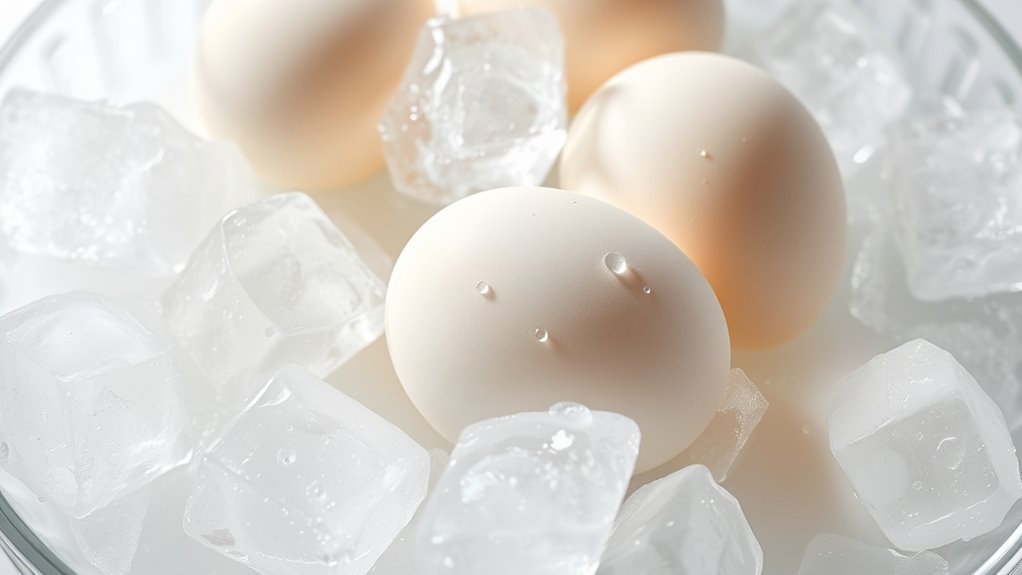
After boiling your eggs, transfer them immediately to a bowl of ice water to stop cooking and prevent that greenish yolk ring. Leaving hard boiled eggs in an ice bath is essential for achieving the perfect texture and making peeling easier.
Leave them fully submerged for at least 10 to 15 minutes; this cools them evenly, contracts the whites, and makes peeling easier. Avoid undercooling, which can toughen shells, or overcooling, which can cause hardness.
Proper timing locks in perfect texture and color. Keep going for tips on handling, storing, and troubleshooting your eggs.
How to Cool Hard Boiled Eggs Right After Boiling
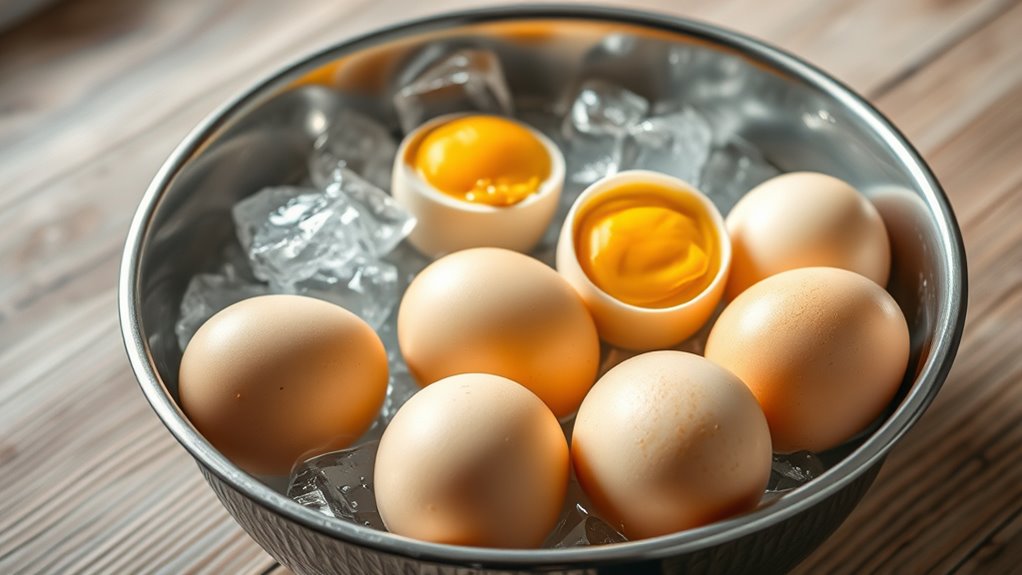
Once your eggs finish boiling, you should immediately transfer them to a bowl of ice water to stop the cooking process. This ice bath helps cool hard boiled eggs quickly, preventing overcooking and that greenish yolk ring. Cooling right after boiling contracts the egg whites, making the shells easier to peel later on.
Make sure to fully submerge the eggs in the ice water to cool them evenly. As the eggs chill, the shell loosens, so tapping them gently before peeling will help you remove the shell smoothly. Proper cooling in the ice bath not only improves texture but also prepares your eggs for easy handling.
Don’t skip this step if you want perfectly cooked, easy-to-peel hard boiled eggs every time.
How Long to Leave Eggs in an Ice Bath for Perfect Results
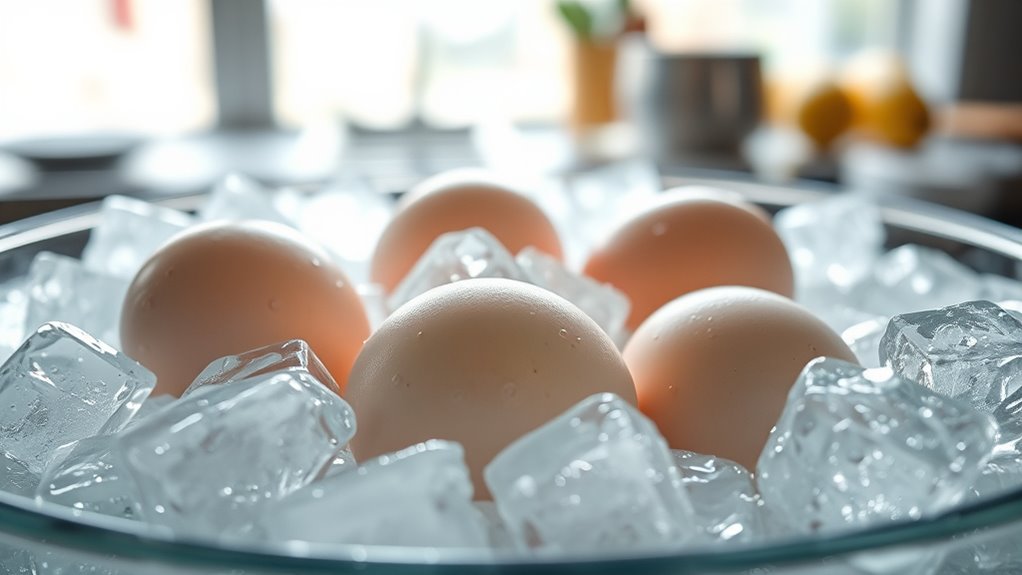
Although you might be eager to peel your hard boiled eggs right away, leaving them in an ice bath for at least 10 to 15 minutes guarantees perfect texture and easy peeling. This cooling time halts the cooking process by eliminating residual heat, preventing overcooking.
Just 1 minute in the ice bath stops cooking, but 10 to 15 minutes ensures thorough cooling and ideal peelability. Cooling for less than a minute risks a tough peel, while extending beyond 15 minutes offers no added benefit.
| Cooling Time | Result |
|---|---|
| Less than 1 minute | Cooking may continue |
| 10 to 15 minutes | Perfect texture and easy peel |
| More than 15 min | Fully cooled, no extra gain |
Why Using an Ice Bath Matters for Hard Boiled Eggs
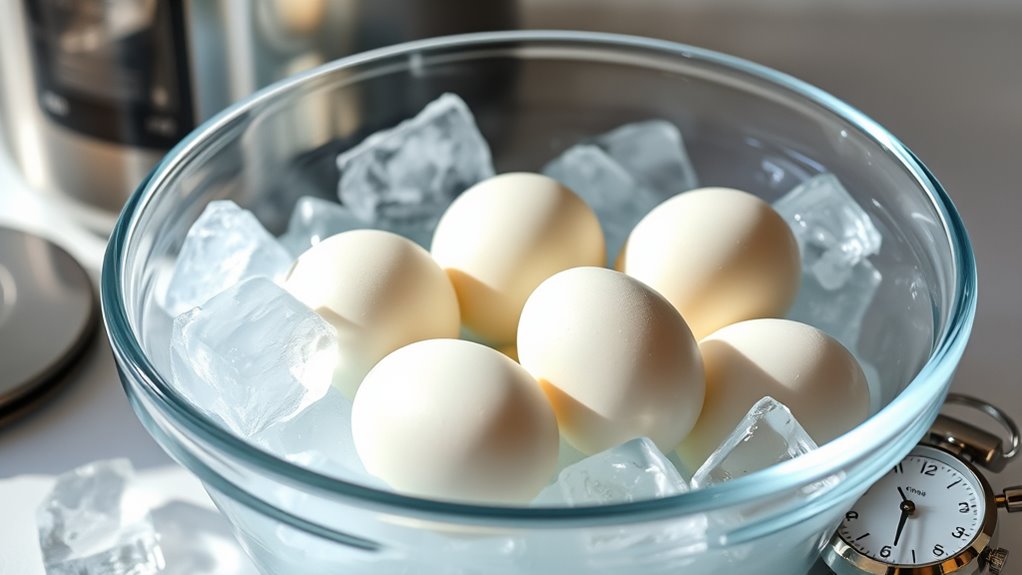
You’ll want to use an ice bath right after boiling to stop the cooking instantly and keep the yolks bright yellow. Cooling your eggs for 1 to 15 minutes helps the whites contract, making peeling much easier.
This simple step prevents overcooking and gives you consistent, perfect eggs every time.
Benefits Of Ice Bath
Because the cooking process continues even after you remove eggs from boiling water, plunging them into an ice bath stops the heat immediately, preventing overcooking and ensuring the yolks stay vibrant and tender. The rapid cooling from the ice bath contracts the egg whites, making peeling much easier and less frustrating.
Without this step, residual heat causes a greenish ring to form around the yolk, which affects both appearance and taste. Using an ice bath also locks in the perfect texture by halting further cooking right away. This simple step not only improves the look and flavor of your hard boiled eggs but also saves you time when peeling.
Taking these benefits into account, an ice bath is an essential part of the hard boiling process.
Timing For Cooling
When you plunge hard boiled eggs into an ice bath right after cooking, you stop the heat instantly, preventing overcooking and preserving the ideal texture. Timing your cooling is essential to get the best results.
Here’s why you should keep eggs in the ice bath for the right amount of time:
- Stop Overcooking: Immediate cooling halts the cooking process, so your eggs won’t turn rubbery.
- Easier to Peel: Spending 5 to 15 minutes in the ice bath contracts the egg whites, making peeling simpler.
- Better Texture and Color: Proper cooling reduces the greenish ring around yolks and keeps the yolk bright yellow with a perfect texture.
Stick to the recommended time in the ice bath for eggs that are easy to peel and delicious every time.
Tips for Keeping Hard Boiled Eggs Fully Submerged in Ice Bath
To keep your hard boiled eggs fully submerged in an ice bath, choose a container large enough to hold plenty of ice and cold water. Gently lower the eggs into the ice bath to avoid cracking shells, which can happen if you drop them in too quickly. Make sure the eggs stay fully submerged throughout the chilling period by adding more ice as needed, since ice remains cold longer and keeps the water temperature steady.
Check the water regularly to maintain submersion and prevent any eggs from floating to the surface. This consistent cold environment stops the cooking process efficiently and makes peeling easier. Following these tips guarantees your eggs cool evenly without damage, giving you perfectly chilled hard boiled eggs ready to enjoy.
What Happens If You Undercool or Overcool Your Eggs
If you undercool your eggs, they’ll keep cooking inside, which can cause greenish yolks and a chalky texture.
On the other hand, overcooling can make the whites rubbery and harder to peel. Sticking to about 15 minutes in the ice bath helps you avoid these issues and get perfectly cooked eggs every time.
Effects Of Undercooling
Although cooling hard boiled eggs might seem straightforward, undercooling or overcooling them can considerably affect their texture and ease of peeling. When you undercool eggs by leaving them in the ice bath for less than a minute, you risk:
- Difficult-to-peel shells that cling stubbornly to the tender whites.
- Greenish discoloration around the yolk caused by residual heat continuing to cook the egg.
- A less firm texture, as the ice bath hasn’t fully set the whites.
Undercooling prevents the eggs from cooling evenly and halting the cooking process, which can spoil both their appearance and texture.
To avoid these issues, make sure to cool your eggs in the ice bath for at least one full minute to ensure ideal peeling and preserve tender whites without discoloration.
Risks Of Overcooling
Even when you cool your eggs properly, leaving them in the ice bath too long can create problems. Overcooling causes the shells to harden excessively, making them tough to peel and increasing shell fragments. The egg whites contract too much, which also complicates peeling.
On the other hand, if you don’t cool your eggs long enough, residual heat continues cooking the yolk, resulting in overcooked eggs and those unappealing greenish rings. Improper cooling duration either way affects texture and appearance. Overcooling won’t risk bacteria growth like undercooling, but it can ruin your peeling experience and the egg’s quality.
To avoid these issues, you need to balance cooling duration carefully, ensuring the eggs cool enough to stop cooking without suffering the downsides of overcooling.
Optimal Cooling Duration
When you cool hard boiled eggs properly, you guarantee they stop cooking quickly, preventing greenish yolks and making peeling easier. The essential cooling duration in an ice bath is vital for perfect results. Here’s what you need to know:
- Undercooling (less than 2 minutes) causes uneven temperature and makes peeling harder.
- Cooling for at least 5 minutes ensures the egg whites contract from the shell, making hard boiled eggs easy to peel.
- Overcooling (15-20+ minutes) fully stops residual heat and can improve peeling but offers no extra benefits past that.
Sticking to the right cooling duration helps you avoid undercooling or overcooling, guaranteeing your eggs peel easily and have a tender texture every time.
How Cooling Time Affects Egg Peeling and Texture
Since cooling eggs in an ice bath immediately after boiling halts the cooking process, you’ll find it easier to peel them and enjoy a better texture. Cooling eggs for at least 2 minutes contracts the egg whites, which helps separate them from the shell, making peeling much simpler.
When eggs are chilled for around 10 to 15 minutes, you reduce the risk of overcooking, preventing greenish yolks and rubbery textures. If you don’t cool them long enough—less than 2 minutes—you’ll struggle with peeling and end up with less firm egg whites.
How to Store Hard Boiled Eggs After Cooling for Freshness
After cooling your hard boiled eggs in an ice bath to stop cooking and improve peeling, proper storage is key to keeping them fresh. To maintain the freshness of your hard-boiled eggs, follow these storage tips:
- Refrigerate unpeeled eggs in their original carton at or below 40°F (4°C) for up to one week.
- If you peel your eggs, consume them the same day to ensure maximum freshness and quality.
- Store peeled eggs in a sealed container to prevent odor absorption and label it with the date to track freshness.
Troubleshooting Common Cooling Problems With Hard Boiled Eggs
If you notice your hard boiled eggs are cracking or sticking to the shell, you probably haven’t cooled them properly in the ice bath. Proper cooling is essential to prevent cracking and make peeling easier. Make sure your eggs are fully submerged in cold water with plenty of ice—shallow water or insufficient ice can cause uneven cooling, leading to cracking or stubborn shells.
Also, don’t rush the cooling time; leaving eggs in the ice bath for at least 15 minutes reduces internal pressure and prevents greenish yolks. If peeling remains difficult, try adding more ice or extending the cooling time. Using cold water instead of warm ensures rapid cooling and shell contraction, making your hard boiled eggs easier to peel and free from cracks.
Frequently Asked Questions
How Long Do You Ice Bath Hard-Boiled Eggs?
You should ice bath hard-boiled eggs for about 10 to 15 minutes to cool them properly and make peeling easier.
Leaving them at least 1 minute stops cooking but longer than 15 minutes isn’t necessary.
What Is the 5 5 5 Rule for Eggs?
The 5-5-5 rule means you boil eggs for 5 minutes, chill them in an ice bath for 5 minutes, then peel after 5 minutes.
You’ll get perfectly soft, creamy yolks every time—no guesswork needed.
What Is the 3 3 3 Method for Eggs?
The 3-3-3 method means you boil eggs for 3 minutes, chill them in ice water for 3 minutes, then peel right away.
You’ll get soft, slightly runny yolks with tender whites, perfect for breakfast or ramen.
Do I Need to Put Boiled Eggs in an Ice Bath?
Don’t put all your eggs in one basket—yes, you should put boiled eggs in an ice bath. It stops cooking, makes peeling easier, and keeps yolks bright, giving you perfectly cooked eggs every time.
Conclusion
Just like a fine wine needs time to breathe, your hard boiled eggs need their moment in the ice bath to reach perfection. Leaving them in for about 10-15 minutes guarantees they cool evenly, making peeling a breeze and locking in that ideal texture.
Skip this step, and you might end up with eggs that are tough to peel or rubbery inside—so don’t rush it. Treat your eggs right, and they’ll reward you every time.
In conclusion, leaving hard boiled eggs in the ice bath for the right amount of time is essential. This step ensures easy peeling and the perfect texture, making your hard boiled eggs truly stand out.