How Long to Cook Beef Fajitas in the Oven With 10 Essential Steps
Cook your beef fajitas in a preheated 425°F oven for 20-25 minutes.
Make sure to slice the steak thinly across the grain and cut the veggies evenly for quick, uniform cooking.
Marinate the steak for at least 30 minutes to boost flavor.
Toss all ingredients with oil and seasoning before spreading them in a single layer on the baking sheet.
Check the steak’s internal temperature to avoid overcooking, then let it rest before slicing.
Follow these steps to get juicy, tender fajitas. You’ll find even more helpful tips ahead to perfect your beef fajita recipe every time.
How Long Should You Cook Beef Fajitas in the Oven?
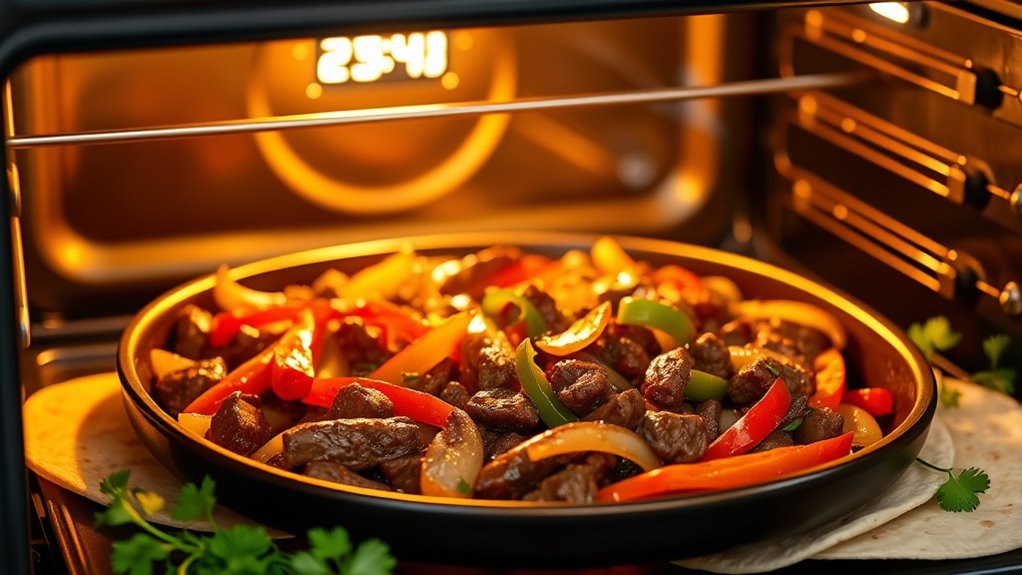
Although cooking times can vary depending on the thickness of your steak, you should generally cook beef fajitas in the oven at 425°F for 20 to 25 minutes. When you use oven baked methods, the heat cooks the meat evenly, especially if your beef is thinly sliced.
Thin slices might only need about 15 minutes to reach the right doneness, so keep an eye on them. For medium-rare, aim for an internal temperature between 130-135°F, which usually takes 20 to 25 minutes. Avoid overcooking beyond 25 minutes, as it will make your beef tough and dry.
After baking, rest your fajita packets for 5 to 10 minutes to lock in juices and enhance flavor.
Best Steak Cuts for Oven Fajitas
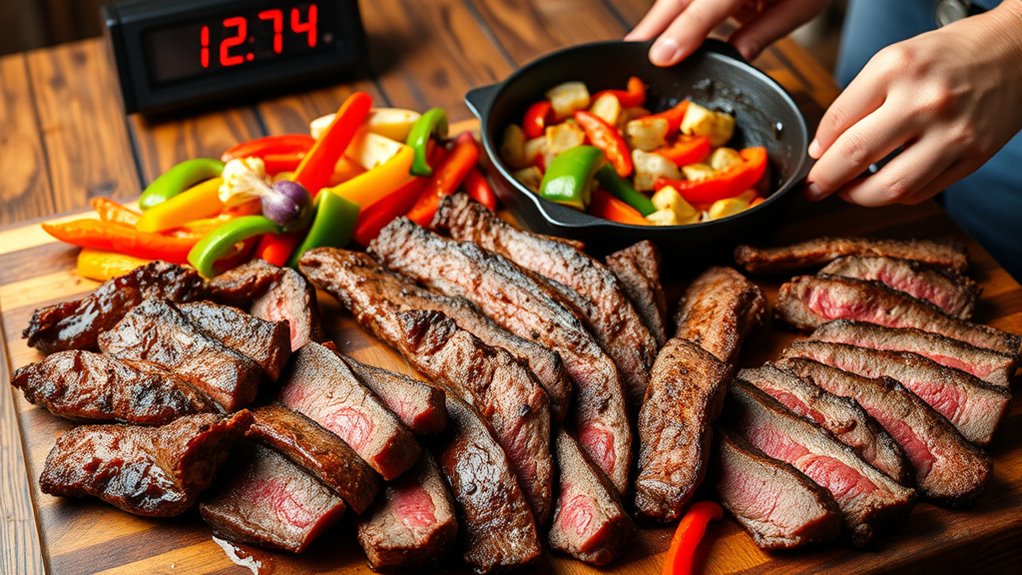
You’ll want to choose steak cuts that balance flavor and tenderness for the best oven fajitas. Flank, skirt, rump, and flat iron steaks all work well, each offering unique characteristics that affect cooking time and texture.
Understanding these differences helps you pick the cut that suits your taste and cooking style.
Recommended Steak Cuts
Choosing the right steak cut can make all the difference when cooking beef fajitas in the oven. To get the best flavor and tenderness, focus on these recommended steak cuts for oven fajitas:
- Flank steak – absorbs marinades well and cooks quickly to medium-rare for ideal tenderness.
- Skirt steak – budget-friendly and flavorful but watch the cooking time to avoid toughness.
- Sirloin – offers a good balance of tenderness and rich taste.
- Rump or flat iron steak – affordable options that stay tender when sliced thinly against the grain.
Avoid tougher cuts like chuck or round since they need much longer cooking times and won’t deliver the tender results you want for fajitas. Stick to these cuts to enjoy juicy, flavorful oven fajitas every time.
Steak Characteristics Explained
When you pick steak cuts for oven fajitas, understanding their characteristics helps you get the best flavor and texture. Flank steak is lean with a fibrous texture, perfect for quick cooking to medium-rare to stay tender. Skirt steak offers more marbling, making it great for high heat roasting.
Cuts like sirloin, flat iron, and hanger steak also work well due to their tenderness and flavor. Avoid rump or round steaks unless sliced thin and cooked carefully to prevent toughness.
| Cut | Texture | Best Cooking Method |
|---|---|---|
| Flank Steak | Lean, fibrous | Quick cook to medium-rare |
| Skirt Steak | Marbled | High heat roasting/broil |
| Sirloin | Tender | Roasting or grilling |
| Flat Iron | Tender, flavorful | Oven roasting |
| Hanger Steak | Tender | Quick, high heat cooking |
Marinating Tips for Flavorful Beef Fajitas
You’ll want to choose marinade ingredients like lime juice and spices to boost flavor and tenderize your beef. Marinate the meat for at least 30 minutes but no more than 3 hours to get the best results.
This timing helps the flavors soak in without compromising the texture.
Marinade Ingredients Selection
Although marinating might seem straightforward, selecting the right ingredients is key to tender, flavorful beef fajitas. Your marinade should balance acidity, seasoning, and moisture to enhance the beef’s natural taste.
Focus on these essentials:
- Oil – Helps distribute flavors evenly and keeps the meat juicy.
- Lime juice – Adds acidity to tenderize and brighten the flavors.
- Soy sauce – Contributes umami depth and saltiness.
- Spices like cumin and chili powder – Provide the classic fajita warmth and complexity.
Don’t forget garlic for an aromatic punch. This combination guarantees your marinade penetrates deeply, creating rich, balanced flavors that make your beef fajitas truly stand out.
Optimal Marinating Duration
Selecting the right marinade ingredients sets the foundation, but how long you let the beef soak in those flavors truly makes a difference. To marinate your flank steak properly, aim for at least 30 minutes to let the flavors start penetrating the meat. For ideal tenderness and taste, marinate the beef between 2 to 4 hours.
If you have the time, marinating up to 24 hours enhances flavor absorption, especially for tougher cuts like flank steak. Just make sure to keep the meat refrigerated during this longer marinating period to prevent spoilage. Using an acidic marinade with lime juice or vinegar helps break down the muscle fibers, tenderizing the beef as it soaks.
Avoid marinating beyond 24 hours to prevent the texture from degrading.
How to Prep Steak and Veggies for Even Cooking
When preparing steak and veggies for fajitas, slicing them uniformly is key to even cooking. To get the best results, follow these steps:
- Slice the flank steak thinly across the grain into ½-inch strips to keep it tender and cook evenly.
- Cut bell peppers and onions into ¼ to ½-inch wide strips for consistent roasting.
- Toss the steak and veggies separately with oil, salt, and spices to guarantee each cooks properly.
- Arrange everything in a single layer on the baking sheet without overlapping, so heat distributes evenly.
This careful prep helps your fajita ingredients cook at the same rate, preventing undercooked or burnt pieces and delivering perfectly cooked steak and veggies every time.
How to Set Oven Temperature for Fajitas
You’ll want to preheat your oven to 425°F for the best results when cooking beef fajitas. This temperature helps the steak sear nicely while the veggies caramelize perfectly.
Keeping the oven at or above 400°F guarantees your fajitas cook evenly and stay flavorful.
Optimal Oven Temperature
Although it might seem tempting to lower the heat for a gentler cook, setting your oven to 425°F (220°C) guarantees your beef fajitas develop the perfect sear and caramelization. This oven temperature ensures even cooking and enhances flavor.
Follow these steps for fajitas in the oven:
- Preheat your oven fully to 425°F before cooking to avoid uneven results.
- Keep the temperature steady; don’t drop below 400°F or exceed 450°F for best texture.
- The high heat shortens cooking time to about 25 minutes, delivering tender steak and crisp veggies.
- Maintain this temperature to achieve ideal browning and caramelization, key to delicious fajitas.
Setting the right oven temperature is vital for fajitas in the oven that impress every time.
Temperature Impact On Cooking
Because setting your oven to the right temperature directly affects how your beef fajitas cook, you should aim for 425°F (220°C) to get the perfect sear and caramelization. This temperature is high enough to quickly cook the meat and vegetables without drying them out.
If you set the oven below 400°F (204°C), your fajitas will take longer to cook, and the flavors won’t develop as well. On the other hand, going above 450°F (232°C) risks burning the meat or making it tough before it’s done.
Always preheat your oven to maintain a consistent temperature, ensuring even cooking throughout. By doing this, you’ll get juicy, flavorful fajitas with nicely caramelized edges every time.
Assembling Sheet Pan Beef Fajitas
When assembling your sheet pan beef fajitas, start by preheating the oven to 400–425°F to guarantee proper caramelization.
Next, follow these steps to assure even cooking and flavor:
- Arrange sliced beef, peppers, and onions evenly in a single layer on a lined or lightly oiled sheet pan.
- Drizzle olive oil over everything, then sprinkle with salt, pepper, and your preferred spices.
- Toss the ingredients gently to coat them evenly with oil and seasonings.
- Add a splash of lime juice or marinade to enhance moisture and flavor during baking.
Keeping everything spread out on the sheet pan helps the heat circulate evenly, preventing steaming and promoting tender, caramelized fajitas.
When to Add Vegetables for Best Texture
To get the best texture from your fajita vegetables, add them to the foil packet during the initial assembly so they cook evenly with the steak. Spread the sliced vegetables in a single layer to ensure even cooking in the oven. Adding them before baking allows the vegetables to soften and caramelize alongside the meat, boosting flavor and tenderness.
If you prefer your vegetables crisper, wait to add them halfway through cooking or roast them separately and mix afterward. Thinly sliced vegetables typically take 15-20 minutes at 425°F to reach ideal tenderness, matching the steak’s cooking time. Keep in mind that adding vegetables too early will soften them more, so adjust timing based on whether you want softer or slightly crunchy vegetables in your fajitas.
Checking Steak Doneness for Juicy Fajitas
Ensuring your steak reaches the right doneness is key to juicy fajitas, so use a meat thermometer to check the internal temperature. Accurate steak doneness prevents overcooking and dryness. Here’s how to do it:
Check steak doneness with a thermometer to keep fajitas juicy and perfectly cooked every time.
- Insert the meat thermometer into the thickest part of the steak.
- Aim for 130-135°F for medium-rare or 140°F for medium doneness.
- Remember, cooking times vary by thickness and oven, so rely on temperature, not time alone.
- Remove steak once it hits the target temperature for perfect doneness.
Using a meat thermometer takes the guesswork out of cooking, ensuring your fajita steak stays tender and juicy every time.
Why Resting Steak Before Slicing Matters
After cooking your steak to the perfect temperature, letting it rest before slicing makes a big difference in flavor and texture. Resting steak for 5-10 minutes lets the juices redistribute evenly, so they don’t escape when you cut into it. If you slice immediately, those flavorful juices run out, leaving your meat dry.
During resting, muscle fibers relax, making the steak more tender and easier to chew. When you slice against the grain after resting, you’ll notice the meat is even softer and more enjoyable. Plus, the steak’s internal temperature stays stable during this time, keeping your desired doneness intact.
Serving and Storing Leftover Fajitas
When you have leftover beef fajitas, storing them properly helps keep their flavor and texture intact for your next meal. Follow these storage tips for the best leftovers experience:
- Store fajitas in an airtight container in the refrigerator for up to 3 days to maintain freshness.
- Remove excess liquid from foil packets before storing to prevent sogginess and spoilage.
- Avoid freezing rice-based fajitas, as reheating can make the rice mushy and affect texture.
- Reheat leftovers gently in a skillet over low heat or microwave with a splash of lime juice or broth to revive moisture and flavor.
Frequently Asked Questions
How Long Do Beef Fajitas Take to Cook in the Oven?
You’ll cook beef fajitas in the oven for about 25 to 30 minutes at 425°F. Thin slices take 15 to 20 minutes.
Don’t forget to let them rest 5 to 10 minutes before serving!
How Long Do Fajitas Take in the Oven?
Fajitas cook in the oven about 25 to 30 minutes, like a warm hug from a cozy blanket.
You’ll want to check the beef’s temperature and let it rest for juicy, flavorful results.
What Temperature Should Fajitas Be Cooked At?
You should cook fajitas at 425°F for a perfect balance of tenderness and flavor.
Check the steak’s internal temperature reaches at least 135°F for safety and rest them 5 minutes before slicing to keep juices intact.
How Long to Cook a Steak in the Oven at 400 Degrees?
Cooking a steak at 400°F is like a quick dance—about 10-15 minutes for medium-rare. You’ll want to check thickness and use a thermometer, then let it rest to keep those juices flowing.
Resting the steak is crucial because it allows the juices to redistribute, making each bite tender and flavorful. Keep an eye on the steak’s internal temperature to ensure it reaches your desired doneness.
Conclusion
Just like a symphony needs every instrument in tune, your beef fajitas rely on timing and technique to hit the perfect note. Remember, cooking them in the oven for about 15-20 minutes at 425°F, plus letting the steak rest, guarantees juicy, flavorful bites every time.
With the right cut, marinade, and patience, your fajitas won’t just satisfy hunger—they’ll create a memorable meal that plays on your taste buds like a well-composed melody.
Mastering how long to cook beef fajitas in the oven is essential for achieving that perfect balance of tenderness and flavor. Follow these 10 essential steps, and your fajitas will be the star of any dinner table.