How You Can Safely Put Aluminum Pans in the Dishwasher
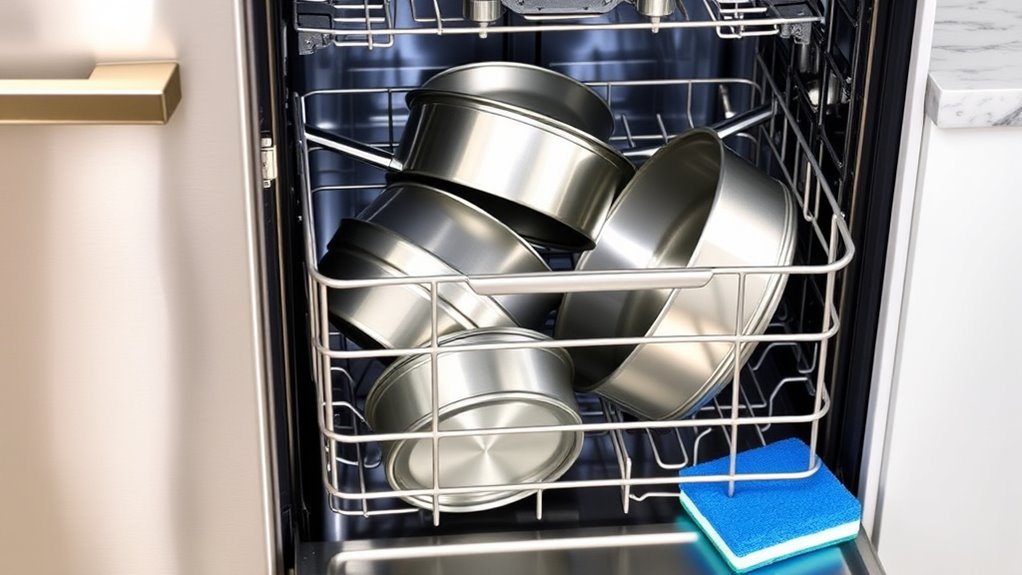
You can safely put aluminum pans in the dishwasher by using a mild, phosphate-free detergent and placing them on the top rack to minimize exposure to harsh sprays.
Choosing a gentle, low-temperature cycle helps protect the pan’s surface and prevents discoloration or dullness.
Avoid heavy-duty settings that can strip coatings and cause oxidation.
Hand washing remains the best option for longevity, but if you want to keep your aluminum cookware looking good, following these tips helps.
To uncover more ways to care for aluminum cookware, keep exploring.
Can You Wash Aluminum Pans in the Dishwasher?
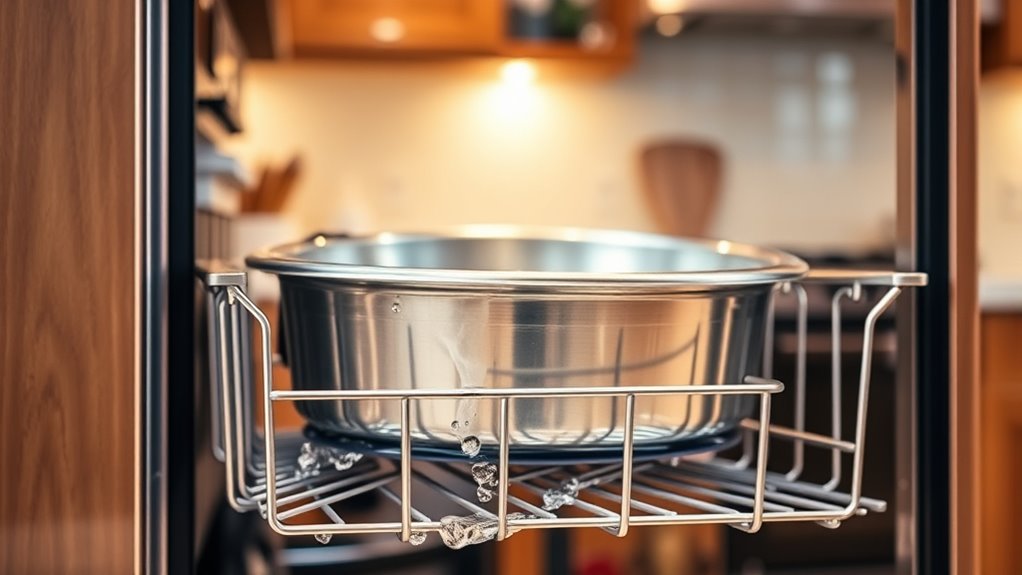
Wondering if you can wash aluminum pans in the dishwasher? While many aluminum pans are technically dishwasher safe, you might notice discoloration or a dull surface developing over time. Anodized aluminum holds up better against dishwashing damage because its surface is harder and more resistant.
However, non-anodized aluminum tends to stain and pit more easily. To reduce damage, place your aluminum pans on the dishwasher’s top rack and avoid harsh detergents or high heat settings. Still, the best way to keep your pans looking new is regular hand washing with mild soap.
This prevents discoloration and surface wear that dishwashers can cause, helping your aluminum cookware last longer and maintain its appearance.
How Dishwasher Detergents Damage Aluminum Pans
You might not realize that the alkaline nature of dishwasher detergents can react harshly with your aluminum pans, stripping away their protective coating. This chemical reaction damages the surface, leading to oxidation and discoloration.
Over time, these effects can weaken your pans and ruin their finish.
Alkalinity Effects On Aluminum
Although dishwasher detergents effectively clean your cookware, their high alkalinity can seriously damage aluminum pans. When aluminum meets alkaline dishwasher soaps, it undergoes oxidation, causing discoloration and surface damage. You might notice a dull, grayish hue or even pitting after repeated washes.
Here’s what alkalinity does to your aluminum pans in the dishwasher:
- Strips protective coatings, exposing bare aluminum.
- Accelerates oxidation, leading to discoloration.
- Causes pitting and surface degradation over time.
- Increases stickiness and roughness, affecting performance.
To protect your aluminum pans, be aware that the alkalinity in dishwasher detergents is the main culprit behind damage, discoloration, and pitting. Avoid prolonged dishwasher exposure to keep your pans looking and working their best.
Coating Degradation Risks
The alkaline nature of dishwasher detergents doesn’t just affect the aluminum base—it also attacks the protective coatings on your pans. These harsh, high-pH agents cause coating degradation by stripping away non-stick coatings and anodized layers, exposing the aluminum underneath.
This leads to surface damage and accelerates oxidation, which dulls and stains your cookware. Repeated dishwasher cycles worsen this effect, shortening the lifespan of your aluminum cookware.
| Effect of Dishwasher Detergents | Result on Aluminum Cookware |
|---|---|
| Alkaline pH | Coating degradation |
| Stripping protective layers | Surface damage and staining |
| Reacting with aluminum | Accelerated oxidation |
| Repeated exposure | Non-stick coating deterioration |
To protect your pans, avoid dishwasher detergents that are too alkaline or frequent dishwashing cycles.
Surface Oxidation Mechanism
When dishwasher detergents come into contact with aluminum pans, their alkaline chemicals react with the metal’s surface, triggering oxidation that dulls and discolors the cookware. This chemical reaction damages the protective aluminum oxide layer, causing:
- Aluminum oxidation to accelerate, stripping away the natural defense.
- Surface damage, including pitting, especially on anodized aluminum.
- Surface discoloration, resulting in stains and blackening.
- Increased surface roughness, which dulls the finish and makes cleaning harder.
Dishwasher detergents’ high pH levels erode both untreated and anodized aluminum, making your pans look worn and damaged. To preserve your cookware’s appearance, it’s essential to understand how these detergents cause oxidation and surface damage.
How to Tell If Your Aluminum Pan Is Dishwasher Safe
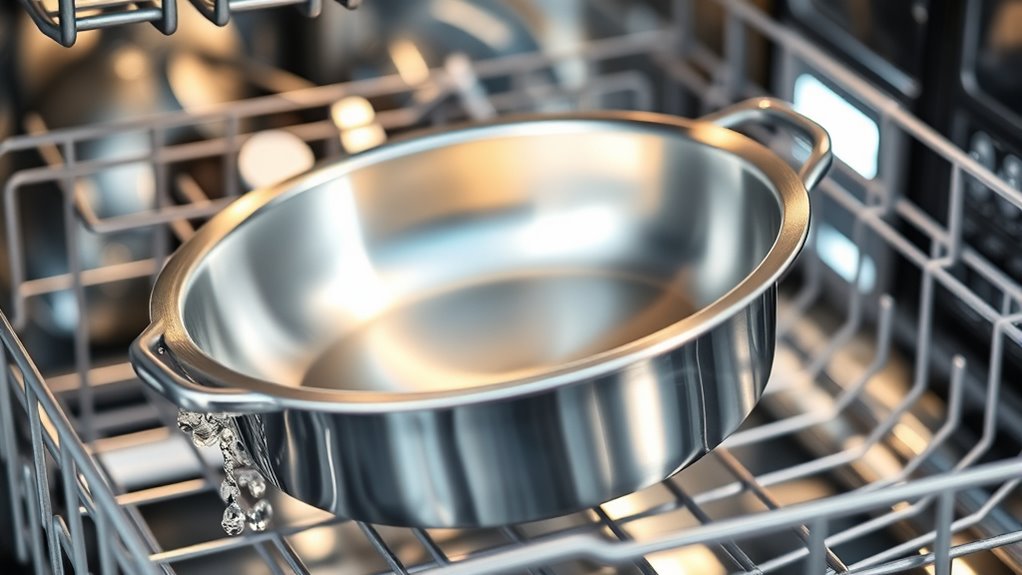
If you want to keep your aluminum pan looking its best, you’ll need to check whether it’s dishwasher safe before tossing it in the dishwasher. Start by examining the manufacturer label or care instructions, which often state if aluminum pans are dishwasher safe.
Anodized aluminum pans typically handle dishwasher cycles well, but uncoated aluminum may suffer discoloration or develop a dull finish. If your pan has a non-stick coating or protective layer, confirm its dishwasher safety to avoid damaging the surface.
After washing, look for signs like scratches or discoloration—these indicate your pan might not be dishwasher safe. When in doubt, consult the product manual or contact the manufacturer to verify your aluminum pan stays in great shape.
Pick the Best Detergent and Dishwasher Cycle for Aluminum
Although aluminum pans can handle some dishwasher cycles, choosing the right detergent and setting is essential to keep them looking their best. To protect your aluminum cookware, follow these tips:
Aluminum pans can go in the dishwasher if you use the right detergent and gentle settings.
- Use a mild, phosphate-free dishwasher detergent to avoid harsh cleaning agents that cause surface damage.
- Select a gentle cycle with low water temperature to minimize discoloration and oxidation.
- Avoid high-temperature or heavy-duty cycles, which accelerate aluminum staining and wear.
- Check the manufacturer instructions and dishwasher settings to ensure compatibility with aluminum pans.
If your dishwasher offers pre-wash or soak options, consider adding gentle cleaning agents like cream of tartar or baking soda.
Steps to Prepare Aluminum Pans Before Dishwasher Use
Before placing your aluminum pans in the dishwasher, you need to prepare them properly to prevent damage and maintain their appearance. Start by thoroughly rinsing your aluminum pans with warm water to remove food debris. Use a soft sponge or cloth to gently clean off any stuck-on grease or residue, avoiding harsh detergents that can cause discoloration or surface damage.
Once clean, make sure the pans are completely dry or lightly oiled to prevent oxidation during the dishwasher cycle. When loading, place aluminum pans on the top rack, keeping them away from heavily soiled items to reduce exposure to high-pressure water.
Following these steps helps protect your aluminum pans and ensures they come out clean and well-maintained after each dishwasher run.
When to Skip the Dishwasher and Hand Wash Aluminum Pans
Because dishwasher detergents and high temperatures can cause discoloration and surface damage, you should hand wash aluminum pans to keep them looking their best. Skip the dishwasher when:
Dishwasher detergents and heat can discolor and damage aluminum pans—hand wash to preserve their appearance.
- Your aluminum pans have anodized aluminum or coated surfaces, as dishwasher damage can strip protective layers.
- You notice repeated dishwasher use has left a sticky, blackened, or dull surface.
- The manufacturer instructions advise against dishwasher cleaning.
- Your cookware has a polymerized oil seasoning that you want to preserve.
Hand washing helps maintain the pan’s appearance and functionality, preventing pitting and dullness common with dishwasher use. Always check the manufacturer instructions first, but when in doubt, hand wash to protect your aluminum pans and extend their lifespan.
Frequently Asked Questions
Can Aluminum Pans Go in the Dishwasher?
Yes, you can put aluminum pans in the dishwasher, but they might discolor or dull over time.
To protect them, use the top rack, choose a gentle cycle, or hand-wash to keep their finish looking great.
Why Can’t You Put Aluminium in the Dishwasher?
You can’t put aluminum in the dishwasher because the detergent and heat damage its protective layer, causing discoloration, pitting, and dullness.
To keep your pans looking great, it’s best you hand wash them instead.
Why Do People Put a Ball of Aluminum Foil in a Dishwasher?
People put a ball of aluminum foil in the dishwasher to reduce static and prevent silverware tarnish. You’ll find it helps react with minerals and detergents, easing rust and buildup without harsh chemicals.
This simple trick can extend the life of your silverware and keep it looking shiny. It works by creating a small electrical charge that counteracts the corrosive effects of water minerals.
Many people use this method as a natural alternative to chemical cleaners. It’s an easy and inexpensive way to maintain your dishwasher and utensils.
How to Clean Aluminum That Went Through the Dishwasher?
Oh, sure, just run your aluminum through the dishwasher and watch the magic happen!
To fix it, soak in baking soda and warm water, then gently scrub and polish with a vinegar-salt-flour paste to restore shine.
Conclusion
About 70% of aluminum pans show dulling or discoloration after just one dishwasher cycle. To keep your pans shining, it’s best to prep them properly and choose a gentle detergent and cycle.
While dishwashers offer convenience, sometimes hand washing is the safer bet to preserve that bright finish. With a little care, you can enjoy your aluminum pans longer without sacrificing cleanliness or appearance.
By following these tips, you can safely put aluminum pans in the dishwasher while maintaining their look and durability. Proper care ensures your aluminum cookware stays in great condition for years to come.