Can You Put a Tin Foil Pan in the Oven?
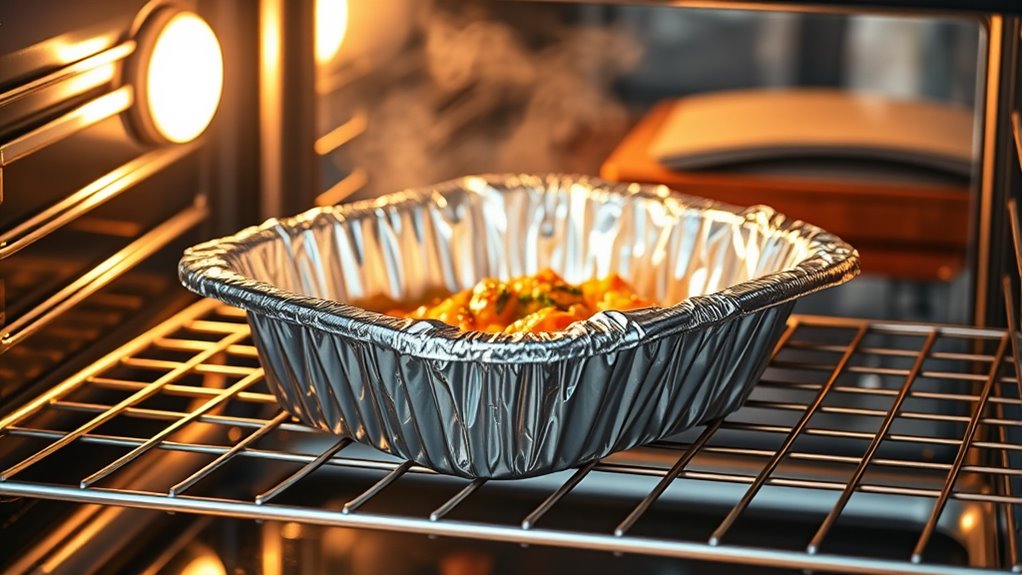
Yes, you can put a tin foil pan in the oven as they can handle temperatures up to 500°F. Tin foil pans are popular for baking, roasting, and reheating because they are convenient and disposable.
Just be sure to place the pan on a sturdy baking sheet or tray to avoid warping or spills. Avoid direct contact with heating elements, and don’t use them under the broiler or over open flames.
Proper support and care make them great for oven use. If you want to know how to get the best results and keep your pans intact, keep going.
How Heat Resistant Are Tin Foil Pans?
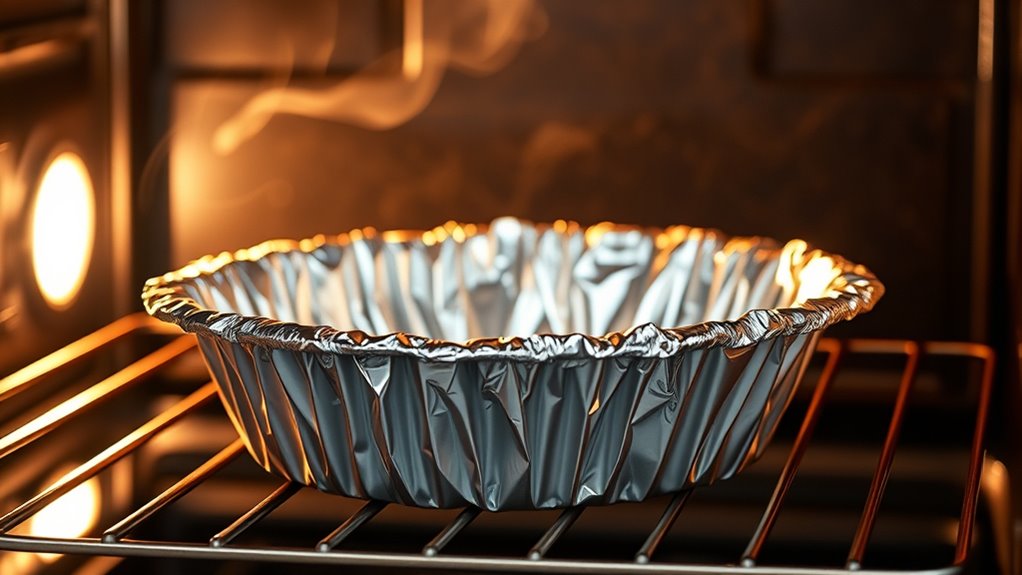
How much heat can tin foil pans actually handle? Generally, tin foil pans offer good heat resistance up to around 500°F, making them suitable for most baking and roasting tasks.
However, if you expose these pans to oven temperatures exceeding that limit, they might warp or even melt due to their thin metal construction. To avoid warping, especially at higher temperatures, consider using heavy-duty tin foil pans with thicker walls—they’re less likely to deform.
You can also place a baking sheet underneath to provide extra support and prevent warping. Keep in mind, tin foil pans aren’t designed for direct open flames or broilers, where their heat resistance markedly drops.
Should You Place Tin Foil Pans Directly on Oven Racks?
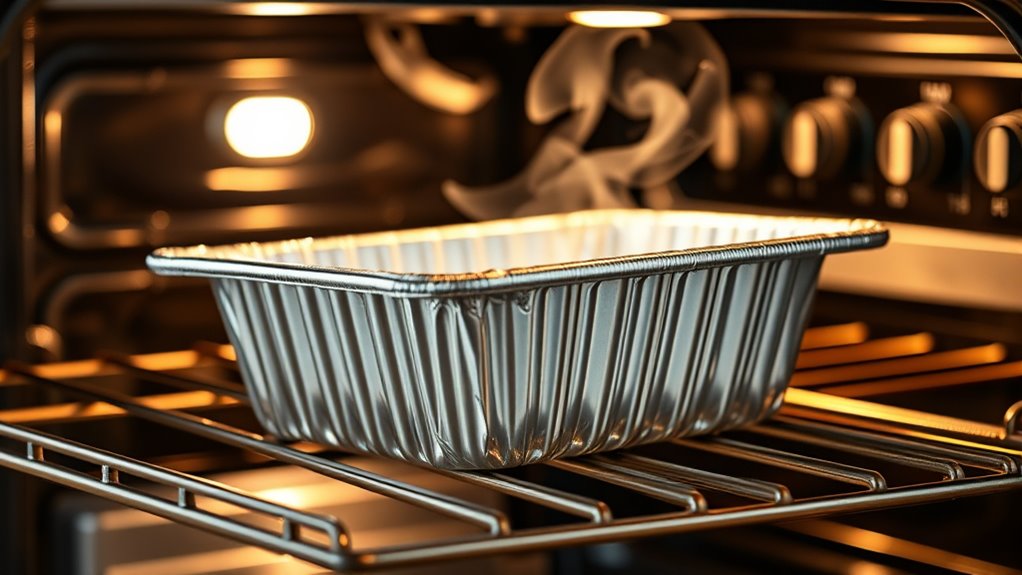
You can place tin foil pans directly on oven racks since they handle high heat well and promote even cooking. For added stability and to catch spills, consider putting a baking sheet underneath the pan.
Just be sure to avoid placing pans over open flames or heating elements to keep things safe.
Direct Rack Placement
Although tin foil pans can be placed directly on oven racks, it’s best to support them with a baking sheet for added stability. Direct placement on oven racks allows even heat exposure, which can enhance cooking results. However, lightweight tin foil pans may warp or spill if placed directly without support.
If you choose direct rack placement, make sure your pan is oven-safe and sturdy enough to hold your food without bending or collapsing. Some bakers prefer placing smaller or more rigid pans directly on the rack for convenience, but this comes with a higher risk of accidents.
To maintain stability and avoid messes, consider the pan’s weight and thickness before deciding on direct placement on your oven racks.
Using Baking Sheets
Placing tin foil pans directly on oven racks works well for even heat distribution, but using a baking sheet underneath can add stability and make handling safer. When you place a foil pan on a baking sheet, it prevents warping and reduces the risk of spills, especially when the pan is heavy or filled.
While direct placement on the oven rack ensures ideal oven airflow and consistent cooking, the added stability from a baking sheet helps you maneuver the pan more easily. Just make sure the foil pan fits securely and doesn’t block vents or disrupt oven airflow to maintain even heat.
Using a baking sheet is a smart choice when you want extra support without sacrificing cooking efficiency.
Handling Safety Tips
When you put a tin foil pan directly on an oven rack, it can handle typical baking temperatures without issue. However, for better oven safety and easier foil pan handling, it’s wise to place the pan on a baking sheet or silicone mat. This provides extra support for foil pans, especially if they hold heavy or liquid-filled dishes, reducing the risk of warping or spills.
Always check that your foil pan is oven-safe and stays within the recommended temperature limits to avoid damage. Using parchment paper underneath can help prevent sticking and make removal safer. While direct placement on racks is common, adding support not only protects your food but also ensures safer, more stable handling throughout baking.
How to Keep Tin Foil Pans From Warping and Spilling
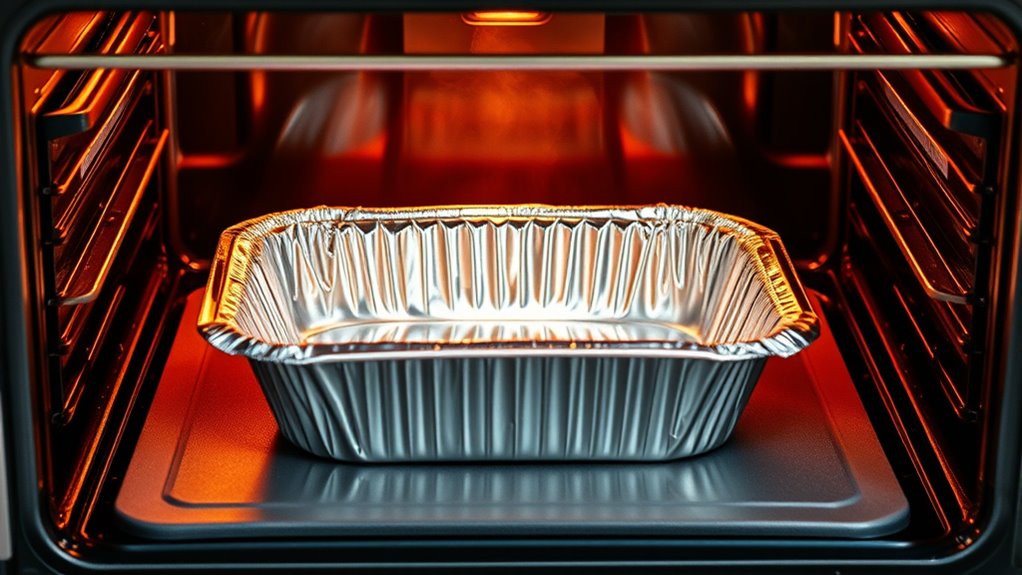
To keep your tin foil pans from warping and spilling, always support them with a sturdy baking sheet and avoid overfilling. Placing the pan on a flat oven rack guarantees stability and helps maintain its shape.
Also, let the pan cool slowly after baking to prevent sudden warping.
Preventing Pan Warping
Although tin foil pans are convenient, they can easily warp and spill if not handled properly. To prevent warping, always place your foil pan on a sturdy baking sheet for added support. This helps the pan maintain its shape during baking in the oven, especially when exposed to high heat.
Avoid overfilling the pan with heavy or dense foods to reduce stress on its structure. When preheating your oven, do it gradually to prevent sudden temperature changes that can deform the pan. If your foil pan is lightweight or thin, supporting it with a rigid surface is essential.
Also, rotating the pan halfway through baking ensures even heat distribution, further minimizing the risk of warping and maintaining your dish’s presentation.
Avoiding Spills During Baking
Since tin foil pans can be fragile, you should always support them with a sturdy baking sheet to prevent warping and spills during baking. Proper handling and baking precautions are key to oven safety and avoiding messes.
To keep your foil pans stable and reduce spills, follow these tips:
- Don’t overfill foil pans; leave space to prevent overflow and spills.
- Place pans on the oven’s center rack for even heat and better stability.
- Use oven mitts carefully when moving pans to avoid tipping.
- Use a silicone spatula or spoon to transfer food gently, minimizing spills.
Best Foods to Cook in Tin Foil Pans
When you choose tin foil pans, you get a versatile cooking tool that handles a variety of dishes with ease. Their excellent heat conduction makes them perfect for baking casseroles, lasagna, and layered desserts. You can also roast vegetables, potatoes, and small cuts of meat evenly while ensuring oven safety since they’re disposable and lightweight.
Tin foil pans excel at baking bread, muffins, and individual treats like mini quiches or cheesecakes. They’re great for grilling tasks such as garlic bread or foil packet meals, too. Plus, their convenience extends beyond cooking; you can reheat leftovers and use them for food storage or transporting meals.
This makes tin foil pans an efficient choice for both cooking and cleanup, combining functionality with practicality in your kitchen.
Can You Broil or Use Tin Foil Pans Over Flames?
If you want to broil with tin foil pans, you should handle them carefully because their thin construction may warp or melt under intense heat. While aluminum foil pans can endure broiling temperatures up to 500°F, lightweight pans risk warping or melting during high heat oven use.
Handle tin foil pans cautiously when broiling, as their thin design may warp or melt under high heat.
Avoid placing tin foil pans directly over flames since they can catch fire or deform. To broil safely:
- Always support tin foil pans on a sturdy baking sheet to prevent warping and spilling.
- Never expose foil pans to direct flame for long periods.
- Monitor pans closely to avoid accidents or damage.
- Use foil pans mainly under the broiler’s indirect heat, not over open flames.
This approach ensures your tin foil pans hold up well when broiling without warping or melting.
Are Tin Foil Pans Safe for Reheating and Freezing?
Although tin foil pans are lightweight, you can safely use them to reheat food in the oven as long as you stick to recommended temperatures and check that the pans are oven-safe. When reheating, avoid acidic foods like tomato sauce in foil pans to prevent metal reactions.
For freezing, tin foil pans work well if you wrap them properly to prevent freezer burn and oxidation. Make sure the pans aren’t damaged or too thin, as this can cause warping or leaks during reheating or freezing.
To maintain food safety, label and date your foil pan before storing it in the freezer, helping you track storage time and keep food fresh. Following these tips ensures you use tin foil pans safely for both reheating and freezing.
Cleaning and Reusing Tin Foil Pans
Wondering how to clean and reuse tin foil pans without damaging them? Proper cleaning and storage are key to keeping your pans reusable. After use, avoid letting food residue dry by washing promptly with warm water and mild detergent.
Steer clear of abrasive scrubbers to prevent damage to the foil’s surface. Also, don’t soak pans for too long, as moisture can weaken the material.
To maintain your tin foil pans:
- Wash gently right after use
- Avoid harsh scrubbing tools
- Dry thoroughly before storage
- Store in a dry place to prevent warping
Following these steps helps preserve your pans’ integrity, letting you reuse them safely for baking or cooking without compromising performance.
Tips for Supporting Tin Foil Pans in the Oven
When using tin foil pans in the oven, giving them proper support is essential to prevent warping and spills. Placing a lightweight pan directly on the oven rack risks bending, especially with heavy ingredients. Instead, set the pan on a sturdy baking sheet or tray for even weight distribution.
Adding a silicone baking mat or parchment paper underneath further stabilizes the pan and simplifies cleanup. Always support deep or heavy pans with a solid surface to avoid collapse and catch drippings.
| Tip | Purpose |
|---|---|
| Use sturdy baking sheet | Distributes weight evenly |
| Place on oven rack | Quick, but risk of warping |
| Add silicone mat/parchment | Adds stability, eases cleanup |
| Use cookie sheet | Catches spills, eases handling |
Frequently Asked Questions
Can You Put a Foil Pan in the Oven?
Yes, you can put a foil pan in the oven, but you should place it on a baking sheet to avoid warping or spills.
Just avoid using it under the broiler or over open flames to prevent damage.
How to Know if an Aluminum Pan Is Oven Safe?
Picture a metal warrior braving fiery battles—check your aluminum pan’s label or packaging for oven-safe symbols or temperature limits.
If it lacks plastic or wood parts, you’re usually good to roast, bake, or reheat safely.
Can I Put Aluminum Foil in the Oven at 350?
Yes, you can put aluminum foil in the oven at 350°F. Just avoid placing it directly on heating elements or the oven bottom.
Don’t fully line the oven with foil to prevent airflow issues or damage. Using foil properly helps ensure even cooking and keeps your oven safe.
Is an Aluminum Tray Okay for an Oven?
Back in the days of rotary phones, you’d find aluminum trays perfectly fine for oven use. You can safely bake or roast with them, but make sure they’re supported and not exposed to direct flames or broilers.
Conclusion
You can definitely use tin foil pans in the oven, but treating them with care keeps your cooking smooth and spill-free. Think of them as delicate dancers on a hot stage—support them well, avoid direct flames, and they’ll perform beautifully.
Whether reheating or roasting, these pans offer convenience without sacrificing safety. Just follow a few simple tips, and you’ll have a trusty kitchen companion ready to catch every delicious moment.
In conclusion, tin foil pans are oven-safe when used properly. Ensuring they are well-supported and away from direct heat will help you enjoy hassle-free cooking with these versatile pans.