How Can You Place Hot Pans on Granite Safely?
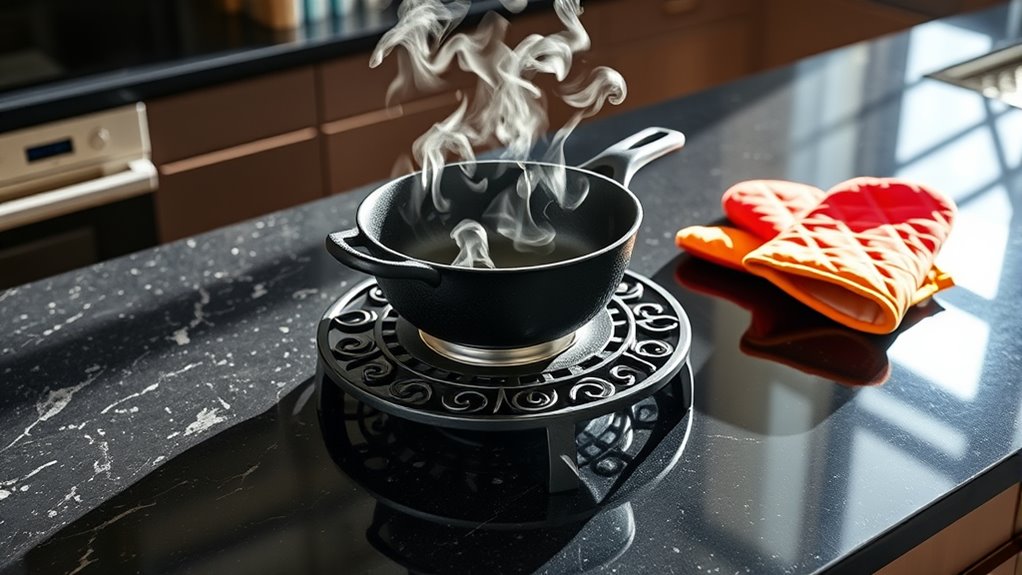
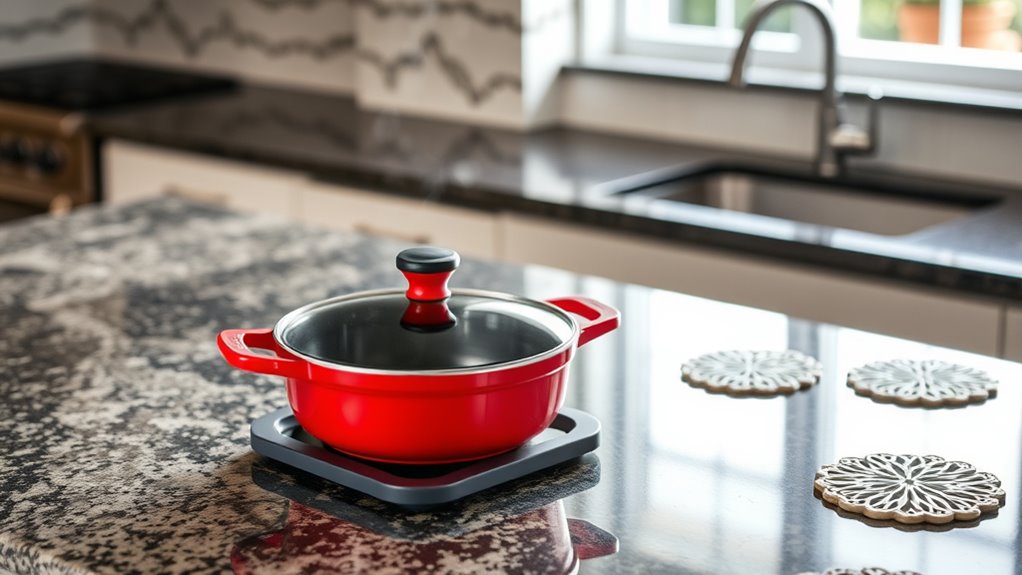
You can safely place hot pans on granite by always using heat-resistant trivets or pads made from silicone, cork, or metal with rubber feet. This method helps protect your granite countertops from damage caused by high temperatures.
Avoid setting hot pans directly on the granite to prevent thermal shock, which causes cracks and weakens the sealant.
Always lift pans gently and never drag them across the surface to avoid scratches.
Regularly inspect and reseal your granite to maintain its protection and durability.
To understand more about preventing damage and maintaining your stone, keep exploring the best care tips.
Why Avoid Placing Hot Pans on Granite
While granite is known for its heat resistance, placing hot pans directly on its surface can still cause damage over time. When you set hot pans on granite without protection, the sudden temperature change may lead to thermal shock. This can create tiny cracks that weaken the stone’s structure.
Although granite resists heat better than many materials, it isn’t immune to damage from repeated exposure. Over time, these cracks can worsen, compromising your countertop’s durability and appearance. Plus, granite holds heat, so touching a surface with hot pans on it risks burns or injuries.
To avoid damage and keep your kitchen safe, you should always use trivets or potholders. These simple steps protect both your granite and your hands from harm.
How Heat Can Damage Granite Sealants
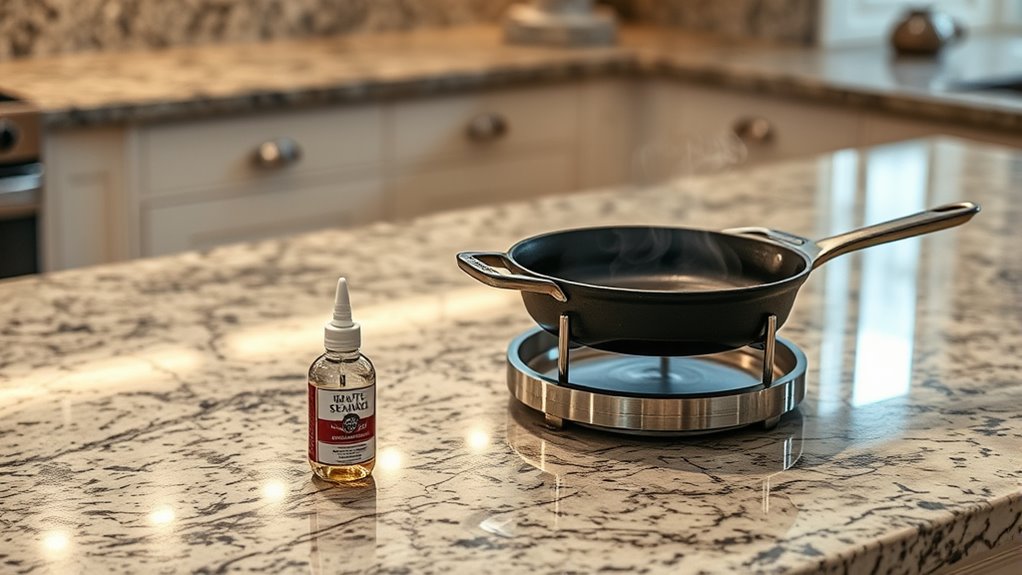
You might not realize that heat can weaken the sealant protecting your granite over time. Placing hot pans repeatedly speeds up this wear, making your countertop more prone to stains and damage.
To keep your granite looking great, you’ll need to protect the sealant and re-seal it regularly.
Sealant Vulnerability To Heat
Although granite itself can withstand high temperatures, the sealant protecting its surface is much more vulnerable to heat. When you place hot pans directly on granite, the sealant can weaken, losing its heat resistant qualities. Repeated exposure to high temperatures breaks down this protective barrier, making your countertop more susceptible to liquid damage and stains.
Rapid temperature changes from hot cookware may also cause micro-cracks in the sealant, further compromising its effectiveness. Since most sealants have temperature tolerance limits, exceeding them speeds up deterioration.
To keep your granite looking great, avoid exposing the sealant to excessive heat, and use proper protection. Maintaining the sealant’s integrity is essential to prevent staining and preserve your countertop’s durability.
Heat Accelerates Sealant Wear
Heat doesn’t just threaten the sealant’s initial strength—it speeds up its wear over time. When you place hot pans directly on granite, the sealant suffers from heat damage and accelerated sealant wear. Thermal expansion causes micro-cracks that let stains and liquids seep in.
Consistent exposure to temperatures above 120°F (49°C) breaks down the protective layer faster.
| Factor | Effect on Sealant | Result |
|---|---|---|
| High Heat Exposure | Accelerates sealant wear | Reduced protection |
| Thermal Expansion | Causes micro-cracks | Compromised integrity |
| Direct Contact | Increases heat damage | Faster sealant breakdown |
| Temperatures > 120°F | Weakens sealant chemically | Stain and liquid penetration |
| Repeated Exposure | Cumulative damage | Shortened sealant lifespan |
Avoiding direct heat helps you maintain sealant durability longer.
Protecting Sealant Integrity
When granite sealants face repeated high temperatures, they weaken and lose their ability to protect your countertops effectively. Heat breaks down the sealant’s chemical structure, causing microcracks and reducing its protective power. Over time, this deterioration makes your granite more vulnerable to stains, liquid damage, and surface etching.
While properly applied sealants can handle brief heat exposure, prolonged or intense heat accelerates their wear. To protect your sealant’s integrity, avoid placing hot pans directly on granite surfaces. Use trivets or heat pads instead to shield the sealant from excessive heat.
Regularly resealing your granite also helps maintain its resistance, ensuring the sealant keeps protecting your countertops against heat and other damaging elements. Taking these steps preserves both your granite’s beauty and durability.
What Is Thermal Shock and Can It Damage Your Granite?
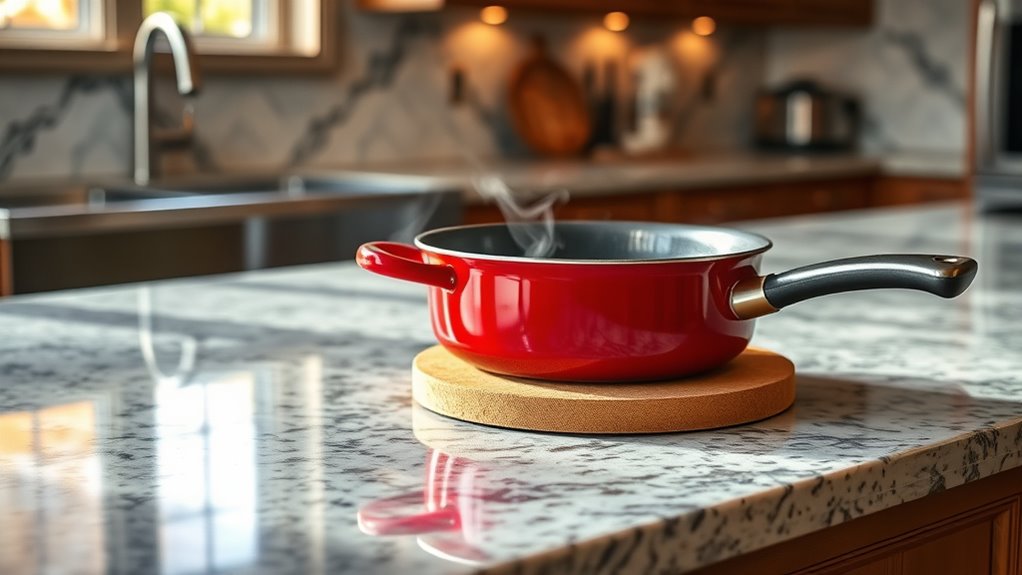
If you place a hot pan directly on a cold or wet granite surface, you risk causing thermal shock—a sudden temperature change that can crack or fracture the stone. Thermal shock happens when granite countertops experience extreme temperatures too quickly, stressing the stone.
While granite naturally handles gradual heat shifts well, sudden exposure to intense heat on a cold or damp surface raises the chance of damage. Extreme temperature differences, like moving a hot pan straight from the stove onto wet granite, increase the risk of cracking.
Though thermal shock is uncommon during typical kitchen use, it’s important to be cautious. Avoiding rapid temperature shifts will help maintain your granite’s durability and appearance over time.
Best Practices for Using Trivets With Hot Pans on Granite
When using hot pans on granite, always choose trivets made from heat-resistant materials with sturdy feet or rubber bases to keep them stable and protect your countertop. Place your trivet carefully away from edges to avoid accidents, and never drag pans across the surface—lift and set them gently instead.
Regularly check your trivets for damage to make certain they continue shielding your granite effectively.
Choosing Appropriate Trivet Materials
Although granite is heat-resistant, you shouldn’t place hot pans directly on its surface. To protect your granite, choose a trivet made from heat-resistant materials like silicone, cork, or metal with rubber feet. These materials prevent heat transfer and protect your countertop from damage.
Make sure your trivet is large enough to fully support the base of your hot pan, distributing weight evenly and avoiding direct contact with the stone. Also, pick a trivet with a non-slip backing or feet to keep it stable when you place or remove hot cookware.
Avoid glass or ceramic trivets, as they can crack or cause thermal shock. Regularly clean your trivet to prevent residue buildup that could scratch or stain your granite surface.
Preventing Heat Damage Risks
To protect your granite countertop from heat damage, always place hot pans on heat-resistant trivets, hot pads, or silicone mats instead of directly on the stone. Using heat-resistant trivets helps to protect granite counter surfaces by creating a barrier that prevents intense heat from transferring and causing cracks or discoloration.
Make sure your trivets have feet or non-slip backing to keep them stable and promote airflow, which dissipates heat more effectively. Place hot pans on the trivet immediately after cooking to keep your countertop safe.
Regularly check your trivets for wear and replace them when necessary to maintain protection. For extremely hot pans, layer a towel or thick pad under the trivet to keep hot pans safe and further protect granite counter surfaces from heat damage.
Trivet Placement And Usage
Because placing hot pans directly on granite can cause damage, you should always use a heat-resistant trivet or pad. Choose a trivet made from silicone, cork, or metal with protective padding to guarantee ideal heat dispersion. For safe placement, position the trivet centrally under the hot pan to evenly spread the heat and avoid stressing any one spot on your granite.
Opt for trivets with feet or rubberized bases to provide insulation and prevent slipping, keeping your pan stable. Regularly inspect your heat-resistant pad or trivet for wear or damage, replacing it as needed to maintain effective protection. By following these best practices for trivet placement and usage, you’ll keep your granite countertop safe from heat damage while cooking.
Inspecting and Maintaining Granite After Heat Exposure
When you place hot pans on your granite, it’s important to regularly check the surface for small cracks or discoloration, especially where direct contact occurred. These signs can indicate damage that might compromise your granite’s heat resistance.
To maintain protection, re-seal your granite at least once a year with a high-quality sealant like Laticrete StoneTech BulletProof. After heat exposure, clean the surface using a pH-neutral, granite-specific cleaner to remove residues that could weaken the sealant.
Avoid abrasive scrubbers or harsh chemicals, as they wear down the sealant, increasing vulnerability to heat damage. If you spot any cracks, chips, or discoloration, consult a professional promptly.
Proper inspection and maintenance help preserve your granite’s durability and appearance after heat exposure.
Choosing Heat-Resistant Stones for Your Kitchen
Although many stones can withstand heat, selecting the right heat-resistant material for your kitchen guarantees durability and safety when placing hot pans. Granite and quartzite rank among the best heat-resistant stones, with quartzite tolerating temperatures up to 1,200°F, making it ideal for frequent hot pan use.
Granite handles heat well but can crack with sudden temperature changes, so using trivets is wise. Engineered surfaces like Dekton also stand up to direct heat, perfect for cooktops or hot pads. Avoid materials like marble, as they’re less heat-resistant and prone to damage or discoloration.
Frequently Asked Questions
Can You Put Hot Pans Directly on Granite?
You can put hot pans directly on granite briefly, but it’s best to use trivets or hot pads. Prolonged heat can damage the sealant, and sliding pans may scratch, so always lift them carefully to protect your surface.
Can You Put Hot Pots on Top of Granite Countertops?
You can put hot pots on granite countertops, but don’t get careless. Using trivets or pads protects your granite’s sealant and prevents cracks.
Avoid repeated direct contact to keep your surface looking flawless and lasting longer.
What Temperature Will Damage Granite Countertops?
You’ll damage granite countertops if temperatures exceed about 480°F (250°C), especially above 600°F (316°C), which can cause cracks or discoloration.
Avoid placing extremely hot pans directly on granite to keep it safe and intact.
Can I Put a Crockpot on My Granite Countertop?
Yes, you can put a crockpot on your granite countertop, but always use a heat-resistant trivet or hot pad.
This protects the sealant and granite from heat damage, ensuring your countertop stays beautiful and durable longer.
Conclusion
You shouldn’t ever place hot pans directly on your granite—it’s like asking it to survive a blazing volcano! Heat can crack sealants and cause thermal shock, damaging your beautiful countertop.
Always use trivets or heat-resistant pads to protect your granite. Regularly inspect and maintain your surface to keep it looking flawless.
By treating your granite with care and using proper heat protection, you’ll make certain it stays stunning and durable. This way, your granite countertop will stand up to all your cooking adventures without a scratch.