How Do You Safely Boil Water in an Aluminum Pan?
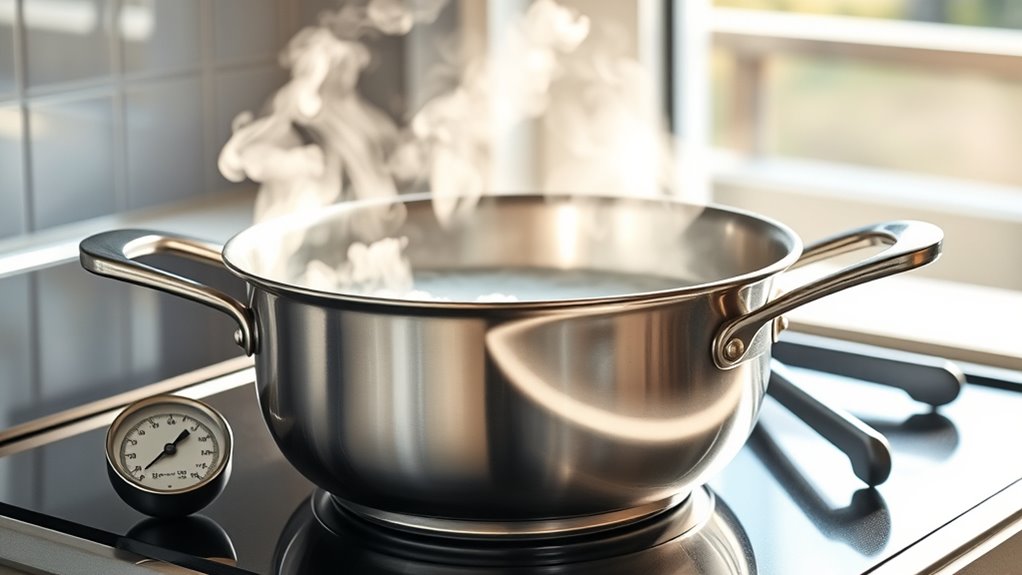
You can safely boil water in an aluminum pan by first reinforcing its natural oxide layer. Start by boiling water once, then rinse and dry the pan thoroughly. This process helps maintain the pan’s protective barrier.
Avoid boiling acidic or salty liquids in the aluminum pan, as they can damage this protective oxide layer. Such damage increases the risk of metal leaching into your food or water.
Use gentle cleaning methods to preserve the surface. Also, regularly check for scratches or corrosion, which can raise health risks. Taking these steps helps keep your pan safe to use.
Keep exploring to understand maintenance tips and when to replace your pan for optimal safety.
Health Risks of Boiling Water in Aluminum Pans
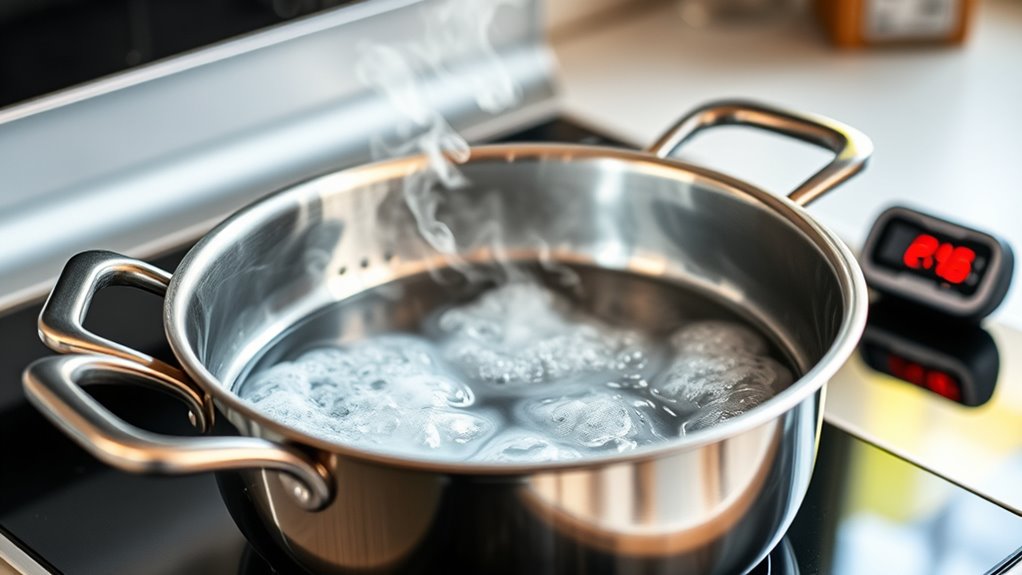
Although you might worry about aluminum leaching into your water, boiling plain water in aluminum pans is generally safe because the protective oxide layer on the surface keeps metal release minimal and well below WHO safety limits. When you boil water in aluminum cookware, this thin oxide coating acts as a barrier, preventing significant aluminum from dissolving into the water.
However, if you boil acidic or highly alkaline liquids, aluminum leaching can increase, potentially posing health risks. Repeated boiling of plain water in scratched or damaged aluminum pans might slightly raise your aluminum intake over time, but studies show this remains low under normal conditions.
How to Get Your New Aluminum Pan Ready for Boiling Water
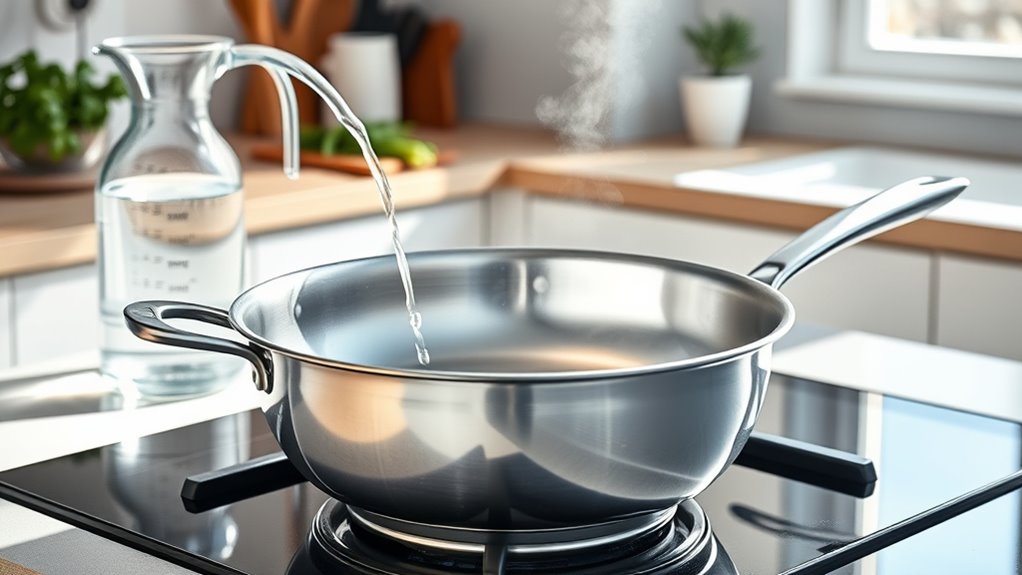
Before you start boiling water in your new aluminum pan, you should prepare it properly to guarantee safety and longevity. First, rinse your aluminum cookware with warm water and mild dish soap to remove manufacturing residues. Then, fill it with clean water and boil for at least 30 minutes.
This process helps form a protective oxide layer, reducing metallic taste and preventing corrosion. After boiling, discard the water, rinse, and dry the pan completely. Repeating boiling once more strengthens the oxide layer. Avoid abrasive scrubbers to keep this layer intact.
| Step | Purpose |
|---|---|
| Rinse with soap | Remove residues |
| Boil water 30 min | Form protective oxide layer |
| Rinse & dry | Prepare for safe use |
Safe Boiling Practices for Aluminum Cookware
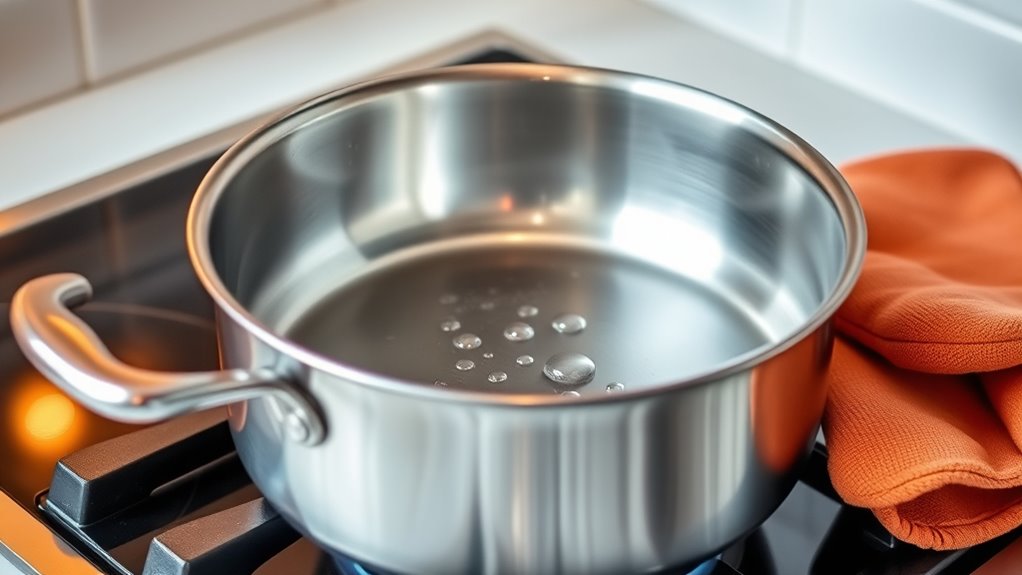
When you boil water in your aluminum pan, always make certain it’s properly seasoned and free from scratches to maintain its protective oxide layer. Before regular use, boil water once in the pan to promote this oxidation. While boiling water, avoid using abrasive sponges or harsh cleaners that can damage the aluminum cookware’s surface.
Regularly inspect your pan for dents, deep scratches, or corrosion—any damage may compromise safety and require replacement. Handle and store your aluminum cookware carefully to prevent surface damage that could increase metal leaching during boiling water.
Liquids to Avoid Boiling in Aluminum Pans
You shouldn’t boil highly acidic liquids like lemon juice or vinegar in aluminum pans because they can break down the protective oxide layer and cause metal to leach.
Avoid boiling saltwater or salty solutions, too, since salt speeds up corrosion and damages the pan’s surface. Keeping these liquids out of your aluminum cookware will help maintain its safety and longevity.
Acidic Liquids Caution
Since acidic liquids like lemon juice or vinegar can cause aluminum to corrode, you should avoid boiling them in aluminum pans. Boiling water alone releases negligible aluminum, but acidic liquids lower pH, damaging the protective oxide layer and increasing metal leaching. Prolonged exposure can discolor or pit your pan, reducing its lifespan and posing health risks.
To help you understand, here’s a quick comparison:
| Liquid Type | Effect on Aluminum | Recommended Action |
|---|---|---|
| Plain Water | Minimal aluminum leaching | Safe for boiling |
| Lemon Juice | Increases corrosion | Avoid boiling |
| Vinegar | Causes pitting | Avoid boiling |
| Acidic Mixtures | Damages surface | Avoid boiling |
Stick to boiling water or neutral liquids to keep your aluminum pans safe and durable.
Avoid Salted Water
Just as acidic liquids can harm your aluminum pan, adding salt to boiling water can also speed up corrosion and increase aluminum leaching. When you boil salted water in aluminum cookware, the salt breaks down the protective oxide layer, causing more aluminum to dissolve into your food. Studies show this effect becomes more noticeable over time with repeated use.
To keep your cookware in good shape and avoid ingesting extra aluminum, don’t boil salted water in aluminum pans. Instead, use non-reactive cookware like stainless steel or ceramic for salty liquids. This simple switch helps minimize metal transfer and keeps your meals safe.
Maintaining Aluminum Pans to Minimize Metal Leaching When Boiling Water
Although aluminum pans are durable and efficient for boiling water, maintaining their protective oxide layer is crucial to minimize metal leaching. Before using a new pan, pre-boil water once or twice to form a stable oxide barrier. Avoid boiling acidic liquids, which can damage this layer.
Clean your pan gently with non-abrasive sponges and baking soda to preserve the coating. Handle and store it carefully to prevent scratches or dents.
| Action | Reason | Tip |
|---|---|---|
| Pre-boil new pans | Forms stable oxide layer | Boil plain water twice |
| Avoid acidic liquids | Prevents oxide layer damage | Skip vinegar or lemon |
| Gentle cleaning | Protects oxide coating | Use baking soda sponge |
| Inspect regularly | Detects damage early | Check scratches/dents |
| Careful handling | Avoids exposing fresh metal | Store safely |
When to Replace Your Aluminum Pan for Safety
You should replace your aluminum pan if you notice deep scratches, dents, or discoloration that won’t come off with cleaning. These signs of wear can increase heavy metal leaching and pose health risks.
Also, keep in mind that aluminum pans don’t last forever—regularly inspect and swap them out every few years to stay safe.
Signs of Wear
When you notice deep scratches or gouges that break through the aluminum pan’s protective oxide layer, it’s time to contemplate replacing it for safety. These imperfections increase metal wear and can lead to higher metal leaching during use.
Also, watch for corrosion signs like discoloration, rust spots, or pitting, which compromise the pan’s integrity. Avoid using aluminum pans with dents or warping, as they create uneven surfaces that damage the oxide layer further.
If the interior surface feels rough, flaky, or if any coating is peeling off, replace your pan immediately to prevent ingesting metal particles. Ultimately, persistent discoloration or darkening that won’t clean off signals significant wear and the need for a new pan to keep boiling water safe.
Heavy Metal Risks
Since aluminum pans can release heavy metals like aluminum, lead, and cadmium into water—especially as they age or sustain damage—you should monitor your cookware closely. Al pots develop an oxide layer that protects against metal leaching, but deep scratches, corrosion, or discoloration can break this barrier.
When you notice these signs or experience a persistent metallic taste in boiled water, it’s time to replace your pan. Studies reveal that heavy metals in water increase with prolonged use, particularly in pans older than 3-6 years.
Usage Duration Limits
Although aluminum pans can last for many years, you should replace them after about 5 to 10 years of use to maintain safety. The usage duration depends on how often you use and care for your pans. Beyond 10 years, scratches and oxide layer damage increase metal leaching risks.
Watch for signs like discoloration, corrosion, or metallic taste in boiled water.
| Usage Duration | Condition |
|---|---|
| 0–5 years | Safe with regular use |
| 5–10 years | Inspect for wear and damage |
| Over 10 years | Substitute to avoid health risks |
Regularly check your aluminum pans’ interior to ensure safe boiling and prevent contamination.
Myths and Facts About Boiling Water in Aluminum Pans
You might have heard that boiling water in aluminum pans can be harmful, but the truth is more reassuring. When you boil water in aluminum cookware, a natural oxide layer forms quickly, protecting you from significant metal leaching. Scientific research confirms that, if properly maintained, aluminum pans release aluminum amounts far below health risk levels during boiling water use.
Myths linking aluminum to Alzheimer’s lack solid evidence, especially with correct use. However, if your aluminum pan has deep scratches or is exposed to acidic liquids, the protective layer can break down, increasing aluminum release. To keep your cookware safe, boil water once before first use to reinforce the oxide layer and clean gently.
This way, you can confidently boil water in aluminum pans without worry.
Frequently Asked Questions
Is It Safe to Boil Water in an Aluminum Pan?
Yes, you can safely boil water in an aluminum pan. Just use a smooth, clean pan, avoid acidic liquids, and don’t scratch the surface.
This helps keep aluminum leaching minimal and your water safe to use.
Does Aluminum Release Toxins When Heated?
Aluminum doesn’t release harmful toxins when heated under normal conditions. You’ll only risk increased aluminum release if the pan’s scratched or you cook acidic foods.
Keeping your cookware well-maintained keeps exposure well within safe limits.
Is Cooking in Aluminum Pots Bad for Your Health?
Think of your aluminum pot as a trusted shield; cooking with it isn’t bad for your health if you avoid acidic foods and keep it well-maintained.
You’ll protect yourself from risks and enjoy safe, nourishing meals daily.
Does Aluminium Leach Into Hot Water?
Yes, aluminum can leach into hot water, but usually in very small amounts.
You won’t need to worry unless the water’s acidic or the pan’s damaged, which could increase aluminum release during boiling.
Conclusion
Boiling water in an aluminum pan isn’t as risky as you might fear, but you’ve got to be careful. By seasoning your pan, avoiding acidic liquids, and keeping it well-maintained, you’ll protect yourself from harmful metal leaching.
Remember, your pan isn’t indestructible—treat it right, or it could wear out faster than a lightning bolt. Follow these tips, and you’ll enjoy safe, worry-free boiling every time!
To safely boil water in an aluminum pan, always ensure proper care and maintenance. Seasoning the pan creates a protective layer that minimizes direct contact between the aluminum and the water. Avoid boiling acidic liquids as they can increase the risk of aluminum leaching.
By following these precautions, you’ll safely boil water in an aluminum pan while preserving the pan’s longevity and your health.