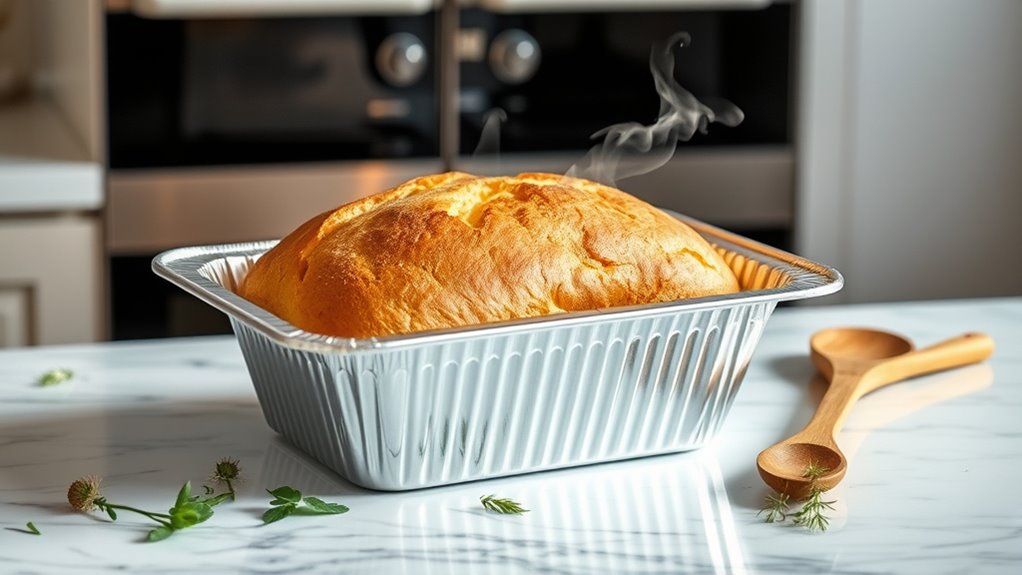
How You Can Bake Safely in a Disposable Aluminum Pan
To bake safely in a disposable aluminum pan, start by choosing a sturdy, oven-safe pan that is sized properly for your recipe. Disposable aluminum pans are convenient, but they require careful handling to avoid issues during baking.
Place the pan on a rimmed baking sheet for added support and stability. Lower your oven temperature slightly and increase the baking time to prevent warping or overbrowning of the pan.
Always grease and line the pan to make removal easier and to protect the pan’s surface. Handle the pan gently to avoid tears or punctures.
Allow the baked goods to cool briefly before removing them from the pan.
Keep these basics in mind, and you’ll find even more helpful tips for successful baking ahead.
Choosing the Right Disposable Aluminum Pan for Your Recipe
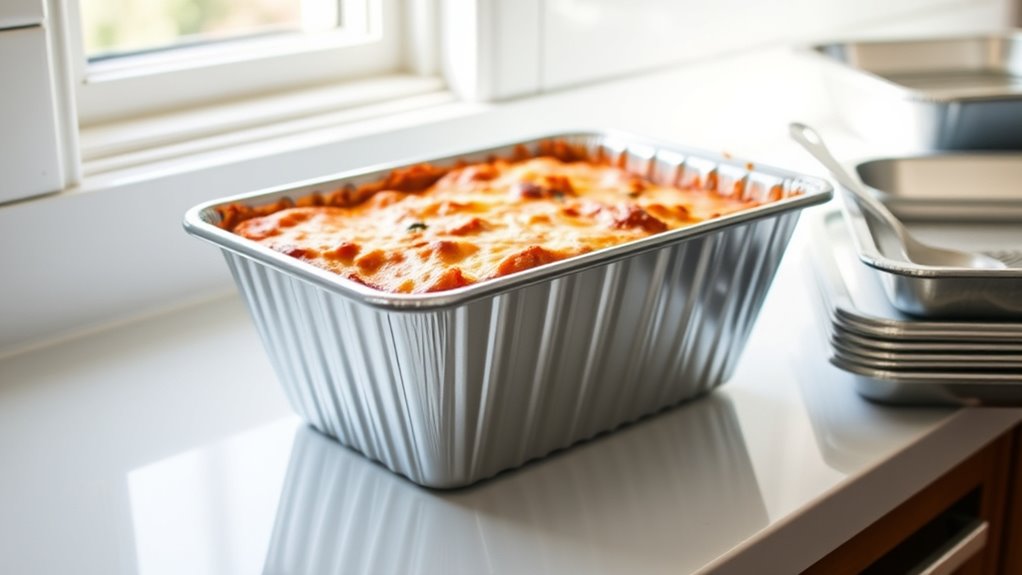
When you choose a disposable aluminum pan for your recipe, make certain it matches the size and shape specified to guarantee even cooking and proper results. Selecting the right pan size prevents uneven baking and ensures your dish cooks through perfectly.
Look for sturdy, reinforced disposable aluminum pans or consider placing smaller pans on a baking sheet to avoid warping. Opt for thicker or insulated pans to improve heat distribution and minimize hot spots, which can ruin your food’s texture.
Also, confirm the pan is labeled oven-safe and can handle temperatures up to at least 450°F without warping or melting. Avoid pans that are too thin, dented, or punctured, as they risk leaks and uneven baking. Proper pan choices mean your recipe will turn out just as intended every time.
How to Prepare and Support Disposable Aluminum Pans for Baking
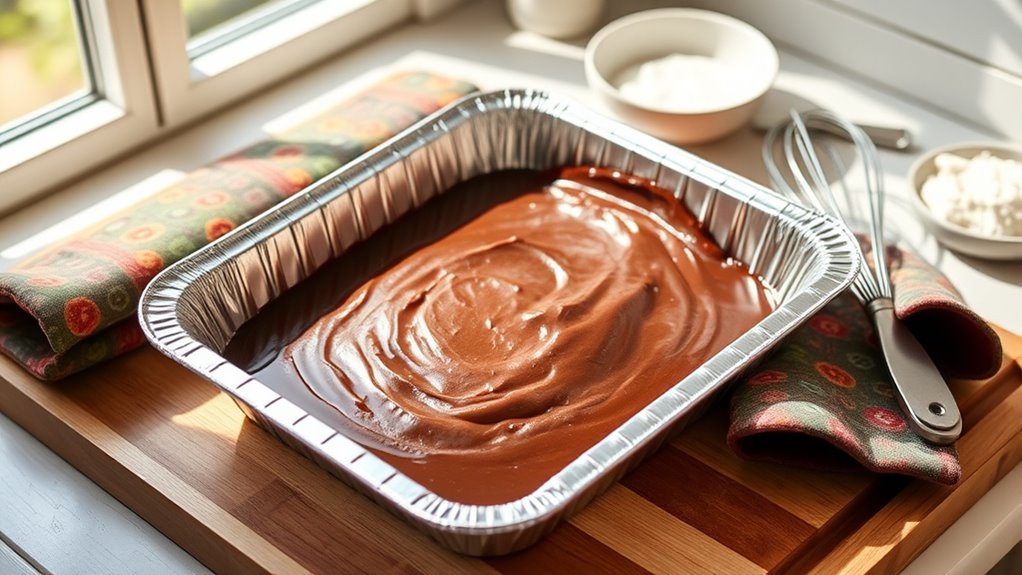
Make sure you pick the right size pan to fit your recipe perfectly and avoid spills or gaps. Always place your disposable aluminum pan on a sturdy, rimmed baking sheet to keep it stable while you handle and bake it.
This simple step helps prevent warping and makes moving the pan much easier.
Choosing Proper Pan Size
Although disposable aluminum pans offer convenience, choosing the right size is essential to avoid spills and uneven baking. Start by selecting a pan size that matches your recipe’s volume to ensure a proper fit. Overfilling a disposable aluminum pan can cause overflow, while underfilling may lead to uneven cooking.
For oven safety, always confirm your pan fits securely on your oven rack or a sturdy baking sheet for stability. If you use a thin or large pan, reinforce it with extra support to prevent bending or warping that could affect baking results. Finally, avoid filling the pan beyond two-thirds full to maintain even heat distribution and prevent spills, promoting a safe and successful baking experience.
Stabilizing With Baking Sheet
Selecting the right disposable aluminum pan size sets you up for success, but supporting that pan properly during baking is just as important. Always place your disposable pan on a sturdy, oven-safe baking sheet to provide stability and prevent warping. This support not only helps distribute heat more evenly but also makes handling the pan easier, reducing the risk of spills or damage when moving it in and out of the oven.
For extra reinforcement, consider wrapping the pan with foil or nesting it inside a larger pan, especially when baking heavy or dense dishes. Ensure your baking sheet fully supports the disposable pan’s base and has rims to keep everything secure. This simple step ensures your bake stays stable and your kitchen stays mess-free.
Adjusting Oven Temperature and Time for Aluminum Pans
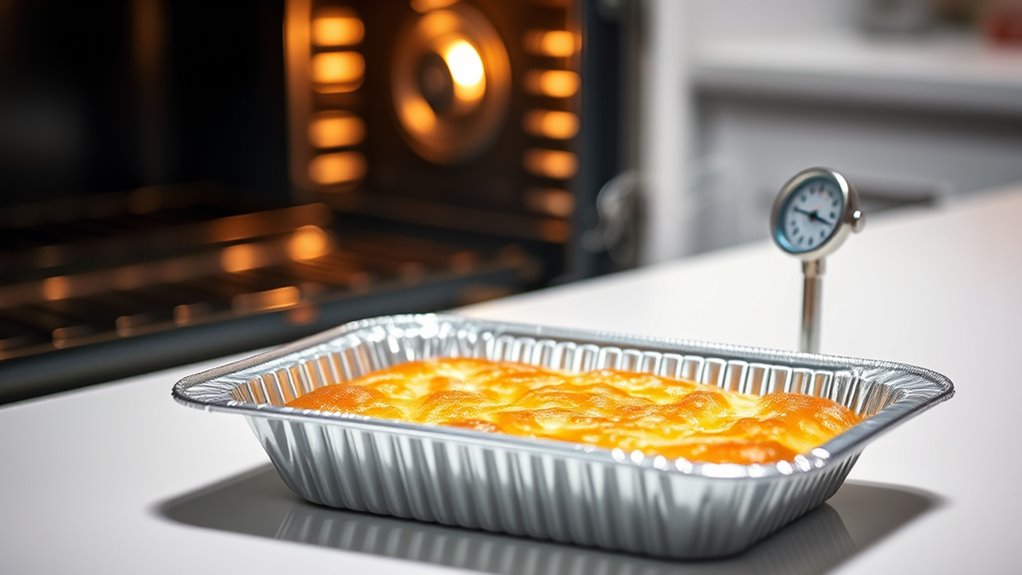
When baking with disposable aluminum pans, lower your oven temperature by 15-25°C to prevent overbrowning. Keep a close eye on the baking time since it can take 15-30 minutes longer than usual.
Using an oven thermometer helps you monitor heat accurately and avoid burning your baked goods.
Lower Oven Temperature
Since disposable aluminum pans conduct heat more efficiently, you’ll need to reduce your oven temperature by about 15-25°C (30-45°F) to prevent over-browning. Because aluminum transfers heat quickly, baked goods brown faster, so lowering the oven temperature helps ensure even cooking without burning.
When using disposable pans, adjust your baking times too—typically add 15-30 minutes—to compensate for the reduced heat. Keep an oven thermometer handy to verify your oven’s true temperature since disposable pans behave differently from traditional bakeware. This way, you avoid guesswork and ensure your dish cooks thoroughly.
Monitor Baking Time
Although disposable aluminum pans heat faster, you’ll want to reduce your oven temperature by about 25°F (14°C) and start checking your baked goods 5 to 10 minutes earlier than the recipe suggests. Since these pans conduct heat quickly, you’ll need to monitor baking closely to avoid overcooking.
Baking times may vary, so it’s essential to check for doneness often. Insert a toothpick or cake tester into the center of your dish to accurately assess if it’s ready. Also, rotate the pan halfway through baking to ensure even heat distribution and prevent uneven cooking.
Prevent Overbrowning Techniques
To prevent your baked goods from overbrowning in disposable aluminum pans, you’ll want to lower the oven temperature by 15 to 25°F (8 to 14°C) and check them 5 to 10 minutes earlier than usual. Aluminum pans conduct heat quickly, so adjusting baking times helps avoid burning.
Cover the top with foil during the last third of baking to shield from direct heat, reducing browning. Using an oven thermometer ensures accurate temperature, and rotating the pan halfway promotes even cooking.
| Adjustment | Purpose | Timing |
|---|---|---|
| Lower oven temp | Prevent overbrowning | Entire baking time |
| Check early | Avoid overbaking | 5-10 minutes before end |
| Cover with foil | Slow browning | Last third of baking |
How to Prevent Warping, Bending, and Spills With Aluminum Pans
When you use disposable aluminum pans, supporting them with a sturdy baking sheet helps keep their shape and prevents warping during handling. To prevent warping, avoid placing pans directly on oven racks; the baking sheet provides even support during oven handling. Also, preheat your oven fully before inserting the pans to prevent sudden temperature changes that cause bending.
Don’t overfill your disposable aluminum pans—too much batter can spill and create a mess. For heavier or denser baked goods, choose insulated or thicker pans to minimize bending from the weight. Always place pans on the center oven rack and avoid stacking or overcrowding, which can compromise stability.
Following these steps ensures your aluminum pans maintain their shape and prevent spills for safer, more reliable baking.
How to Avoid Overbrowning and Uneven Cooking in Aluminum Pans
Since aluminum pans conduct heat quickly, you’ll want to reduce your oven temperature by 25°F (15°C) to prevent overbrowning. Disposable aluminum pans can cause uneven cooking if not handled properly, so it’s important to protect your bake from hot spots and burning edges.
To guarantee even heat and avoid overbrowning, try these tips:
- Use a pie shield or foil around the edges to protect delicate areas from burning.
- Rotate the pan halfway through baking to promote even heat distribution.
- Place the disposable aluminum pan on a sturdy baking sheet for stability and even heat transfer.
- Cover the top with foil if the surface browns too fast before the inside is fully cooked.
Following these steps will help you bake safely and achieve perfect results every time.
Monitoring Bake Doneness When Using Disposable Aluminum Pans
How can you tell if your baked goods are done when using disposable aluminum pans? Since aluminum pans conduct heat rapidly, check for doneness 5-10 minutes before the recipe’s suggested baking times. Use a toothpick or cake tester to check the center; if it comes out clean, your baked good is ready.
Also, look for a golden-brown crust or edges pulling away from the pan. Gently shake the pan—if the center jiggles, bake a bit longer. Remember to rotate the pan halfway through baking to ensure even heat conduction and prevent hot spots.
| Test Method | What to Look For | Action |
|---|---|---|
| Toothpick Test | Toothpick comes out clean | Baking done |
| Visual Check | Golden-brown crust, edges pulling | Bake complete or near done |
| Jiggle Test | Center jiggles slightly | Continue baking, recheck soon |
| Rotation | Rotate halfway to ensure even heat | Prevents uneven baking |
Safe Handling and Cooling of Baked Goods From Aluminum Pans
After confirming your baked goods are done, let them cool in the disposable aluminum pan for 10-15 minutes before removing. This cooling period helps the item set, making it easier to handle without breaking. When you’re ready to transfer your baked goods, be gentle to avoid tearing the thin disposable aluminum.
Use a silicone spatula or plastic knife to carefully loosen the edges first.
Keep these tips in mind for safe handling and cooling:
- Transfer baked items to a wire rack or sturdy plate after initial cooling for even setting.
- Avoid stacking hot baked goods on other surfaces to prevent warping the pan.
- Handle the aluminum pan carefully to avoid punctures or spills.
- Dispose of or recycle the pan only after baked goods are fully cooled and removed.
Tips for Removing Baked Goods Without Damage or Sticking
When you want your baked goods to come out cleanly from disposable aluminum pans, proper preparation and gentle handling are key. Before pouring your batter, grease the pan thoroughly with butter, oil, or non-stick spray to reduce sticking. For extra ease in removing, line the bottom and sides with parchment paper or foil.
After baking, let the baked goods cool in the pan for 10-15 minutes to set their structure. Then, carefully run a silicone spatula or plastic knife around the edges to loosen them without damaging the pan. Finally, invert the pan onto a wire rack or plate and tap lightly to release the baked goods.
These steps help prevent sticking and ensure your treats come out intact and looking great.
Reusing, Recycling, and Disposing of Disposable Aluminum Pans Safely
Although disposable aluminum pans offer convenience, managing their reuse, recycling, and disposal properly helps minimize waste and environmental impact. You can extend the life of sturdy pans by reusing them if they remain clean and undamaged after washing. When recycling, rinse pans thoroughly to remove food residue and flatten them to save space.
Avoid recycling pans contaminated with grease or food, as this disrupts processing. If pans are too thin or damaged and can’t be cleaned, dispose of them in the trash according to local guidelines.
- Check local recycling rules for aluminum pan acceptance
- Rinse and flatten pans before recycling
- Reuse undamaged pans for multiple bakes
- Trash pans that can’t be safely cleaned or recycled
Proper handling promotes environmental responsibility and reduces waste.
Troubleshooting Common Baking Issues With Disposable Aluminum Pans
Because disposable aluminum pans heat up quickly and are often thin, you might encounter issues like uneven baking, warping, or sticking. Aluminum pans conduct heat rapidly, which can cause overbrowning or burning, especially on edges if your oven temperature is too high.
To avoid this, lower the heat by 15-25°F and start checking for doneness 5-10 minutes early. Thin disposable pans may bend under heavy batter, so place them on a sturdy baking sheet to prevent warping and spills. Rotate your pan halfway through baking to promote even heat distribution.
Finally, grease your pan well and line it with parchment paper to minimize sticking and make cleanup easier. These simple steps help you troubleshoot common problems and bake safely every time.
Frequently Asked Questions
Can I Bake in a Disposable Aluminum Tray?
Yes, you can bake in a disposable aluminum tray. Just make sure it’s oven-safe and sturdy enough to hold your food.
Place the tray on a baking sheet to avoid spills or bending during baking. This extra support helps keep your dish stable in the oven.
Does Aluminum Foil Release Toxins When Heated?
No, aluminum foil doesn’t release toxins when heated under normal cooking temperatures. You should avoid prolonged contact with highly acidic foods and extremely high heat, but generally, it’s safe and won’t harm your food or health.
Can You Make Lasagna in a Disposable Aluminum Pan?
Yes, you can make lasagna in a disposable aluminum pan. Just grease it lightly, place it on a baking sheet for support, and bake at the right temperature.
It’s convenient and cooks your lasagna evenly.
Can You Put Parchment Paper in a Disposable Aluminum Pan?
You can put parchment paper in a disposable aluminum pan—it’s your baking shield, preventing sticking and easing cleanup.
Just fit it snugly, avoid high heat beyond 450°F, and your dish will come out perfect every time.
Conclusion
Using disposable aluminum pans can make baking easier and cleaner, but did you know they conduct heat 15% faster than traditional pans? That means you’ll need to watch your baking time closely to avoid overcooking.
By choosing the right pan, supporting it properly, and adjusting oven settings, you’ll bake safely and get delicious results every time.
Remember, handling and recycling disposable aluminum pans responsibly keeps both your kitchen and the planet happy! Safe baking in disposable aluminum pans means better outcomes and eco-friendly practices.