Can Silicone Muffin Pans Go Directly on the Oven Rack?
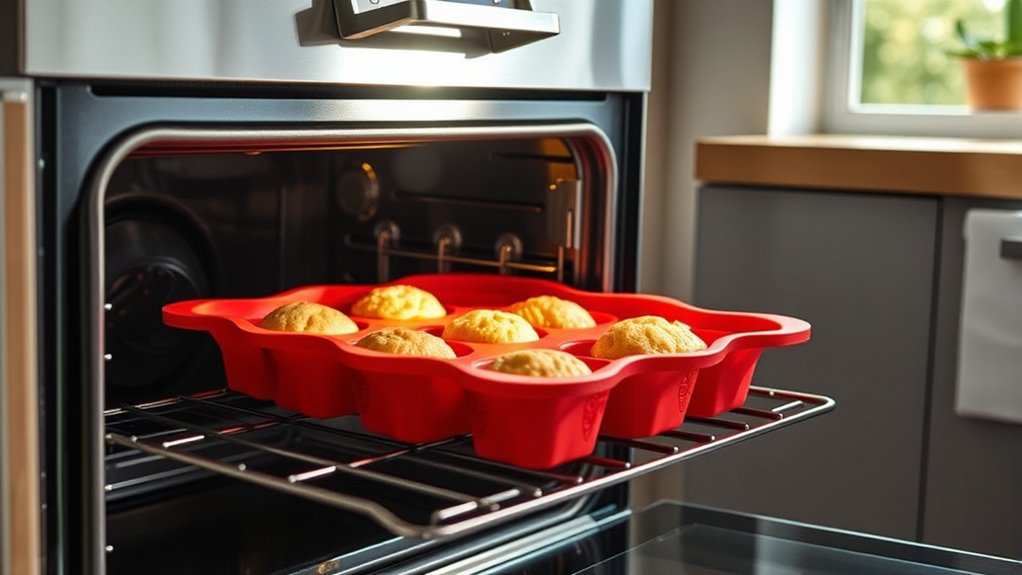
You can place silicone muffin pans directly on the oven rack as long as you stay within their temperature limits, typically up to 450°F. Silicone muffin pans are designed to handle high heat and can go directly on the oven rack without issues. Direct placement promotes even heat exposure, which helps your muffins bake uniformly.
However, using a baking sheet underneath can offer extra support to prevent warping and make handling easier. This method also reduces the risk of spills and makes transferring the pans safer. Always check your pan’s specific guidelines to avoid damage and ensure safe use.
If you want to bake evenly and safely, there are helpful tips and best practices you’ll find ahead. Following these recommendations will help you get the best results from your silicone muffin pans every time.
Can You Put Silicone Muffin Pans Directly on the Oven Rack?
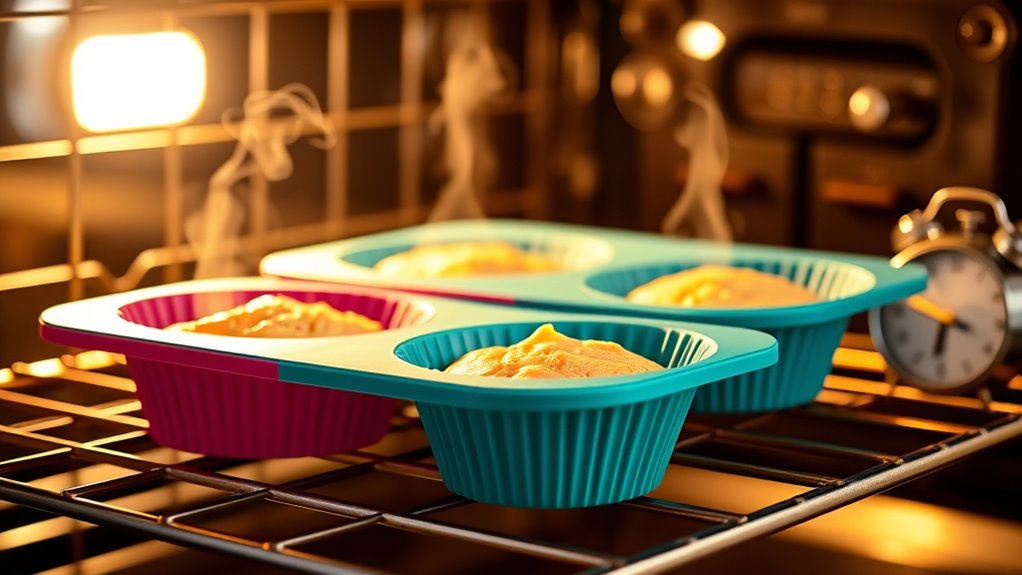
Although silicone muffin pans can withstand oven temperatures up to around 450°F, you should still check your manufacturer’s guidelines before placing them directly on the oven rack. Silicone is generally safe for baking at high heat, and putting the pan directly on the oven rack promotes even heat exposure, ensuring your muffins bake uniformly.
However, to avoid any risk of warping or spills, it’s wise to place the silicone pan on a sturdy baking sheet before setting it on the oven rack. This extra support makes handling easier, especially when the pan is hot, and helps maintain the pan’s shape.
Always confirm your silicone pan’s temperature limits to keep your baking safe and successful.
What Temperature Limits Apply to Silicone Muffin Pans?
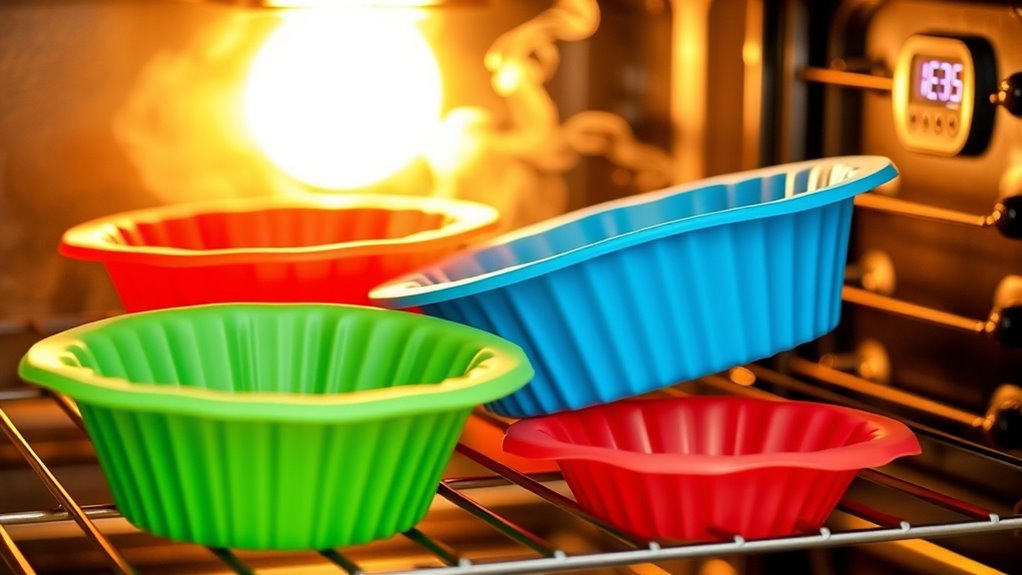
When using silicone muffin pans, you need to pay close attention to their temperature limits to prevent damage. Most silicone muffin pans have a maximum temperature of about 450°F (232°C), thanks to their excellent heat resistance. However, you should always check the manufacturer instructions to confirm the specific temperature range for your pans.
Staying within this range ensures the pans remain safe to use and avoid warping or melting. Because of their heat resistance, silicone muffin pans can go directly on the oven rack without harm, as long as you don’t exceed the recommended maximum temperature. Ignoring these limits risks degrading the silicone material, shortening your pan’s lifespan.
Why Use a Baking Sheet Under Silicone Muffin Pans?
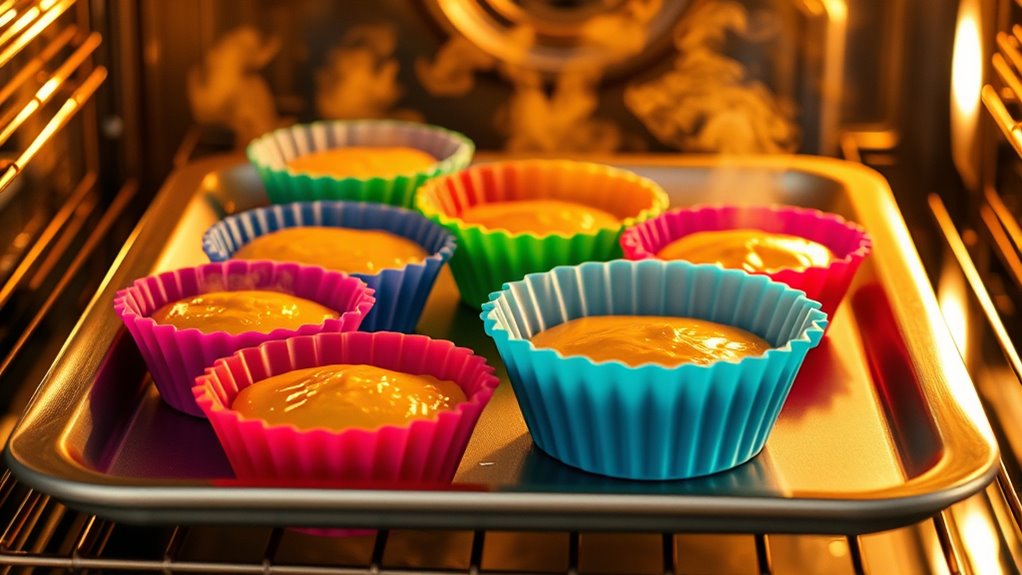
Because silicone muffin pans are flexible, placing them directly on the oven rack can cause them to warp or bend during baking. Using a baking sheet underneath provides the necessary support and stability to keep your pan flat and secure. This prevents any unwanted warping or slipping while your muffins bake.
Plus, a baking sheet catches drips or overflow, helping keep your oven clean. Supporting the silicone pan on a baking sheet also makes it much easier to handle and transfer in and out of the oven without risking spills or burns. Most manufacturers recommend this method to ensure safer, more even baking and protect the shape of your silicone bakeware.
How Can You Safely Handle and Support Silicone Muffin Pans?
You’ll want to place your silicone muffin pan on a sturdy baking sheet to keep it stable and prevent spills or warping. This support makes it easier to handle the pan safely, especially when it’s filled with batter.
Always use oven mitts to grip the tray, avoiding direct contact with the hot silicone for a smooth, safe baking experience.
Importance Of Stable Support
Although silicone muffin pans can withstand direct placement on oven racks, providing stable support is essential to guarantee safe handling and prevent spills or deformation.
To guarantee stability, place your silicone pan on a baking sheet or support pan before sliding it onto the oven rack. This setup helps manage the pan’s weight and avoids warping or bending while you handle it.
When removing the pan, use oven mitts to safely handle the hot silicone, especially since the pan may flex without a solid base. Supporting your silicone muffin pan properly not only prevents accidents but also maintains the pan’s shape during baking.
Preventing Spills And Warping
When handling silicone muffin pans, placing them on a sturdy baking sheet is key to preventing spills and warping. Though you can place the pans directly on the oven rack, a baking sheet offers essential support and stability. This reduces the risk of warping from uneven heat and prevents batter from spilling.
To safely handle silicone muffin pans:
- Always set the pan on a flat baking sheet before sliding it onto the oven rack to ensure even heat distribution and avoid deformation.
- Avoid placing silicone pans directly on heating elements or flames, as extreme heat can cause warping or melting.
- When removing pans, use oven mitts and support the bottom with a baking sheet or tray to keep the pan stable and prevent spills.
Following these steps keeps your silicone muffin pans in great shape and your baked goods intact.
Handling Tips For Safety
Since silicone muffin pans can become hot and flexible during baking, handling them with care is essential to avoid burns and spills. Always support the pans by placing them on a sturdy, flat surface like a metal baking sheet before putting them in or taking them out of the oven. Use oven mitts or heat-resistant gloves to handle the pans safely, as they can get very hot.
When lifting, support the base with one hand and hold the edge with the other to maintain stability and prevent bending. Avoid pulling or stretching the silicone while it’s hot to prevent damage. For added safety, let your silicone muffin pans cool completely before moving them to avoid burns and ensure easier, more stable handling.
How Do You Bake Evenly With Silicone Muffin Pans?
To bake evenly with silicone muffin pans, you’ll want to place them on a stable, flat surface like a baking sheet for proper support. This helps distribute heat evenly and prevents warping during baking.
Make sure to preheat your oven and consider rotating the pan halfway through for consistent results.
Ensuring Stable Heat Distribution
Although silicone muffin pans are flexible and non-stick, you’ll need to place them on a sturdy, preheated metal baking sheet to guarantee stable heat distribution and prevent warping during baking.
While placing silicone directly on the oven rack promotes even heat distribution, it risks instability and spills. To assure uniform baking and stability with your silicone bakeware, follow these tips:
- Use a preheated metal tray beneath the silicone pan to evenly transfer heat and maintain the pan’s shape.
- Position the pan at least one inch away from the oven’s heating element to avoid melting or damage.
- Rotate the pan halfway through baking to promote consistent heat exposure and uniform cooking results.
This approach balances even heat distribution with pan stability for the best baking outcome.
Using Supportive Baking Sheets
When you bake with silicone muffin pans, placing them directly on the oven rack can cause them to bend or warp because they lack support. To prevent warping and guarantee stability, use supportive baking sheets beneath your silicone pans. This not only offers a solid base but also promotes even heat distribution, helping your muffins bake consistently.
Additionally, the baking sheet catches any spillage from runny batter, keeping your oven clean. For best results, always preheat the oven with the baking sheet in place, which helps maintain the pan’s shape during baking.
Using a supportive tray also makes removal easier and safer since you’re handling a sturdy surface instead of a flexible pan. This simple step makes a big difference in your baking outcomes.
How Should You Clean and Maintain Silicone Muffin Pans?
Since silicone muffin pans can retain odors and food residue, you should wash them with warm, soapy water after each use to keep them clean and fresh. To properly maintain your silicone bakeware, follow these steps:
- Use a soft sponge or brush with soapy water to remove residue gently; avoid abrasive cleaners that might damage the surface.
- For stubborn stains or odors, soak the pans in a baking soda and water mixture or wipe them with white vinegar and water.
- Check if your silicone muffin pans are dishwasher safe—many are, but confirm with the manufacturer’s instructions.
For storage, keep them flat or upright in a dry, well-ventilated spot to prevent deformation and keep dust away. This care routine will extend your pans’ life and keep them performing well.
Frequently Asked Questions
Can Silicone Baking Pans Go Directly on an Oven Rack?
Yes, you can put silicone baking pans directly on the oven rack since they’re heat-resistant. However, it’s best to place them on a baking sheet for stability and easier handling, preventing warping and spills during baking.
What Are the Disadvantages of Silicone Cookware?
Ever worry about durability? Silicone cookware can warp or tear over time, retain odors, and may leach chemicals if low quality.
Plus, it’s flexible and tricky to handle hot, risking spills or burns when you remove it.
Can Silicone Baking Sheets Go Directly in the Oven?
Yes, you can put silicone baking sheets directly in the oven since they’re oven-safe. Just make sure they’re flat and free of folds, and check the manufacturer’s guidelines for temperature limits to avoid any issues.
This helps ensure even baking and prevents damage to the silicone sheet. Always avoid using them under a broiler or exposing them to direct flame, as that can exceed their temperature tolerance.
Can Silicone Go in a 400 Degree Oven?
You can confidently toss silicone into a 400-degree oven; it’s designed to handle that heat without fuss.
Just be sure to check your specific pan’s limits and consider a baking sheet for extra stability.
Conclusion
You might think placing your silicone muffin pans directly on the oven rack is risky, but it’s actually safe as long as you stay within temperature limits.
Coincidentally, using a baking sheet not only supports your pan but also helps your muffins bake evenly—something you probably want without even realizing it.
So, next time you bake, trust your silicone, support it well, and enjoy perfectly baked treats with less hassle and more joy. Silicone muffin pans can go directly on the oven rack, but using a baking sheet enhances stability and baking results.