10 Easy Steps to Cook Beef Tongue in a Crock Pot
Choose a fresh, firm beef tongue and rinse it well. Removing the tough outer skin is an important step to ensure tenderness. Season the tongue with onion, garlic, and bay leaf to infuse rich flavors.
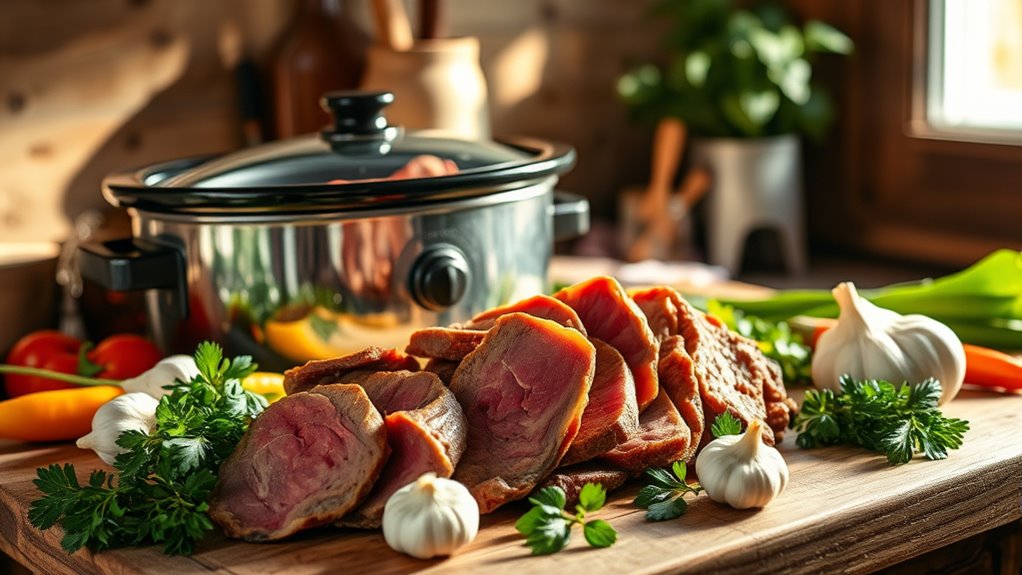
Place the tongue in your crock pot, cover with 4-6 cups of water, and cook on low for 8 hours until tender. After cooking, peel off the skin again, then trim and dice the meat into bite-sized pieces.
Keep the beef tongue warm until serving. It pairs perfectly with classic taco toppings. If you want to master every step of cooking beef tongue in a crock pot, there’s plenty more to discover.
Choose the Best Beef Tongue for Slow Cooking
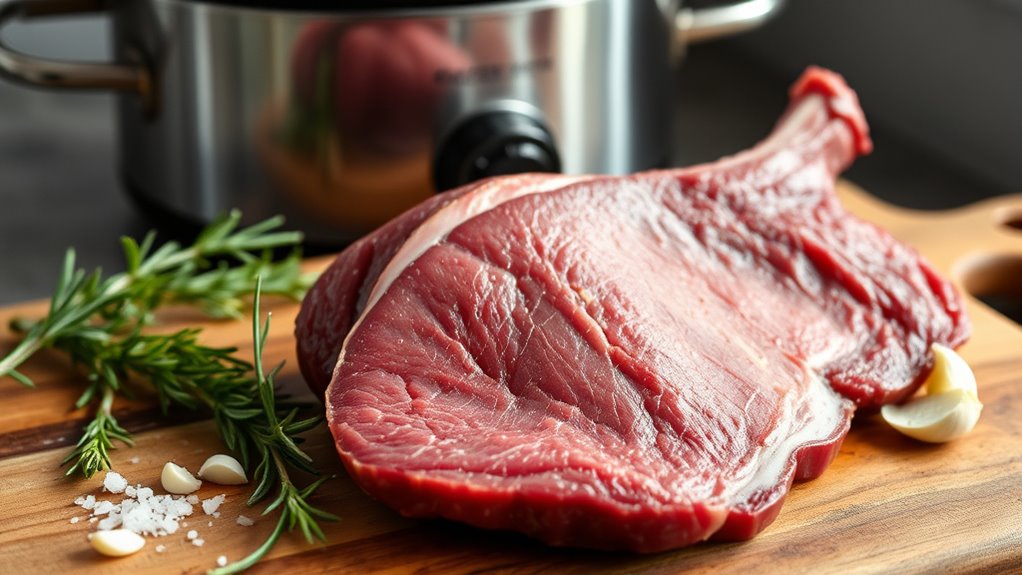
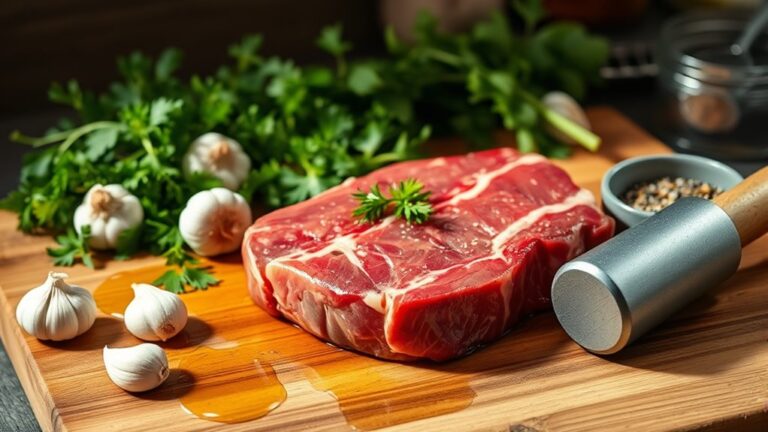
When choosing the best beef tongue for slow cooking, you’ll want one that weighs between 3 to 4 pounds and feels firm with a smooth, unblemished surface. Your selection should be fresh or properly thawed, showing good marbling without excessive fat or tough connective tissue. This balance ensures the right texture and tenderness when braising or slow cooking.
Avoid tongues with discoloration or slimy spots, which indicate poor quality. When shopping, ask specifically for beef tongue labeled for slow cooking to guarantee ideal results. Opting for a reputable source like Rumba Meats can make a big difference in consistency and overall quality.
Clean and Prepare the Beef Tongue for Cooking
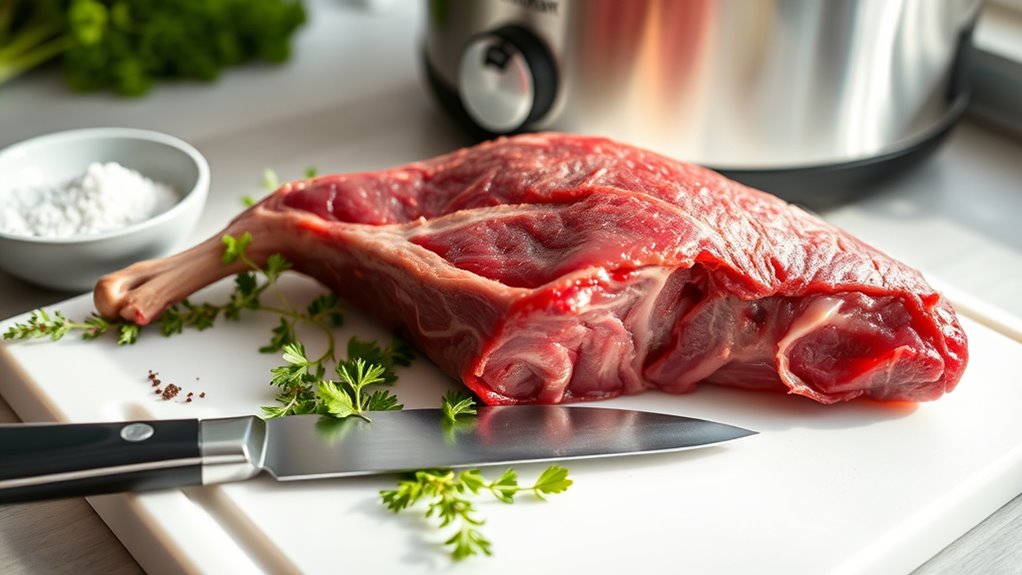
Start by rinsing the beef tongue thoroughly under cold water to get rid of any blood or debris. Then, use a sharp knife to remove the tough outer skin and any leftover surface debris.
Finally, take a moment to inspect the tongue for quality, trimming off excess fat or rough edges to guarantee it cooks evenly.
Rinse Thoroughly Before Cooking
Although it might seem like a simple step, rinsing the beef tongue thoroughly under cold running water is essential to remove any blood, debris, or impurities before cooking. When you prepare the tongue, take your time to rinse every surface carefully, ensuring it’s clean and free from impurities. Use your hands or a soft brush to gently scrub the tongue’s surface, helping you remove hidden dirt without damaging the meat.
Avoid soaking the tongue, as quick rinsing preserves its texture and prevents excess moisture buildup. After rinsing, pat the tongue dry with paper towels to eliminate any remaining moisture, which helps seasonings stick better during cooking. This thorough rinse sets the foundation for perfectly cooked beef tongue in your slow cooker.
Remove Excess Surface Debris
Once you’ve rinsed the beef tongue thoroughly, you’ll want to remove any remaining surface debris to guarantee a clean and tender final dish. Use your fingers or a brush to scrub off any dirt or impurities. Carefully trim away excess fat, connective tissue, and any loose skin.
This preparation ensures the beef tongue is clean and ready for the slow cooker, which helps enhance flavor and texture.
| Step | Action | Purpose |
|---|---|---|
| Rinse | Under cold water | Remove blood and surface debris |
| Scrub | With brush or fingers | Eliminate lingering impurities |
| Trim | Excess fat and skin | Remove excess and rough patches |
| Dry | Pat with paper towels | Prepare for seasoning and slow cooker |
Removing excess debris is essential for a clean, delicious beef tongue.
Inspect Tongue For Quality
Before cooking, you’ll want to carefully inspect the beef tongue to make certain it’s fresh and of good quality. Start by rinsing the tongue under cold water to remove any surface debris and blood. As you inspect the beef tongue, look closely for any discoloration, sliminess, or off-putting odor—these signs indicate the meat may spoil and should be discarded.
Use a sharp knife to trim away any excess fat or gristle from the outer surface. Remember, don’t remove the thick, rough skin before cooking, as it helps keep the meat moist; you’ll peel it off afterward. Finally, pat the beef tongue dry with paper towels to ensure it’s ready for seasoning and easier to handle during preparation.
This careful inspection guarantees a high-quality dish.
Season Beef Tongue With Onion, Garlic, and Bay Leaf
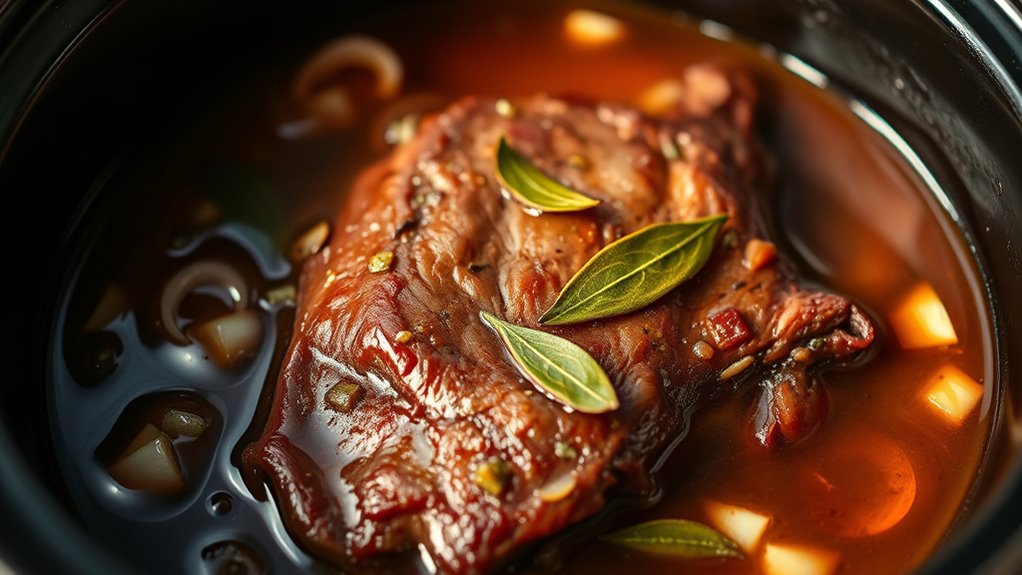
To boost the flavor of your beef tongue, season it directly in the crock pot with halved, skinless onion, whole garlic cloves, and a bay leaf. The onion’s natural sweetness seeps into the meat during slow cooking, enriching the overall taste. Whole garlic cloves infuse a rich, aromatic flavor that complements the beef tongue perfectly.
Adding a bay leaf introduces a subtle herbal note that elevates the savory profile of this recipe. This simple seasoning combination ensures your beef tongue turns out tender and full of flavor without extra effort. By layering these ingredients right in the crock pot, you create the ideal environment for the beef tongue to absorb every bit of seasoning, making your slow-cooked dish irresistible.
How Much Water to Add When Cooking Beef Tongue in a Slow Cooker
You’ll want to add enough water to fully cover the beef tongue, usually around 4 to 6 cups for a 3-4 pound tongue, to guarantee even cooking.
If you prefer a richer flavor or plan to use the cooking liquid, just enough water to submerge the meat works well. Keep an eye on the water level during cooking and top it up as needed to prevent the tongue from drying out.
Water Quantity Guidelines
Three to six cups of water usually cover a 3-4 pound beef tongue in a slow cooker, ensuring even cooking throughout. The water level should fully submerge the meat to prevent burning and promote uniform tenderness. Adjust the quantity depending on your slow cooker’s size and how much broth you want.
If your recipe calls for a richer cooking liquid or sauce, you might use less water, around half a cup, to concentrate flavors. Remember, maintaining the right water level throughout cooking is key—check occasionally and add more if necessary. The broth created during cooking enhances the beef tongue’s flavor, so balancing water quantity helps you achieve the perfect texture and taste in your slow cooker recipe.
Impact On Cooking
Although it might seem minor, the amount of water you add when cooking beef tongue in a slow cooker directly affects the texture and flavor of the meat. Proper water level guarantees even cooking and ideal tenderness, while too much water can dilute the broth flavor.
Slow cooking with just enough liquid promotes moisture retention and better flavor absorption, enhancing meat texture. Adjust water based on slow cooker settings and tongue size, topping up if needed.
| Factor | Impact |
|---|---|
| Water Level | Guarantees even cooking, prevents dryness |
| Slow Cooker Settings | Influence cooking time and moisture |
| Flavor Absorption | Enhanced with proper liquid amount |
| Broth Flavor | Concentrated with balanced water level |
| Meat Texture | Tenderness depends on moisture retention |
Set Your Slow Cooker to Low and Let It Cook for 8 Hours
When you set your slow cooker to low, it delivers gentle, even heat that slowly tenderizes the beef tongue over eight hours. Make sure to fully submerge the beef tongue and aromatics in water to guarantee the meat cooks evenly and absorbs rich flavors. Cover your slow cooker with its lid to trap moisture and heat, which helps maintain a consistent cook time and prevents drying out.
Avoid lifting the lid during cooking; each time you do, you lose heat and moisture, which can extend the cook time and affect tenderness. This low setting allows the beef tongue to become perfectly tender by the end of the eight hours, making it easy to slice and enjoy in your favorite recipes.
How to Check If the Tongue Is Tender and Ready
You’ll know the tongue is ready when it looks soft and slightly gelatinous. Try piercing it with a knife—if it slides in easily, that’s a good sign.
Press the meat gently with a fork; it should shred or fall apart without much effort.
Visual Tenderness Indicators
You are trained on data up to October 2023. When checking visual tenderness indicators, look for key signs that your beef tongue is perfectly cooked. The outer skin should peel away easily, revealing soft meat underneath.
The tongue’s surface must have a moist appearance with no firmness or rubbery texture. Also, tenderness is confirmed when the meat is pierced easily without resistance. The internal temperature should reach at least 190°F (88°C) to guarantee ideal softness.
| Visual Indicator | Description | What to Avoid |
|---|---|---|
| Skin Peeling | Easily comes off | Stubborn skin |
| Meat Texture | Soft and moist | Firm or rubbery |
| Tenderness Check | Pierced easily, yields | Tough, resists piercing |
Use these signs to know when your tongue is ready to serve.
Knife Piercing Test
Although cooking times vary, performing the knife piercing test after at least 8 hours on low heat helps you determine if the beef tongue is tender and ready.
Here’s how to check meat readiness in your slow cooker:
- Use a clean, sharp knife to avoid damaging the meat’s surface.
- Insert the knife into the thickest part of the tongue.
- If the knife slides in easily with little resistance, the meat is soft and tender.
- If the knife meets resistance or requires force, continue cooking until the meat softens.
This test confirms the connective tissues have broken down, signaling perfect tenderness.
Trust this simple knife piercing test to assess cook time and avoid undercooked tongue.
Texture When Pressed
When checking if the beef tongue is tender and ready, press it gently with a fork or your finger to feel its texture. It should feel soft, moist, and slightly squishy, showing no resistance or firmness under pressure. If the tongue is still firm or resists your touch, it needs more time to cook.
Tenderness is key, so keep testing until it yields easily. Besides texture, use a meat thermometer to check the internal temperature; it should reach at least 190°F (88°C) for ideal tenderness. This combination of temperature and texture ensures your tongue is perfectly cooked and ready to enjoy.
Don’t rush—patience with these checks guarantees a soft, tender result every time.
Peel Off the Skin and Trim the Beef Tongue Safely
Once the beef tongue has cooled slightly, you can start peeling off the thick, rough outer skin using a sharp knife or your fingers. This outer layer is tough and inedible, so removing it is essential for a tender final dish.
Follow these steps to peel and trim safely:
- Begin peeling at one end, gently loosening the skin without tearing the meat.
- Use a sharp knife to carefully trim away any stubborn skin or connective tissue.
- Remove the rough tip and any excess fat to avoid chewy bites.
- Discard all inedible parts and ensure only the tender, peeled beef tongue remains.
Dice Cooked Beef Tongue Into Bite-Sized Pieces
Start by carefully removing the cooked beef tongue from the slow cooker and letting it cool just enough to handle safely. Once it’s cool, place the tongue on a clean cutting board. Peel off the thick outer skin, which should come off easily after the skin removal step in your recipe.
Discard the skin and any rough ends. Next, take a sharp knife and dice the tender beef tongue into uniform, bite-sized pieces. Cutting into small cubes ensures even texture and makes it easy to serve or incorporate into other dishes.
These cooked pieces are now ready to be returned to the slow cooker to stay warm or served immediately. Dicing the beef tongue this way highlights its tenderness and enhances your recipe’s presentation.
Keep Cooked Beef Tongue Warm and Prepare Your Toppings
To keep your cooked beef tongue at the perfect temperature, set your slow cooker to the warm setting and cover it tightly to lock in moisture. This helps keep the tongue tender and flavorful until you’re ready to serve.
While it stays warm, prepare your toppings for easy assembly:
- Chop onions and cilantro for fresh, vibrant flavor.
- Slice radishes thinly for a crunchy contrast.
- Cut lime wedges to add a zesty kick.
- Use a sharp knife to thinly slice the beef tongue just before serving to preserve its tenderness.
Keeping the beef tongue covered in the slow cooker maintains moisture, so it stays juicy and delicious throughout your meal.
Serve Tacos De Lengua With Traditional Sides
How do you bring out the full flavor of your tacos de lengua? Start by serving tender beef tongue on warm corn tortillas, then top them with fresh cilantro, diced onions, and squeeze lime wedges over each taco. These traditional sides brighten the rich, savory meat perfectly.
Serve tender beef tongue on warm tortillas topped with cilantro, onions, and a squeeze of lime for vibrant flavor.
Add pickled jalapeños and a dash of hot sauce for a spicy kick that balances the flavors. Don’t forget to plate your tacos with vibrant garnishes for an inviting presentation.
To complete the meal, serve your tacos de lengua alongside classic Mexican rice or refried beans. This combination not only complements the beef tongue but also rounds out your dish with satisfying textures and tastes.
With these traditional sides, you’ll savor every bite of your homemade tacos de lengua.
Frequently Asked Questions
How Do You Cook Tongue in a Slow Cooker?
You rinse the tongue, place it in the slow cooker with water and seasonings, cook on low for about 8 hours until tender, then peel off the skin and serve or dice for your desired dish.
How Is Beef Tongue Supposed to Be Cooked?
You’ve got to cook beef tongue low and slow until it’s softer than a cloud on a lazy Sunday. Rinse, simmer for hours, then peel off the tough skin to reveal tender, flavorful meat inside.
How to Cook Beef so It’s Tender in a Slow Cooker?
You’ll want to cook beef on low heat for several hours, usually 6–8, with enough liquid to keep it moist.
This slow, gentle cooking breaks down tough fibers, making the meat tender and flavorful.
How Long Does It Take for Beef to Get Tender in a Crock Pot?
It typically takes you 6 to 8 hours on low heat to get beef tender in a crock pot.
For larger cuts, you might want to cook it up to 10 hours for extra softness.
Conclusion
Now that you’ve mastered these easy steps, your beef tongue is ready to steal the show—like a vintage jukebox spinning your favorite tune. Slow cooking transforms this humble cut into tender, flavorful bites perfect for tacos de lengua.
Just peel, dice, and serve with your favorite toppings and sides. So fire up that crock pot, and get ready to impress your friends with a delicious, timeless dish.
This recipe for cooking beef tongue in a crock pot is as comforting as an old-school dance hall, making it a must-try for any home cook. Enjoy your tender, flavorful beef tongue today!