How Long to Cook Beef Kabobs in the Oven Step by Step
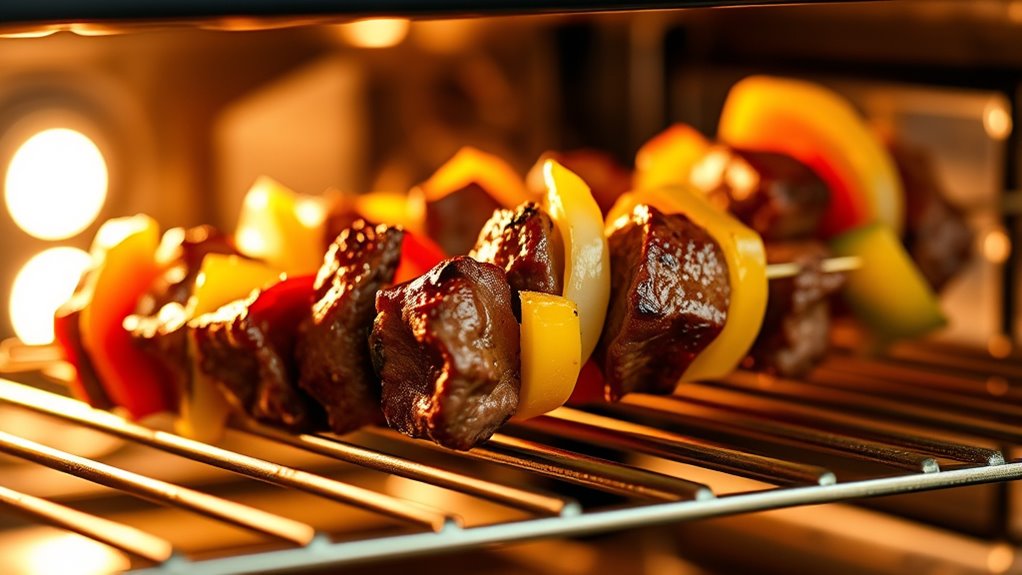
To cook beef kabobs in the oven, preheat it to 400°F and bake the skewers for 10 to 15 minutes, turning halfway for even cooking.
Cut beef and veggies into 1-inch pieces for uniform doneness, and marinate beef for at least 30 minutes to enhance juiciness.
Use a meat thermometer to check for 130-135°F for medium-rare.
Let kabobs rest a few minutes before serving to lock in flavor.
Keep going to discover tips for perfect tenderness and presentation.
How Long To Marinate Beef Kabobs For Juiciness
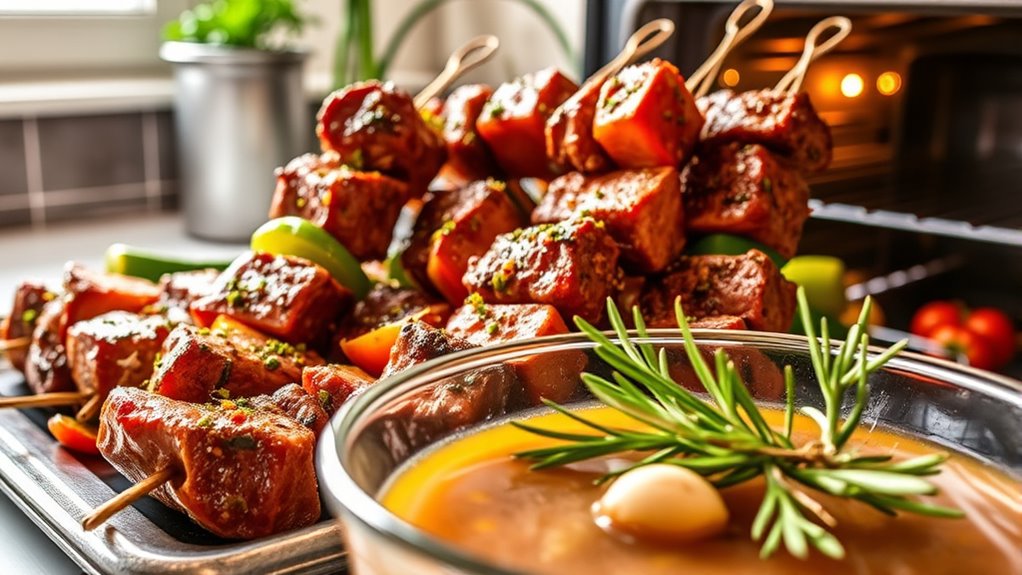
Although you can marinate beef kabobs for as little as 15-20 minutes to boost juiciness, allowing them to soak for 30 minutes to 12 hours will give you much better tenderness and flavor.
When you marinate for 2 to 4 hours, the acids and enzymes in the marinade start breaking down the meat’s fibers more deeply. This process enhances tenderness and lets the flavors penetrate thoroughly.
Marinating overnight, up to 24 hours, can maximize juiciness and flavor, especially if your marinade has acidic ingredients like vinegar or citrus. Just be careful not to exceed 24 hours, as too much acid can break down the meat too much, making it mushy.
How To Cut Beef And Vegetables For Even Cooking
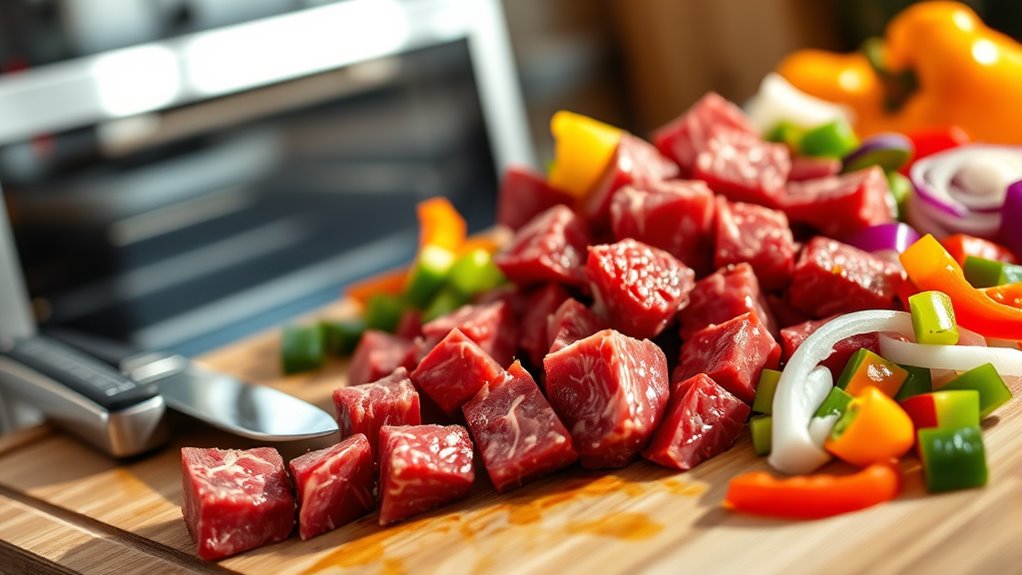
You want to cut your beef into uniform 1-inch cubes to make sure everything cooks evenly. Match your vegetable pieces to the same size so peppers, onions, and zucchini finish at the same time as the meat.
Using consistent sizes keeps your kabobs juicy and perfectly done throughout.
Uniform Beef Cubes
When cutting beef and vegetables for kabobs, making uniform 1-inch cubes guarantees everything cooks evenly. Start by trimming excess fat and any uneven edges from the beef to guarantee consistent heat distribution during oven cooking. Use a sharp knife to cut your beef cubes to a uniform size; this prevents some pieces from overcooking while others remain underdone.
Measure and slice vegetables like peppers and onions into similarly sized pieces to match the beef cubes, maintaining overall consistency. Preparing all ingredients before assembling your kabobs saves time and helps you keep the uniform size of each piece.
Vegetable Size Consistency
Matching the size of your vegetables to the beef cubes helps everything cook evenly and finish at the same time. To achieve this, cut both your vegetables and beef into uniform pieces about 1 to 1.5 inches in size. Consistent cutting with a sharp knife ensures clean edges and prevents uneven cooking or color differences.
Choose vegetables with similar size and shape, like bell peppers, zucchini, and onions, to pair with your beef cubes. Avoid large or irregular pieces, as they can cause some parts to overcook while others remain underdone. By keeping your vegetables in uniform pieces, you guarantee that all ingredients reach the perfect doneness simultaneously, resulting in kabobs that are juicy and evenly cooked throughout.
How To Thread Beef Kabobs For Even Heat Distribution
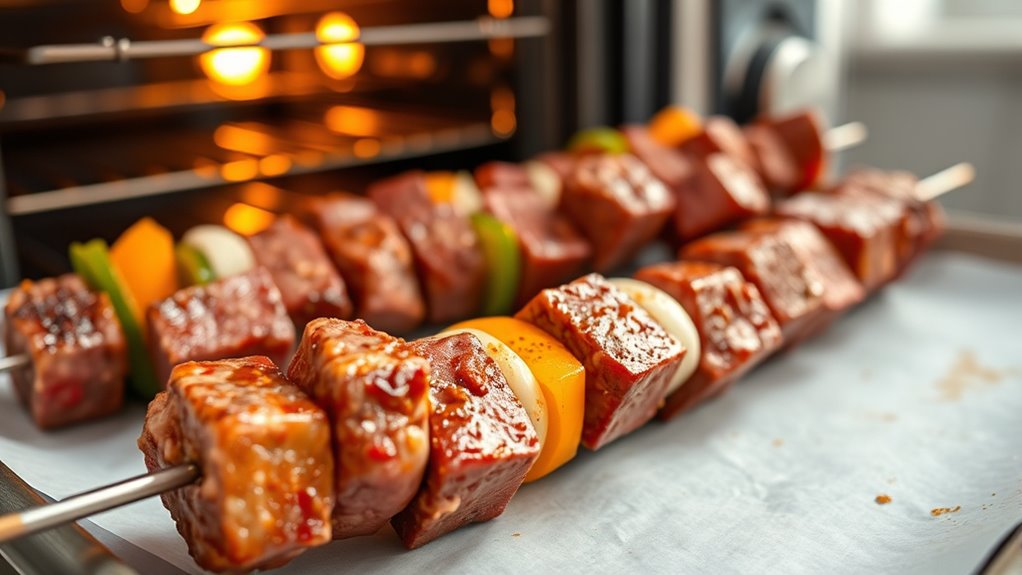
Although properly threading beef kabobs might seem simple, it’s key to guarantee even heat distribution and balanced flavors. Start by threading beef cubes and vegetables onto skewers, alternating ingredients to promote even heat and flavor. Make sure the pieces are roughly the same size to prevent uneven cooking.
Leave small gaps between each piece to allow hot air to circulate, which helps with uniform heat exposure. Use metal skewers or wooden ones soaked in water so they don’t burn or warp, maintaining consistent heat transfer. Arrange your skewers on a preheated baking sheet or an oven-safe rack, allowing heat to surround all sides evenly.
Proper threading ensures every bite is cooked perfectly and bursting with flavor.
Best Oven Temperature And Baking Time For Beef Kabobs
To cook beef kabobs evenly and lock in their juicy flavors, you’ll want to set your oven to 400°F (200°C). This oven temperature ensures even cooking and caramelization, which enhances the taste and texture.
Typically, the baking time for beef kabobs at this temperature ranges from 10 to 15 minutes, depending on the size of the meat and vegetables. If you prefer, you can cook them at 375°F, but expect to increase the baking time to about 15-20 minutes for similar results.
Keep in mind that shorter baking times prevent overcooking, preserving tenderness. Using this oven temperature and baking time balance helps you achieve perfectly cooked beef kabobs with flavorful, juicy meat every time.
How To Use A Meat Thermometer To Check Doneness
To check if your beef kabobs are perfectly cooked, insert a calibrated meat thermometer into the thickest part of the beef, avoiding contact with the skewer or vegetables.
For medium-rare, look for a temperature of 130-135°F, and for medium, aim for 140-145°F. Always check after the minimum cooking time, then let the kabobs rest for a few minutes to let the juices settle before serving.
Thermometer Placement Tips
When you check the doneness of your beef kabobs, make sure you insert the meat thermometer into the thickest part of the meat, steering clear of skewers or bones to get an accurate reading. Proper thermometer placement is vital to avoid false readings caused by the heat-conductive metal or bone.
Use a digital instant-read thermometer for quick, precise results, especially in the last few minutes of cooking. Always preheat your oven and let the kabobs rest a few minutes before measuring the internal temperature to guarantee accuracy.
Record the temperature promptly, then remove the kabobs once they reach your desired doneness. Correct thermometer placement guarantees accurate readings, helping you cook your beef kabobs perfectly without overcooking.
Ideal Beef Temperatures
Accurately measuring the internal temperature of your beef kabobs guarantees they reach the perfect level of doneness while staying safe to eat. Use a meat thermometer to check the beef temperature in the thickest part of the kabob.
The USDA recommends cooking beef to at least 145°F (63°C) with a 3-minute rest for safety. For medium-rare, aim for 130-135°F (54-57°C), and for medium, 140-145°F (60-63°C).
Remove the kabobs from the oven when the thermometer reads about 5°F (3°C) below your target, allowing carryover cooking to finish the job. Regularly checking the beef temperature helps prevent overcooking and ensures your kabobs have the doneness you want every time.
How To Broil Beef Kabobs For A Charred Finish
Although broiling beef kabobs requires close attention, you can achieve a perfectly charred exterior in just a few minutes. First, preheat your broiler to its highest setting and position the oven rack 4 to 6 inches from the heating element.
Place your beef kabobs on a foil-lined baking sheet or broiler-safe pan to catch drips. Broil the kabobs for 1 to 2 minutes per side, flipping once to ensure even charring. Keep a close eye to prevent burning.
Use a meat thermometer to check doneness, aiming for an internal temperature between 130°F and 145°F depending on your preference. This quick broil method delivers flavorful, charred beef kabobs that are sure to impress.
Why And How To Rest Oven-Baked Beef Kabobs
After broiling your beef kabobs to a perfect char, letting them rest for a few minutes makes a big difference in flavor and texture. Resting allows the juices to redistribute throughout the meat, keeping it juicy and flavorful instead of drying out. During this time, the internal temperature rises 2-3°F, helping the kabobs reach even doneness.
If you cut into them immediately, the juices escape, leading to dry, less tasty kabobs. To rest properly, loosely cover the beef kabobs with foil to retain heat without making the surface soggy. This simple step ensures the residual heat finishes cooking the meat and vegetables evenly, giving you tender, perfectly cooked kabobs every time.
Don’t skip resting—it’s key for delicious results.
Tips For Serving And Enjoying Your Oven-Baked Kabobs
When you’ve let your oven-baked beef kabobs rest, serve them immediately to enjoy their full juiciness and rich flavor. Use a meat thermometer to verify they’ve reached the perfect internal temperature of 130-145°F before plating.
Pair your kabobs with fresh sides like grilled vegetables, rice, or a crisp salad to complement the savory beef. For an extra touch, garnish with fresh herbs such as parsley or drizzle some pesto over the top.
If you have leftovers, store them in an airtight container in the fridge for up to three days. When it’s time to eat again, reheat gently to preserve tenderness and avoid drying out the meat. These tips will help you serve and enjoy your oven-baked kabobs at their best every time.
Frequently Asked Questions
How Long Should You Cook Beef Kabobs in the Oven?
You should cook beef kabobs in the oven for about 10 to 15 minutes at 400°F.
Flip them halfway through, and use a meat thermometer to check for 130°F to 145°F for medium doneness.
How Long Does a Kebab Take in the Oven?
You might be surprised, but kebabs usually take just 10-15 minutes in the oven.
Keep an eye on them, flip halfway, and use a thermometer to hit your perfect doneness every time.
How Long to Cook Kabobs in the Oven at 350 Degrees?
You’ll cook kabobs at 350°F for about 25 to 30 minutes. Turn them halfway through for even cooking, and let them rest 3 to 5 minutes afterward to keep the juices locked in and flavors intact.
How Long Should Skewers Be in the Oven?
Skewers should be in the oven like a quick dance, around 10 to 15 minutes at 400°F. Turn them halfway through to cook evenly, and adjust time if you want your beef more or less done.
Conclusion
Now that you know the secrets to juicy, perfectly cooked beef kabobs, you might be wondering—what’s the one trick that will take your kabobs from good to unforgettable? It’s all about timing and temperature, but there’s a little twist that many miss.
Ready to uncover that final step and impress everyone at your next meal? Keep experimenting, and you’ll soon master kabobs that are bursting with flavor and grilled to perfection every time.
Mastering how long to cook beef kabobs in the oven ensures a delicious, tender result. With practice, your kabobs will become the highlight of every meal, juicy and cooked just right.