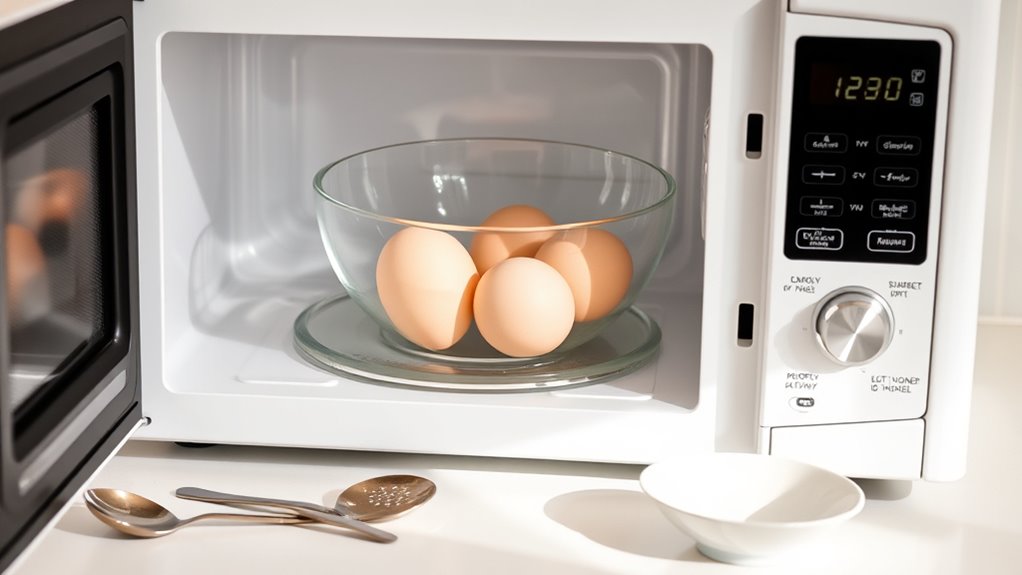
10 Easy Steps to Soft Boil an Egg in the Microwave
To soft boil an egg in the microwave, start by piercing the wide end of two large eggs to prevent cracks.
Boil salted water and fully submerge the eggs in a microwave-safe bowl.
Microwave on medium power to avoid overheating.
Once done, immediately cool them in cold water to stop cooking.
Peel carefully from the wider end under running water for easy shell removal.
If you want to master perfect timing and serving tips, there’s more helpful info ahead.
Gather Ingredients and Tools
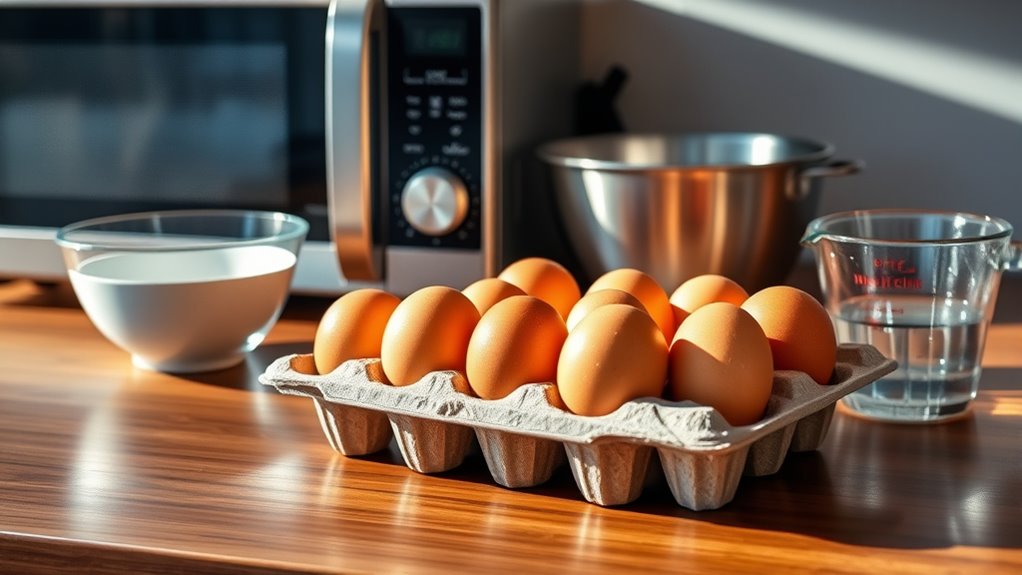
Before you start cooking, gather two large eggs, a microwave-safe bowl, and enough water to fully submerge the eggs. Whether you want to make soft boiled eggs or hard boiled ones, having the right tools makes a difference every time.
Fill the bowl with hot or boiling water to cover one egg or both, depending on how many cooked eggs you want. Using cold water after cooking helps to stop the cooking process and makes peeling easier.
To make eggs for breakfast quickly, Eggs In The Microwave is a handy method. Remember, the microwave-safe bowl is essential to avoid accidents when heating water with eggs. This simple prep sets you up perfectly to make soft boiled eggs in the microwave without hassle or cracks.
Pierce and Prep Your Egg to Prevent Cracks
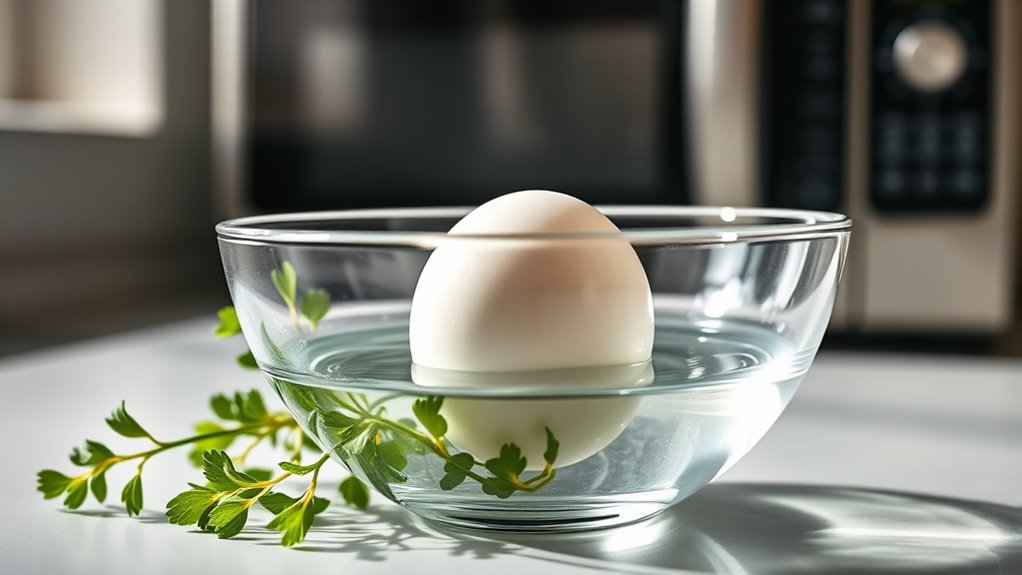
How can you prevent your egg from cracking in the microwave? Start by piercing the wide end of the egg with a fine-pointed pin or needle. This creates an air pocket that releases steam during cooking, reducing pressure buildup inside the shell.
Gently tap the eggshell to make a small, shallow hole—be careful not to damage the egg white or yolk. Using controlled, light pressure guarantees the shell won’t crack prematurely.
This simple step lets steam escape safely, preventing the shell from bursting or cracking as the egg heats. Taking this precaution means your egg stays intact and cooks evenly, setting you up perfectly for the next step in soft boiling your egg in the microwave.
Boil Salted Water to Ensure Even Cooking
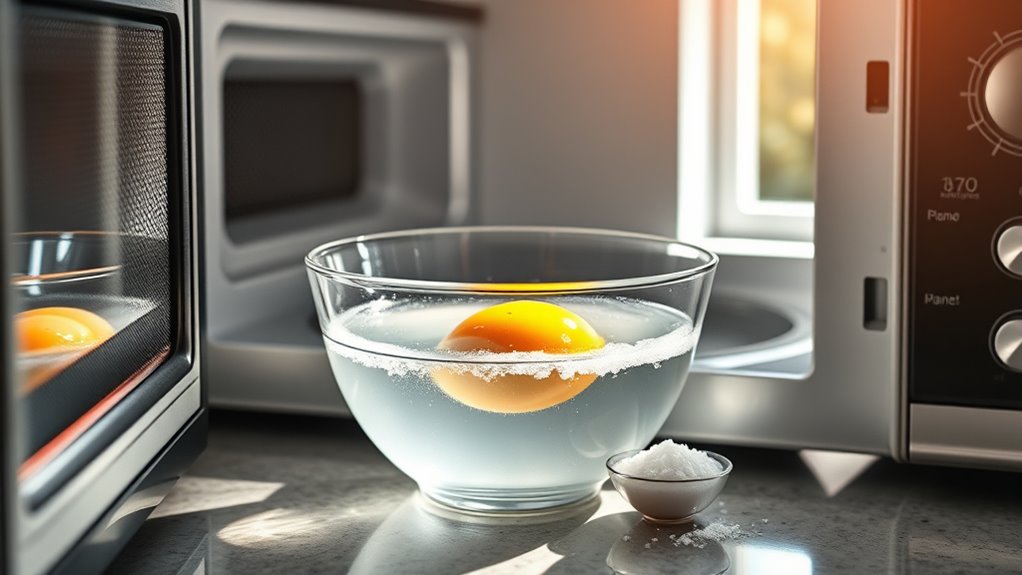
Start by boiling salted water to help cook your egg evenly in the microwave. The salt raises the boiling point, which promotes consistent heat and reduces the chance of cracks by strengthening the shell.
Make sure your egg is fully submerged for the best results.
Benefits Of Salted Water
Adding salt to your boiling water offers several benefits that make soft boiling eggs in the microwave more effective. Salt raises the water’s boiling point just enough to help your eggs cook more evenly. It also improves heat transfer, so your eggs cook faster and more consistently.
Plus, salt strengthens the eggshell’s outer membrane, which helps prevent the egg whites from sticking to the shell during cooking. Another advantage is that salted water reduces foaming and prevents the water from boiling over, keeping your microwave clean and safe.
Salt Prevents Egg Cracking
When you boil eggs in salted water, you reduce the risk of cracking by strengthening their shells and creating a denser cooking environment. The salt raises the boiling point of water, ensuring the eggs cook more evenly and gently. This denser environment cushions the eggs, lowering the chance of cracks from sudden heat changes.
If tiny cracks do appear, the salt helps seal them, preventing egg white from leaking out. Additionally, salt slightly toughens the shells, making them less likely to break under heat stress. Beyond preventing cracks, salted water also makes peeling easier by breaking down the shell’s surface.
Achieving Consistent Cooking
Salt not only protects your eggs from cracking but also plays a key role in achieving consistent cooking. When you boil salted water in the microwave, the salt raises the boiling point slightly, ensuring a stable and even temperature. This prevents sudden temperature shocks that might cause cracks or uneven cooking.
Make sure your egg is fully submerged in the salted boiling water so heat distributes evenly around the shell. Keeping a consistent amount of water and the same salt concentration each time helps you get reliable, uniform results, especially when cooking multiple eggs.
Submerge the Egg Fully in Hot Water
Since uneven heat can cause cracking or uneven cooking, you should fully submerge your egg in hot water just below boiling temperature. This guarantees the heat surrounds the egg evenly, preventing undercooked or overcooked spots. Use water around 190°F (88°C) and make sure the egg is covered by at least an inch of water to keep the temperature consistent.
Submerging the egg also helps avoid shell cracks by minimizing rapid temperature changes. Starting with hot water jumpstarts the cooking process, giving you a perfectly soft-boiled egg.
Picture this:
- A clear bowl filled with steaming, gently rippling water
- The egg resting calmly, completely enveloped beneath the surface
- Tiny bubbles clinging lightly to the shell’s surface
- A smooth, even heat wrapping around the egg for gentle cooking
Microwave on Medium Power to Avoid Cracks
You’ll want to set your microwave to medium power to keep the egg from cracking. This gentler heat helps the egg warm evenly and prevents sudden temperature spikes that can shatter the shell.
Taking this step guarantees your egg stays intact while cooking perfectly.
Benefits Of Medium Power
Using medium power—typically between 50% and 70% wattage—makes a big difference in preventing your eggs from cracking in the microwave. This setting helps heat the egg evenly, avoiding sudden temperature spikes that often cause shells to crack or whites to leak.
While cooking takes a bit longer at medium power, you get a perfectly soft-boiled egg without damage, especially if you’re new to microwaving eggs. By choosing medium power, you’ll enjoy:
- Even heat distribution that protects the shell
- Reduced risk of hotspots causing explosions
- A gentle cooking process that maintains egg integrity
- More consistent soft-boiled results every time
Using medium power is a simple adjustment that guarantees your eggs cook safely and deliciously.
Preventing Eggshell Cracks
Microwaving eggs at medium power not only guarantees even cooking but also plays a key role in preventing the shell from cracking. By setting your microwave to around 50% power, you reduce sudden temperature changes that cause shells to crack. Before cooking, pierce the wider end of the egg with a pin to let trapped air escape, preventing pressure buildup.
Fully submerge the egg in water to help heat distribute evenly, minimizing uneven expansion. Use a microwave-safe container with a lid to contain steam, which protects the shell from rapid boiling damage. Finally, increase cooking time gradually and avoid high power settings to minimize thermal shock.
Following these steps helps you enjoy perfectly soft-boiled eggs without messy cracks.
Microwave Timing for Perfect Soft Yolks
Although microwave wattages vary, aiming for 3 to 4 minutes at full power usually soft-boils an egg perfectly. If you want a runny yolk, shoot for around 3 minutes; for a slightly firmer yolk, extend the time to about 3.5 minutes. Using medium power (60%) can help prevent overcooking or breaking the yolk.
Remember to pierce the wide end of the shell beforehand to let steam escape and avoid cracks.
Here’s how to get perfect soft yolks:
- Set your microwave power and time precisely
- Pierce the eggshell at the wide end
- Use medium power for gentle cooking
- Rest the egg in hot water after microwaving
These steps help you achieve creamy, soft yolks every time.
Use an Ice Bath to Stop the Cooking Instantly
Once your eggs finish cooking, immediately transfer them to a bowl of ice water to stop the cooking process. This quick action halts the residual heat, preventing your eggs from overcooking and ensuring the yolk stays perfectly runny while the white sets just right.
Submerge the eggs for at least two minutes to cool them rapidly. The ice bath also helps the egg’s shell and inner membrane contract, which makes peeling easier and cleaner later on.
Preparing the ice water bath before cooking is key, so you can transfer your eggs instantly and preserve that ideal soft-boiled texture. This simple step controls carryover heat and guarantees your eggs don’t become overdone after microwaving.
Peel Your Soft-Boiled Egg Carefully
Now that your egg has cooled, it’s time to peel it gently to keep the soft white and yolk intact. Start by tapping the shell lightly all over to create small cracks, especially at the wider end.
Take your time removing the shell with your fingers or a spoon to avoid damaging the delicate egg inside.
Gentle Shell Removal
To peel your soft-boiled egg without damaging the delicate white or runny yolk, start by cooling it in cold water for at least two minutes to reduce shell sticking. Once cooled, gently tap the egg all over to create tiny cracks.
Begin peeling from the wider end where the air pocket lies, using your fingers or the tip of a teaspoon to lift the shell carefully. You can peel under running water or submerge the egg in a bowl of water to loosen the shell from the membrane. Handle the egg gently throughout to preserve its soft texture.
- Tap gently all around to crack the shell evenly
- Start peeling from the egg’s wider end
- Use fingers or a spoon tip to lift shell pieces
- Peel under running water to ease shell removal
Avoiding White Damage
Although peeling a soft-boiled egg can be tricky, handling it gently guarantees the delicate white stays intact. Start peeling from the wider end, where there’s usually an air pocket, to avoid damaging the soft white. Use a small spoon to carefully loosen the shell instead of forcing it off.
Peeling under cold running water helps separate the shell from the white, making the process smoother. Take your time and be gentle—rushing or using force can tear the fragile white. Avoid sharp knives or any harsh tools, as they can easily break the egg.
Easy Serving Ideas for Soft-Boiled Eggs
When you want to elevate your meals quickly, soft-boiled eggs offer versatile serving options that bring both flavor and texture. Their creamy yolks add richness and a delightful contrast to many dishes.
Here are some easy ideas to enjoy your soft-boiled eggs:
- Place them atop toast or sourdough with sautéed mushrooms and garlic butter for a satisfying brunch.
- Add halved soft-boiled eggs to Caesar or Nicoise salads for protein and depth.
- Serve alongside avocado slices sprinkled with sea salt for a nutritious, simple breakfast.
- Top ramen or soba noodles with soft-boiled eggs to boost umami flavor and make the meal heartier.
These serving ideas make soft-boiled eggs a delicious addition to your everyday cooking.
Store and Reheat Soft-Boiled Eggs Safely
Since soft-boiled eggs are delicate, you’ll want to store and reheat them carefully to keep their texture and flavor intact while ensuring food safety. After cooking, cool your eggs quickly in an ice bath to stop residual cooking and prevent bacteria growth. Store them in an airtight container in the refrigerator for up to 2 days.
Avoid freezing, as it alters texture and makes peeling difficult. When you’re ready to eat, reheat the eggs by placing them in hot water for about 2 minutes—skip the microwave to prevent overcooking or cracking. Always eat reheated eggs immediately, and if you notice any off smells or unusual appearances, discard them to stay safe.
Following these steps helps you enjoy your soft-boiled eggs fresh and delicious every time.
Frequently Asked Questions
How to Make a Soft Boiled Egg in a Microwave?
You’ll fill a microwave-safe bowl with water, pierce the egg’s rounded end, submerge it fully, then microwave for 30-45 seconds.
Cool it briefly in cold water, peel, and enjoy your soft boiled egg immediately.
What Is the Easiest Way to Make a Soft Boiled Egg?
Picture gently piercing the egg’s wide end, then submerging it in warm water inside a microwave-safe bowl.
You’ll microwave it for about 4-6 minutes, then cool it quickly—easy, quick, and perfectly soft-boiled every time.
Can I Boil Eggs in the Microwave?
Yes, you can boil eggs in the microwave by submerging them in water, piercing the shell to prevent cracking, adding salt or baking soda, and cooking for 4-6 minutes.
Don’t forget to cool them afterward!
What Is the Best Way to Make Eggs in the Microwave?
When it comes to making eggs in the microwave, don’t put all your eggs in one basket—use a microwave-safe container with water.
Pierce the shell, cover it, cook carefully, then chill in ice water for perfect results.
Conclusion
Now that you’ve mastered soft boiling eggs in the microwave, picture cracking open that tender shell to reveal a warm, golden yolk gently spilling onto your toast. With just a few simple steps, you’ve turned a quick kitchen task into a comforting ritual.
Whether it’s breakfast or a snack, these soft-boiled eggs bring cozy satisfaction in every bite. Keep experimenting, and enjoy the effortless delight you’ve created with ease and care.
By following these easy steps for soft boiling eggs in the microwave, you can enjoy perfectly cooked eggs anytime. Embrace the convenience and savor the delicious results every time you soft boil an egg in the microwave.