
How Many Calories Are in a Fried Egg?
You’ll find about 90 calories in a plain fried egg, but adding oils or butter can boost that to 120 or more. How many calories are in a fried egg depends largely on the cooking method and added fats.
The type and amount of fat you use really matter—using a non-stick pan or oil spray helps keep calories lower.
Fried eggs also provide protein, vitamins, and minerals. If you want to learn how to manage these calories better and understand the nutrients you get, there’s more useful info ahead.
Fried Egg Calories: Plain and With Added Fat
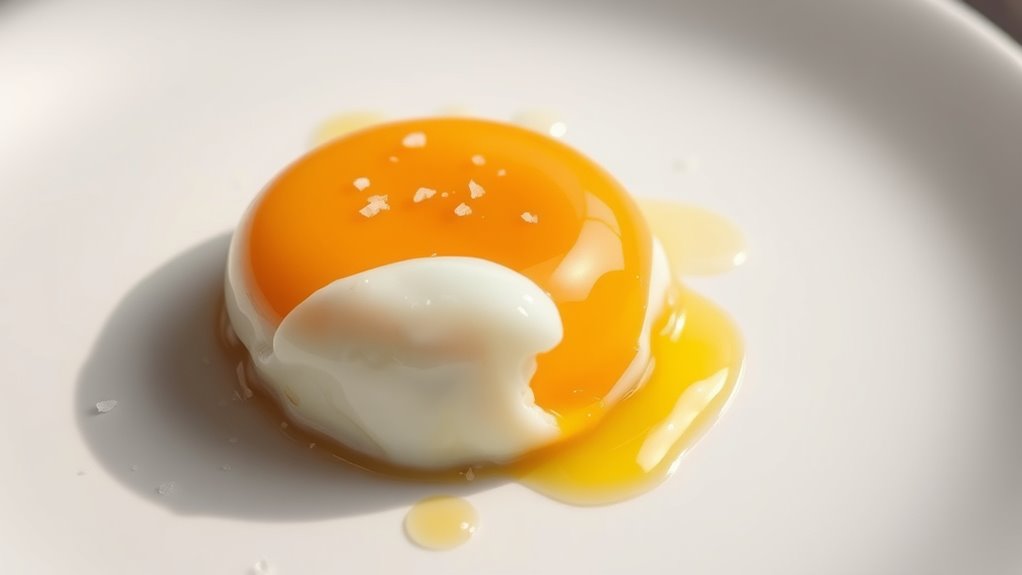
Although a plain large fried egg contains about 92 calories, adding oil or butter when frying can raise the calorie count to between 85 and 120 calories per egg. When you cook a plain fried egg, most fried egg calories come from its natural fats and proteins.
However, the calorie content increases with added fat like oil or butter. Depending on the amount you use, these added fats can markedly boost the total calories. To keep fried egg calories lower, try using minimal oil or a non-stick spray.
This way, your fried egg stays close to the 85-calorie range. Remember, the type and amount of oil or butter you add directly affect the calorie content, so controlling these helps manage your intake effectively.
How Different Cooking Oils and Methods Change Fried Egg Calories
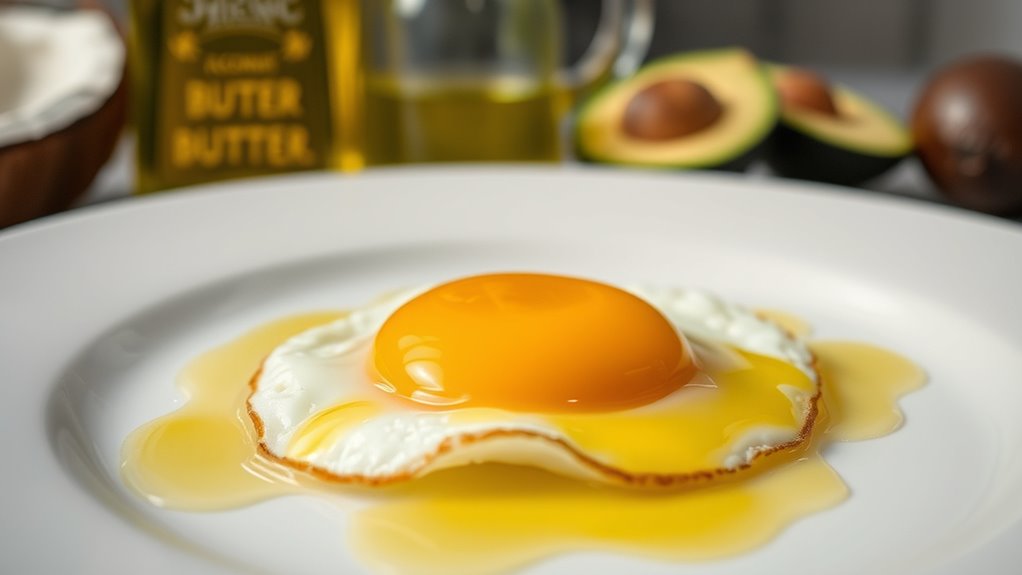
When you fry an egg, the type and amount of oil you use can substantially change its calorie content. Using cooking oils like sunflower, olive, or rapeseed adds healthy fats but also causes a calorie increase depending on the oil amount. One tablespoon of oil can add roughly 120 calories, so be mindful.
Frying methods matter too; cooking your egg in a non-stick pan with minimal oil keeps calories around 85, while adding more oil can push it to about 120 calories. Alternatively, methods that use no added fat—like spraying oil lightly or cooking with water—help maintain the egg’s natural calorie content.
How to Reduce Calories When Making Fried Eggs

To cut calories while frying eggs, choose healthy oils like olive or sunflower spray and use them sparingly. These healthy oils help reduce the calorie content compared to butter or heavy spreads. Using non-stick pans allows you to fry eggs with minimal oil, keeping calories closer to 85 per egg.
After frying, blot the egg with paper towels to remove surface fats, further lowering calorie intake. Here are some tips to reduce calories when frying eggs:
- Use healthy oils in spray form to control oil amount
- Cook eggs in non-stick pans to minimize added fats
- Blot fried eggs with paper towels to eliminate excess surface fats
What Nutrients Do Fried Eggs Provide Besides Calories?
Frying eggs with less oil helps keep calories in check, but eggs offer much more than just energy. When you eat a fried egg, you’re getting a nutrient-dense package packed with high-quality protein—about 6.3 grams per large egg—that supports muscle repair and overall body function.
Eggs also supply essential vitamins like A, D, and B12, which contribute to eye health, bone strength, and cognitive function. Alongside vitamins, you’ll find important minerals such as iron, calcium, and potassium, essential for oxygen transport and electrolyte balance.
Plus, eggs contain antioxidants like lutein and zeaxanthin that help reduce oxidative stress and promote healthy vision. Don’t overlook choline, a fundamental nutrient for brain health, making fried eggs a well-rounded choice beyond just calories.
How to Fit Fried Egg Calories Into Your Daily Diet
Although fried eggs provide valuable nutrients, you’ll want to keep an eye on their calorie content to fit them into your daily diet effectively. A typical fried egg has about 92 calories, so portion control is essential, especially if you’re following a calorie-conscious diet or focusing on weight management.
You can reduce calories by using minimal oil or healthier fats like olive oil when frying. To balance your meal, pair your fried egg with low-calorie vegetables or whole-grain toast.
- Use minimal oil or non-stick spray to lower calorie content
- Pair fried eggs with nutrient-dense, low-calorie sides
- Track your fried egg calories within your total daily intake
Frequently Asked Questions
How Many Calories Do 2 Fried Eggs Have?
Two fried eggs typically have around 184 calories if you use minimal oil or butter.
If you cook them with more fat, the calorie count can rise to about 240 calories for both eggs.
Can I Eat Fried Eggs During Weight Loss?
Yes, you can eat fried eggs during weight loss. Use minimal oil, drain excess fat, and control portions.
They provide protein, promote fullness, and fit well into balanced meals, helping you stay on track with your goals.
Is 2 Fried Eggs a Day Healthy?
Yes, eating two fried eggs a day can be healthy if you use minimal oil and balance your diet.
Just watch your cholesterol intake and include plenty of veggies and whole grains to keep things nutritious.
What Is the Lowest Calorie Way to Eat Eggs?
You’d practically be eating air if you stuck to egg whites—they’re just 17 calories! Poaching or boiling eggs keeps calories low, too, so ditch the oil and butter to stay light and healthy with every bite.
Conclusion
Just like Humpty Dumpty, a fried egg might seem simple, but there’s more to it than meets the eye. Whether you fry it plain or with a splash of oil, you can control the calories without cracking your diet.
Remember, this humble breakfast staple offers more than just energy—it’s packed with nutrients to fuel your day. So go ahead, enjoy your fried egg wisely, and let it fit perfectly into your daily nutrition story. Understanding how many calories are in a fried egg can help you make smarter choices for your meals.