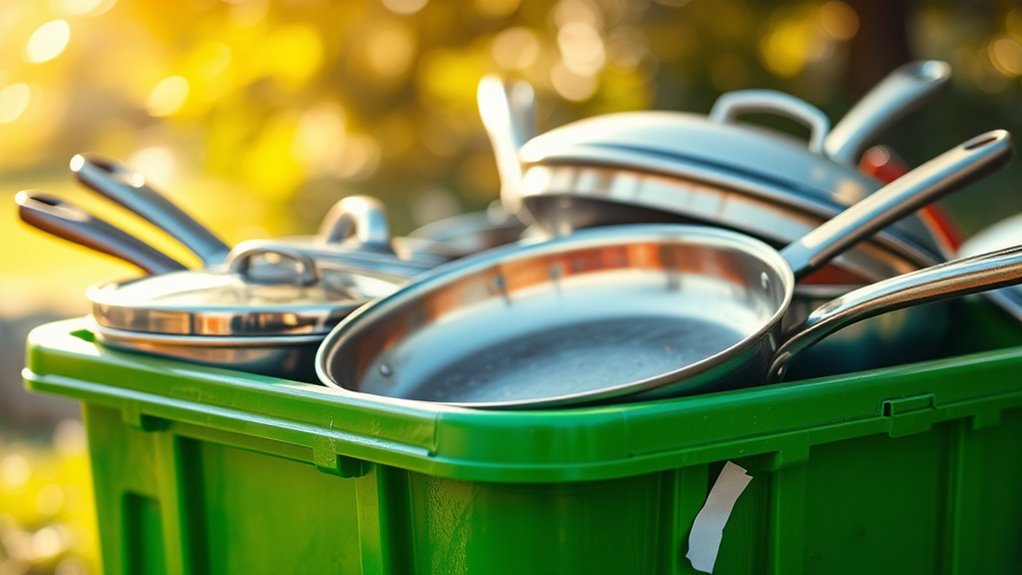
Can You Put Cooking Pans in the Recycle Bin?
You can’t just toss most cooking pans into your regular recycle bin because nonstick coatings and mixed materials interfere with recycling machines. Damaged pans with PTFE coatings can release harmful chemicals, making them unsafe for curbside recycling.
However, intact metal cookware like cast iron or stainless steel can be recycled at scrap metal facilities if you remove plastic parts first.
If you want to make smarter choices or find alternative disposal options, there’s more to contemplate beyond the bin.
Why You Can’t Recycle Most Cooking Pans in Your Bin
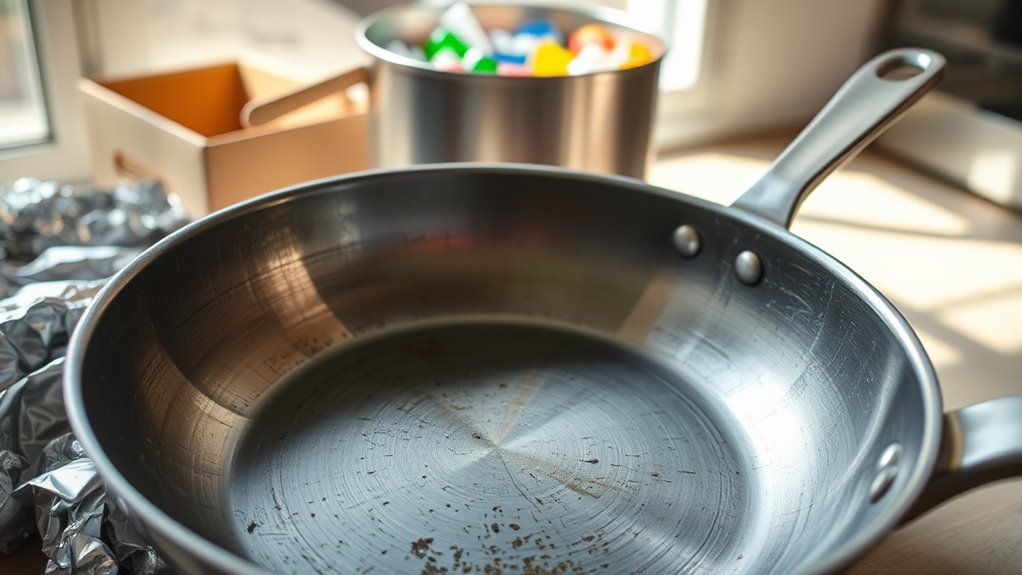
Most cooking pans can’t be recycled in your curbside bin because they’re made from metals like aluminum or cast iron combined with non-stick coatings that current recycling facilities can’t process. When you try to toss old pots and pans into your regular recycling, they often get rejected since the coatings and mixed materials interfere with sorting machines.
Recycling options are limited because most curbside programs only accept clean, uncontaminated metals. Instead, if you want to recycle, you’ll need to take your cookware to scrap metal recycling centers that can handle bare metals without coatings or damage.
Otherwise, placing pans in your bin risks contaminating other recyclables and ends up in the landfill. So, while it’s tempting to recycle old pots and pans curbside, scrap metal recycling is your best bet for proper disposal.
How Nonstick Coatings Affect Cookware Recycling
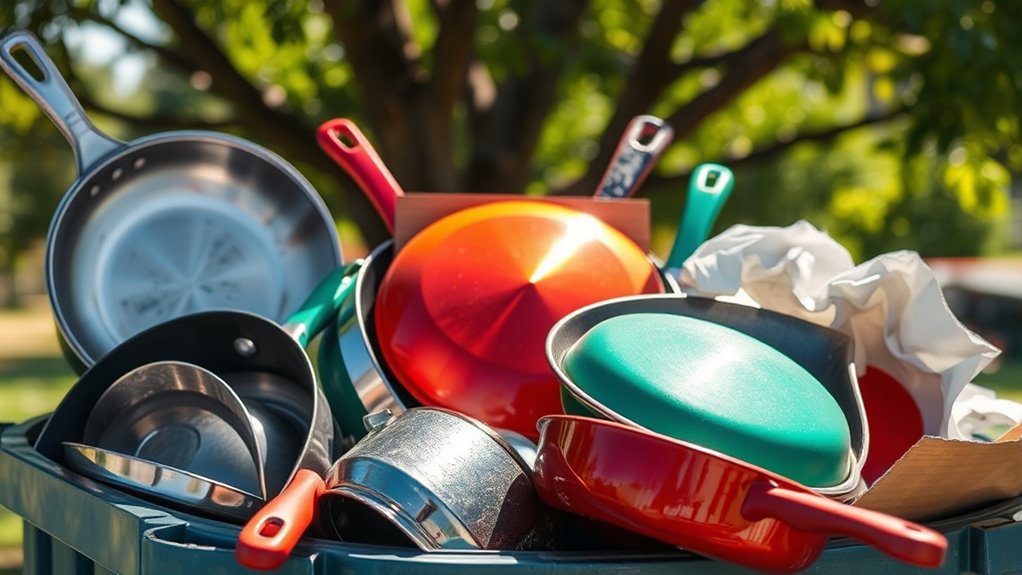
You can’t just toss nonstick pans in recycling bins because their PTFE coatings contain chemicals that complicate processing. If these coatings are damaged, they might release harmful substances like PFOA and PFOS when discarded improperly.
Plus, most facilities can’t separate the coating from the metal, making recycling these pans a real challenge.
Challenges With PTFE Coatings
Although nonstick cookware is popular for its convenience, the PTFE coatings used pose significant recycling challenges. PTFE, a type of PFAS, forms a fluoropolymer layer that’s tough to separate from metal, complicating recycling efforts.
Damaged pans with chipped coatings can’t be reused safely, and most recycling centers won’t accept them due to contamination risks. Fortunately, some brands offer take-back programs to manage PTFE-coated cookware responsibly.
| Issue | Cause | Impact on Recycling |
|---|---|---|
| PTFE Layer | Fluoropolymer coating | Hard to separate from metal |
| Contamination | Coating flakes or chips | Unsafe for reuse/recycling |
| Recycling Facility | Lack of specialized tech | Rejects PTFE pans |
| Brand Programs | Take-back initiatives | Provides safe disposal |
Health Risks Of Damage
When nonstick coatings on cookware become damaged or start flaking, they release harmful chemicals like PFOA and PFAS into your food and the environment. Using nonstick cookware with damaged nonstick coatings increases the risk of ingesting toxic particles as these coatings can chip off and contaminate your meals.
This not only poses serious health risks, including reproductive problems, thyroid issues, and certain cancers but also complicates recycling efforts. Damaged coatings can leach chemicals into recycling streams, making it unsafe to process the cookware for reuse.
Because these toxic substances persist and accumulate, you should avoid putting nonstick cookware with compromised coatings in your recycling bin to protect both your health and the environment. Proper disposal methods help prevent contamination and reduce exposure to hazardous chemicals.
Recycling Limitations For Nonstick
Because nonstick coatings contain PTFE, a type of PFAS, recycling your cookware becomes a complicated process that most facilities can’t handle. PTFE is hard to separate from metal, and damaged coatings risk chemical leaching.
Removing the nonstick layer before recycling is costly and technologically challenging. As a result, many recycling programs advise against tossing nonstick pans in curbside bins. Instead, consider alternative disposal methods.
| Aspect | Challenge | Impact |
|---|---|---|
| PTFE Coating | Difficult to separate | Limits recyclability |
| Damage to Coating | Chemical leaching risk | Unsafe for recycling |
| Removal Process | Costly and complex | Recycling often not feasible |
| Recycling Programs | Discourage curbside recycling | Require alternative disposal |
Cookware Metals Accepted by Scrap Metal Recycling Facilities
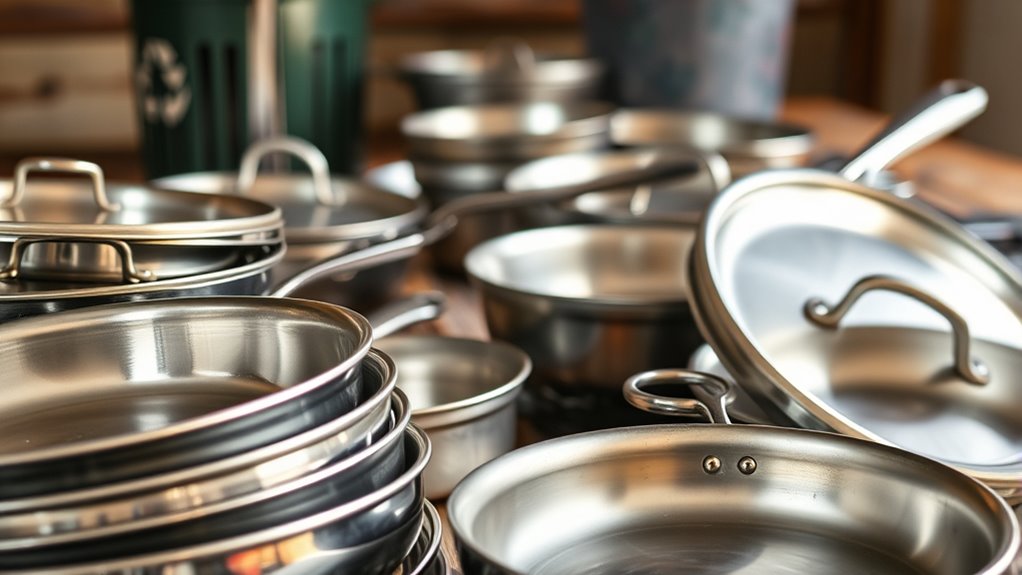
When recycling cooking pans, you’ll want to focus on metals like aluminum, stainless steel, cast iron, and steel, which scrap facilities commonly accept. Make sure your cookware is clean and free from non-metal parts like plastic handles or coatings before dropping it off.
Common Recyclable Metals
Although cookware comes in various materials, scrap metal recycling facilities primarily accept metals like cast iron, steel, aluminum, copper, and stainless steel. You can easily identify ferrous metals like cast iron and steel because they’re magnetic, while nonferrous metals such as aluminum, copper, and stainless steel aren’t.
Remember, removing non-metal parts like plastic handles ensures your cookware gets properly recycled.
| Metal Type | Magnetic? | Emotion Evoked |
|---|---|---|
| Cast Iron | Yes | Durable & Reliable |
| Stainless Steel | No | Sleek & Modern |
| Aluminum | No | Lightweight & Bright |
| Copper | No | Rich & Valuable |
Knowing these metals helps you recycle your pans responsibly and feel good about reducing waste.
Scrap Facility Acceptance Criteria
Knowing which metals make up your cookware helps you understand what scrap metal recycling facilities accept. Most facilities take ferrous and nonferrous metals like steel, aluminum, copper, and brass. However, they often reject cookware with coatings, such as nonstick or paint, or those with plastic handles and other non-metal parts.
To guarantee your cookware qualifies, you’ll need to remove any non-metal components and clean off residues. If you’re unsure whether your local recycling program accepts scrap cookware, it’s best to check their specific guidelines. This helps you properly dispose of old cookware without contaminating the recycling stream.
Where to Donate or Reuse Old Cookware Instead of Recycling
If you want to give your old cookware a new purpose, donating to local charities, shelters, or secondhand stores like Goodwill and Salvation Army can make a big difference. These places often accept gently used pots and pans, helping you donate items that are still functional and safe. Before you donate, check for rust, deep scratches, or damaged nonstick coatings to ensure usability.
You can also reuse old cookware creatively—turn pots into planters or use pans for DIY projects, reducing waste even further. Community organizations and food banks sometimes welcome cookware donations to support those in need.
Brand Take-Back Programs for Cookware Recycling
Donating or reusing old cookware helps reduce waste, but when your pots and pans reach the end of their usable life, brand take-back programs offer a responsible way to recycle them. Several cookware brands like Made In, Our Place, GreenPan, Calphalon, and Tefal have recycling programs designed to handle used cookware sustainably.
Made In even accepts any brand, recycling damaged items and buffing off PTFE coatings. Our Place provides prepaid shipping for ceramic cookware to a California recycling facility. GreenPan combines eco-friendly production with recycling efforts, planting a tree for each order.
Tefal aims to collect 20 million utensils by 2027 through its program. These initiatives ensure scrap metal and other materials are properly processed, reducing landfill waste and supporting environmentally friendly disposal.
How to Dispose of Non-Metal Cookware and Plastic Utensils
Although non-metal cookware and plastic utensils might seem recyclable, they usually can’t go in your curbside bins. Glass or ceramic pans often aren’t accepted and can contaminate recycling streams. Plastic utensils are typically made from non-recyclable plastics, so you should verify your local recycling rules before tossing them in.
For damaged nonstick cookware, don’t put it in regular recycling; instead, look for scrap metal recycling programs or special hazardous waste options. If your cookware has plastic handles, remove those first since mixed materials complicate recycling.
When in doubt, contact your local waste management authority to find out how to dispose of these items properly. This helps prevent environmental harm and ensures responsible recycling practices.
Safer Cookware Alternatives That Are Easier to Recycle
Choosing safer cookware alternatives like cast iron, stainless steel, and ceramic not only protects your health but also simplifies recycling. Unlike nonstick pans coated with PFAS or PTFE, these options avoid harmful chemicals that complicate recycling and threaten environmental health. Cast iron and stainless steel are highly recyclable through scrap metal facilities, making it easier for you to dispose of them responsibly.
Ceramic cookware, while not typically accepted in curbside recycling, can be repurposed or donated if undamaged, reducing waste. By switching to PFAS-free cookware, you support sustainable waste management and reduce chemical contamination in recycling streams. Opting for these safer alternatives benefits both you and the environment, making your kitchen greener and your recycling efforts more effective.
Frequently Asked Questions
Can I Put Pans in My Recycling Bin?
You usually can’t put pans in your recycling bin unless they’re clean scrap metal without coatings or handles.
Check your local guidelines, as many places require special drop-offs for cookware to avoid contamination and recycling issues.
Can I Put Pots and Pans in the Recycle Bin?
You generally can’t put pots and pans in your curbside recycle bin unless your program accepts scrap metal.
Instead, take them to a scrap metal recycling center, especially if they have non-stick coatings or mixed materials.
How to Dispose of an Old Frypan?
Don’t toss that old frypan like yesterday’s news! You’ll want to either donate it or drop it at a scrap metal facility if metal.
Otherwise, check local rules for hazardous waste disposal options.
What Is Surprisingly Not Recyclable?
Surprisingly, nonstick pans with PTFE coatings, Pyrex glass, and cookware with plastic handles aren’t recyclable in curbside bins.
You’ll need to find special scrap metal facilities or disposal methods for these items instead.
Conclusion
You might picture tossing that old, scratched pan into your recycling bin, but it’s not that simple. Nonstick coatings and mixed materials often block the way, turning your recycling efforts into a frustrating maze.
Instead, imagine giving your cookware a second life—donate it or find a scrap metal facility ready to welcome it.
By choosing safer, recyclable alternatives, you’re not just clearing clutter—you’re helping the planet shine a little brighter, one pan at a time. Remember, when wondering, “Can you put cooking pans in the recycle bin?” the best answer is often to recycle responsibly through proper channels.