How to Safely Put a Roasting Pan on Your Stove
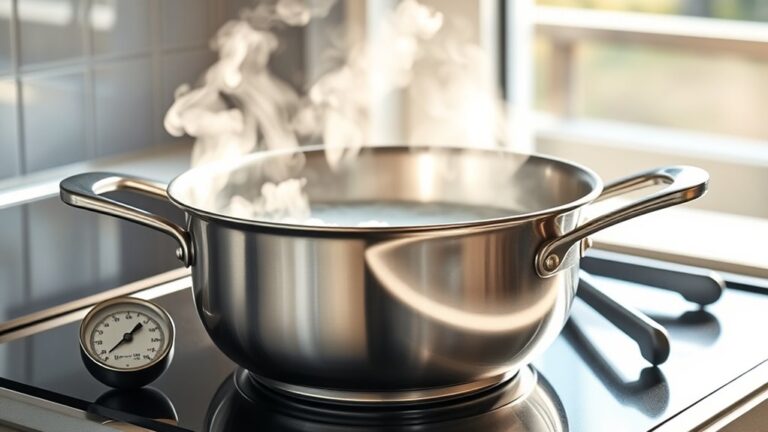
To safely put a roasting pan on your stove, first make sure it’s designed for stovetop use with sturdy, heat-resistant handles.
Placing a roasting pan on the stove requires attention to stability and heat compatibility. Choose a burner that matches the size of the pan to keep it stable and promote even heating.
Use low to medium heat and preheat gradually to avoid warping.
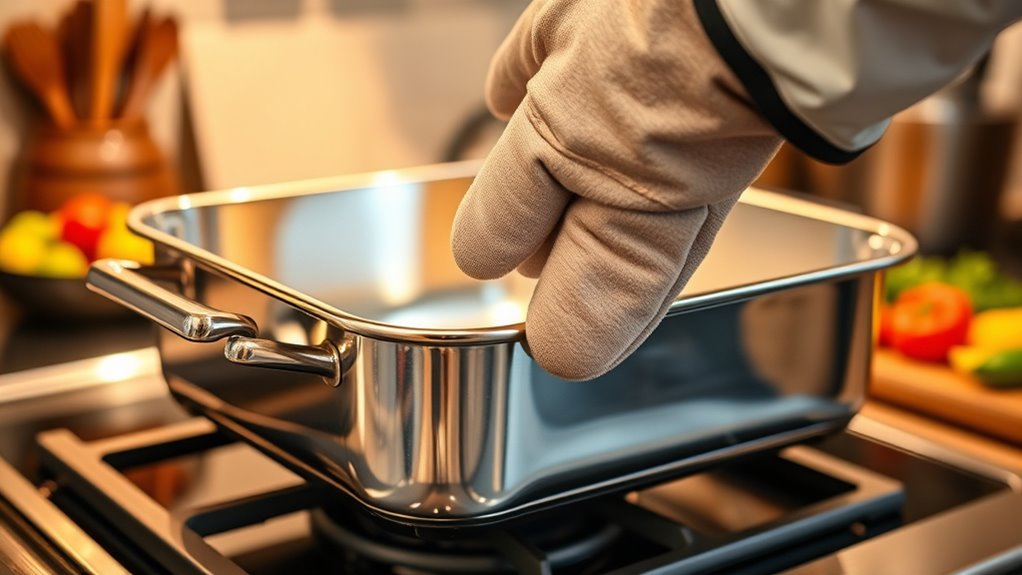
Always handle the pan with oven mitts to prevent burns.
If you want to master using your roasting pan on the stove without damage, there’s more you can do to protect and maintain it.
How to Check If Your Roasting Pan Is Safe for Stove Use
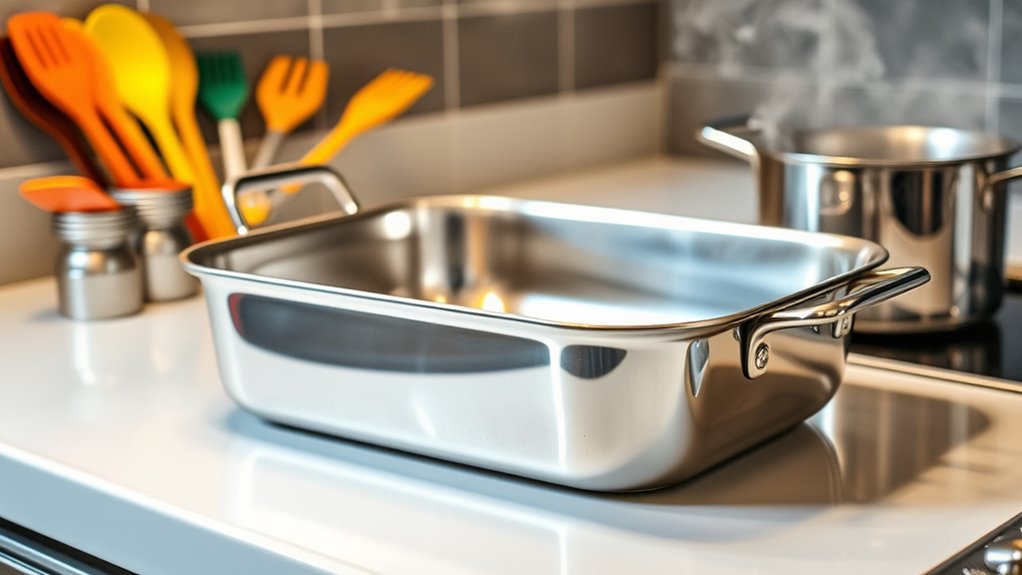
How can you tell if your roasting pan is safe to use on the stove? First, check the manufacturer’s guidelines to see if the pan is rated for stovetop use. Next, look at the material—stainless steel pans and heavy-gauge aluminum ones are usually safe for direct heat.
Inspect your pan carefully for warping, dents, or any damage that might compromise safety when placed on the stove. Also, make sure the handles are sturdy, heat-resistant, and securely attached to handle stovetop temperatures without issue. Avoid using nonstick-coated pans on the stove, as high heat can ruin the coating and pose safety risks.
Choosing the Best Roasting Pan Material for Stove Cooking
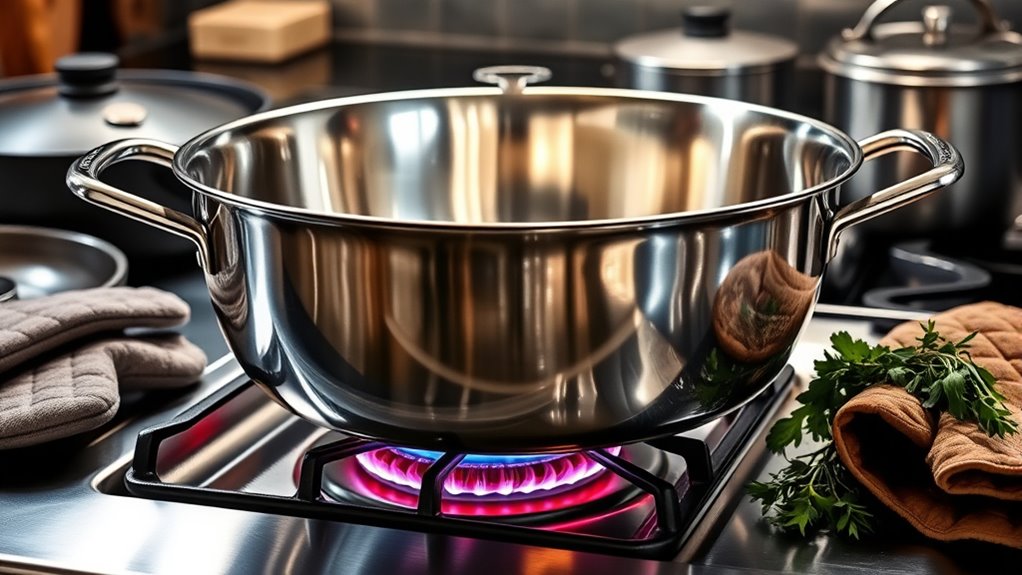
When picking a roasting pan for stove use, you’ll want to focus on materials that handle direct heat well, like stainless steel. Hard-anodized aluminum pans offer great heat conduction and often come with nonstick surfaces, but make certain they’re stove-safe before using them.
Also, consider pans with thick construction to prevent warping and ensure even heat distribution.
Stainless Steel Benefits
A stainless steel roasting pan offers you durability and reliable performance on the stove. Its superior heat conduction and even heat distribution give you consistent cooking results every time. Since stainless steel is non-reactive, it won’t alter flavors or discolor with acidic ingredients.
Plus, these pans resist warping and often come with riveted handles for safe handling when moving between stove and oven.
| Feature | Benefit | Why It Matters |
|---|---|---|
| Durable | Resists warping and damage | Long-lasting use |
| Heat Conduction | Distributes heat evenly | Prevents hot spots |
| Non-Reactive | No flavor or color changes | Ideal for acidic foods |
| Riveted Handles | Secure grip | Safe stove-to-oven transfer |
Aluminum Nonstick Options
If you’re looking for a roasting pan that’s lighter and easier to handle on the stove, aluminum nonstick options might catch your eye. They offer excellent heat conduction, ensuring your food cooks evenly and browns beautifully. The nonstick coating makes searing and browning simple while speeding up cleanup.
Keep these points in mind when choosing an aluminum nonstick roasting pan:
- Lightweight design reduces strain when moving the pan on and off the stove.
- Nonstick coating prevents food from sticking, so you can cook delicate items without worry.
- Always check the manufacturer’s heat recommendations to avoid damaging the nonstick surface.
Heat Resistance Factors
Because roasting pans come in various materials, understanding their heat resistance is essential for safe stove use. You want a pan that withstands high heat without warping or damage. Stainless steel and cast iron tops the list for heat resistance, handling direct flames with ease.
Hard-anodized aluminum also performs well due to excellent thermal conductivity. However, pans with nonstick coatings usually have lower heat tolerance, so avoid high heat to preserve their surface.
| Material | Heat Resistance & Stove Use |
|---|---|
| Stainless Steel | Highly heat-resistant; safe for direct stove use |
| Hard-Anodized Aluminum | Excellent heat conduction; stove-friendly |
| Cast Iron | Extremely durable; ideal for open flames |
| Nonstick Coated | Lower heat tolerance; avoid excessive heat |
Always check manufacturer guidelines to ensure safe stove use.
How to Prepare Your Roasting Pan Before Using It on the Stove
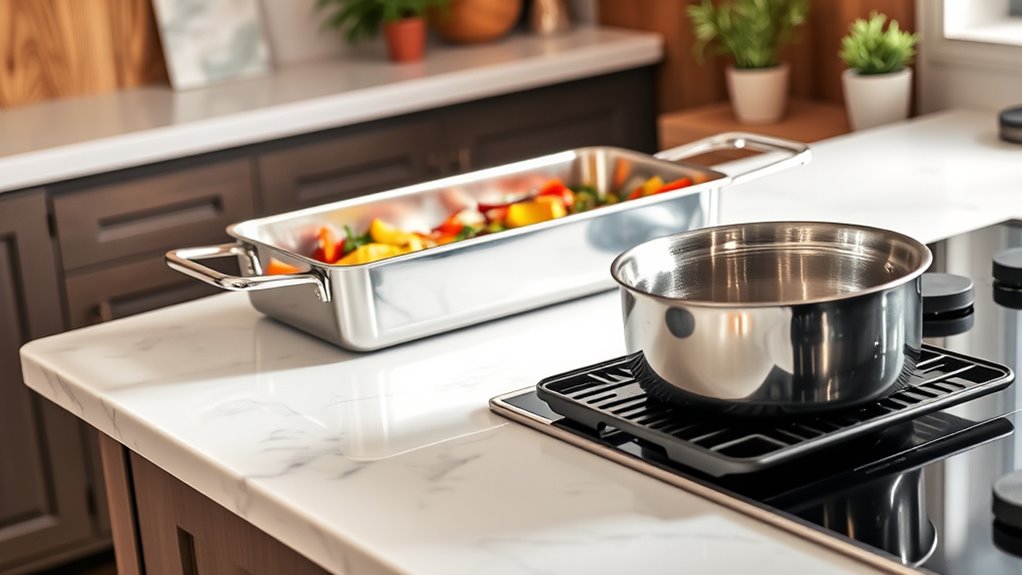
Before placing your roasting pan on the stove, make sure you clean and dry it thoroughly to remove any residues or oils that might affect cooking. Properly preparing your pan ensures safe and efficient roasting on the stovetop.
Start by inspecting the pan for warping, cracks, or damage, which could compromise safety. Check that the handles are securely attached and heat-resistant for safe handling. Also, confirm that any nonstick coating is stovetop-compatible to avoid fumes or degradation.
When you begin heating, gradually preheat the pan over low to medium heat to prevent warping and promote even heat distribution. Follow these steps for effective preparation:
- Cleaning and inspecting the pan and handles
- Verifying nonstick coating compatibility
- Preheating gradually to protect the pan and optimize roasting results
Positioning Your Roasting Pan Safely on the Stove Burner
You’ll want to match your roasting pan to the right burner size to guarantee even heat and stability. Center the pan carefully on the burner to prevent tipping or uneven cooking.
Keep an eye on how the heat spreads to avoid any hot spots that could damage your pan or food.
Proper Burner Size
Selecting the right burner size is essential to safely positioning your roasting pan on the stove. Using the proper burner size helps guarantee even heat distribution and prevents accidents.
When choosing your burner, consider these key points:
- Match the burner diameter with your roasting pan to keep it stable and evenly heated.
- Avoid the smallest and largest burners, as they can cause uneven heating or warp your pan.
- Use a burner with a flat, sturdy surface to stop the pan from tipping or wobbling during cooking.
Pan Placement Technique
Matching your roasting pan to the right burner size sets the stage for safe placement on your stove. To master the pan placement technique, first confirm your roasting pan is made from compatible materials like stainless steel or heavy-gauge aluminum.
Check that its bottom is flat and free of warping, ensuring it sits securely without rocking. When placing the pan on the burner, center it carefully so it rests evenly, preventing slipping or tipping during cooking.
Avoid using pans with nonstick coatings or those not designed for stovetop use, as they can pose safety risks or get damaged. By following this pan placement technique, you create a stable, secure cooking setup that minimizes hazards and boosts your roasting success.
Heat Distribution Awareness
Although it might seem simple, positioning your roasting pan correctly on the stove burner plays a crucial role in heat distribution and cooking safety. To guarantee even cooking and avoid accidents, focus on these key points:
- Use a pan made from compatible materials like stainless steel or heavy-duty aluminum to promote consistent heat distribution.
- Make sure the pan’s base is flat and even; warped or damaged bases cause uneven contact with the burner, leading to hot spots and instability.
- Center the pan over a burner that matches its base diameter to maximize heat transfer and reduce the risk of tipping or sliding.
How to Manage Stove Heat to Prevent Roasting Pan Damage
When you place a roasting pan on your stove, managing the heat carefully helps prevent warping and discoloration. Always use medium or low heat settings, especially with stainless steel or aluminum pans, to avoid damage. Start heating gradually by applying a small amount of heat and increase it slowly to prevent thermal shock.
Avoid exposing pans not rated for stovetop use to direct high flames or open flames, as they can deform or discolor. Before using your roasting pan on the stove, check the manufacturer’s guidelines to ensure it’s designed for stovetop use.
Once cooking is done, let the pan cool completely before cleaning or storing to avoid warping from sudden temperature changes. This careful heat management extends your pan’s lifespan and keeps it performing well.
Safely Handling Heavy Roasts in Your Roasting Pan on the Stove
Handling a heavy roast in your roasting pan on the stove requires caution and the right technique to avoid injury or damage. Prioritizing safety guarantees you manage the weight without straining yourself or harming the pan. Always check that your roasting pan is designed for stovetop use to avoid warping or hazards.
Follow these tips for safe handling:
- Use oven mitts or heat-resistant gloves to protect your hands from burns.
- Confirm the pan’s handles are sturdy and securely attached before lifting.
- Lift slowly, keeping the pan close to your body for better balance and control.
Avoid dragging the pan, as this can damage the handles or surface. Practicing these safety steps keeps you secure while handling heavy roasts.
Making Gravy and Sauces Safely With Your Roasting Pan on the Stove
Since your roasting pan is on the stove, you can easily make flavorful gravy and sauces right after cooking your roast. First, verify your pan is stovetop-safe, like stainless steel or heavy-duty aluminum, and free of damage to avoid uneven heating. Use low to medium heat to prevent warping.
To make gravy, start by deglazing the pan: add warm liquid gradually while stirring gently to loosen those delicious browned bits without splattering. This step enhances flavor and makes scraping easier. Always handle the hot pan with oven mitts and sturdy grips to avoid burns.
Cleaning and Maintaining Your Roasting Pan After Stove Use
After making gravy or sauces on your stove-safe roasting pan, it’s important to clean and maintain it properly to keep it in good condition. Always let the pan cool completely before you start cleaning to avoid warping. Use warm, soapy water with a non-abrasive sponge for gentle cleaning.
Let your stove-safe roasting pan cool before cleaning with warm, soapy water and a gentle sponge.
For tough stains, soak the pan first to loosen residues. Remember these key cleaning tips:
- Soak with mild detergent for burnt-on food before scrubbing.
- Avoid metal scrubbers or harsh abrasives to protect the pan’s surface.
- Dry thoroughly after washing to prevent rust or water spots.
Following these steps ensures your roasting pan stays durable and ready for your next stovetop cooking adventure.
What to Do If Your Roasting Pan Warps or Discolors
If you notice your roasting pan warping or showing discoloration, it’s important to stop using it on the stove immediately to prevent further damage or safety risks. Warping often appears as bending or buckling, while discoloration may show as rainbow-colored spots caused by excessive heat. These signs indicate heat damage that can weaken your cookware and compromise its safety.
Continuing to cook with a warped or discolored pan might lead to uneven cooking or even accidents. Inspect your pan carefully and avoid exposing it to direct high heat beyond the manufacturer’s recommendations. For safety, contact the manufacturer to determine if your roasting pan can be repaired or needs replacement.
Prioritizing cookware condition helps maintain safe and effective cooking in your kitchen.
Tips for Safely Combining Oven Roasting and Stove Cooking
Before you move your roasting pan from oven to stove, make sure it’s made from stove-safe materials like stainless steel or heavy-gauge aluminum. Avoid using pans with nonstick coatings or glass, as they can warp or crack under direct heat.
Always use low to medium heat and check your pan for any damage after stovetop use to keep it in good shape.
Stove-Safe Roasting Pans
When you want to shift from oven roasting to stove cooking, choosing a roasting pan labeled as stove-safe is essential. Stove-safe roasting pans are typically made from stainless steel or heavy-gauge aluminum, ensuring they handle direct heat without warping. Avoid nonstick-coated or glass pans on the stove to prevent damage.
To use stove-safe roasting pans properly:
- Inspect the pan for warping or damage before each use; don’t use if deformed.
- Match the burner size to the pan’s base to ensure even heating and stability.
- Follow manufacturer instructions and never leave the pan unattended on the stove.
Preventing Pan Damage
Choosing a stove-safe roasting pan is just the first step in protecting your cookware during stovetop use. Before you place your pan on the burner, check it carefully for warping, dents, or cracks, as these can cause uneven heating or damage.
Always use low to medium heat and increase the temperature gradually to prevent thermal stress that might warp the pan. Avoid direct contact with open flames or high heat, especially if your pan isn’t explicitly designed for stovetop cooking.
Make sure the pan’s handles are securely attached and heat-resistant to avoid loosening or melting. By following these tips, you’ll extend your pan’s lifespan and ensure safe, effective cooking when combining oven roasting and stovetop methods.
Frequently Asked Questions
Can You Put a Roasting Pan on the Stove?
You can put a roasting pan on the stove if it’s made from stovetop-safe materials like stainless steel. Always check the manufacturer’s instructions, use a heat diffuser if needed, and handle it carefully to avoid damage or injury.
Are You Supposed to Put Water in the Bottom of a Roaster Pan?
You’re usually not supposed to put water in the bottom of a roasting pan unless you’re braising or steaming.
Water can dilute flavors and prevent browning, so stick to natural juices for crispy, flavorful results.
Can You Put an Aluminum Roasting Pan on the Stove?
Did you know 60% of kitchen accidents stem from improper cookware use? You can put an aluminum roasting pan on the stove, but only if it’s sturdy and heat-resistant.
Avoid high flames or prolonged heat to stay safe.
Can I Put a Stainless Steel Pan on the Stove?
Yes, you can put a stainless steel pan on your stove, but make sure it has a flat, smooth bottom and is designed for stovetop use.
Avoid high heat to prevent warping and always follow the manufacturer’s guidelines.
Conclusion
By carefully checking compatibility, choosing the correct cookware, and controlling the cooking conditions, you’ll confidently conquer stove-top roasting pan challenges. Preparing, positioning, and patiently managing your pan prevents pesky problems like warping or discoloration.
Remember, maintaining and managing your roasting pan means more marvelous meals and minimal mishaps. So, stay safe, savor the sizzle, and skillfully switch between stove and oven to make your kitchen creations truly spectacular!
In conclusion, always prioritize safety when placing a roasting pan on your stove. Proper handling and awareness ensure your roasting pan remains in excellent condition, helping you enjoy delicious meals without any kitchen mishaps.