How You Can Put a Ceramic Pan Safely in the Oven
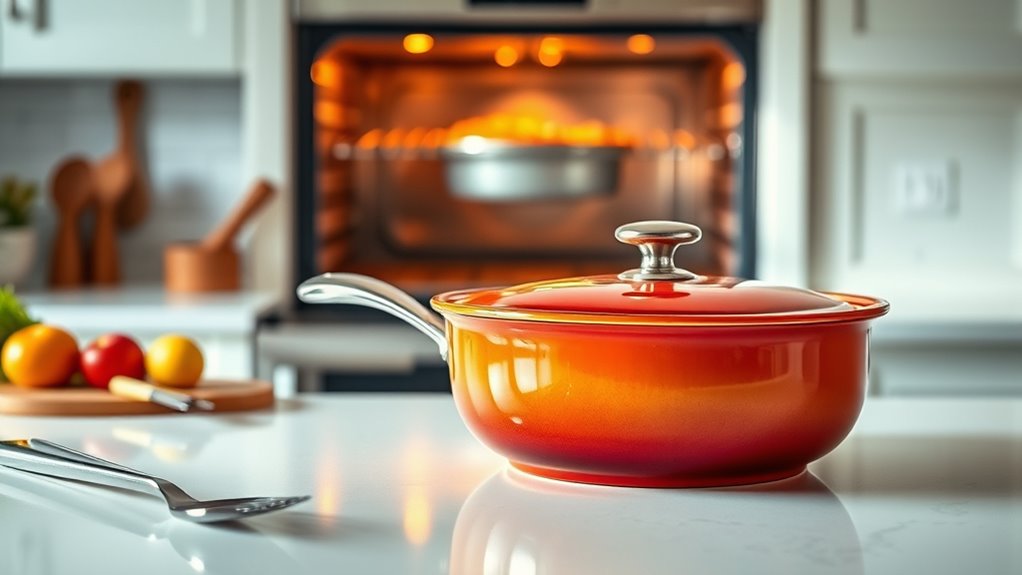
To safely put your ceramic pan in the oven, start by checking if it’s oven-safe. Review the manufacturer’s guidelines and inspect the pan for any chips or cracks. This ensures you avoid damaging your cookware or causing safety issues.
Always respect the recommended temperature limits, which are typically between 350°F and 450°F. Avoid sudden temperature changes to prevent thermal shock, which can crack or warp your pan.
When handling the pan, use heat-resistant mitts for safety. Place the ceramic pan on a stable, level oven rack to ensure even cooking and prevent spills.
Following these steps helps protect both your pan and your cooking results. Keep exploring for tips on maximizing its lifespan and avoiding common oven mistakes.
How to Check If Your Ceramic Pan Is Oven Safe
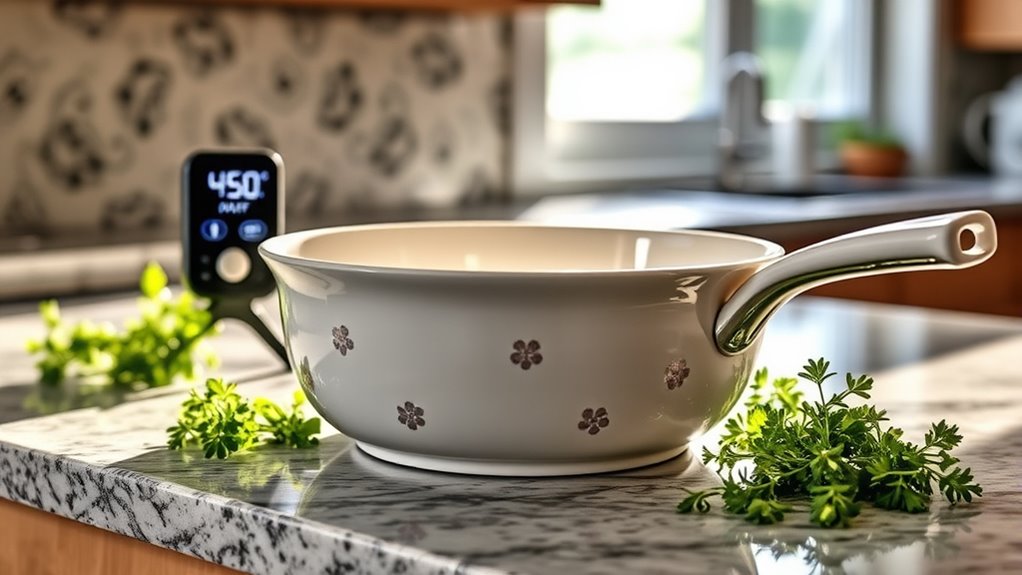
Before placing your ceramic pan in the oven, you need to confirm it’s oven safe by checking for labels or symbols on the bottom or packaging that indicate maximum temperature limits, such as “oven safe up to 450°F.”
Next, consult the manufacturer’s manual or product description to verify explicit oven safety information for your ceramic cookware. Inspect your pan carefully for cracks, chips, or any damage, since these can compromise its safety in the oven.
Also, ensure that any glazes or decorative finishes are heat resistant and free from harmful chemicals like lead or cadmium. If you’re still unsure, don’t hesitate to contact the manufacturer directly to confirm whether your ceramic cookware is truly oven safe before you use it.
Should You Use a Ceramic Pan With Cracks or Chips?
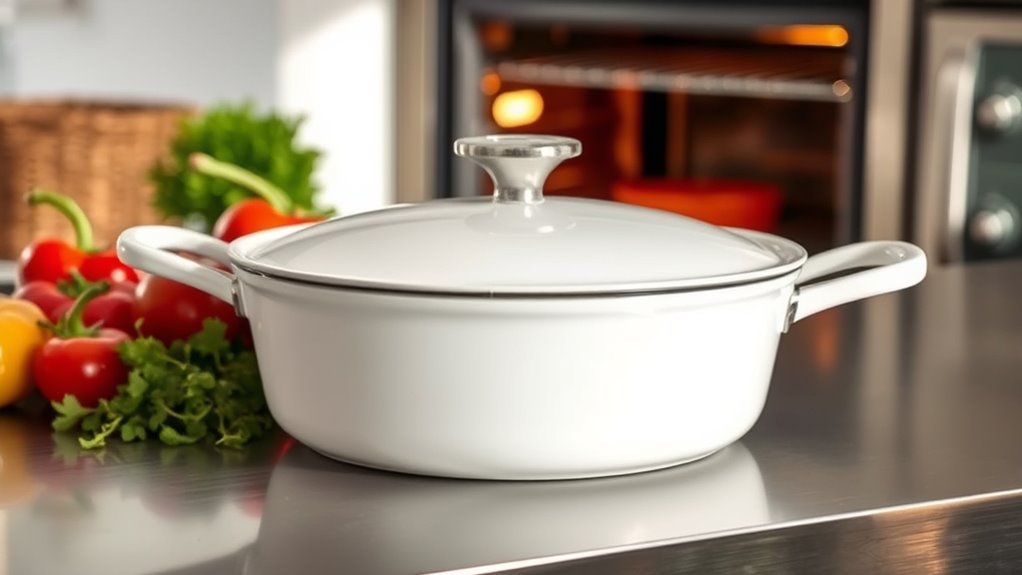
Why should you think twice about using a ceramic pan with cracks or chips? When the glaze or coating is damaged, harmful substances might leach into your food. Cracks and chips allow moisture to seep in, weakening the pan’s structure and increasing the risk of further damage or even breakage in the oven.
While small chips may not immediately threaten safety, they can cause uneven heating and food sticking or burning. If you notice extensive damage, it’s best to replace the pan to avoid potential health risks and ensure safe cooking.
Always inspect your ceramic cookware carefully before oven use, and don’t use pans with significant cracks or chips to keep your cooking safe and effective.
What Temperature Limits Should You Follow for Ceramic Pans
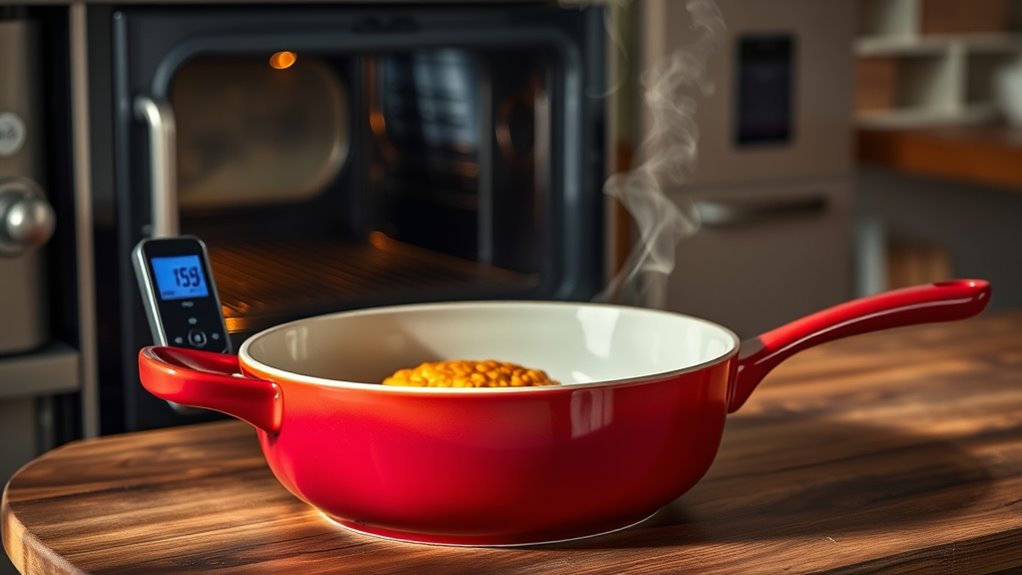
You should always check your ceramic pan’s maximum oven temperature before use to avoid damage. Most pure ceramic pans handle temperatures above 500°F, but ceramic-coated ones usually max out between 350°F and 400°F.
Following the manufacturer’s guidelines is key to keeping your pan safe and functional.
Maximum Oven Temperature
How hot can you safely heat your ceramic pan in the oven? Most ceramic cookware handles temperatures between 350°F and 500°F, depending on the brand and material. Pure ceramic pans often tolerate over 500°F, ideal for high-heat baking or roasting.
To avoid damage like cracks or warping, always respect the maximum oven temperature stated on your pan’s label or instructions. Heating beyond that can compromise the pan’s integrity and coating. Also, be cautious with sudden temperature shifts—never plunge a hot ceramic pan into cold water, as this can cause it to crack.
Manufacturer Guidelines Importance
Although ceramic pans are designed to withstand high oven temperatures, following the manufacturer’s temperature limits is essential to prevent damage and guarantee safety. You should always check the manufacturer guidelines to know your pan’s maximum oven-safe temperature, which usually ranges from 350°F to 500°F.
Pure ceramic pans can handle temperatures above 500°F, but ceramic-coated ones typically max out at 350°F-400°F. Ignoring these limits risks cracking, warping, or ruining your pan. The manufacturer guidelines also often include specific instructions on preheating and cooling to avoid thermal shock.
Sticking to these recommended temperatures and procedures not only keeps your ceramic pan safe in the oven but also extends its lifespan, ensuring you get the best performance from your cookware.
Why Follow Manufacturer Instructions for Oven Use
Because ceramic pans have specific temperature limits, following the manufacturer’s instructions is essential to prevent damage and guarantee your cookware lasts. These guidelines help you avoid thermal shock by advising proper preheating and cooling methods, which reduces the risk of cracks or warping.
Ignoring these instructions can void warranties and harm your pan’s performance.
| Reason to Follow Instructions | Benefit |
|---|---|
| Max Oven Temperature | Prevents warping and chipping |
| Preheating & Cooling Advice | Minimizes thermal shock |
| Care and Handling Tips | Extends cookware durability |
Stick to the manufacturer instructions to maintain safety, protect your investment, and enjoy your ceramic pan’s full lifespan in the oven.
How Ceramic Coatings Impact Oven Safety and Lifespan
You need to understand how ceramic coatings hold up under heat to keep your pan safe in the oven. Exposing the coating to temperatures beyond its limit or sudden temperature changes can cause damage and reduce its lifespan.
Taking care to avoid scratches and overheating will help maintain your pan’s durability and performance.
Ceramic Coating Durability
When you use a ceramic-coated pan in the oven, keeping the coating intact is key to maintaining its durability and safety. Ceramic coatings are oven-safe when free from cracks or chips, as any damage compromises their protection. The durability largely depends on the quality of the ceramic coating and how you handle the pan.
High-quality coatings last longer during repeated oven use, typically up to 350°F-400°F. To extend your pan’s lifespan, avoid rapid temperature changes and preheat the oven gently. Also, use utensils that won’t scratch the surface.
Heat Exposure Effects
Although ceramic coatings can handle oven temperatures up to 350°F-450°F, exposing them to heat beyond these limits risks damaging the surface. When you subject your ceramic pan to excessive heat, the coating may crack or peel, reducing its nonstick properties and overall lifespan.
Rapid temperature changes, like placing a hot pan into cold water, cause thermal shock that stresses the coating and leads to premature wear. To protect your pan, preheat and cool it gradually, avoiding sudden temperature shifts. Regularly inspect the coating for cracks or chips, as these can worsen if ignored.
How to Preheat and Cool Ceramic Pans Safely
Since sudden temperature changes can damage ceramic pans, it’s important to preheat and cool them gradually. When preheating your ceramic pan, place it in a cold oven first, then turn the oven on to low or medium heat. This slow rise in temperature helps prevent cracks or warping caused by thermal shock.
Avoid putting a cold ceramic pan directly into a hot oven. After cooking, let the pan cool down naturally at room temperature before cleaning. Never immerse a hot ceramic pan in cold water or rinse it immediately after use, as sudden cooling can cause damage.
How to Avoid Thermal Shock With Ceramic Pans
Because ceramic pans are sensitive to rapid temperature changes, you need to handle them carefully to avoid thermal shock. Always preheat your ceramic pan gradually by starting in a cold oven and increasing the temperature slowly. Avoid placing a cold pan into a hot oven or moving a hot pan onto cold surfaces, as sudden shifts in temperature can cause cracking.
Stick to low to medium oven temperatures within the manufacturer’s guidelines to minimize risk. Also, never immerse a hot ceramic pan into cold water. Regularly inspect your pan for chips or cracks, since damaged areas are more prone to thermal shock.
Handling Ceramic Pans: Mitts and Oven Placement
When handling your ceramic pan, always wear heat-resistant mitts to protect your hands from burns. Place the pan securely on oven racks, avoiding cold spots or edges that could cause tipping or thermal shock.
Let the pan cool slightly before moving it to prevent cracking and guarantee safe handling.
Using Heat-Resistant Mitts
Although ceramic pans retain heat well, you’ll need heat-resistant mitts rated for at least 450°F to handle them safely in the oven. These mitts protect your hands from burns and help you grip the pan securely. Always make sure your heat-resistant mitts are dry before use, as moisture can increase the risk of burns.
When removing a ceramic pan from the oven, use both hands with mitts to evenly distribute the weight and avoid spills. Keep these tips in mind:
- Use oven mitts with a non-slip grip for secure handling.
- Lift the ceramic pan carefully to prevent accidents.
- Allow the pan to cool slightly before transferring it, even with mitts.
Following these steps ensures safe oven handling of your ceramic cookware.
Safe Oven Rack Placement
To keep your ceramic pan safe and intact, you should always place it on a stable, level oven rack that can support its weight without tipping. Make certain the oven racks are clean and free from debris or other cookware that might scratch or damage the ceramic surface.
Position your pan in the center of the oven for even heat distribution, which helps prevent stress on the pan’s edges. Avoid overcrowding the rack with other items that can cause instability or uneven heating.
When handling the pan, always use oven mitts and lift it carefully, keeping the pan level to avoid spills or cracks. By paying attention to proper oven rack placement and using mitts, you’ll protect both your ceramic pan and yourself during baking.
Avoiding Thermal Shock
Handling your ceramic pan with care doesn’t stop at placing it correctly on the oven rack. To maintain oven safety and prevent thermal shock, you need to manage the pan thoughtfully throughout the cooking process. Always use oven mitts or heat-resistant gloves to avoid burns and accidental drops.
When placing the pan in the oven, do it gently to avoid sudden impacts that stress the ceramic. Also, never transfer the pan directly from the fridge or freezer into a hot oven; let it reach room temperature first.
To keep your ceramic pan safe from thermal shock:
- Preheat the oven gradually if the pan is cold.
- Avoid pouring cold liquids into a hot pan.
- Let the pan cool slowly before rinsing or cleaning.
These steps protect your pan and ensure oven safety.
Common Oven Mistakes That Break Ceramic Pans
When you put a ceramic pan directly from a hot stove into a cold oven—or the other way around—you risk thermal shock that can crack or break the pan. Avoid sudden temperature changes to keep your pan oven-safe.
Another common mistake is exceeding the manufacturer’s recommended maximum oven temperature, usually between 350°F and 400°F for ceramic-coated pans. Using a pan with existing cracks or chips also increases the chance of damage when heated.
Rapidly heating or cooling your ceramic pan weakens the glaze and may cause fractures. Finally, placing the pan on rough or sharp oven racks can scratch the ceramic coating, compromising its oven-safe integrity.
Being mindful of these mistakes will help prevent premature pan breakage.
How to Extend the Lifespan of Your Ceramic Pan
Although ceramic pans are durable, taking a few simple precautions can considerably extend their lifespan. Protecting the non-stick coating and respecting the pan’s heat resistant properties will keep it performing well for years.
To do this, you should use silicone or wooden utensils instead of metal to avoid scratching the ceramic surface. Preheat the pan gradually on low heat to minimize thermal stress and prevent cracking. Apply a thin layer of oil or fat before heating to preserve the non-stick coating and prevent food from sticking.
Also, avoid sudden temperature changes, like moving the pan from the fridge directly to the oven. Regularly check for chips or cracks and handle any damage quickly. These steps will help you enjoy your ceramic pan longer and safer.
Frequently Asked Questions
Are Ceramic Pans Safe to Put in the Oven?
Yes, ceramic pans are usually safe in the oven if you follow the temperature limits specified by the manufacturer.
Always avoid sudden temperature changes and check for any cracks or chips before use to prevent damage or breakage.
How Do I Tell if My Ceramic Is Oven Safe?
You’ll spot if your ceramic’s oven safe by checking for labels like “oven safe” or temperature limits. If it’s cracked or chipped, skip the oven.
When unsure, just call the manufacturer—they’ll clarify.
Can Ceramic Go in the Oven at 450 Degrees?
Yes, you can put ceramic in the oven at 450 degrees if your pan’s manufacturer says it’s safe.
Always check the label first to avoid cracking or damage, since some ceramic coatings can’t handle that heat.
Is 100% Ceramic Oven Safe?
Yes, your 100% ceramic pan is oven safe, usually up to 500°F or more.
Just double-check the manufacturer’s instructions and verify there are no cracks before using it in the oven.
Conclusion
You might think ceramic pans can handle any oven heat, but that’s not always true. To keep your pan safe and lasting longer, always check if it’s oven safe, avoid sudden temperature changes, and follow the manufacturer’s limits.
Using mitts and placing the pan carefully also prevents damage. By respecting these tips, you’ll avoid cracks or chips and enjoy your ceramic pan’s benefits without worry.
It’s all about treating your cookware right! Following these guidelines ensures you can put a ceramic pan safely in the oven and maintain its quality over time.