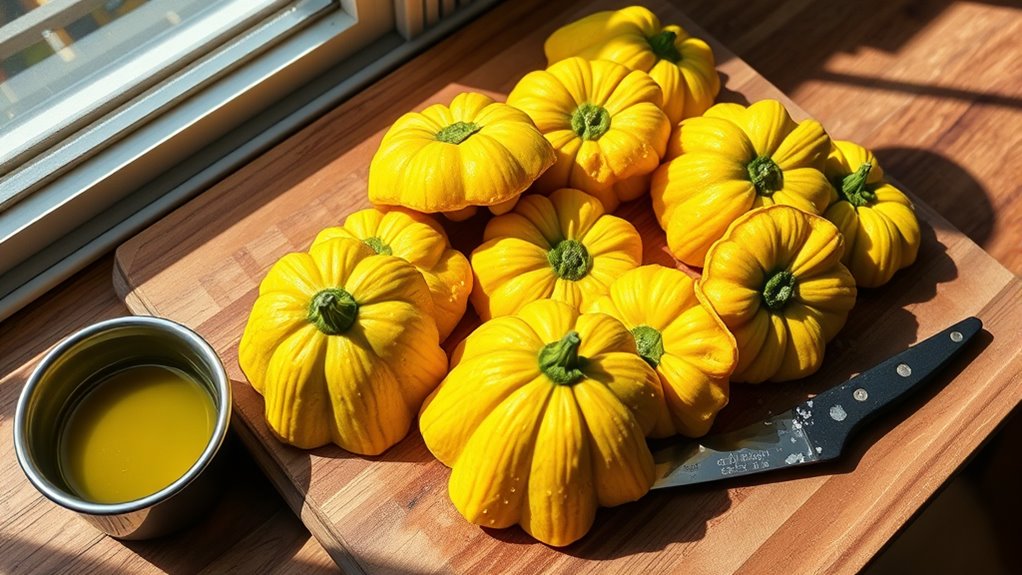
How You Can Eat Patty Pan Squash Skin Safely
You can safely eat patty pan squash skin by washing it thoroughly under cool water and scrubbing gently to remove any dirt or bacteria. Patty pan squash skin is edible and nutritious, so it’s best to keep it on when cooking.
Check for blemishes or soft spots and cut them away before cooking.
Cooking the squash, like roasting, steaming, or sautéing, softens the skin, making it tender and flavorful. Keeping the skin on also adds extra fiber and nutrients.
If you want to know the best ways to prepare and enjoy it without toughness, keep exploring.
Is Patty Pan Squash Skin Edible and Nutritious?
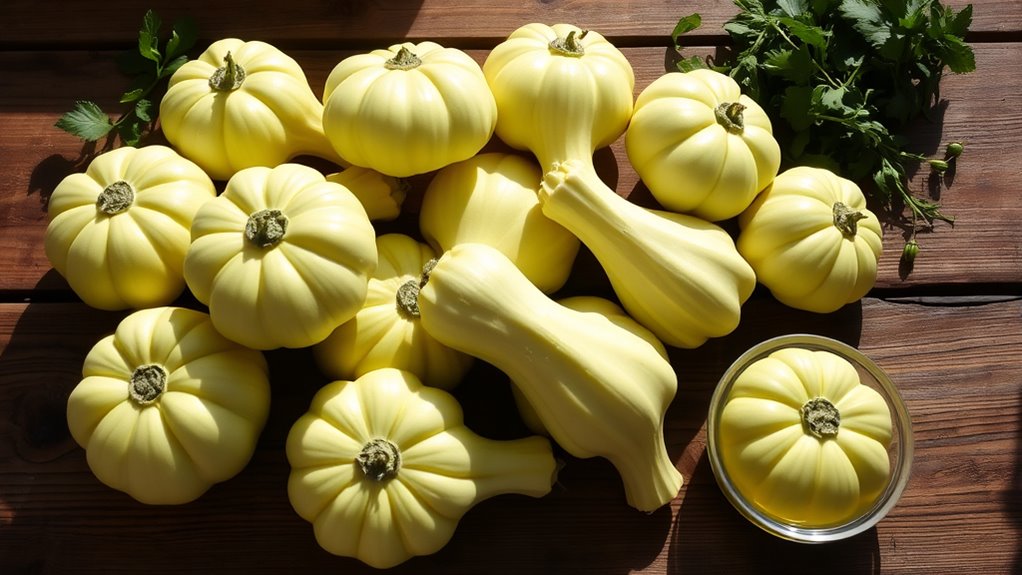
Wondering if you can eat patty pan squash skin? The answer is yes! Patty pan squash has an edible skin that’s thin and tender, making it enjoyable to eat along with the flesh. When cooked, the skin often softens even more, blending smoothly with the squash’s texture.
Eating the skin not only adds flavor but also boosts the nutritional value of your dish by providing extra fiber and beneficial nutrients. The edible skin of patty pan squash is much like zucchini or other summer squash varieties, which are commonly consumed with their skins intact.
Just make sure to wash the squash thoroughly before cooking to ensure the skin is clean and safe. Including the skin is a simple way to get more from your patty pan squash.
How to Clean Patty Pan Squash for Eating the Skin
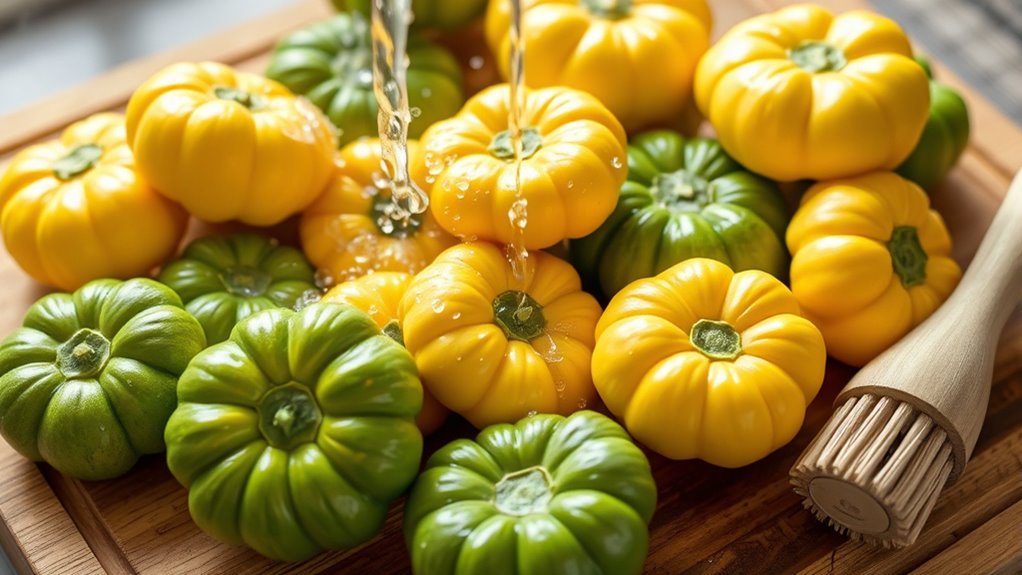
To enjoy patty pan squash skin safely, start by rinsing it thoroughly under cool running water to remove dirt. Use a soft vegetable brush to scrub gently, especially around crevices and the stem.
Finally, inspect the skin closely and trim away any bruised or damaged spots before eating.
Thorough Washing Techniques
Although patty pan squash looks clean at first glance, you should always rinse it thoroughly under cool running water before handling to remove dirt, bacteria, and pesticide residues. Thorough washing is key to enjoying its skin safely. Gently scrub the surface with a soft cloth, focusing on crevices and the stem where dirt hides.
For extra cleanliness, soak the squash in a mixture of one part vinegar to three parts water for a few minutes to kill germs and loosen residues. After soaking, rinse it again with clean water to eliminate any vinegar taste. Finally, dry the patty pan squash completely with a clean towel before cutting or cooking.
This careful process ensures the skin is safe and ready to eat.
Choosing The Right Brush
After thoroughly washing your patty pan squash, the next step is choosing the right brush to clean its skin effectively. You’ll want a vegetable brush with stiff bristles to scrub away dirt, wax, and debris that often cling to the squash’s surface, especially in summer when outdoor gardening is common.
Focus on all the crevices and the stem area, where dirt tends to hide. While scrubbing, rinse the squash under running water to wash away loosened contaminants. Avoid abrasive or metal brushes—they can scratch the delicate skin, increasing the risk of bacteria settling in.
Once clean, dry your squash with a clean cloth or paper towel to prevent mold growth. Picking the right brush guarantees your summer squash is safe and ready to enjoy with its skin intact.
Inspecting For Damage
When you examine your patty pan squash for damage, check the skin carefully for blemishes, cuts, or soft spots that could harbor bacteria. These imperfections can affect the squash skin’s safety and taste, so remove any damaged areas with a sharp knife.
Here’s a quick guide to help you identify and handle blemishes effectively:
| Type of Damage | Appearance | Action to Take |
|---|---|---|
| Blemishes | Dark spots | Scrub gently, assess damage |
| Cuts | Visible slices | Cut away damaged section |
| Soft Spots | Mushy or sunken | Remove before cooking |
| Sticky Patches | Sticky or dirty | Soak in vinegar solution |
Inspecting thoroughly guarantees your squash skin is safe and enjoyable to eat.
When Should You Peel Patty Pan Squash?
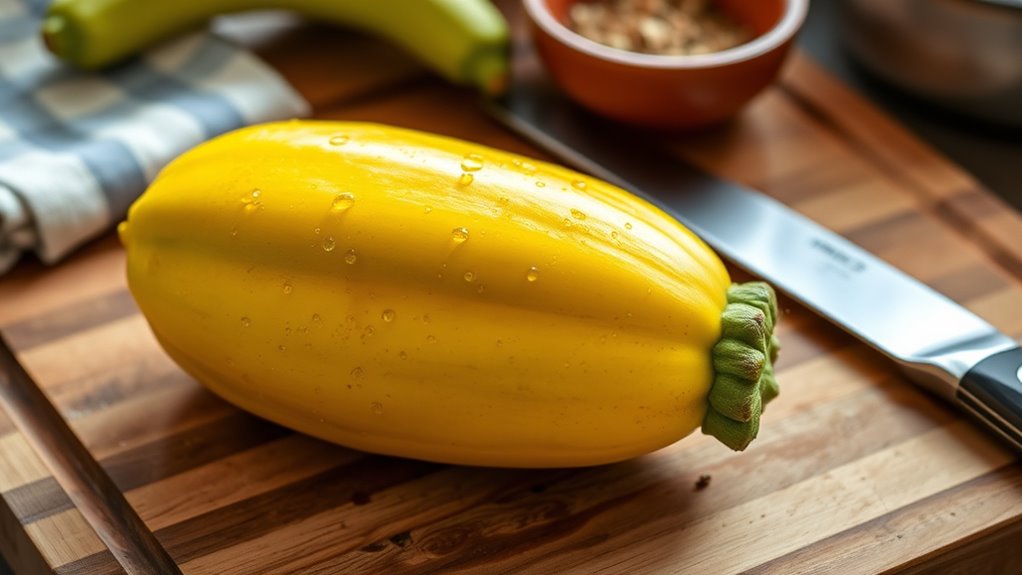
You should consider peeling patty pan squash when its skin feels tough or thick, especially with larger or older squash. The cooking method also plays a role—roasting or sautéing can soften the skin, making peeling less necessary.
If you want a smooth texture for purees or smoothies, removing the skin is the best choice.
Skin Texture Considerations
Although patty pan squash skin is generally thin and tender on smaller fruits, you’ll want to contemplate peeling it as the squash grows larger and the skin thickens. The skin texture changes from soft and edible to firmer and sometimes tougher, which might affect your dish’s final mouthfeel.
If you’re using small squash, you can usually leave the skin on without issue. However, when the skin becomes thick, peeling can improve the eating experience, especially in recipes where a smooth texture is important.
Keep in mind that cooking methods can soften the skin, but if the texture remains unpleasantly tough, removing the skin is the safer choice. Ultimately, paying attention to the skin texture helps you decide when peeling is necessary.
Cooking Method Impact
Since cooking methods greatly influence the texture of patty pan squash skin, knowing when to peel depends on how you plan to prepare it. If you’re slicing and sautéing or roasting, the cooking method breaks down the skin, making it tender enough to eat without peeling. Steaming or baking until fork-tender also softens the skin, so peeling is usually unnecessary.
However, if your dish needs a smooth texture, like a puree, it’s best to remove the skin before blending, regardless of the cooking method. For grilling or stuffing, leaving the skin on helps maintain structure and adds nutrients, so peeling isn’t needed. Longer cooking methods like slow roasting or simmering further soften the skin, reducing the need for peeling in most recipes.
Desired Dish Consistency
When aiming for a smooth, creamy dish like a puree, peeling patty pan squash is essential to prevent a fibrous texture. The skin can add unwanted chunks, disrupting the dish’s uniformity. However, if you’re roasting or braising, leaving the skin on enhances the texture with a pleasant chew and boosts nutrients.
Smaller patty pan squash typically have thinner, tender skins that don’t require peeling, making preparation easier. For thicker-skinned squash, peeling is advisable if you want a tender, consistent texture. Cooking methods like slow roasting or steaming can soften tougher skins, so you can decide based on your texture preference.
Ultimately, whether you peel the skin depends on the dish’s desired consistency and how you want the squash’s texture to come through.
Best Ways to Cook Patty Pan Squash Skin
To enjoy patty pan squash skin without any toughness, you can roast or bake it to bring out a tender texture and rich flavor. These methods soften the skin, making it more enjoyable to eat. You can also sauté sliced patty pan squash skin with oil and herbs; this breaks down the skin and enhances its taste.
Steaming or microwaving until fork-tender is another quick way to soften the skin. If you like soups or stews, adding chopped squash allows the prolonged cooking to naturally tenderize the skin. When grilling or stuffing, leave the skin on—the heat helps soften it while adding texture and nutrients.
Using these techniques guarantees the patty pan squash skin is both safe and delicious.
Using Patty Pan Squash Skin: Tips and Recipe Ideas
Although patty pan squash skin is often overlooked, you can easily incorporate it into your meals to boost both flavor and nutrition. Since the skin is thin and tender when cooked right, you don’t need to peel it. Try roasting or steaming patty pan squash skin for 15-20 minutes until it’s fork-tender, enhancing its natural texture and nutrients.
When baking or grilling, leave the skin on to add a pleasant chewiness to your dish. For stuffed patty pan squash, keep the skin intact to enjoy extra fiber and texture. You can sauté slices with garlic and herbs or toss roasted pieces into salads and pasta.
Using patty pan squash skin not only reduces waste but elevates your meals with subtle, earthy flavors.
How to Enjoy Patty Pan Squash Skin Without Toughness
Incorporating patty pan squash skin into your dishes enhances both flavor and nutrition, but ensuring it doesn’t turn tough can make all the difference. To enjoy pattypan squash skin without toughness, try roasting or braising it, which breaks down the skin, making it tender and flavorful. Steaming for 15-20 minutes until fork-tender also softens the skin while preserving its nutrients.
When baking stuffed pattypan squash, leave the skin on and cook thoroughly to add texture and maintain edibility. Slicing the squash into smaller pieces before cooking promotes even softening of the skin. By choosing proper cooking methods and durations like slow roasting or simmering, you’ll turn the pattypan squash skin tender and palatable, making every bite enjoyable.
Frequently Asked Questions
Can You Eat the Skin of a Pattypan Squash?
Yes, you can eat pattypan squash skin. It’s tender and safe, especially when cooked by roasting or sautéing.
The skin adds fiber and nutrients, so just wash it well and enjoy the whole squash without peeling.
Is It Safe to Eat Squash Skin?
Isn’t it great that you can eat squash skin safely? Just wash it thoroughly, then cook it well—roast, steam, or sauté—to soften the skin and enjoy its nutrients without any health concerns.
Is Patty Pan Squash Good for You?
Yes, patty pan squash is good for you. It’s packed with fiber, vitamins, and antioxidants that support digestion and immune health.
Eating it regularly can boost your nutrient intake and keep you feeling energized.
Can You Eat the Skin of Dumpling Squash?
Yes, you can eat dumpling squash skin. Just wash it well, then roast or steam the squash to soften the skin.
You’ll enjoy its tender texture and added nutrients along with the flesh.
Conclusion
You might’ve heard that patty pan squash skin is too tough to eat, but that’s not quite true. When you clean it well and cook it right, the skin is not only safe but also packed with nutrients and flavor. Don’t peel it unless the skin feels unusually thick or waxy.
So next time, give that colorful skin a try—you’ll enjoy added texture and health benefits without any fuss or toughness. Eating patty pan squash skin safely enhances your dish with vibrant color and extra nutrients. Remember, proper cleaning and cooking are key to enjoying the full potential of this tasty vegetable.