How Can You Bake Bread in a Glass Pan Safely?
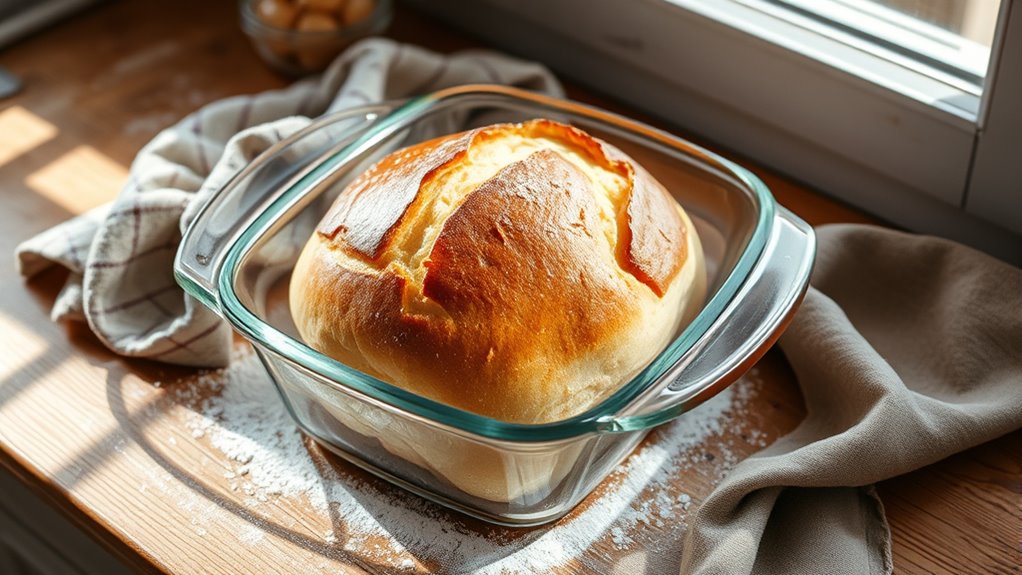
You can bake bread safely in a glass pan by lowering your oven temperature about 25°F to avoid over-browning and extending baking time slightly for even cooking.
Using a glass pan for baking bread requires some adjustments to ensure the best results. Lightly grease or line the pan with parchment to prevent sticking, and cover it loosely with foil to create steam for a better crust.
Cool the bread properly before removing it gently. Follow these steps, and you’ll soon master baking bread beautifully in glass—there’s more helpful guidance ahead to perfect your technique.
Benefits and Challenges of Baking Bread in Glass Pans
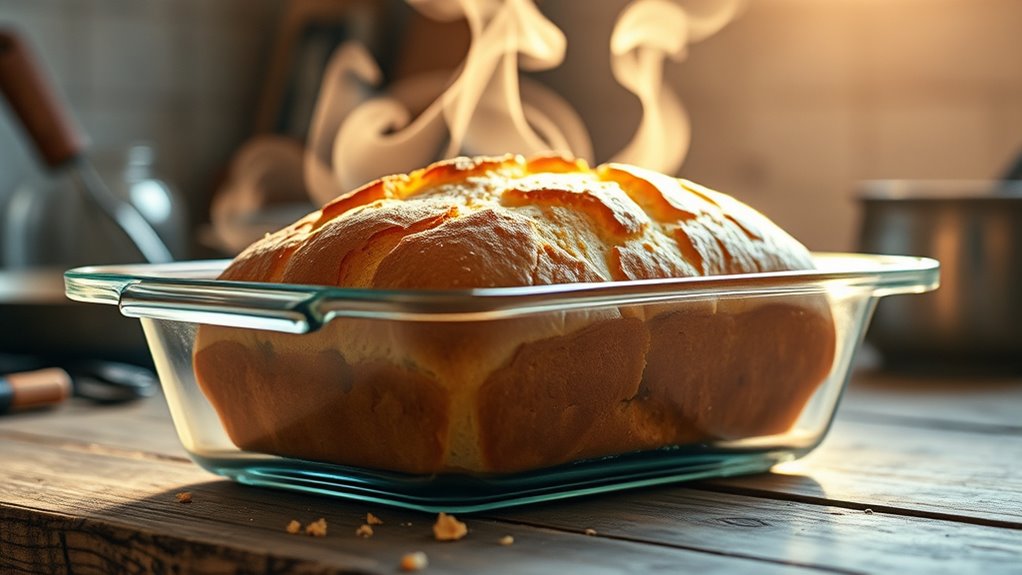
Although glass pans conduct heat more slowly and unevenly than metal ones, they offer the advantage of allowing you to watch your bread’s crust develop through their transparency. This means you can monitor the baking progress without opening the oven door, helping you avoid under- or over-baking.
However, because glass retains heat longer, you’ll need to lower your oven temperature by about 25°F to prevent over-browning or burning. Baking times may also be slightly extended, so keep a close eye on the crust to avoid it becoming too thick or bitter.
Using glass pans requires some adjustments, but with careful temperature control and monitoring, you can enjoy perfectly baked bread while taking advantage of the unique benefits glass offers in the oven.
How to Prepare Your Glass Pan to Prevent Sticking
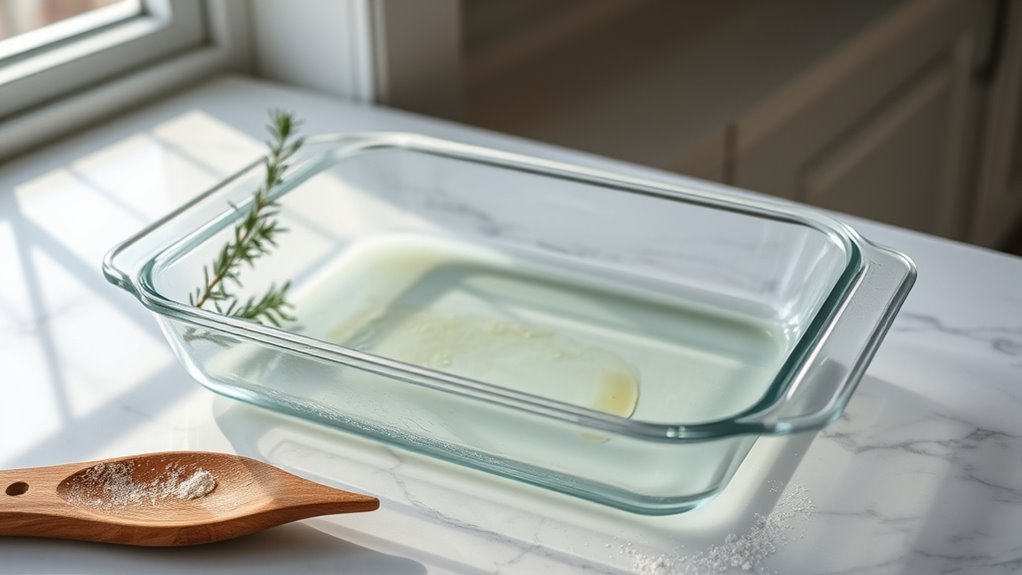
To prevent your bread from sticking to a glass pan, start by lightly greasing it with butter or a non-stick spray. You can also line the pan with parchment paper, leaving some overhang to lift the bread easily once baked. Dusting the pan with flour or cornmeal creates a barrier that further helps prevent sticking.
Make sure your dough is properly shaped and not too sticky, as moisture increases sticking risk. Avoid sudden temperature changes by placing dough in a room-temperature pan.
| Method | How It Helps | Tips |
|---|---|---|
| Greasing | Creates a slippery surface | Use butter or spray lightly |
| Parchment Paper | Easy bread removal | Leave overhang for lifting |
| Flour/Cornmeal | Adds textured barrier | Dust evenly inside pan |
| Proper Dough | Reduces moisture risk | Shape dough well |
Adjust Oven Temperature for Glass Pans
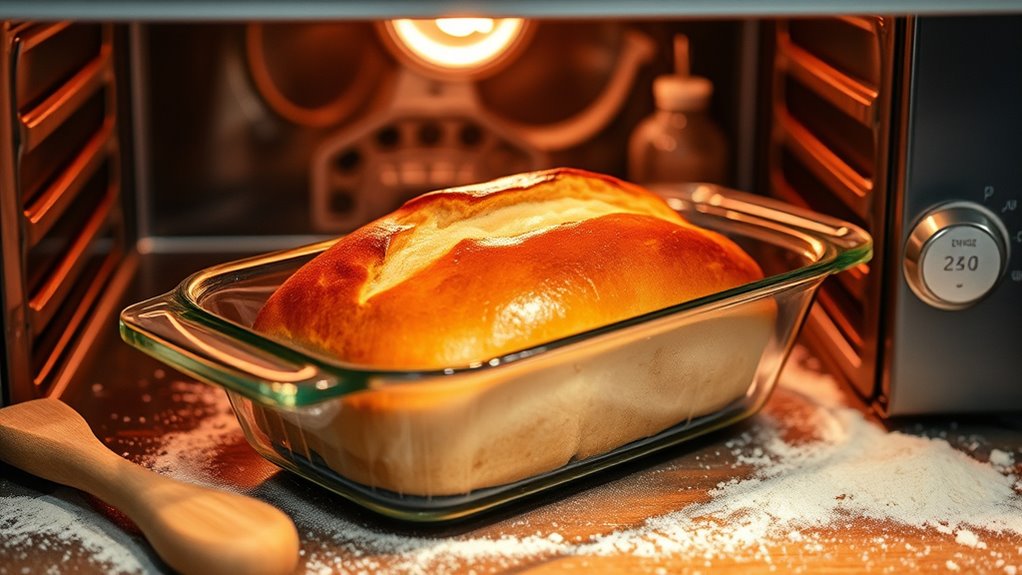
When baking bread in a glass pan, you’ll want to lower the oven temperature by about 25°F to avoid over-browning. Since glass pans heat more efficiently, expect to add 10-15 extra minutes to your baking time.
Keep a close eye on the crust and test for doneness to get the best results.
Lower Temperature Settings
Since glass pans conduct heat more efficiently, you’ll want to lower your oven temperature by about 25°F (14°C) from what your recipe suggests to prevent over-browning or burning. When baking in glass, the outer edges of your bread can cook faster, so adjusting temperature is key.
Here’s how to manage it:
- Reduce the oven temperature by 25°F (14°C) from the original recipe.
- Keep an eye on the crust color; if the outer edges darken too quickly, lower the temperature a bit more.
- Use a thermometer or tap the loaf to check doneness, as baking times may vary with glass pans.
These steps help ensure even baking without burning, making your bread perfect every time.
Extend Baking Duration
Although glass pans require you to lower the oven temperature by about 25°F, you’ll also need to extend the baking time by 10 to 15 minutes to guarantee your bread cooks through evenly. Glass heats more slowly and retains heat longer than metal, so your bread needs this extra time to reach the right internal temperature, around 190-210°F.
Start baking at a lower temperature, like 325°F, and adjust it if needed based on how your bread looks. To ensure even cooking, rotate the glass pan halfway through baking since glass distributes heat differently. By adjusting both temperature and baking duration, you’ll prevent over-browning while getting perfectly baked bread every time in your glass pan.
Creating Steam With Foil or Covers When Baking Bread in Glass Pans
Creating steam is essential for baking bread in glass pans, and you can achieve this by tightly covering your pan with aluminum foil or a heatproof lid. To guarantee your glass loaf bakes perfectly, follow these tips:
- Snip the dough’s top before you cover it, letting steam escape and preventing cracks.
- Make sure the foil or cover fits snugly but doesn’t touch the dough, maintaining a steamy environment without sticking.
- For extra steam, place an oven-safe dish with water or ice cubes inside the oven during baking.
Remember to remove the foil or cover during the last 10-15 minutes to allow the crust to brown properly. This method keeps your bread moist and creates a beautiful crust.
Adjust Baking Time and Check Doneness
When baking bread in a glass pan, you’ll want to reduce the oven temperature by about 25°F to prevent the crust from over-browning. Because glass heats more slowly than metal, you should extend the baking time by 10 to 15 minutes to ensure the bread cooks thoroughly.
To check doneness, insert a toothpick or a digital thermometer into the center of the loaf; it should come out clean or show a slightly moist reading. Also, rotate the glass pan every 20 minutes to promote even heat distribution and avoid hot spots.
These adjustments help you bake perfectly cooked bread without burning the crust or underbaking the interior.
Tips for Cooling and Removing Bread Safely From Glass Pans
Since glass pans retain heat longer, you should let your bread cool on a wire rack for at least 1.5 hours before removing it. This prevents sticking and cracking.
When it’s time to take your bread out, follow these tips:
- Use a thin, flexible spatula or butter knife to gently loosen the edges from the glass pan.
- Invert the pan onto the wire rack and carefully tap or lift the pan away, supporting the bread’s weight.
- If the bread sticks, place a damp towel over the pan for a few minutes to loosen it, then gently pry it free.
Common Problems When Baking Bread in Glass Pans and How to Fix Them
Although glass pans offer even heat distribution, they can cause your bread to brown too quickly or bake unevenly if you’re not careful. Glass retains heat longer, which may lead to thick or dark crusts. To avoid this, reduce your oven temperature by 25°F and extend baking time.
Rotating the glass pan midway helps ensure even baking, preventing edges from overcooking while the center remains underdone.
| Problem | Fix |
|---|---|
| Over-browning crust | Lower oven temperature, monitor closely |
| Uneven baking | Rotate glass pan halfway through baking |
| Thick crust | Extend baking time, avoid overheating |
Final Tips for Perfect Bread in Glass Pans
To achieve perfect bread in a glass pan, you’ll want to adjust your baking routine slightly to account for glass’s unique heat retention. Unlike a metal pan, glass heats slower but holds heat longer, affecting your loaf’s crust and crumb.
Here are three final tips to get it right:
- Lower your oven temperature by 25°F to prevent the crust from burning while the inside bakes fully.
- Extend baking time by 10-15 minutes, and rotate the pan halfway through to promote even browning.
- Use a thermometer or insert a toothpick in the loaf’s center to check doneness. If the crust darkens too fast, loosely tent with foil to avoid burning.
These tweaks guarantee your bread comes out perfectly baked every time.
Frequently Asked Questions
Is It Okay to Bake Bread in a Glass Pan?
Yes, you can bake bread in a glass pan safely. Just lower the oven temperature by 25°F, avoid preheating the pan, and extend baking time to prevent burning and guarantee even cooking.
Do You Need to Adjust Baking Time for a Glass Pan?
Yes, you need to adjust baking time for a glass pan. Lower the temperature by 25°F and extend baking by 10-15 minutes.
Check doneness regularly and rotate the pan halfway through for even baking.
How Long to Bake Bread in a Glass Pan at 350 Degrees?
You’ll bake bread in a glass pan at 350°F for about 45-55 minutes. Since it retains heat well, expect to add 10-15 minutes compared to metal pans.
Always check for an internal temperature of 200°F.
Can I Put a Glass Pan in the Oven at 400 Degrees?
You can put a glass pan in the oven at 400 degrees only if it’s tempered and rated for that temperature.
Always preheat the oven and pan gradually to avoid thermal shock and prevent breakage.
Conclusion
Baking bread in a glass pan transforms your kitchen into a warm haven where golden crusts meet glossy glass walls. While the heat hugs the pan gently, you’ll notice slower browning—but with patience and the right tweaks, you’ll pull out a loaf that’s crisp outside, tender inside.
Just like balancing fire and water, mastering glass pans means respecting their quirks to create bread that’s as beautiful as it is delicious. To bake bread in a glass pan safely, always avoid sudden temperature changes to prevent cracking. Preheat the oven and pan together, and consider lowering the baking temperature slightly compared to metal pans.
By following these simple tips, you can enjoy the unique benefits of glass bakeware and achieve perfect bread every time. Baking bread in a glass pan safely combines technique and care to bring out the best in your homemade loaves.