How You Can Safely Feed Raw Ground Beef to Your Dog
You can safely feed your dog raw ground beef by choosing fresh, high-quality meat from trusted sources. Ensuring the meat is fresh is crucial for your dog’s health and safety. Keep the beef refrigerated or frozen until you are ready to use it, and always thaw it properly in the fridge or cold water.
Handle the beef with clean hands and utensils to avoid cross-contamination. It’s important to balance the raw ground beef with organ meats, bones, and vegetables to provide complete nutrition.
Always start with small amounts to see how your dog tolerates the new diet.
Consult your vet to monitor your dog’s health and ensure the raw feeding plan is suitable for them. There’s more to ensuring safety and nutrition you’ll want to know as you continue feeding raw ground beef to your dog.
Is Feeding Raw Ground Beef Safe for Dogs?
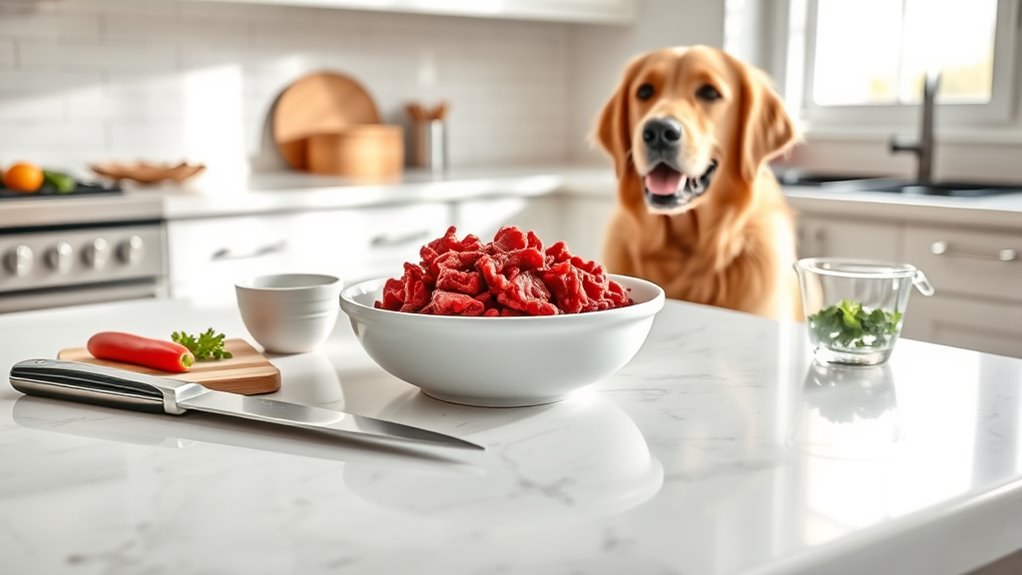
How safe is it to feed your dog raw ground beef? Raw ground beef can carry harmful bacteria like Salmonella and E. coli, posing health risks to your dog. To reduce bacterial contamination, source USDA-inspected and high-pressure processed meat, which enhances raw meat safety.
However, feeding raw ground beef without ensuring nutritional balance may cause deficiencies in your dog’s diet. Cooking ground beef thoroughly eliminates bacteria, making it a safer option if you’re concerned about contamination.
For safe feeding, always consult your veterinarian before adding raw ground beef regularly to your dog’s meals. This way, you can weigh the risks and benefits while maintaining your dog’s health and nutritional needs effectively.
Benefits of Feeding Raw Ground Beef to Dogs

While concerns about safety are important when feeding raw ground beef, it’s also worth recognizing the significant benefits it can offer your dog. Raw ground beef provides complete protein, essential nutrients like iron, zinc, and B vitamins, all crucial for dog nutrition and immune support. Including raw ground beef in your dog’s meals closely mimics a natural diet, enhancing digestion and overall vitality.
The healthy fats, especially omega-3 fatty acids, contribute to a shiny coat and healthy skin. When part of a balanced diet, the benefits of feeding raw ground beef extend to improved muscle growth, stronger immune function, and better longevity. By incorporating this nutrient-dense food properly, you’re helping your dog thrive with optimal health and energy.
How to Choose High-Quality Raw Ground Beef
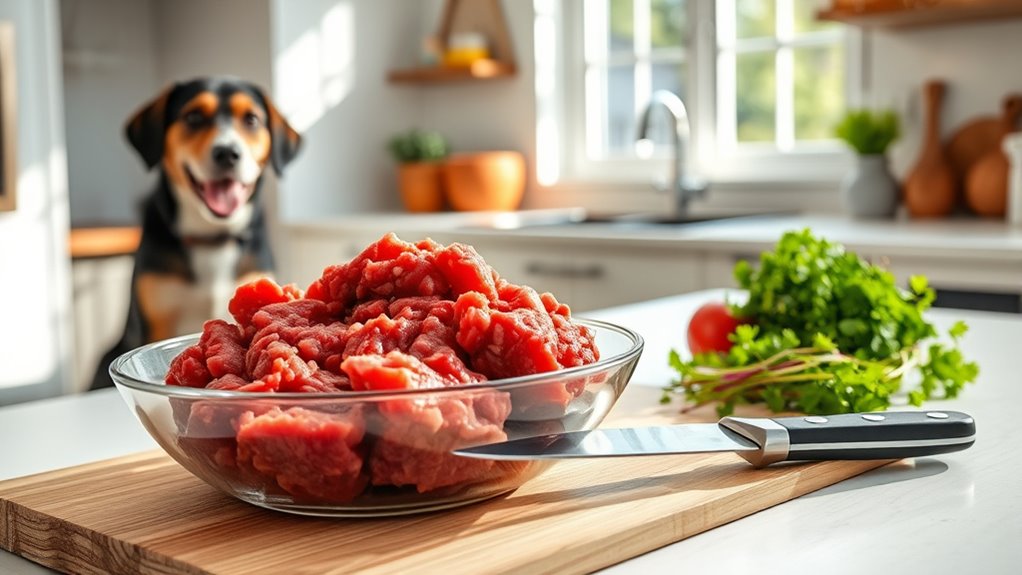
Since feeding raw ground beef requires careful attention to quality, you should always choose meat that’s USDA-inspected and sourced from reputable suppliers. High-quality ground beef ensures safety and peak nutrition for your dog. Whenever possible, opt for grass-fed, pasture-raised beef, as it offers higher nutrient levels and fewer contaminants.
Check packaging dates carefully and select meat with the most recent processing date to guarantee freshness. Avoid ground beef containing preservatives, flavorings, or seasonings, which can be harmful to your pet. For a balanced diet, consider pre-ground, commercially prepared raw options formulated to meet AAFCO standards.
How to Freeze and Thaw Raw Ground Beef Safely
To keep raw ground beef safe for your dog, you need to freeze it at 0°F (-18°C) or lower for at least 48 hours, which helps eliminate most bacteria and parasites. When you thaw the raw meat, do it in the refrigerator for 24-48 hours, keeping the temperature at or below 40°F (4°C) to minimize the risk of foodborne illness. Avoid thawing ground beef at room temperature, as this promotes bacterial growth and compromises food safety.
If you need to thaw faster, seal the beef in a leak-proof plastic bag and submerge it in cold water, changing the water every 30 minutes. After thawing, store the ground beef properly in refrigeration and use it within 1-2 days to maintain freshness and prevent spoilage.
How Much Raw Ground Beef Should You Feed Your Dog?
You should feed your dog about 2-3% of their body weight in raw ground beef daily, adjusting based on their size and activity.
Puppies and nursing dogs need more, usually around 5-10% of their body weight. It’s best to split the daily amount into multiple meals to keep their digestion steady.
Portion Size Guidelines
Feeding your dog the right amount of raw ground beef is essential for their health and energy. Proper portion sizes ensure your dog’s diet meets their nutritional needs without risking overfeeding. Generally, dogs eat about 2-3% of their body weight daily in raw food, including ground beef.
For example, a 50-pound dog can safely consume 1 to 1.5 pounds of raw ground beef per day, split into meals. Keep these feeding guidelines in mind for portion control and dog health:
- Adjust portions based on age, weight, and activity level
- Adult dogs typically get 10-20% of daily calories from raw ground beef
- Puppies and seniors need smaller, more frequent servings
Monitor your dog’s weight and energy for safety. Consult your vet for personalized caloric intake advice.
Following these tips helps maintain balance and safety in your dog’s diet.
Feeding Frequency Recommendations
How often should your dog eat raw ground beef for the best results? Most adult dogs thrive on raw ground beef once or twice daily, but pup feeding requires more frequent meals—typically three or more per day. Adjust meal frequency based on your dog’s size and activity level.
For large breed feeding, smaller, more frequent meat servings help reduce bloat risks and aid digestion. Aim to feed raw ground beef at 2-3% of your dog’s body weight per day, divided into appropriate portion sizes.
Maintaining a consistent feeding schedule and portion size guarantees your dog’s digestive health and supports a balanced dog diet. By tailoring feeding frequency and meal size, you’ll keep your furry friend happy and healthy.
Ingredients to Avoid When Preparing Raw Beef for Dogs
When preparing raw ground beef for your dog, it’s essential to steer clear of certain ingredients that can be harmful or toxic. Avoid adding garlic, onions, or any other alliums like chives and leeks, as they’re poisonous to dogs. Skip spices, salt, and other flavorings that may upset your dog’s stomach.
Never mix in processed meats loaded with preservatives and additives. Also, avoid cooked bones since they can splinter and cause serious injuries.
Here are key ingredients to avoid:
- Garlic, onions, chives, and leeks
- Spices, salt, and other flavorings
- Processed meats with preservatives and additives
- Sauces and marinades containing unhealthy fats or sugar
- Cooked bones, which pose choking and injury risks
Stick to plain, fresh raw ground beef for a safe meal.
Balancing Raw Ground Beef With Other Nutrients
Although raw ground beef provides a rich source of protein, you’ll need to balance it with organ meats, bones, and vegetables to guarantee your dog gets all the essential nutrients for ideal health. Aim for a balanced diet with about 80% muscle meat, 10% organ meats, and 10% bones to maintain nutritional balance and prevent deficiencies.
Incorporate nutrient variety by adding vegetables like carrots or pumpkin for fiber and antioxidants. Rotate protein sources regularly and consider dietary supplements such as fish oil to provide omega-3 fatty acids missing in ground beef.
Always prioritize food safety when handling raw ingredients. By combining these elements, you guarantee your dog receives a complete, nutrient-rich diet that supports overall well-being and keeps mealtime exciting and healthy.
How to Spot Digestive Problems or Allergies in Your Dog
If your dog starts showing symptoms like vomiting, diarrhea, or excessive gas after eating raw ground beef, you should pay close attention. These signs may indicate digestive problems or allergies related to the new diet. Changes in stool consistency or frequency can signal food intolerance or allergic reactions affecting your dog’s gastrointestinal health.
Watch for symptoms like itching, swelling, or chronic ear scratching, which often point to allergies. If these issues persist, seek a vet consultation promptly for proper allergy testing.
- Monitor stool consistency after feeding raw ground beef
- Note any vomiting, diarrhea, or bloating episodes
- Watch for skin itching or ear infections
- Track changes in appetite or energy levels
- Schedule allergy testing if symptoms continue
Early detection helps manage your dog’s health safely.
Cleaning and Handling Tips to Prevent Cross-Contamination
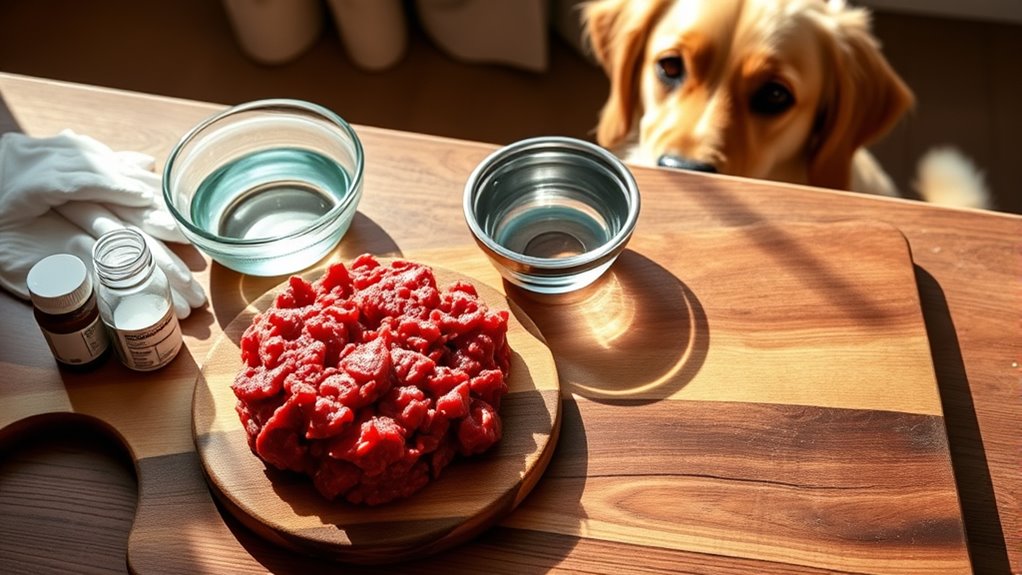
Noticing digestive or allergic reactions in your dog after feeding raw ground beef means you should handle the meat with extra care to avoid spreading bacteria. Always wash your hands before and after handling raw meat.
Use separate utensils and cutting boards to prevent cross-contamination. Disinfect all surfaces and tools with a pet-safe cleaner after preparation. Keep the beef refrigerated until just before feeding, and store it in sealed containers to avoid leaks.
| Cleaning Step | Best Practice |
|---|---|
| Handwashing | Soap and warm water, before & after |
| Utensil Use | Separate for raw meat and others |
| Surface Disinfection | Use pet-safe disinfectants |
| Storage & Refrigeration | Seal raw meat; refrigerate promptly |
When to Consult Your Vet and Alternative Protein Options
Before adding raw ground beef or any new protein to your dog’s diet, you should always consult your veterinarian to guarantee it meets their nutritional needs and is safe for them to eat. A vet consultation helps ensure nutritional balance and guides you on proper portion control.
Your vet can recommend alternative proteins like turkey, chicken, or fish if raw beef isn’t ideal due to sensitivities or health concerns. Regular health monitoring allows for timely dietary adjustments, maintaining your dog’s overall well-being.
If raw beef isn’t suitable, your vet may suggest turkey, chicken, or fish to ensure your dog’s health.
Consider these key points:
- Discuss protein options tailored to your dog’s dietary needs
- Evaluate alternative proteins for food safety
- Understand proper portion control for balanced nutrition
- Schedule regular vet visits for health monitoring
- Follow professional advice on dietary adjustments
Frequently Asked Questions
Can You Give Raw Ground Beef to a Dog?
Yes, you can give raw ground beef to your dog, but you should choose high-quality meat, introduce it gradually, balance it with other nutrients, and watch for any signs of illness to keep your dog safe and healthy.
It’s important to ensure the meat is fresh and sourced from a reputable supplier to minimize the risk of bacterial contamination. Start by offering small amounts to see how your dog tolerates it, then increase the quantity if there are no adverse reactions.
Also, incorporate a variety of other foods to provide a balanced diet. Monitor your dog closely for any changes in behavior, digestion, or health, and consult your veterinarian if you notice anything concerning.
How Do I Prepare Raw Beef for My Dog?
Think of preparing raw beef as crafting a simple masterpiece: thaw it in the fridge, trim bones and fat, cut or grind properly.
Serve plain, and always wash hands and surfaces to keep your dog healthy and safe.
How Do I Prepare Ground Beef for My Dog?
You should fully cook ground beef until it hits 160°F. Avoid seasonings, remove excess fat and bones, then let it cool.
Serve small portions to keep your dog safe and happy.
Can I Give My Dog Ground Beef Daily?
You can feed your dog ground beef daily, but you shouldn’t rely solely on it, shouldn’t overfeed, and shouldn’t skip vet advice.
Balance, variety, and portion control keep your dog healthy and happy every day.
Conclusion
Feeding your dog raw ground beef is like planting a seed in a garden—when done with care, it can grow into vibrant health. Choose quality meat, handle it safely, and balance it well, so your furry friend thrives like a blossoming flower.
Watch for signs of distress, and always keep your vet in the loop. With mindful steps, you’re nurturing your dog’s well-being, turning each meal into a nourishing ritual full of life and vigor. Feeding raw ground beef to your dog safely ensures a healthy and happy companion.