How to Do Beef Soup Bones Broth
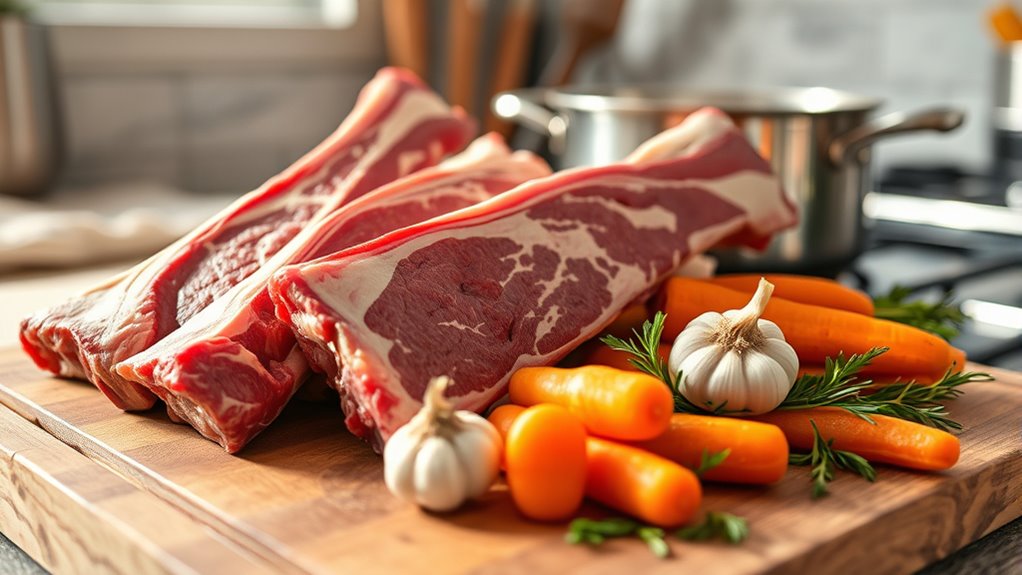
To make beef soup bone broth, start by choosing marrow-rich bones like shank or knuckles from quality sources. These bones are essential for a rich, flavorful broth that is packed with nutrients. Roast them at 425°F until browned, adding vegetables halfway for caramelization.
Then, simmer gently for 24-36 hours with a splash of vinegar to extract minerals, skimming impurities early on. This slow cooking process develops deep flavor and a gelatin-rich texture that distinguishes homemade broth.
Strain the broth for clarity, cool, and store properly.
This process builds deep flavor and gelatin-rich richness. If you want to master every step and access full flavor potential, keep exploring these tips. With practice, your beef soup bone broth will become a delicious and nourishing staple in your kitchen.
How to Pick the Best Beef Bones for Flavor
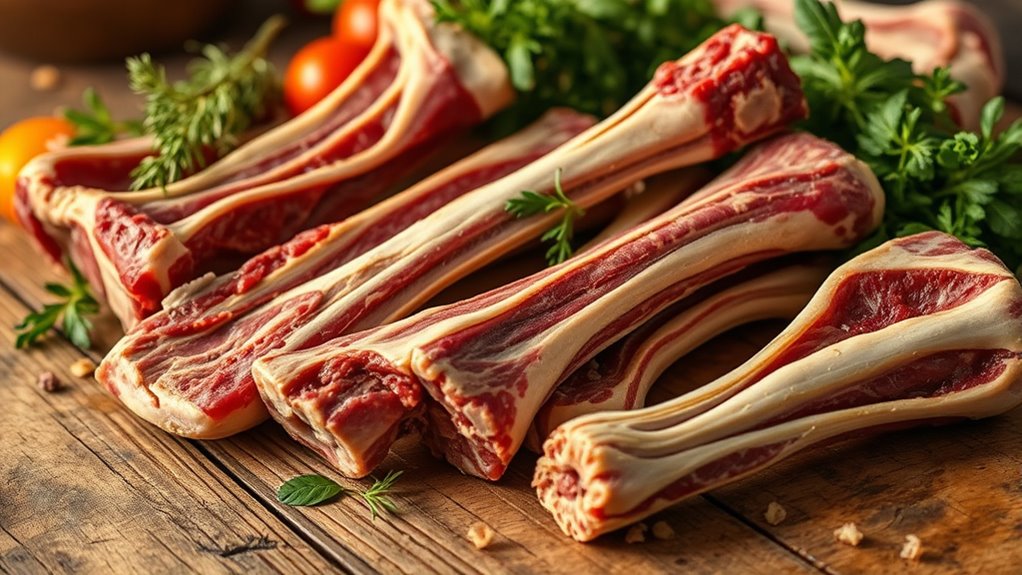
How do you choose the best beef bones for a rich, flavorful broth? Start by selecting beef bones with plenty of connective tissue and cartilage, such as marrow bones, knuckles, and shank bones. These are key for extracting collagen and gelatin, which give your broth body and a silky texture.
Soup bones rich in marrow add depth and richness, so look for a balanced amount of marrow and attached meat. Opt for bones from grass-fed, healthy animals for superior flavor and mineral content. Avoid bones that show freezer burn or off-odors, as they’ll spoil your broth’s quality.
To get the best cuts, consider sourcing from a local farmer or butcher who can provide specific bones like oxtails or soup bones, ensuring your broth is full of authentic, savory flavor.
Roasting Beef Bones and Vegetables for Deep Flavor
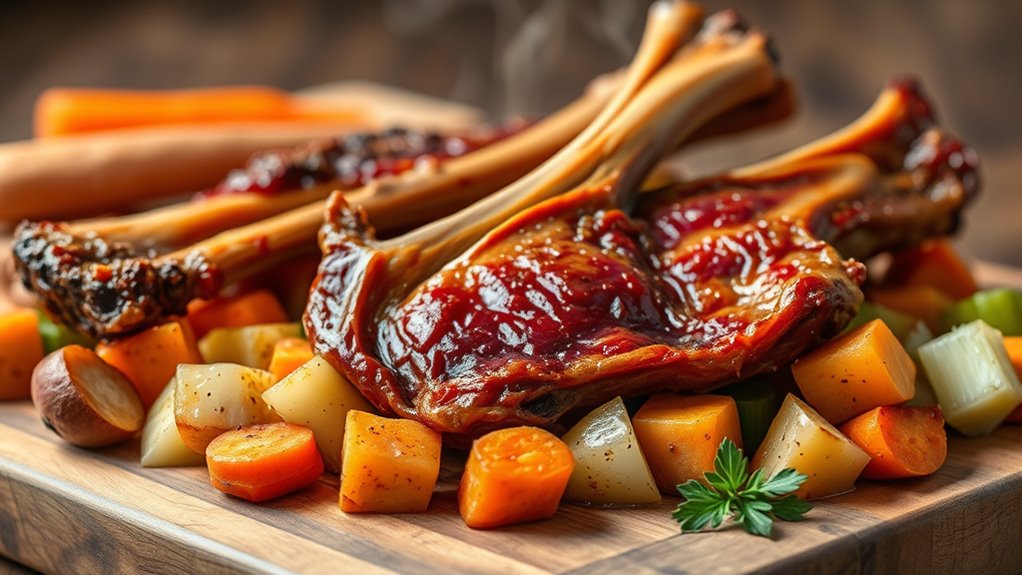
While roasting beef bones at 425°F, you’ll develop a deep, rich flavor that forms the backbone of your broth. Place the roast beef bones in a roasting pan and let them brown thoroughly, about 30-40 minutes, to achieve intense caramelization and browning.
Add quartered onions, carrots, and celery to the pan during the last 30 minutes to create flavorful caramelized vegetables. Remember to drain excess fat periodically to avoid greasy bones and guarantee a cleaner broth.
Once done, don’t toss the browned bits left in the roasting pan; deglaze it with warm water, scraping up all the caramelized goodness. Pour this liquid into your broth pot along with the roasted bones and vegetables to infuse that unmistakable deep flavor in your beef bone broth.
Simmering Beef Bone Broth to Unlock Flavor
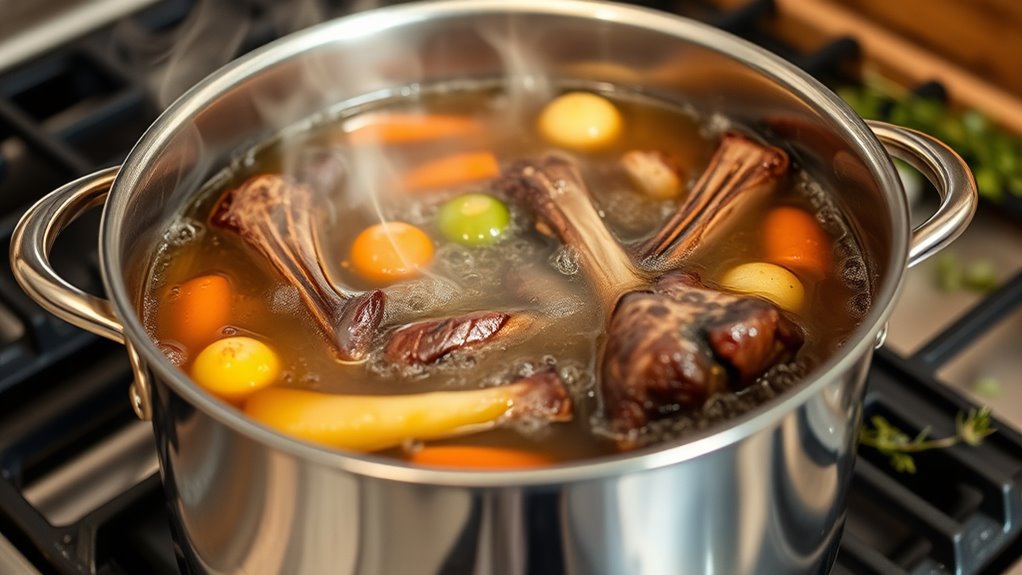
Once you’ve roasted your beef bones and vegetables, simmer them gently at a low temperature between 200-225°F for 24 to 36 hours to fully extract their rich flavors and nutrients. Keep the broth at a gentle simmer rather than boiling to maintain clarity and prevent cloudiness.
During the first 2-3 hours of this long cook, regularly skim off foam and impurities to improve the broth’s quality. Use filtered cold water initially, covering the beef bones completely, and add a splash of vinegar to help dissolve minerals from the bones.
Throughout the simmer, check water levels often, topping up as needed to keep the bones submerged. This slow, gentle simmer releases deep flavor and draws out beneficial minerals, resulting in a rich, clear broth perfect for your recipes.
Straining and Storing Your Beef Bone Broth
After simmering, you’ll want to strain your beef bone broth carefully to remove any solids and impurities. Use a fine-mesh sieve or cheesecloth to guarantee a clear, clean broth.
Once cooled, transfer the broth into jars or containers using a ladle to avoid spills.
After cooling, ladle the broth into jars carefully to prevent spills and ensure easy storage.
For proper storage:
- Let the broth reach room temperature before sealing to prevent condensation.
- Store in airtight containers, leaving headspace if freezing for expansion.
- Refrigerate or freeze, labeling each container with the date.
After refrigeration, you can remove the solidified fat layer for a leaner broth or keep it for extra flavor and nutrients.
Following these straining and storage steps will keep your broth fresh and delicious for future use.
Using Beef Bone Broth in Soups and Stews
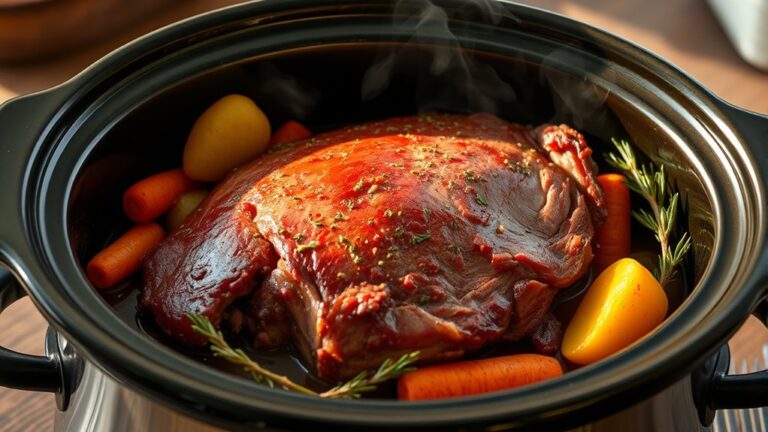
Because beef bone broth is rich in gelatin and deep flavors, you can use it to elevate your soups and stews by replacing commercial stock with a natural, nourishing base that enhances both taste and texture. When you make beef broth using roasted bones in a slow cooker, you release a rich, savory flavor perfect for hearty stews.
Follow a classic beef bone broth recipe to extract maximum nutrients and flavor from the bones and ingredients. Use the strained broth as a 100% natural stock, and add cooked, shredded meat from the bones into your stew for extra depth.
You can also adjust richness by diluting the broth with water or mixing it with other ingredients, ensuring your soups and stews are both flavorful and wholesome every time.
Frequently Asked Questions
How to Make Proper Beef Bone Broth?
You roast the beef bones first, then cover with cold water and vinegar to extract minerals. Simmer slowly for 24-48 hours, skim fat and foam, strain, cool, and store.
You’ll get rich, nourishing broth!
How to Prepare Beef Soup Bones for Soup?
To start, don’t beat around the bush—thaw your beef soup bones completely. Rinse them thoroughly, then roast at 375°F until browned. This releases flavor and nutrients, setting the stage for a rich, hearty soup base.
How to Make Bone Broth Into a Soup?
You’ll strain the broth, add shredded meat, veggies, and herbs, then simmer gently for 15-30 minutes.
Season it well, adjust spices, and serve hot with fresh herbs for a delicious, nourishing beef soup.
How Long Do You Boil Beef Bones for Beef Broth?
Think of it like a slow symphony—you’ll want to simmer your beef bones gently for at least 12 hours, even up to 48, to unseal deep richness without boiling away the delicate flavors and clarity you crave.
This long, gentle simmer allows the marrow, collagen, and nutrients to fully infuse into your broth, creating that luxurious mouthfeel and depth of flavor.
Avoid boiling vigorously, as it can break down the broth and make it cloudy or bitter.
Patience is key—slow and steady wins the flavor race.
Conclusion
Congratulations, you’ve officially mastered the ancient art of boiling bones—who knew simmering cow skeletons could be so rewarding? Now that you’ve roasted, simmered, and strained your way to liquid gold, you’re basically a culinary wizard wielding beef broth like a magic potion.
Store it wisely, use it generously, and watch your soups and stews ascend from “meh” to “masterpiece.” Who needs fancy elixirs when you’ve got beef bone broth?
Cheers to your newfound broth brilliance! Enjoy the rich flavors and health benefits that come with beef soup bones broth.