What Part of the Cow Does Beef Bacon Come From?
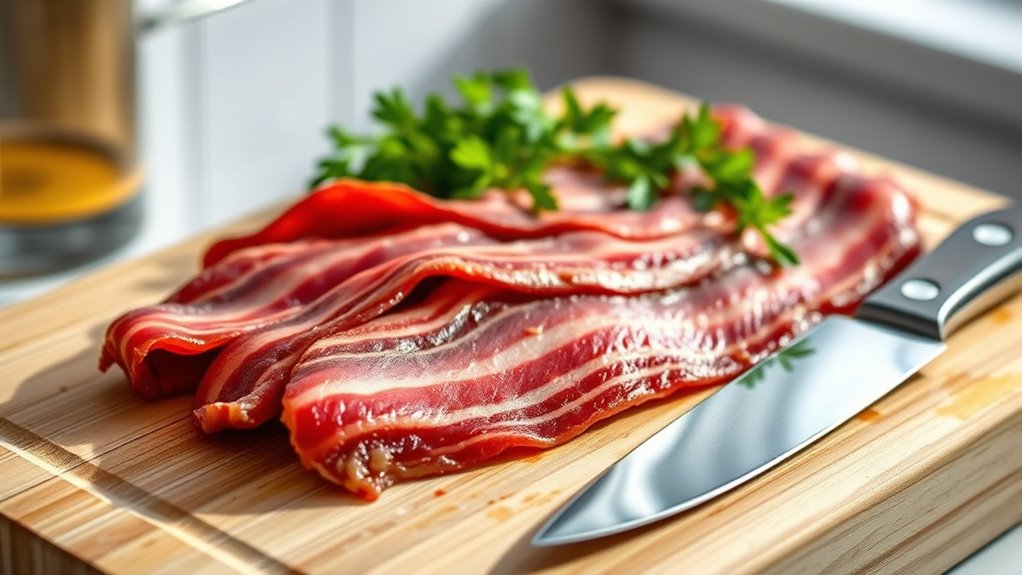
You get beef bacon from the beef navel, a fatty cut located on the cow’s lower belly near the brisket. This part has excellent marbling and a good fat ribbon, making it perfect for curing and smoking, which gives beef bacon its rich flavor and crispy texture.
While brisket or short ribs can work as substitutes, the navel is preferred for consistent quality. Keep exploring to find out why this cut stands out and how it shapes the final taste.
What Cut of Beef Is Used for Beef Bacon?
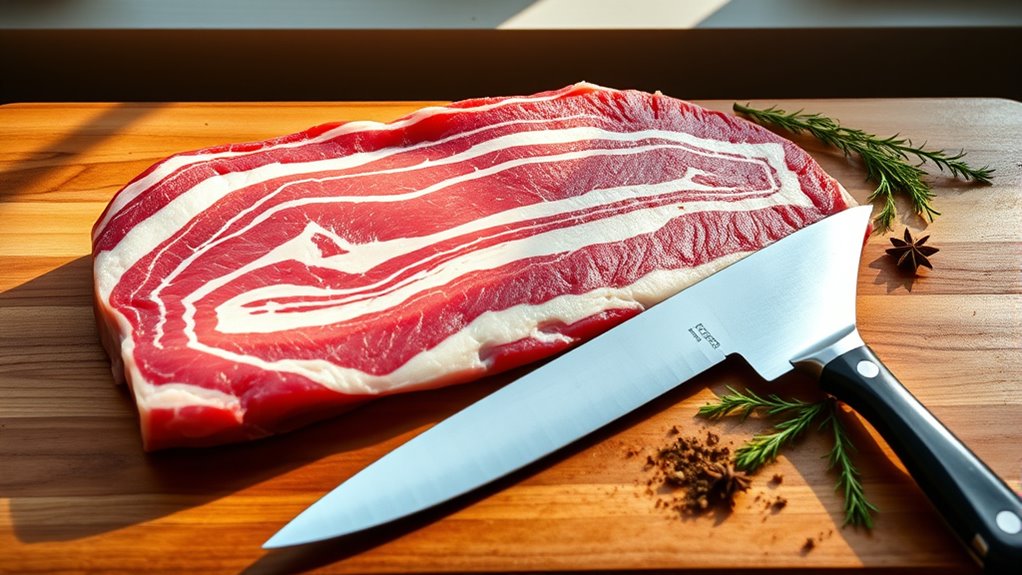
When you choose beef bacon, you’re usually getting it from the beef belly, also called the navel or plate, which comes from the cow’s lower abdomen. This cut is prized because it closely resembles pork belly, featuring a ribbon of fat perfect for the curing process. That fat marbling not only enhances flavor but also helps create the crispy texture you love in bacon.
Some beef bacon is made from brisket, a chest cut with more muscle and less fat, offering a different profile. However, the beef belly remains the preferred choice due to its rich, fatty, and flavorful qualities. Whether from beef belly or brisket, both cuts undergo curing to develop that distinctive smoky, savory taste you expect from beef bacon.
Where Is the Beef Navel Cut Located on the Cow?

You’ll find the beef navel cut on the underside of the cow, near the front of its belly. It sits right where the brisket meets the lower chest and abdomen.
This location gives the beef navel its unique texture and fat content, perfect for making bacon.
Location Of Beef Navel
Although the beef navel might not be as well-known as other cuts, you’ll find it in the lower chest area of the cow, just below the brisket. This cut, part of the plate primal cut, sits at the front underside near the bovine belly. You’ll notice it’s closely connected to the diaphragm and adjacent to short ribs.
The beef navel is prized for its high fat content and resemblance to pork belly, making it ideal for beef bacon and cured meats.
| Feature | Description |
|---|---|
| Location | Lower chest area |
| Primal Cut | Plate primal cut |
| Adjacent Cuts | Brisket, short ribs |
| Texture | Similar to pork belly |
| Use | Beef bacon, pastrami |
Relation To Brisket
Since the beef navel lies just below the brisket, it shares a close relationship with this well-known cut. The navel, also called beef belly, is located where the brisket meets the plate primal, right under the lower chest and front shoulder. While the brisket and beef belly are separate cuts of beef, they sit adjacent in the cow’s torso.
The brisket comes from the upper chest, whereas the navel occupies the abdominal area just beneath it. This proximity means the navel shares some characteristics with the brisket but is much fattier, featuring a ribbed texture and a ribbon of fat. Understanding this relation helps you appreciate why the beef navel is ideal for producing beef bacon, distinct from but connected to the brisket.
Differences Between Beef Belly and Brisket for Beef Bacon
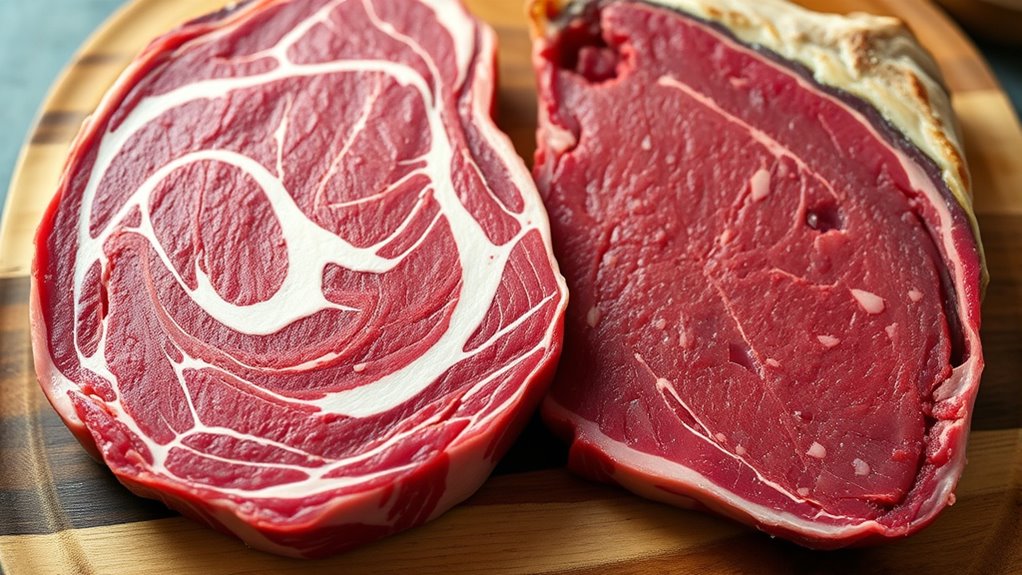
When choosing between beef belly and brisket for beef bacon, you’ll notice that each cut brings distinct qualities to the final product. Beef belly, also called navel or plate, comes from the cow’s underside and is rich in fat marbling, which makes it ideal for curing and smoking. This marbling ensures a tender, flavorful, and crispy bacon with uniform fat distribution.
On the other hand, brisket is leaner, cut from the chest area, with less intramuscular fat and a firmer texture. While brisket can be used for beef bacon, its uneven fat layers and lower fat content result in a different flavor profile and less crispiness. So, if you want classic beef bacon qualities, beef belly is the better choice.
Why Beef Navel Is Ideal for Curing and Smoking
You’ll find beef navel, also called beef plate, perfect for curing and smoking because of its high intramuscular fat and distinctive fat ribbon. This cut, located just below the brisket, closely resembles pork belly in fat composition, making it ideal for beef bacon. When you use pink curing salt, the beef navel cures evenly, developing that appealing pink color and rich flavor.
Here’s why beef navel stands out for curing and smoking:
Beef navel excels in curing and smoking due to its rich fat and even salt penetration.
- Its abundant fat ensures moisture retention during smoking, keeping the bacon juicy.
- The natural marbling allows pink curing salt to penetrate evenly, enhancing flavor.
- The structure supports consistent curing, giving you reliable, delicious results every time.
Using beef navel guarantees a flavorful and perfectly cured beef bacon.
How Marbling and Fat Distribution Affect Beef Bacon Flavor
You’ll notice that marbling plays a key role in boosting the flavor and tenderness of beef bacon. How fat is distributed throughout the cut affects how evenly it cures and smokes, which directly impacts taste.
Paying attention to these patterns helps you choose the most flavorful, juicy bacon.
Importance Of Marbling
Because marbling—the intramuscular fat in beef—plays a crucial role in flavor and texture, you’ll notice that well-marbled cuts like beef belly or short ribs produce richer, juicier beef bacon. Marbling enhances the flavor profile by evenly distributing fat, which melts during curing and smoking, adding savory depth.
When choosing beef bacon, consider these key points:
- Higher marbling means a more pronounced, succulent flavor and better mouthfeel.
- Cuts like beef belly have consistent intramuscular fat, ensuring balanced taste and tenderness.
- Less marbled cuts may yield uneven flavor and dryness.
Understanding marbling helps you select beef bacon that delivers the best flavor and texture, making your meals more satisfying and delicious.
Fat Distribution Patterns
While selecting beef bacon, understanding fat distribution patterns is essential because they directly affect flavor and texture. Beef belly, a common cut for beef bacon, features high fat marbling that ensures tenderness and moisture. Unlike pork bacon, which typically has more uniform fat layers, beef cuts like brisket have uneven fat distribution, leading to inconsistent texture.
The ribbon-like fat layers in beef navel make it especially suitable for curing and smoking, helping the bacon retain juiciness and enhancing its richness. When fat marbling is evenly spread throughout the cut, the bacon cooks more evenly, balancing crispiness with juicy bite.
Impact On Flavor
When you choose beef bacon with well-distributed marbling, you reveal richer flavors and a tender texture that elevates every bite. The marbling—the intramuscular fat in cuts like brisket or short ribs—intensifies the beefy flavor and keeps the bacon moist. Fat distribution in the beef belly cut guarantees consistent flavor and a juicy mouthfeel.
Plus, the fat helps absorb smoky notes during curing, deepening the flavor profile.
Here’s how marbling and fat shape your beef bacon experience:
- Cuts with higher marbling deliver a more intense, succulent flavor.
- Even fat distribution keeps each slice tender and flavorful.
- Fat preserves the pink hue of cured bacon, enhancing visual appeal.
Butcher Preparation Techniques for Beef Belly Bacon
To make high-quality beef bacon, you’ll start by carefully separating the beef belly, also known as the navel or plate, from the brisket and surrounding cuts. Once you have the beef belly, trimming away excess fat, silver skin, and connective tissue is essential to guarantee an even curing process.
Next, you’ll score the surface, which means making shallow cuts to help the curing mixture penetrate deeply and evenly. Proper scoring allows the salt and spices to infuse throughout the meat, enhancing flavor.
Finally, cutting the beef belly into uniform sizes helps maintain consistency during curing and smoking. By mastering these butcher preparation techniques—trimming, scoring, and curing—you set the foundation for producing delicious, well-textured beef bacon every time.
Choosing the Best Cut for Flavor and Texture
Selecting the right cut plays an essential role in achieving the perfect balance of flavor and texture in your beef bacon. When you focus on cut selection, you want to prioritize parts with the right fat content and marbled fat distribution. Here’s what to regard:
- Beef belly: This cut is ideal because its fat content and marbling closely resemble traditional pork belly, giving you rich flavor and a tender texture.
- Beef brisket: If you prefer a leaner option, brisket offers good flavor with less fat, though it won’t be as silky as belly.
- Marbled fat cuts: Look for consistent marbling in any cut you choose, as this ensures your beef bacon stays juicy and flavorful after curing.
Alternatives to Beef Navel for Beef Bacon Production
Although beef navel is the traditional choice for beef bacon due to its ideal fat ratio, you can also use other cuts like beef brisket or short ribs to achieve rich flavor and proper marbling. Beef brisket serves as a popular alternative cut, with its flat section offering leaner bacon and the point section providing more fat for depth of taste.
In some cases, producers use beef short ribs, which contain well-marbled meat suitable for curing and smoking, though they’re less common. The beef plate, another name for beef navel or navel brisket, remains the classic cut, but if you can’t find it, beef brisket or beef plate make excellent substitutes.
These options let you create flavorful beef bacon without relying solely on the traditional cut.
Frequently Asked Questions
What Cut of Meat Is Used for Beef Bacon?
You use beef belly or brisket for beef bacon. These cuts have the right fat and texture, so when you cure and smoke them, you get that crispy, flavorful bacon you love, just from beef instead of pork.
Is Beef Bacon Healthy?
Beef bacon can be part of a healthy diet if you eat it in moderation. Choose leaner cuts and nitrate-free options to reduce additives, but remember it’s still high in saturated fats, so don’t overdo it.
Does Beef Bacon Come From a Cow?
Yes, beef bacon comes from a cow. It’s made by curing and smoking specific cuts of beef, like the belly or brisket.
This process gives you that rich, savory flavor you expect from bacon but with beef instead of pork.
Why Isn’t Beef Bacon More Popular?
Beef bacon isn’t more popular because it’s pricier, tougher, and has a stronger flavor than pork bacon.
You might find its taste less familiar, and longer curing times make it less available in most markets.
Conclusion
When choosing beef bacon, consider the cut carefully. The beef navel, nestled near the belly, offers fantastic fat and flavor, making it perfect for curing and smoking. Its marbling masters mouthwatering taste and texture, setting it apart from brisket alternatives.
Butcher’s best techniques bring out bold, beautiful bacon bites. So, savor the sizzle and select smartly—because picking the proper part promises a perfectly pleasing, punchy, and palatable beef bacon experience every time. Remember, understanding what part of the cow beef bacon comes from is key to enjoying the best quality and flavor.