How to Distinguish the Difference Between Wagyu Beef and Kobe Beef in 5 Steps
To distinguish Wagyu beef from Kobe beef, start by checking their origin and certification—Kobe comes only from Tajima cattle in Hyōgo, Japan, with strict grading standards. These unique factors are key to understanding the differences between Wagyu and Kobe beef.
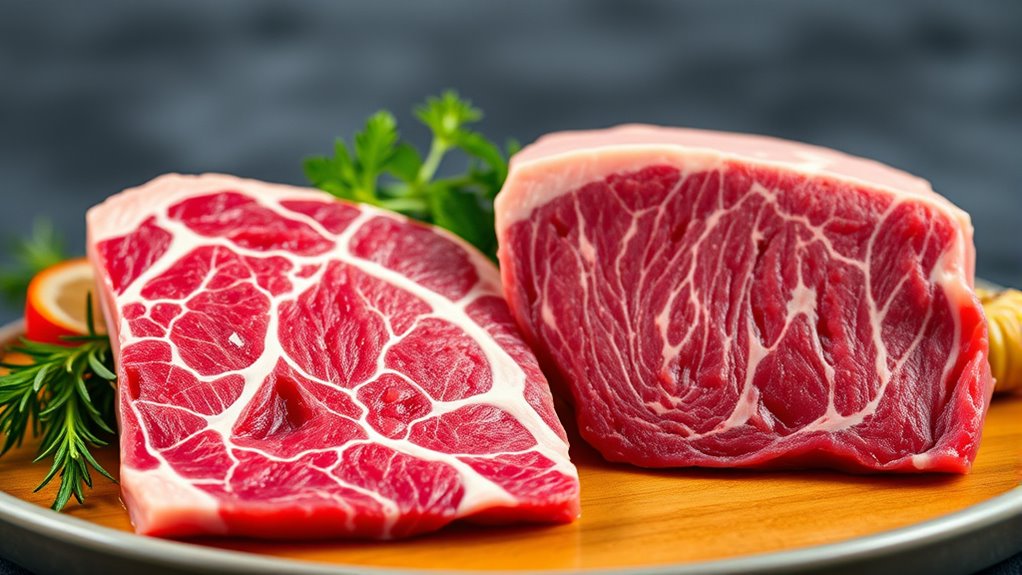
Next, compare the marbling patterns; Kobe beef typically has more intense, snowflake-like fat distribution, giving it a distinct appearance and texture.
Then, look closely at labels for official ID numbers and certification marks to ensure authenticity.
Also, keep in mind that Kobe is rarer and generally pricier than Wagyu.
By following these steps, you’ll soon uncover even finer details that set these two premium beef types apart.
Key Differences Between Wagyu and Kobe Beef
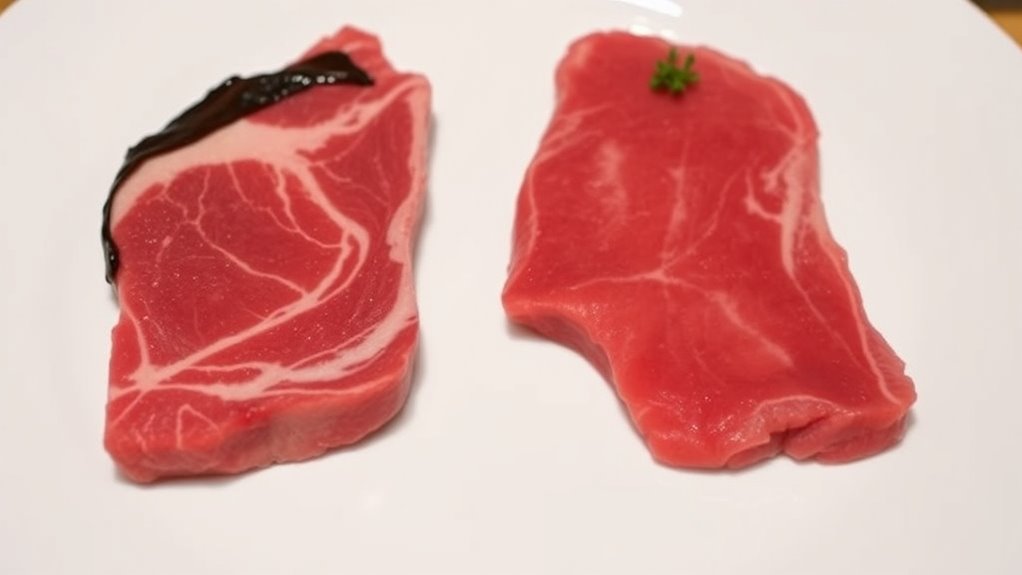
What sets Kobe beef apart from Wagyu? While all Kobe beef is Wagyu, not all Wagyu qualifies as Kobe. Kobe beef comes from the Tajima strain of Japanese Black cattle raised exclusively in Hyōgo Prefecture. This region-specific origin is essential.
To earn the Kobe label, the beef must meet strict grading standards, including a high marbling score (BMS of 6 or above) and specific yield and quality grades. Certification confirms these criteria.
Meanwhile, Wagyu refers broadly to several breeds and regions, both in Japan and abroad, with varying marbling levels and flavor profiles. Kobe beef represents the most exclusive, high-quality subset of Wagyu due to its breed, origin, and rigorous certification, making it a prized choice when you want truly exceptional marbled beef.
Verify Wagyu and Kobe Origin and Certification
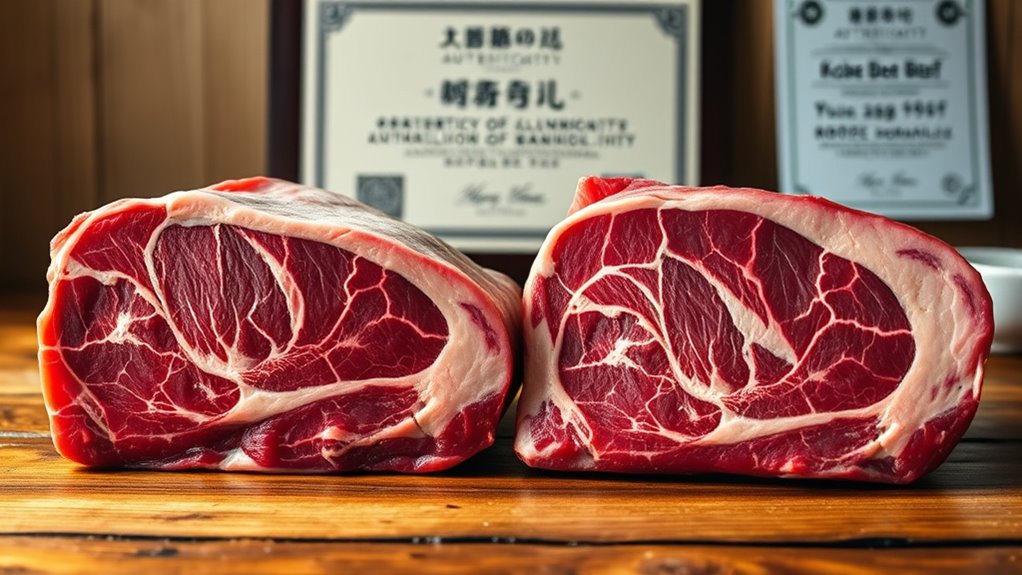
Since Wagyu and Kobe beef command premium prices, you need to verify their origin and certification carefully before purchasing. Authentic Kobe beef comes exclusively from the Tajima strain in Hyōgo Prefecture and must meet strict Kobe certification standards. Genuine Wagyu requires breed verification and regional origin documentation.
To ensure you’re getting the real deal, check for official certification and proper beef labeling. The Kobe Beef Association manages traceability and grading, critical for confirming authenticity.
When verifying, look for:
- Breed verification confirming Tajima lineage or Wagyu breed
- Origin certification proving regional source
- Kobe certification standards including BMS score and registration
- Wagyu grading details from recognized authorities
- Traceability documentation and official certification labels
These steps guarantee you buy premium, authentic beef with verified provenance.
Compare Marbling and Texture in Wagyu vs. Kobe

How do Wagyu and Kobe beef differ in marbling and texture? Kobe beef boasts a higher marbling score, typically 6 or above, with fine, snowflake-like intramuscular fat patterns that create a dense, intricate beef appearance. This uniform marbling results in a melting tender texture and an exceptionally luxurious mouthfeel.
Wagyu marbling, while abundant and creamy, tends to be less consistent, with broader marbling patterns that still deliver richness but a slightly different texture. The high intramuscular fat in Kobe beef makes it incredibly tender, almost buttery, enhancing every bite with a melt-in-your-mouth sensation.
When comparing the two, Kobe’s marbling and texture stand out for their intensity and finesse, making it distinct from general Wagyu’s rich but less uniform marbling and texture.
Look for Authenticity Clues on Labels and Packaging
When you’re shopping for Kobe or Wagyu beef, knowing how to spot authenticity on labels can save you from costly mistakes. Look closely for traceability and certification marks that confirm the beef meets strict standards. Authentic Kobe beef labels include a 10-digit ID proving it’s from Hyogo Prefecture and the Tajima breed.
Genuine Wagyu will also specify breed, region, and grading details like BMS and yield grades. Here’s what to check on the label and packaging:
- 10-digit traceability number for Kobe beef
- Kobe Beef Marketing and Promotion Association logo
- Clear breed and region information
- Grading standards (BMS, quality, yield)
- Documentation for imported products verifying authenticity
These clues guarantee you’re buying true, high-quality beef.
Understand Price and Availability Differences Between Wagyu and Kobe
Although both Wagyu and Kobe beef are prized for their exceptional quality, you’ll find that Kobe beef commands a much higher price and is far rarer outside Japan due to strict certification and limited annual supply.
Authentic Kobe beef, certified in Hyogo Prefecture, must meet rigorous standards, making it a premium and rare choice. Wagyu, often crossbred outside Japan, is more widely available and comes at a lower price, though some premium Wagyu rivals Kobe’s quality.
| Aspect | Wagyu | Kobe Beef |
|---|---|---|
| Price | Moderate to premium | Very high |
| Availability | Common worldwide | Extremely rare outside Japan |
| Certification | Less strict | Strict Hyogo Prefecture standards |
Understanding these differences helps you make informed choices about authenticity, rarity, and price.
Frequently Asked Questions
What Is the Difference Between Kobe and Wagyu Beef?
You’ll find Kobe beef is a specific, premium type of Wagyu from Hyōgo Prefecture, meeting strict standards.
While all Kobe is Wagyu, not all Wagyu comes from Kobe or meets its exclusive criteria.
How to Differentiate Wagyu Beef?
Like deciphering a rare manuscript, you can differentiate Wagyu beef by checking its marbling, origin, and certification.
Look for the A5 grade, regional labels, and authenticity seals to guarantee you’re savoring genuine Wagyu.
Is All A5 Wagyu Kobe Beef?
No, not all A5 Wagyu is Kobe beef. You’ll find Kobe only if it’s from Tajima cattle in Hyōgo Prefecture, certified by their association.
A5 just means top quality, not specific origin.
Is A5 the Same as Kobe?
Don’t get your wires crossed—A5 isn’t the same as Kobe.
You’ll find A5 is a top-grade quality mark, while Kobe is a specific region and breed designation that must meet strict standards beyond just grading.
Conclusion
Now that you’ve unraveled the mystery between Wagyu and Kobe beef, you hold the key to a treasure chest of flavors. Like a seasoned detective, you’ll spot authenticity in a glance and savor the marbling that melts like snowflakes on your tongue.
Remember, true Kobe beef is rare and precious—worth every penny. So, trust your senses and knowledge to feast like royalty, turning every bite into a celebration of Japanese excellence.
With this understanding, distinguishing Wagyu beef from Kobe beef becomes effortless. Enjoy the unparalleled taste and quality that only genuine Kobe and Wagyu can deliver.