How to Tell the Difference Between Corned Beef and Brisket
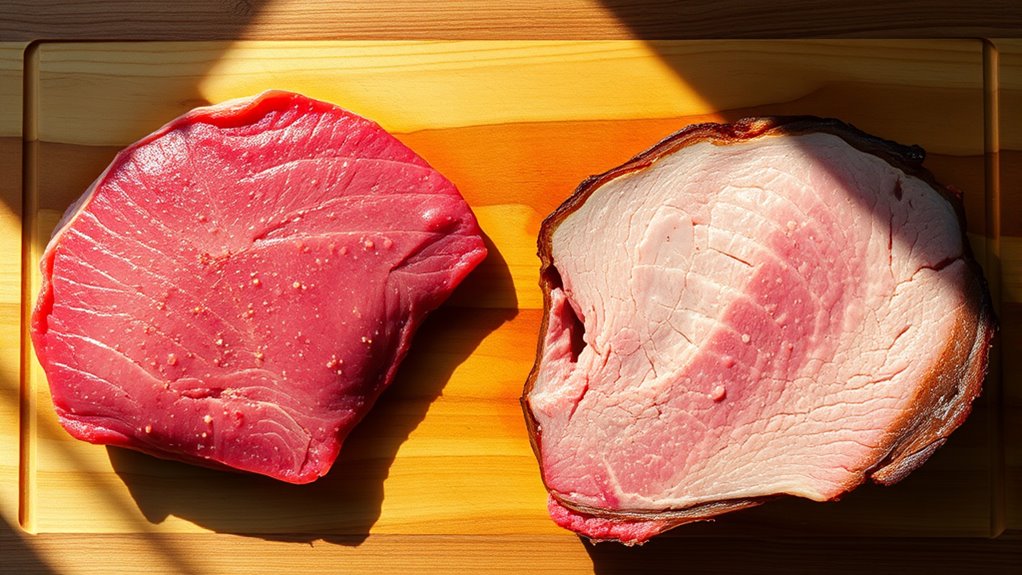
You can tell corned beef from brisket by their look and flavor—corned beef is pinkish from curing and packed with spices, while brisket is raw, deeper red, and has natural marbling.
Corned beef tastes salty and tangy, cooked by simmering; brisket has a richer, pure beef flavor and needs slow smoking or roasting.
Texture-wise, corned beef is tender and moist, brisket is firmer.
Keep exploring to discover how to cook and substitute these cuts perfectly.
What Exactly Is Corned Beef?
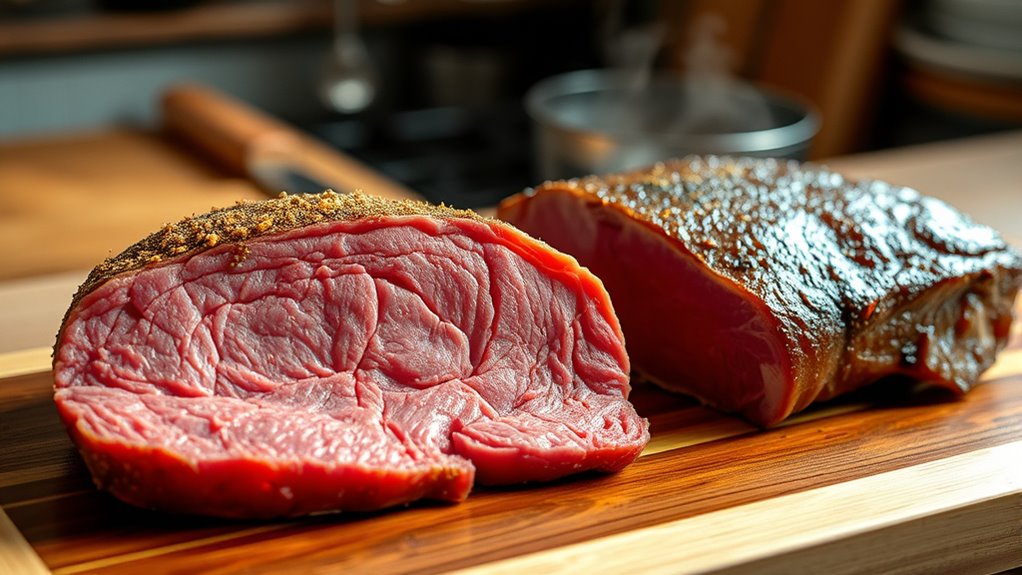
Although you might think corned beef is just a type of cooked meat, it’s actually beef cured in a salt brine infused with spices like coriander, cloves, and mustard seeds. This curing process is what gives corned beef its distinctive pink or reddish color and savory, salty flavor.
Typically, corned beef comes from cuts like brisket or beef navel, which are soaked in the brine for several days to absorb the seasoning. The term “corned” refers to the large salt crystals, or “corns,” used during curing.
After this process, you can cook corned beef by boiling, simmering, or smoking it before serving, which enhances its tenderness and flavor. This makes corned beef quite different from just plain cooked beef.
What Is Brisket? Cut And Origin
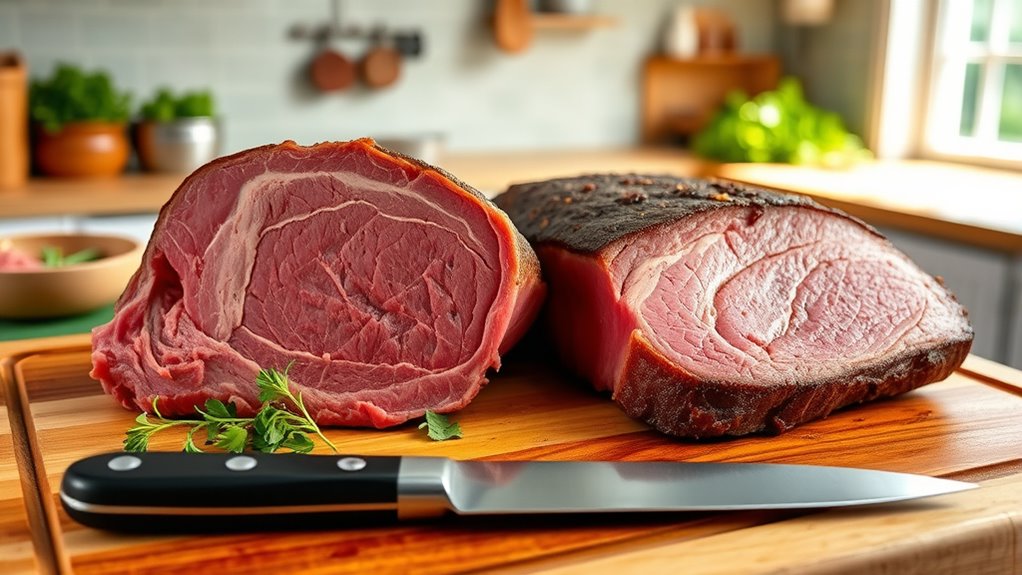
You’ll find brisket in the lower chest area of the cow, where it supports much of the animal’s weight. This cut contains dense, tough muscle fibers that need slow, low-heat cooking to become tender.
It’s made up of two parts: the leaner flat and the fattier point, each offering different textures and flavors.
Brisket Cut Location
Where exactly does brisket come from on a cow? Brisket is a primal cut located in the lower chest area, right beneath the shoulder. This cut supports much of the cow’s weight, which is why the muscle tissue is dense and tough.
The brisket is divided into two main parts: the flat cut, which is leaner, and the point cut, which has more fat. Both come from the same location, making brisket unique in its texture and flavor profile.
Typically, a whole brisket weighs between 10 to 15 pounds and features a thick fat layer on one side. Its location and characteristics make brisket perfect for slow cooking methods like barbecue and smoking, enhancing tenderness and taste.
Muscle Composition Details
Understanding the brisket’s muscle composition helps explain why this cut behaves the way it does during cooking. Brisket comes from the cow’s chest and bears much of its weight, making the muscle dense and tough. It consists of two main muscles: the flat, which is leaner, and the point, which has more fat and a different texture.
This variation affects how the brisket cooks and tastes. Because the muscle fibers are fibrous and thick, brisket requires slow, moist cooking methods like braising or smoking to break down collagen and become tender. Typically sold as a large, thick cut with a fat cap, the brisket’s muscle composition and fat content contribute to its rich flavor and juicy texture when cooked properly.
How To Tell Corned Beef From Brisket
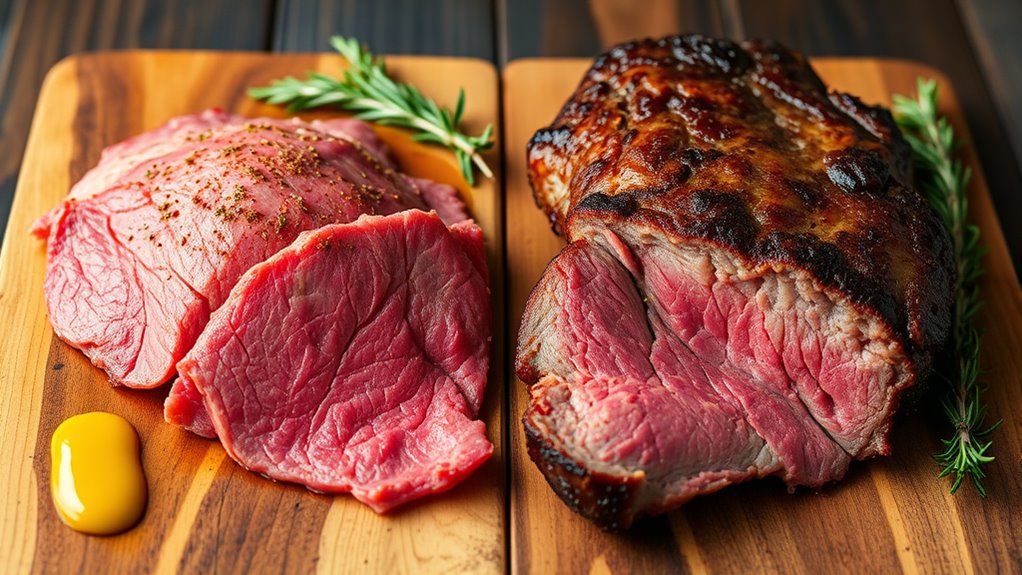
You can spot corned beef by its pinkish color and uniform slices, while brisket looks deeper red with a thicker fat cap and irregular shape.
When you taste corned beef, expect a salty, spiced flavor and a firm texture, unlike the beefier, less salty brisket that’s tougher when raw.
Paying attention to these visual and flavor differences helps you tell them apart easily.
Visual Appearance Differences
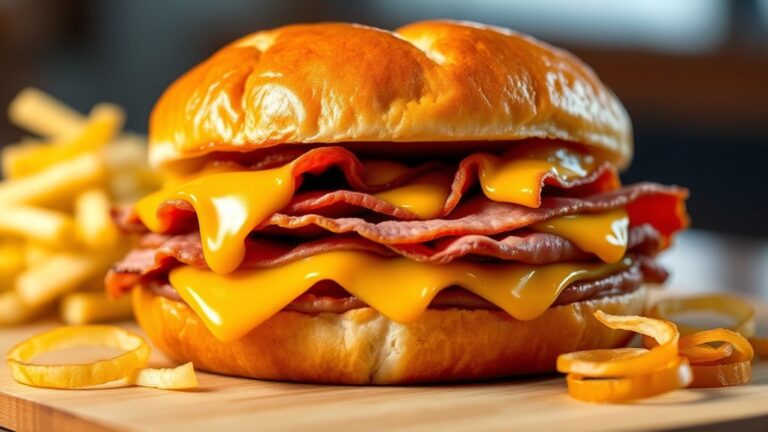
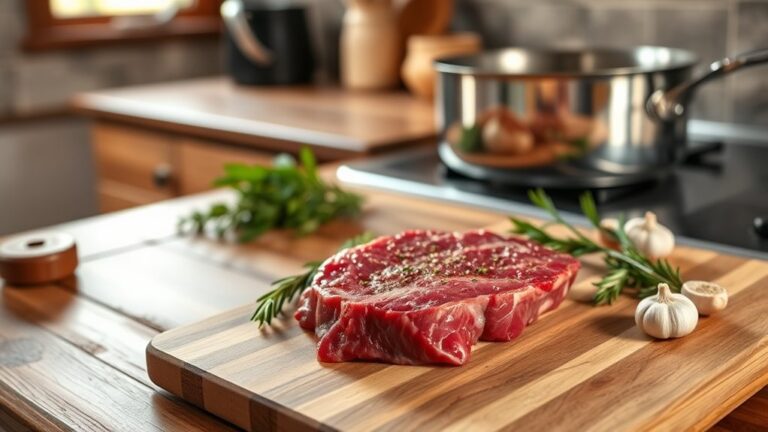
Although both come from the same cut of meat, corned beef and brisket look quite different once you know what to spot. Corned beef usually has a pink or reddish color thanks to the curing process, while raw brisket shows a deeper red or burgundy shade. You’ll notice corned beef often looks uniformly seasoned, with embedded spices and a smooth, moist surface from brining.
It’s typically sliced into flat, even pieces or comes pre-cooked with a consistent, processed look. In contrast, brisket has a natural, uneven grain with visible fat layers and a drier surface that might show a thick fat cap. When raw, brisket’s coarse muscle fibers and marbling stand out, giving it a rougher texture compared to corned beef’s cured, uniform color.
Flavor And Texture
When you taste corned beef, you’ll notice its distinct salty and tangy flavor that comes from the curing process, setting it apart from the rich, straightforward beefiness of brisket. The cured spices like peppercorns and cloves add an aromatic depth that brisket lacks.
In terms of texture, corned beef feels tender yet slightly chewy because curing and boiling alter its fibers. Brisket, on the other hand, is naturally tougher and requires slow cooking to become tender. Its texture is more fibrous, so you need to slice against the grain for the best mouthfeel.
Corned beef is usually more moist and easier to slice, reflecting its cured preparation, while brisket offers a hearty, unprocessed beef experience with a firmer bite.
How Corned Beef And Brisket Taste Differ
How exactly do corned beef and brisket differ in taste? When you bite into corned beef, you’ll notice a salty, tangy flavor from the curing process. The curing spices, like coriander and cloves, give it a unique aromatic profile that brisket doesn’t have.
Corned beef often carries a seasoned, savory punch, sometimes with a slight smokiness if it’s smoked after curing. On the other hand, brisket offers a rich, beefy taste that’s more natural and robust. Its deep beef essence intensifies with slow cooking or smoking, providing a subtle, unprocessed flavor.
While corned beef’s saltiness stands out, brisket delivers a more mellow, straightforward beef experience, letting you savor the meat’s true character without the influence of curing spices.
Cooking Methods For Corned Beef And Brisket
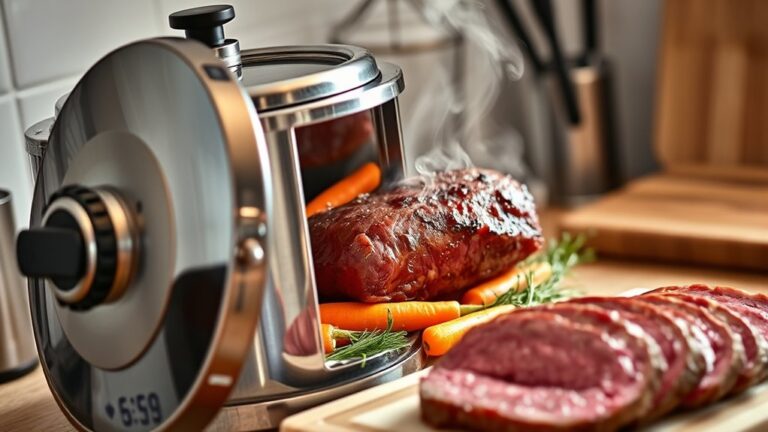
The distinct flavors of corned beef and brisket come from more than just taste—they’re shaped by how you cook them. Corned beef is typically simmered in a seasoned liquid for 2-3 hours until tender, while brisket needs low and slow dry heat methods like smoking or roasting for 4-6 hours.
Here’s a quick guide on their cooking methods:
| Cut | Common Cooking Methods | Key Temperature/Time |
|---|---|---|
| Corned Beef | Simmering, boiling | 2-3 hours in brine |
| Brisket | Smoking, roasting, grilling | 225-275°F for 4-6 hours |
| Both | Resting before slicing | Slice against the grain |
Choosing the right cooking methods helps you discover each cut’s unique texture and flavor.
Can You Substitute Corned Beef For Brisket In Recipes?
Can you swap corned beef for brisket in your favorite recipes? Yes, you can substitute corned beef for brisket, but keep in mind corned beef is cured, pre-cooked, and saltier. This changes the flavor profile, adding a more aromatic, seasoned taste compared to fresh brisket.
Because corned beef is already tender and cooked, you’ll need less cooking time and should adjust seasoning to avoid over-salting. Brisket requires slow cooking or smoking to tenderize, while corned beef’s texture is softer from the start.
When you substitute corned beef for brisket, modify your recipe’s cooking method and seasoning to balance saltiness and texture, ensuring your dish still delivers the desired flavor and tenderness.
Frequently Asked Questions
Is There a Difference Between Corned Beef and Corned Beef Brisket?
Yes, there is no real difference between corned beef and corned beef brisket since corned beef is typically made from brisket that’s been cured.
What Is Poor Man’s Brisket?
You’ll find Poor Man’s Brisket offers great value—costing up to 30% less than traditional brisket. It’s a tougher, fattier cut that becomes tender with slow cooking, perfect for budget-friendly, flavorful meals.
How to Identify Beef Brisket?
You can identify beef brisket by its large size, dense texture, and thick fat layer on one side.
Look for a deep red color and visible muscle fibers, often labeled simply as “beef brisket.”
Does Corned Beef Taste Like Brisket?
No, corned beef doesn’t taste like brisket. You’ll notice corned beef is saltier and spiced from curing, while brisket has a more natural, beefy flavor that depends on how you season and cook it.
Conclusion
Now that you know the difference between corned beef and brisket, you can choose the right cut for your meal with confidence. Did you know that brisket sales spike by over 40% every St. Patrick’s Day, thanks to corned beef’s popularity?
Whether you’re slow-cooking or curing, understanding these cuts will elevate your cooking game. So go ahead, try both and savor the unique flavors each one brings to your table!
By knowing the distinctions between corned beef vs brisket, you can make informed decisions for your recipes and enjoy delicious meals every time.