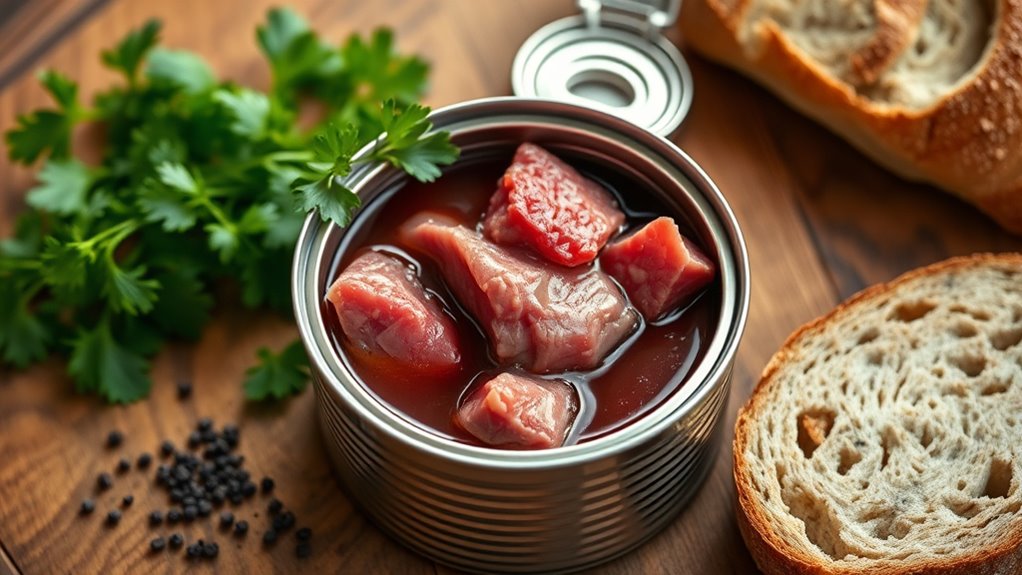
What Is Canned Corned Beef Made Of?
When you open a can of corned beef, you’re getting tougher beef cuts like brisket or chuck that have been cured with salt, spices, and preservatives such as sodium nitrite and saltpeter. This curing process preserves the meat’s flavor, color, and shelf life.
The beef is sealed in the can and cooked under high pressure, giving it a softer texture compared to fresh corned beef.
These ingredients and methods make canned corned beef unique. The curing ensures the meat stays flavorful and safe to eat over a long period.
High-pressure cooking tenderizes the beef, making it convenient and ready to use straight from the can.
Keep exploring to understand more about what makes canned corned beef a popular pantry staple. Its combination of preservation techniques and quality cuts delivers a distinct taste and texture that sets it apart from fresh versions.
What’s In Canned Corned Beef?
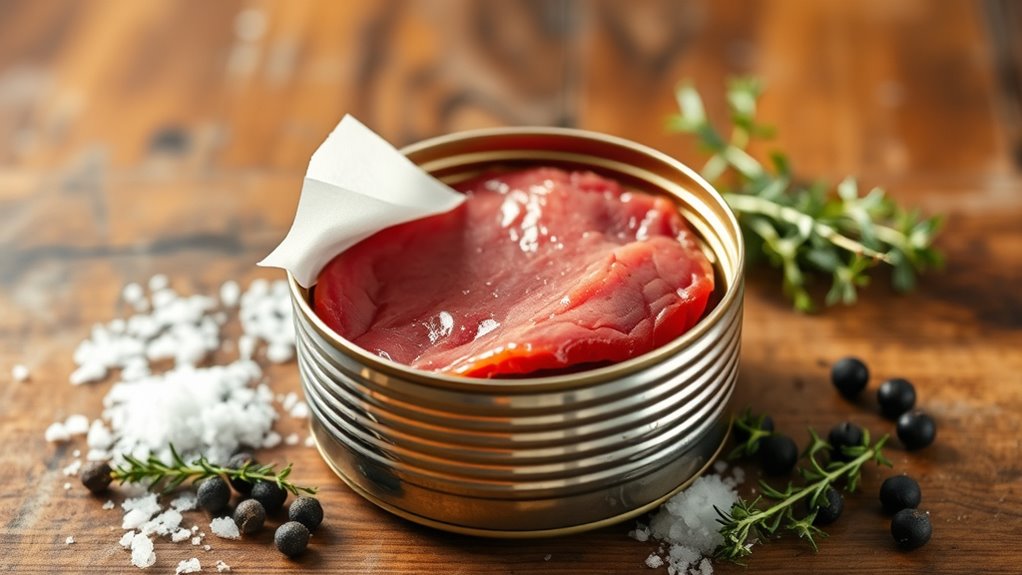
Although it’s often overlooked, canned corned beef contains more than just beef. The corned beef ingredients start with beef brisket or other tougher meat cuts, which undergo a curing process. This involves soaking the meat in a brine filled with salt and spices, including rock salt, which gives corned beef its name.
During processing, the beef is cured with salt, sugar, and sodium nitrite to preserve flavor and texture. To maintain its pink color and extend shelf life, manufacturers add preservatives and colorants. The meat cuts used tend to be fattier and less suitable for fresh sale, influencing the final texture and taste.
Beef Cuts Used For Canned Corned Beef
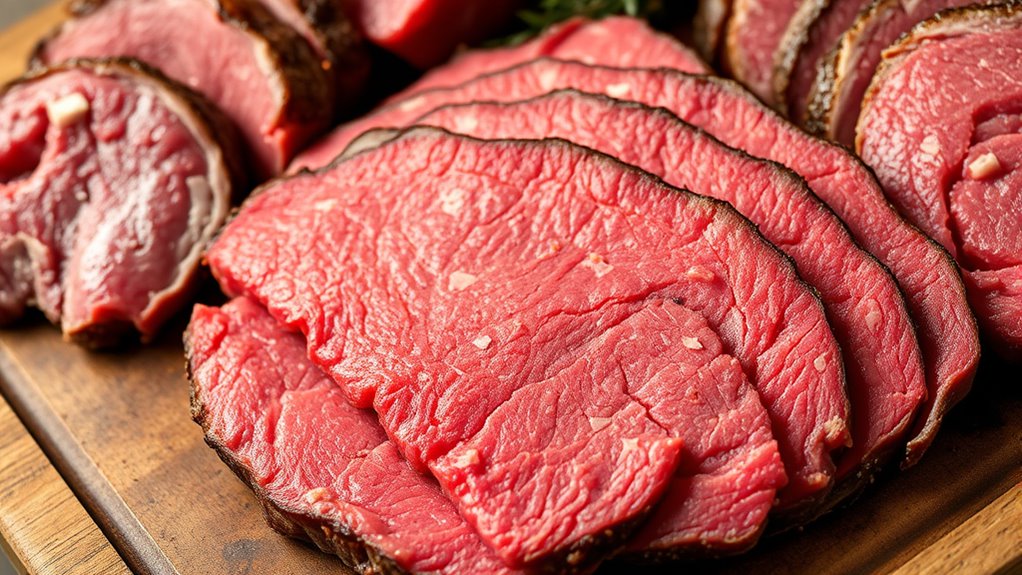
When you open a can of corned beef, you’re getting more than just any cut of meat. The beef cuts used for canned corned beef typically come from tougher, lower-grade beef like brisket, chuck, pot roast, and round. These cuts are affordable and durable, making them ideal for beef for canning.
Often, the meat is mechanically recovered or processed beef, which extracts meat from less desirable parts, ensuring minimal waste. Corned beef brisket is a common choice, valued for its flavor despite its toughness. Using tough beef cuts allows the product to maintain texture and taste through the canning process.
You won’t find prime steaks here; instead, the focus is on practical, sturdy cuts that hold up well once shredded or chopped into the final canned product.
Curing And Preservation Methods In Canned Corned Beef

Because preserving canned corned beef requires both safety and flavor, producers use curing methods that draw out moisture and inhibit bacterial growth. The curing process involves either dry curing with salt and spices or wet curing through brining in a solution containing salt, sugar, spices, and preservatives like sodium nitrite.
This combination not only enhances flavor but also guarantees food safety by preventing harmful bacteria. After curing, the beef undergoes sterilization through high-pressure canning, which seals and cooks the meat inside cans, locking in freshness and extending shelf life.
These preservation methods work together to maintain the meat’s pink color and texture while safeguarding it from spoilage. By understanding these steps, you’ll appreciate how canned corned beef stays safe and flavorful on your shelf.
Role Of Sodium Nitrite And Saltpeter In Canned Corned Beef Preservation
Alongside salt and spices, sodium nitrite and saltpeter play key roles in preserving canned corned beef. Sodium nitrite acts as a vital additive that inhibits bacterial growth, ensuring food safety while maintaining the meat’s characteristic pink color. Saltpeter, or potassium nitrate, has been used for centuries in curing to prevent spoilage and enhance flavor.
Both additives contribute markedly to preservation in canned meats, but their use is carefully regulated to minimize health risks. Excess sodium nitrite can lead to the formation of carcinogenic N-nitrosamines, so strict limits exist to keep levels safe for consumption. When you choose canned corned beef, these curing agents work together to preserve quality, extend shelf life, and maintain flavor without compromising your health.
Differences Between Canned And Fresh Corned Beef
Although both canned and fresh corned beef share the same basic name, you’ll notice significant differences in preparation, texture, and flavor. Canned corned beef undergoes a curing process and high-temperature sterilization for food preservation, resulting in a softer, more uniform texture. It’s made from lower-grade beef cuts and is ready to eat straight from the can, boasting a salty, cured flavor profile.
In contrast, fresh corned beef comes from whole beef cuts like brisket, requiring you to cook it through slow braising or boiling. This preparation method preserves a firmer texture and richer, more complex flavor. Plus, fresh corned beef has a shorter shelf life compared to the long-lasting canned meat, so you’ll need to plan cooking and consumption accordingly.
Frequently Asked Questions
Is Canned Corned Beef Healthy?
Canned corned beef isn’t the healthiest choice due to high sodium, fat, and preservatives. You can enjoy it occasionally, but try lower-sodium versions and balance it with fresh foods to protect your heart and overall health.
What Exactly Is Canned Corned Beef?
Think of canned corned beef as a preserved treasure chest of tender, salted beef brisket, seasoned and sealed tight.
You can enjoy it straight from the can—it’s fully cooked, flavorful, and ready whenever you are.
What Part of a Cow Is Corned Beef From?
Corned beef mainly comes from the brisket, a tougher cut from the cow’s lower chest. You’ll also find it made from round or chuck, especially in canned versions, but brisket’s the most common choice for flavor and texture.
What Ingredients Are in Canned Corned Beef?
You’ll find canned corned beef mainly contains cooked beef, salt, sugar, and sodium nitrite. Sometimes, spices like cloves or bay leaves are added, plus preservatives to keep it fresh and maintain its distinctive color and flavor.
Conclusion
Now that you know what goes into canned corned beef, it’s fascinating to learn that about 70% of the beef used comes from tougher cuts, like brisket, which get tender through curing and preservation.
With sodium nitrite and saltpeter playing key roles in keeping it safe and flavorful, canned corned beef offers a convenient alternative to fresh cuts.
Next time you open a can, you’ll appreciate the science and care behind it, as well as the unique ingredients that make canned corned beef a popular, shelf-stable source of protein.