How Many Calories Are in a Beef Tamale
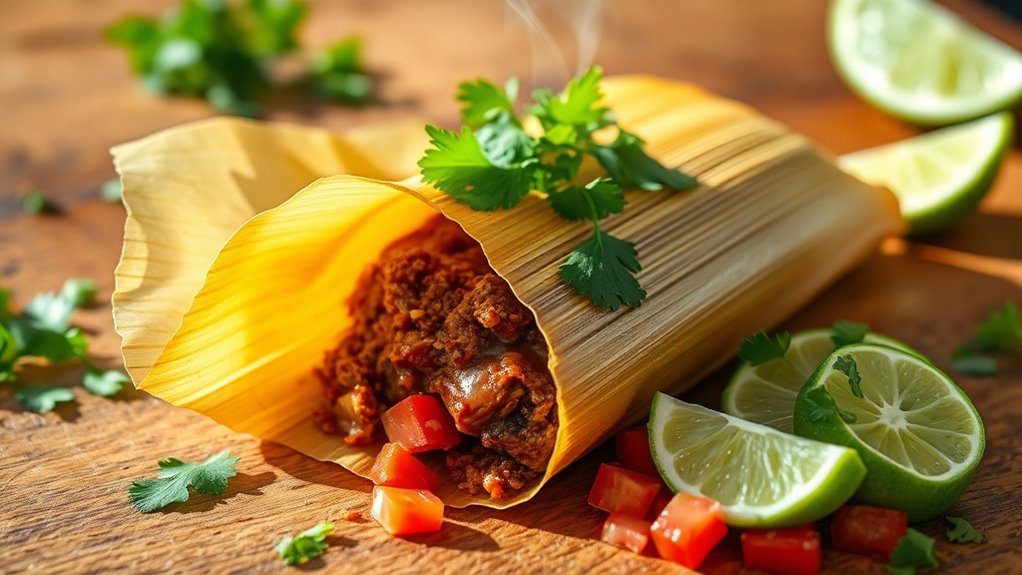
A typical beef tamale contains between 260 and 370 calories, depending on its size and brand. The main calorie sources include the beef filling, masa dough, and fats like lard used in preparation.
Understanding how many calories are in a beef tamale can help you make better dietary choices.
Larger tamales naturally have more calories, while cooking and reheating methods can slightly alter the calorie content.
Opting for leaner meats or whole-grain masa can lower the calorie count.
If you want to understand how ingredients and cooking affect those numbers, keep exploring to learn more.
Average Calories in a Beef Tamale
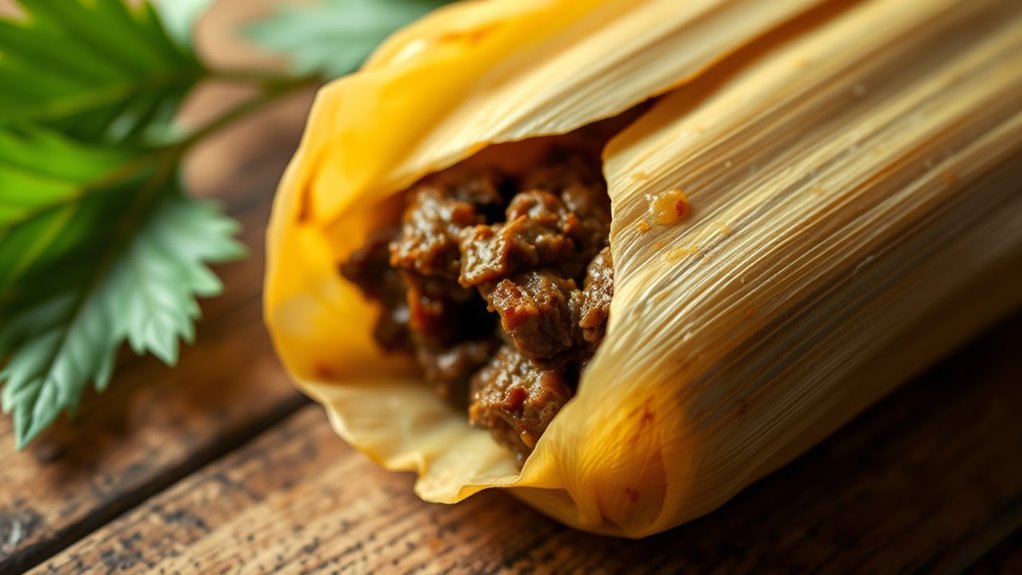
Although the calorie count in beef tamales varies by brand and size, you can generally expect between 260 and 370 calories per tamale. When you look at a typical beef tamale, like those from La Indiana, you’ll find about 320 calories per serving.
The serving size usually refers to one tamale, which makes it easy to track your calorie intake. Keep in mind that the calories come from the beef, masa dough, and fats used in preparation. Checking the nutritional label can give you a clearer picture of the exact calories in your beef tamale.
Understanding the average calories in a beef tamale helps you make informed choices when including this tasty dish in your meal plan.
Which Ingredients Add Calories to Beef Tamales
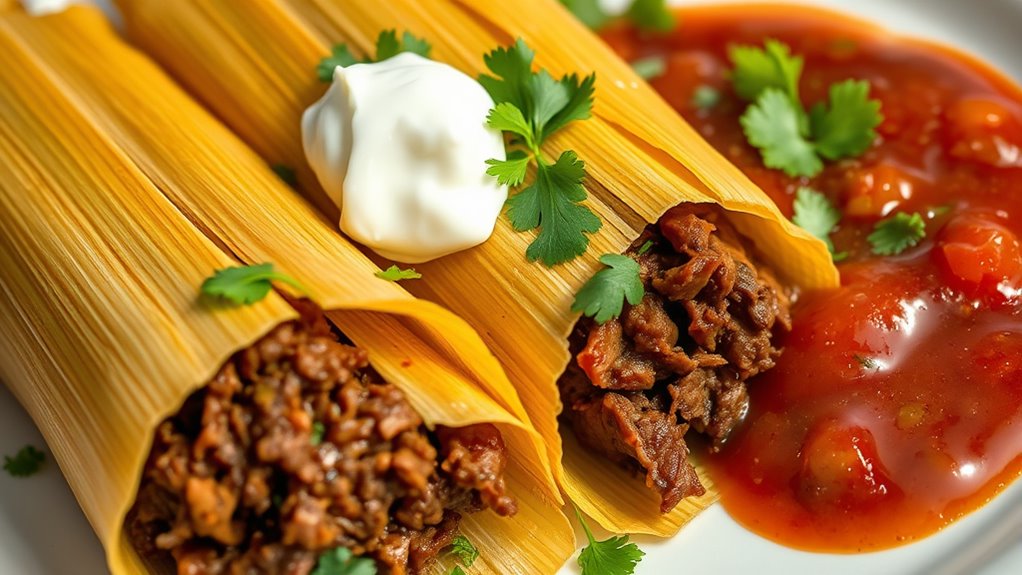
When you eat a beef tamale, the beef itself packs a big calorie punch depending on how much you get. The masa dough isn’t just a carrier—it adds calories too, especially because of the lard mixed in.
Plus, any extra fats used in the filling boost the calorie count even more.
Caloric Impact Of Beef
Because beef forms the main protein in tamales, it considerably impacts their calorie count, contributing around 250 to 300 calories per 3-ounce serving based on fat content and preparation. While beef provides most of the calories, other ingredients also play a role in the overall count.
For example, the corn-based masa dough includes lard, which raises calories further. When you consider a beef tamale, keep these calorie contributors in mind:
- Beef: Primary source of calories, varies with fat content
- Lard: Adds about 115 calories per tablespoon, used in masa and flavoring
- Corn masa: Contributes 100-150 calories per tamale depending on portion size
Understanding these elements helps you gauge the caloric impact of beef tamales more accurately.
Role Of Masa Dough
Since masa dough forms the base of a beef tamale, you should understand which ingredients add calories to it. The primary source of caloric content in masa dough comes from masa harina, which provides carbohydrates and some protein. However, the addition of fats, such as lard or other fats, markedly boosts the calorie count since fats are calorie-dense.
Each tablespoon of the masa mixture used to coat the husks contributes about 20-30 calories, depending on how much fat is included. Additionally, the moisture from reserved cooking liquid slightly affects the masa dough’s calorie density but to a lesser extent. Overall, the masa dough’s ingredients—especially the combination of masa harina and fats—play an essential role in determining the beef tamale’s total caloric content.
Effects Of Added Fats
Masa dough sets the stage for a beef tamale’s calorie content, but added fats play a major role in boosting its energy density. Lard, a key fat in masa and cooking, packs in a significant number of calories, making the tamale richer and more calorie-dense.
Beyond lard, other fats contribute to the overall calorie count, so it’s important to weigh these when evaluating how many calories you’re consuming.
Here are the main fat sources adding calories to beef tamales:
- Lard used in masa and cooking, high in fat and calories
- Soybean oil added to the filling, dense in calories
- Pork skins in the wrapper and filling, especially when fried
These fats substantially increase the calories, making tamales a satisfying, energy-rich dish.
Comparing Calories by Size and Brand
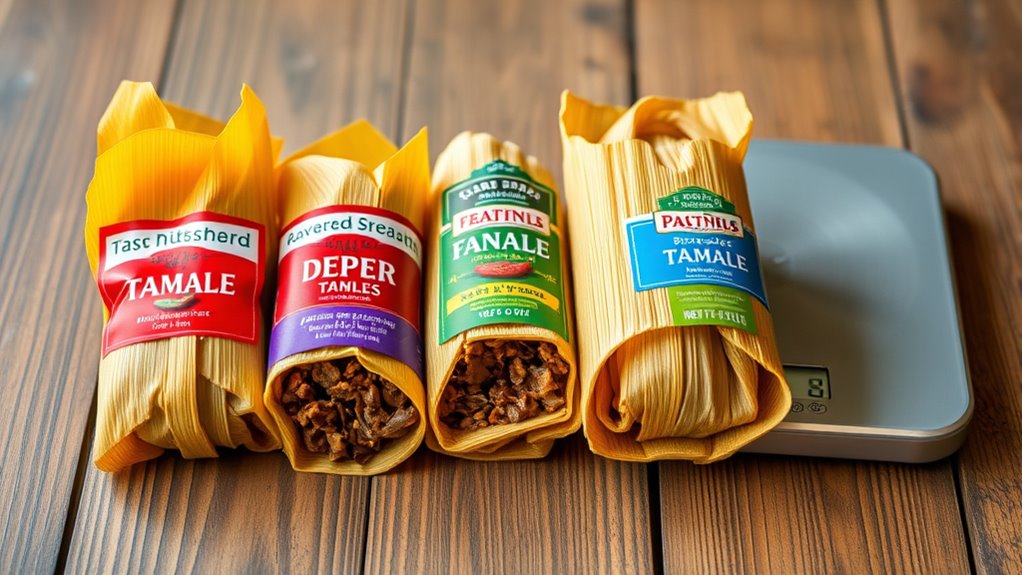
When you compare beef tamales from different brands, you’ll notice their calorie counts vary widely due to differences in size and ingredients. For example, a Trader Joe’s beef tamale contains about 260 calories, while La Indiana’s 5 oz tamale has roughly 320 calories. Texas Tamale Co.’s larger 6 oz tamale clocks in at around 370 calories.
This brand variation largely stems from tamale size—larger tamales naturally pack more masa and filling, increasing calories. So, when tracking calories, don’t just look at the brand name; pay close attention to the tamale size. Knowing this helps you make better choices based on your calorie needs without sacrificing flavor or satisfaction.
Cooking Methods That Affect Beef Tamale Calories
Understanding the calorie differences among tamale brands and sizes is just part of the picture. How you cook your beef tamale markedly affects its calorie content. Steaming is the traditional method that preserves calories by cooking without added fats, usually around 370 calories per serving.
Using a microwave can slightly reduce calories due to moisture loss, but reheating frozen tamales with added oils can increase calorie density. To keep moisture and flavor intact without changing calories much, try reheating in the microwave with a damp paper towel.
However, overcooking—especially steaming too long—causes moisture loss, concentrating calories per serving. Consider these points when preparing your tamale:
- Steaming maintains original calorie content
- Microwave reheating may reduce or increase calories depending on added fats
- Moist paper towel in microwave preserves moisture and calorie balance
Nutritional Breakdown: Fat, Protein, and Carbs
A beef tamale offers a balanced mix of macronutrients that fuel your body effectively. With about 260 calories per serving, it provides a moderate amount of protein, fat, and carbohydrates. You get roughly 10 grams of protein, which supports muscle repair and keeps you feeling full.
The fat content is also around 10 grams, mainly from lard and meat, adding richness and flavor. Carbohydrates come in at about 29 grams, mostly from the masa dough. This combination makes beef tamales a satisfying choice without overloading on any one nutrient.
| Macronutrient | Amount (grams) | Role |
|---|---|---|
| Protein | 10 | Muscle repair, satiety |
| Fat | 10 | Flavor, energy |
| Carbohydrates | 29 | Energy source |
Tips to Manage Calorie Intake With Beef Tamales
You can manage your calorie intake by controlling portion sizes, like sharing a tamale or choosing smaller servings. Opt for tamales wrapped in corn husks and avoid adding extra fats when reheating to keep calories in check.
Pairing tamales with veggies instead of high-calorie sides also helps maintain a balanced diet.
Portion Control Strategies
Although beef tamales are delicious and satisfying, managing your portion size is key to keeping calorie intake in check. Each tamale can contain 260-370 calories, so controlling portion size directly impacts calorie control. Start by removing the corn husk before eating to avoid consuming inedible parts, which helps you focus on the actual edible calories.
You can further manage intake by measuring portions or sharing tamales.
Here are some portion control strategies to try:
- Eat one tamale instead of multiple to reduce calorie intake.
- Pair your tamale with low-calorie vegetables or a light salad to balance the meal.
- Use a food scale to measure tamale portions consistently and accurately.
These tactics help you enjoy beef tamales without overdoing calories.
Healthier Preparation Methods
When preparing beef tamales, choosing healthier methods can help you manage calorie intake without sacrificing flavor. Opt for steaming instead of frying to cut down on added fats and calories. Using leaner cuts of beef reduces the overall fat content, while minimizing lard in the masa makes a significant difference.
You can also control portions by eating half or smaller tamales to keep your calorie consumption balanced. Pair your tamales with fresh salsa or vegetables rather than high-calorie sides to further manage intake. When reheating, use a microwave with a damp paper towel to prevent excess oil absorption, keeping the calories lower.
These simple tweaks let you enjoy delicious beef tamales with fewer calories and greater nutritional value.
Healthier Alternatives to Traditional Beef Tamales
Since traditional beef tamales can be high in calories and saturated fats, you can make them healthier by swapping in lean ground beef or turkey to cut about 50 calories per serving. Using lean ground beef not only reduces fat but keeps the flavor rich.
You can also boost nutrition by incorporating whole-grain masa instead of refined flour, which adds fiber and helps you feel fuller longer. Replacing traditional lard with healthier fats like olive or avocado oil lowers saturated fat content without sacrificing texture.
Try these healthier alternatives:
- Add veggies like zucchini or cauliflower to the filling for extra fiber.
- Use whole-grain masa for better nutrition.
- Cook tamales by steaming or baking, avoiding extra oils.
These swaps make your tamales lighter but still delicious.
Storing and Reheating Without Adding Calories
To keep your beef tamales tasty without adding extra calories, focus on proper storage and reheating methods. After enjoying your tamales, cool leftovers uncovered in the refrigerator to prevent moisture buildup, which helps maintain their texture.
If you plan to freeze them, tightly wrap each tamale in heavy-duty plastic bags and store for up to six months. When it’s time to eat again, thaw frozen tamales in the refrigerator first to ensure even reheating.
For reheating, steam them for 15-18 minutes without adding oils or fats, preserving moisture and flavor without extra calories. Following these steps guarantees your tamales stay fresh, flavorful, and calorie-conscious every time you enjoy them.
Calories Burned Digesting Beef Tamales?
Although eating a beef tamale provides you with 260 to 370 calories, your body burns a portion of those calories during digestion. The calories burned digesting a beef tamale vary based on your metabolism, but generally range from 13% to 18% of its total calories. For example, a 260-calorie beef tamale might cost you about 34 to 47 calories just to digest.
Protein-rich foods like beef tamales require more energy to break down, increasing the calories burned compared to carbs or fats.
Keep these digestion facts in mind:
- The thermic effect of food (TEF) accounts for roughly 10% of calories burned during digestion.
- Individual factors like age and activity level affect calories burned digesting a beef tamale.
- Digestion helps offset some calories consumed, supporting weight management.
Finding Beef Tamales With Accurate Nutrition Labels
When choosing beef tamales, you’ll want to find products with accurate nutrition labels that clearly list calories and macronutrients. Accurate nutrition labels typically show around 260-370 calories per serving, but this varies by brand and tamale size.
Look for brands like La Indiana and Texas Tamale Co., which provide transparent caloric information per tamale or serving size. Reading these labels carefully helps you know exactly how many calories you’re consuming, especially if you’re deciding between frozen, fresh, or store-bought options.
Pay attention to the serving size and the number of servings per package to calculate your total caloric intake accurately. This way, you can better manage your diet while enjoying beef tamales without guesswork.
Frequently Asked Questions
How Many Calories Are in 1 Beef Tamale?
You’ll find about 260 calories in one beef tamale. It packs roughly 10 grams of protein and fat, making it a balanced option.
Just remember, calories might vary slightly depending on how it’s made.
How Many Calories Are in a Regular Tamale?
A regular tamale packs about 260 to 370 calories, dancing between light and hearty. When you bite in, you’re savoring masa, savory fillings, and fats, all blending to fuel your day with rich tradition and flavor.
Are Beef Tamales Healthy?
Yes, beef tamales can be healthy if you eat them in moderation and choose traditional, minimally processed ingredients. They provide protein and healthy fats, but watch the carbs and fat content to keep your diet balanced.
Can I Eat Tamales While Trying to Lose Weight?
You can enjoy tamales while losing weight, but don’t bite off more than you can chew—practice portion control, choose lean fillings, and pair them with veggies to keep calories in check and stay on track with your goals.
Opting for tamales made with lean meats like chicken or turkey can help reduce fat intake.
Including a side of steamed or roasted vegetables adds fiber and nutrients without too many extra calories.
Conclusion
Just like Goldilocks seeking the perfect porridge, you want your beef tamale calories “just right.” Knowing what ingredients and cooking methods add up helps you enjoy every bite without guilt. Whether you choose a small homemade tamale or a store-bought giant, understanding the nutrition lets you savor tradition while staying mindful.
So, dig in wisely and keep your tamale experience both tasty and balanced—because you deserve the best of both worlds. Being aware of beef tamale calories ensures you can enjoy this delicious dish while managing your dietary goals effectively.