How Many Calories Are in a Slice of Roast Beef?
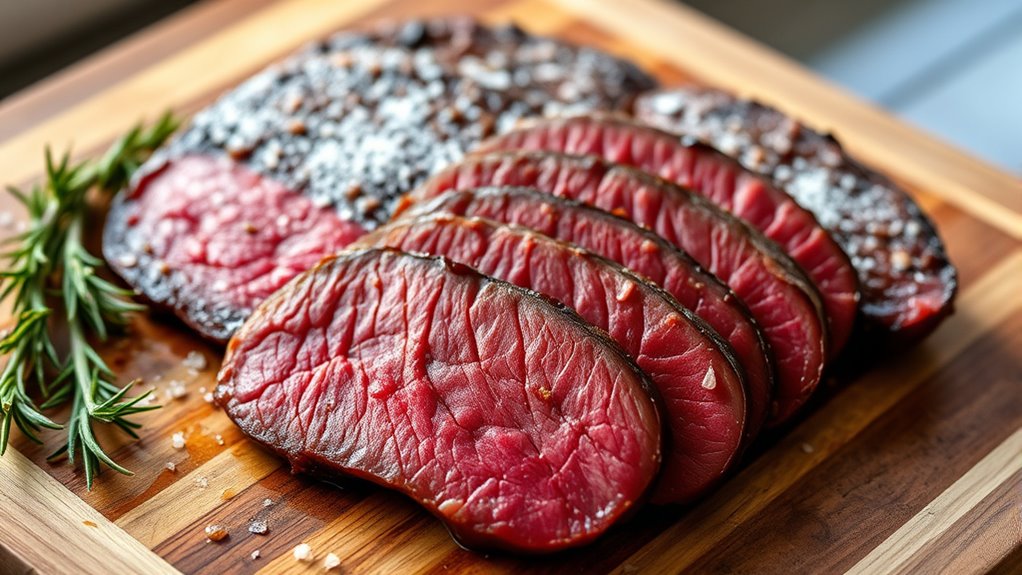
A typical slice of roast beef has about 115 to 125 calories, though this varies with thickness and cut. Thinner deli slices may have around 56 calories, while home-cooked portions are higher. Understanding how many calories are in a slice of roast beef can help you make better dietary choices.
Roast beef is rich in protein and low in carbs, making it a solid choice for many diets. It also contains moderate fat and cholesterol, which depends on the cut you choose.
Keep exploring to understand how to pick the best option for your nutrition goals.
How Many Calories Are in a Typical Slice of Roast Beef?
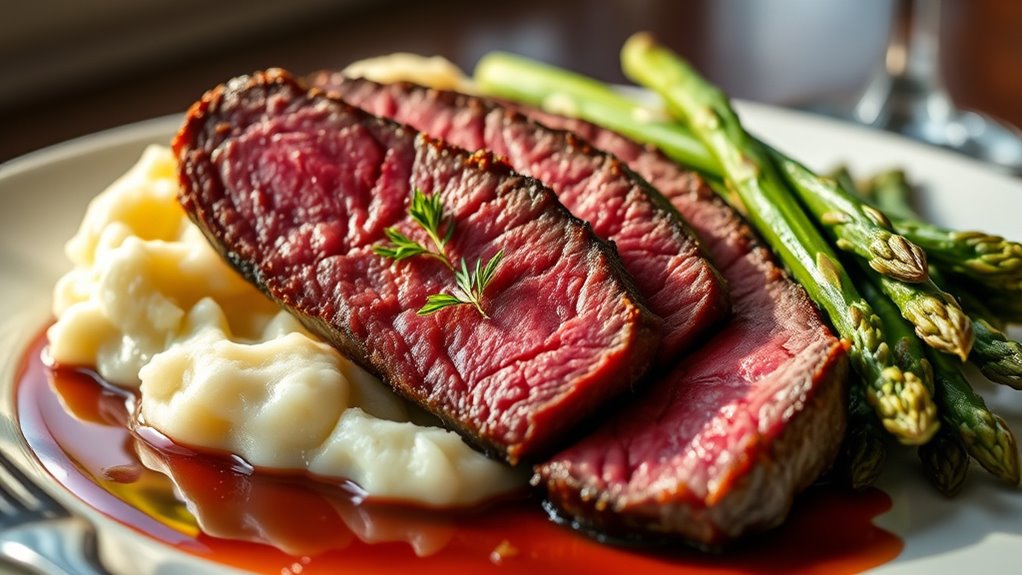
How many calories does a typical slice of roast beef pack? If you pick up a slice weighing about 1.8 to 2 ounces, you’re looking at roughly 115 to 125 calories. The calories mainly come from protein and fat, with hardly any carbs involved.
If your slice is thinner, say around 56 grams, expect it to have about 56 calories. On the other hand, a standard 4-ounce serving contains about 160 calories. Keep in mind that the thickness and weight of the slice directly affect the calories it contains—thicker slices pack more calories, while thinner ones have fewer.
What Affects Roast Beef’s Calories?
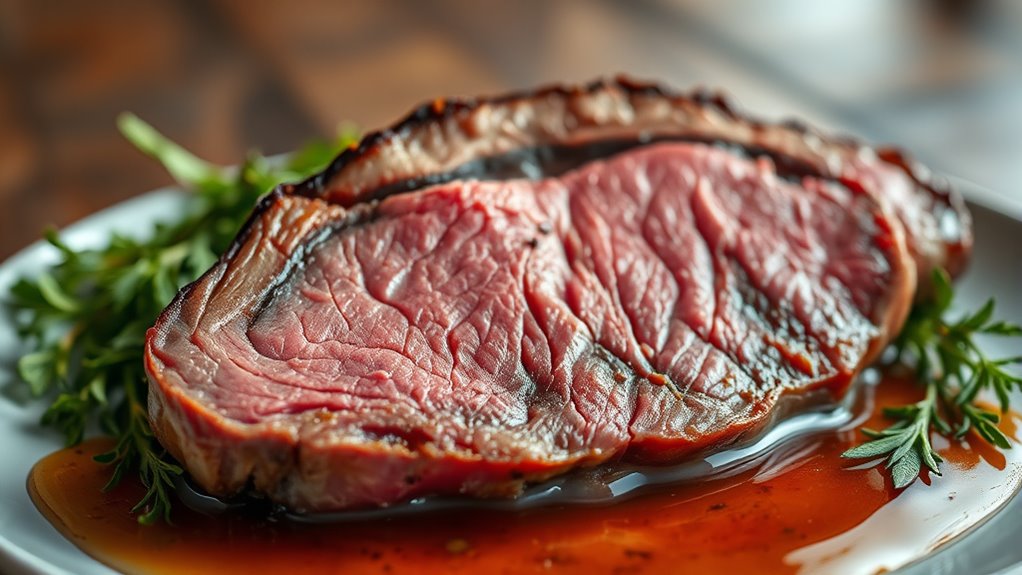
The calories in your roast beef slice don’t just depend on its size—they also vary based on factors like the cut of meat and cooking method. For instance, fattier cuts such as ribeye pack more calories than leaner cuts like sirloin. How you cook your roast beef matters too; roasting usually keeps calories lower, but frying adds calories through extra fats or oils.
The thickness and weight of your slice directly affect calorie content, so thicker slices mean more calories. Additionally, added seasonings, marinades, or glazes, especially those containing sugars or fats, can increase calories. By understanding these factors, you can better estimate the calorie content of your roast beef slice and make choices that fit your dietary goals.
Roast Beef Macronutrients by Serving Size
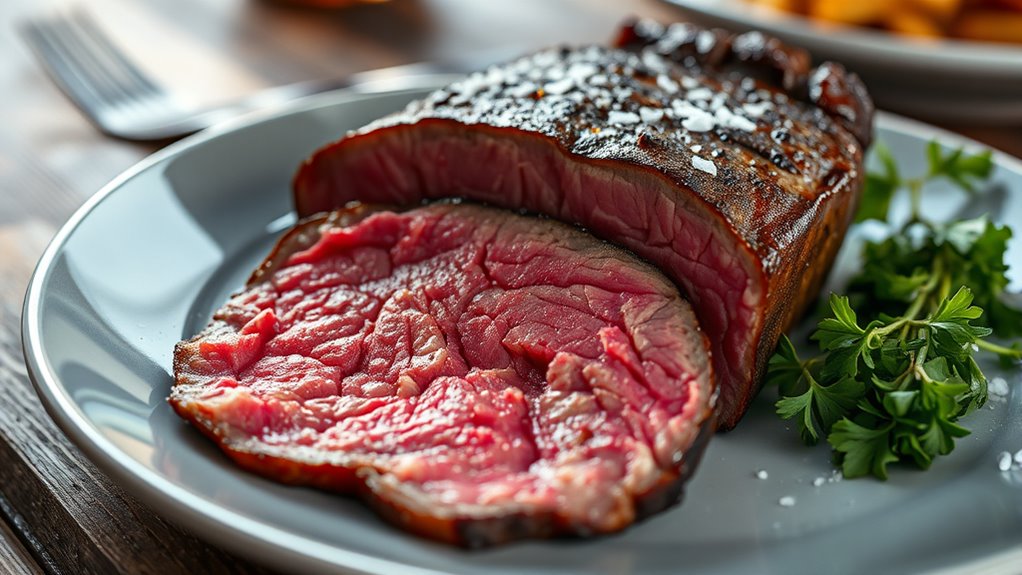
When you look at roast beef by serving size, protein makes up the largest portion of its calories, with fat contributing a smaller share and carbohydrates nearly absent.
Understanding the fat breakdown can help you gauge how much saturated versus unsaturated fat you’re consuming. Paying attention to these macronutrients lets you manage your intake more effectively.
Protein Content Per Serving
Because you want to fuel your body with quality protein, roast beef stands out as a great choice. Its rich protein content fits well into your daily diet, supporting muscle maintenance and overall nutrition. A typical 2-ounce (56g) slice delivers about 10-12 grams of protein, making it a potent source of this essential macronutrient.
When you eat a standard 4-ounce (113g) serving, you get roughly 23-24 grams of protein, which accounts for 18-20% of an average adult’s daily protein needs. This makes roast beef a smart option, especially if you follow a low-carb, high-protein diet.
Here’s a quick look at its protein content per serving size:
- 2-ounce slice: 10-12 grams of protein
- 100 grams: ~21 grams of protein
- 4-ounce serving: 23-24 grams of protein
Fat Composition Breakdown
Although roast beef is prized for its protein, you’ll find it also contains a modest amount of fat that contributes to its flavor and texture. When examining the fat composition of roast beef, a typical 13.8-gram slice contains about 0.5 grams of total fat.
Per 100 grams, roast beef has roughly 1.3 grams of saturated fat, alongside 1.5 grams of monounsaturated and 0.27 grams of polyunsaturated fats. Most of the fat is saturated, which adds to its juiciness but should be consumed in moderation.
Nutrition facts show that a 56-gram serving contains approximately 3.64 grams of fat, making roast beef a relatively lean protein source. Understanding this fat composition helps you balance flavor with healthier eating choices.
Carbohydrates And Sugars
Since roast beef contains only about 0.5 grams of carbohydrates per slice, you won’t have to worry about it impacting your carb intake considerably. The carbohydrates present come mostly from natural sugars like glucose, fructose, lactose, and galactose, each in trace amounts less than 0.1 grams per slice. This minimal carbohydrate content makes roast beef an excellent choice if you’re following a low-carb or ketogenic diet.
Additionally, the sugars are naturally occurring, so they don’t cause a significant glycemic response. You’ll also find that fiber is practically nonexistent in roast beef, so it doesn’t contribute to your carbohydrate totals.
Here’s a quick look at roast beef carbohydrates and sugars:
- About 0.5 grams of carbohydrates per slice
- Less than 0.1 grams of natural sugars per slice
- Negligible fiber content, keeping carbs low
How Much Fat and Cholesterol Are in a Slice of Roast Beef?
A single slice of roast beef contains about 3.64 grams of total fat, including 1.431 grams of saturated fat and roughly 1.545 grams of monounsaturated fat, which is considered a healthier fat. When you eat a slice, you’re getting a moderate amount of fat that balances taste and nutrition.
Saturated fat, while present, remains relatively low, helping you manage your fat intake. Additionally, a standard slice contains about 16 milligrams of cholesterol, which is also moderate. Keep in mind, fat and cholesterol levels can vary depending on the cut and how the beef is prepared.
Calories: Deli vs. Home-Cooked Roast Beef
When you compare deli roast beef to home-cooked slices, you’ll notice a big difference in calories. Deli slices tend to be thinner and less dense, while home-cooked pieces are thicker and often pack more calories.
Factors like cut, preparation, and added ingredients all play a role in how much energy you’re actually getting.
Calorie Comparison Overview
Although deli roast beef slices are thinner and smaller, you’ll find they contain about 56 calories each, while a typical 3-ounce home-cooked portion packs around 125 calories. This means home-cooked roast beef delivers roughly 2.2 times more calories per serving.
The difference mainly comes from the larger portion size and possible added fats or seasonings in homemade versions. When choosing between deli and home-cooked roast beef, understanding these calorie variations can help you control your intake better.
- Deli slices: ~56 calories each, smaller and thinner
- Home-cooked portion: ~125 calories per 3 ounces
- Calorie difference influenced by serving size and preparation methods
Knowing this lets you make smarter dietary choices based on your calorie needs.
Factors Influencing Calories
Because preparation methods and portion sizes vary, the calories in roast beef slices can differ markedly between deli and home-cooked options. When you choose deli roast beef, the slices tend to be thinner and less calorie-dense, while home-cooked versions often have added fats and thicker cuts, increasing the calories.
| Type | Serving Size | Calories Range |
|---|---|---|
| Deli Roast Beef | 1-2 ounces | 30-56 calories |
| Home-Cooked | 3 ounces | 80-115 calories |
| Factors | – | Thickness, fat content |
Knowing these factors helps you manage calorie intake better, whether you grab deli slices or prepare your own roast beef at home.
What Vitamins and Minerals Does Roast Beef Provide?
If you want to boost your intake of essential nutrients, roast beef delivers a powerful punch of vitamins and minerals. It’s especially rich in vitamin B12, providing about 96% of your daily value per serving. Along with vitamins, roast beef offers key minerals that support various body functions.
Here are some important nutrients you get from roast beef:
- Vitamin B12: Essential for nerve health and red blood cell formation.
- Iron and Zinc: Iron helps oxygen transport, while zinc supports your immune system.
- Potassium: Fundamental for muscle and nerve function, with around 734 mg per serving.
Plus, you get small amounts of calcium, magnesium, and other B-vitamins, rounding out its nutrient profile effectively.
Is Roast Beef High in Protein and Low in Carbs?
You’ll find that roast beef is packed with protein, offering about 21 grams per 4-ounce serving. It’s also very low in carbs, usually under 1 gram, making it ideal for low-carb diets.
This combination supports muscle growth and helps you stay on track with keto or Atkins plans.
Protein Content Overview
How much protein do you get from a slice of roast beef? A typical 3-ounce slice offers about 21 grams of protein, making it a solid choice if you’re aiming to boost your protein intake. This efficient protein source supports muscle building and maintenance, especially with a protein-to-calorie ratio of roughly 16 grams per 100 calories.
Plus, roast beef contains less than 1 gram of carbohydrates, so it fits well into low-carb and ketogenic diets. Here’s a quick overview:
- High protein content: ~21 grams per 3-ounce slice
- Low in carbohydrates: under 1 gram per serving
- Supports satiety and weight management due to its protein-to-calorie efficiency
Including roast beef can help you meet your protein needs without extra carbs.
Carbohydrate Levels Explained
Roast beef not only packs a hefty protein punch but also keeps carbohydrates to a minimum, making it an excellent choice for those watching their carb intake. Typically, a serving contains only about 0.5 grams of carbohydrate, which is negligible compared to its protein content of roughly 21 grams per 4-ounce portion.
This low carbohydrate level means roast beef won’t cause spikes in your blood sugar, as its glycemic index is fundamentally zero. The small amount of carbohydrates present comes mainly from natural sugars and trace fiber, which don’t add up to much.
Benefits For Low-Carb Diets
Wondering if roast beef fits into your low-carb diet? It definitely does. Roast beef is high in protein and very low in carbs, making it an excellent choice for anyone managing carbohydrate intake. Each 3-ounce serving offers about 21 grams of protein and less than 1 gram of carbohydrates, providing a nutrient-dense way to support muscle maintenance and blood sugar control.
Plus, it’s low in fat and cholesterol, which helps keep your diet lean.
Here’s why roast beef benefits your low-carb diet:
- Supplies high protein to meet daily nutrient needs
- Contains negligible carbs, ideal for carb restriction
- Offers low fat and cholesterol for lean nutrition
Including roast beef helps you stay on track and nourished.
How Does Roast Beef Fit Into Low-Calorie and Keto Diets?
Because it’s low in calories and carbs, a 2-ounce slice of roast beef fits well into both low-calorie and keto diets. With about 115 calories and only 0.6 grams of carbohydrates per serving, it provides a satisfying, nutrient-dense option without disrupting ketosis or calorie goals. You’ll also get around 16 grams of protein, which supports muscle maintenance and keeps you feeling full longer.
Plus, roast beef contains healthy fats like monounsaturated and polyunsaturated fats that align perfectly with keto fat intake needs. Just keep in mind the moderate sodium and cholesterol levels; managing portion size helps you stay on track with health goals. Overall, roast beef offers a balanced way to enjoy flavorful protein while sticking to your low-calorie or keto plan.
Does Prepackaged Roast Beef Have More Sodium and Calories?
If you rely on prepackaged roast beef for convenience, you might be consuming more sodium and calories than you realize. These ready-to-eat slices often contain added sodium and preservatives to boost flavor and extend shelf life.
Prepackaged roast beef often contains added sodium and preservatives, increasing sodium and calorie intake beyond fresh options.
As a result, a single slice can pack about 380mg of sodium and roughly 56 calories, which is higher compared to freshly prepared roast beef.
Keep in mind:
- Sodium levels increase during processing to enhance taste and preservation.
- Calorie counts may rise if fillers or sauces are added.
- Nutrition labels reveal these higher sodium and calorie contents compared to homemade or deli versions.
Tips for Choosing Lower-Calorie Roast Beef Options
When selecting roast beef, choosing leaner cuts like sirloin or eye of round can help you reduce both total and saturated fat intake, which lowers the calorie content per serving. Opt for thin slices and smaller servings to control calories naturally.
Always check nutrition labels or ask about the nutrition facts to find lower-fat, minimally processed meat options. Pair your roast beef with vegetables or salads to balance your meal’s total calories.
| Cut | Calories per Serving | Fat Content (g) |
|---|---|---|
| Sirloin | 150 | 5 |
| Eye of Round | 140 | 4 |
| Brisket | 230 | 12 |
| Chuck | 210 | 10 |
| Round Tip | 160 | 6 |
Frequently Asked Questions
How Many Calories Are in a Single Slice of Roast Beef?
You’ll find about 50 to 60 calories in a single thin slice of roast beef, depending on thickness and cut.
It’s mainly protein and fat, so keep that in mind when counting your daily intake.
Is Roast Beef the Healthiest Deli Meat?
Roast beef can be one of the healthiest deli meats due to its high protein, lower sodium, and beneficial nutrients like iron.
However, you should still watch portions and compare it to other options based on your dietary needs.
Is Roast Beef High in Calories?
Roast beef isn’t a calorie culprit; it’s a lean, low-calorie choice. You’ll find it fits nicely into your calorie-conscious cuisine, offering protein power without packing on pounds or pushing your limits.
What’s the Lowest Calorie Deli Meat?
The lowest calorie deli meats you’ll find are turkey or chicken breast, usually around 25-30 calories per 2-ounce slice.
Choosing extra lean or low-fat options helps you keep calories down while enjoying deli meat.
Conclusion
Now that you know how many calories are in a slice of roast beef, you can make smarter choices, enjoy richer flavors, and stay on track with your health goals. Whether you’re picking deli cuts or roasting at home, focusing on lean options, watching portion sizes, and checking labels will help you eat well without guilt.
Embrace balance, savor every bite, and fuel your body with delicious, nutritious roast beef that fits your lifestyle perfectly. Incorporating calorie-conscious roast beef into your diet allows you to enjoy this flavorful protein while managing your calorie intake effectively. Keep these tips in mind to make the most of your roast beef meals and maintain a healthy, satisfying diet.