How Long Will Beef Broth Keep in the Fridge Guide
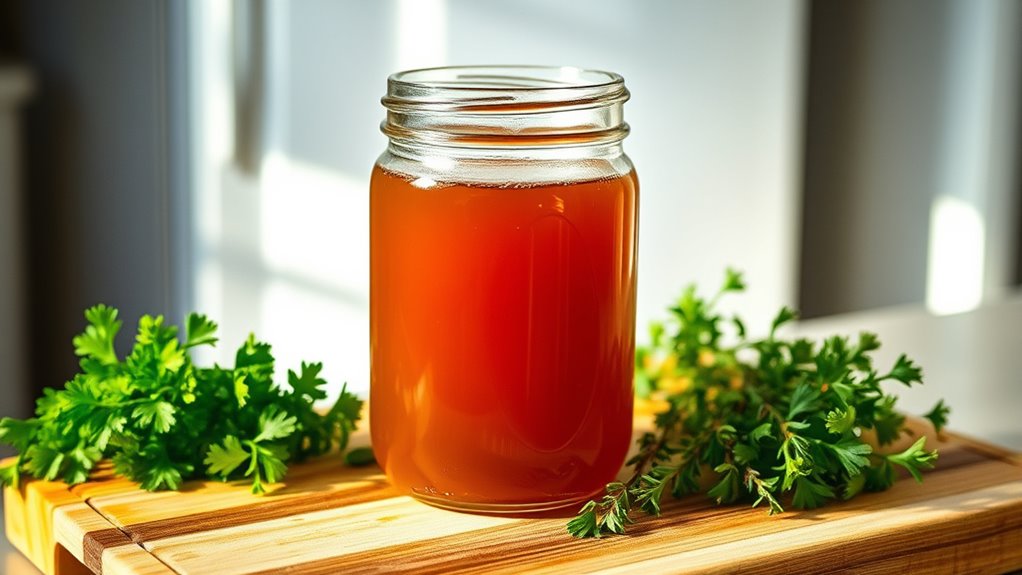
You should use beef broth within 3 to 5 days after opening to keep it fresh and safe. Proper storage is key to maintaining the quality of your beef broth. Always store it in an airtight container in the coldest part of your fridge at or below 40°F (4°C).
Watch for sour smells, color changes, or sliminess, which indicate that it’s gone bad. If you won’t finish it soon, freeze portions for longer storage. Freezing helps prevent spoilage and extends the shelf life of your broth.
There’s more to know about preventing spoilage and proper thawing to get the best from your broth. Following these tips ensures your beef broth stays fresh and delicious for your recipes.
How Long Does Beef Broth Last in the Fridge After Opening?
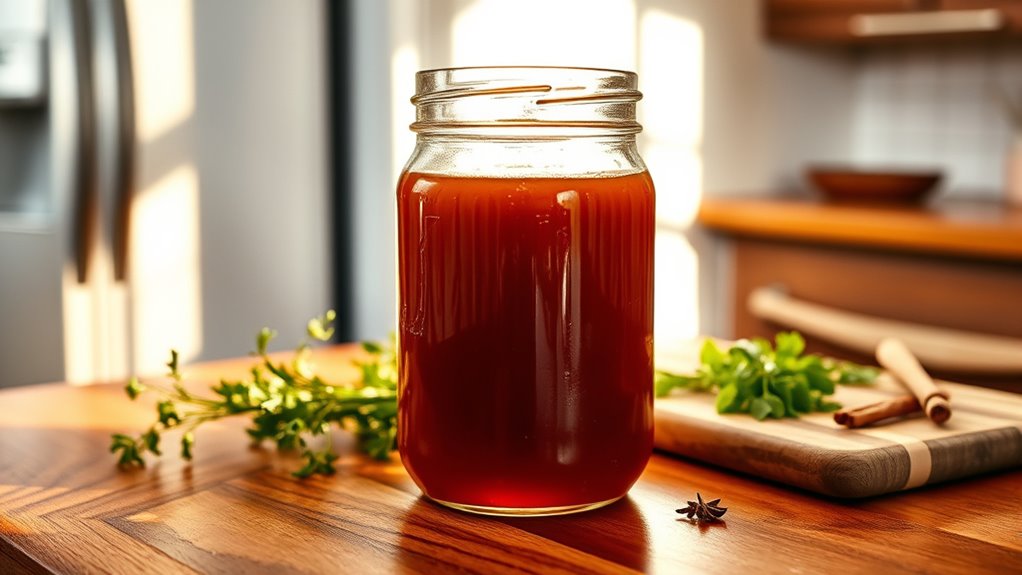
Once you’ve opened a container of beef broth, you should keep it in the fridge and use it within 3 to 5 days to guarantee safety and quality. For proper storage, make sure the beef broth is sealed tightly in an airtight container and refrigerated at or below 40°F (4°C). This helps maintain its shelf life and prevents spoilage.
Some packaging may indicate a longer shelf life—up to 14 days—but always check the label to be sure. If you don’t plan to use the broth within this timeframe, freezing it is a better option. Proper refrigeration slows bacterial growth, keeping your beef broth fresh and safe to consume during this period.
Storing it correctly is key to avoiding waste and foodborne illness.
Signs Your Beef Broth Has Gone Bad
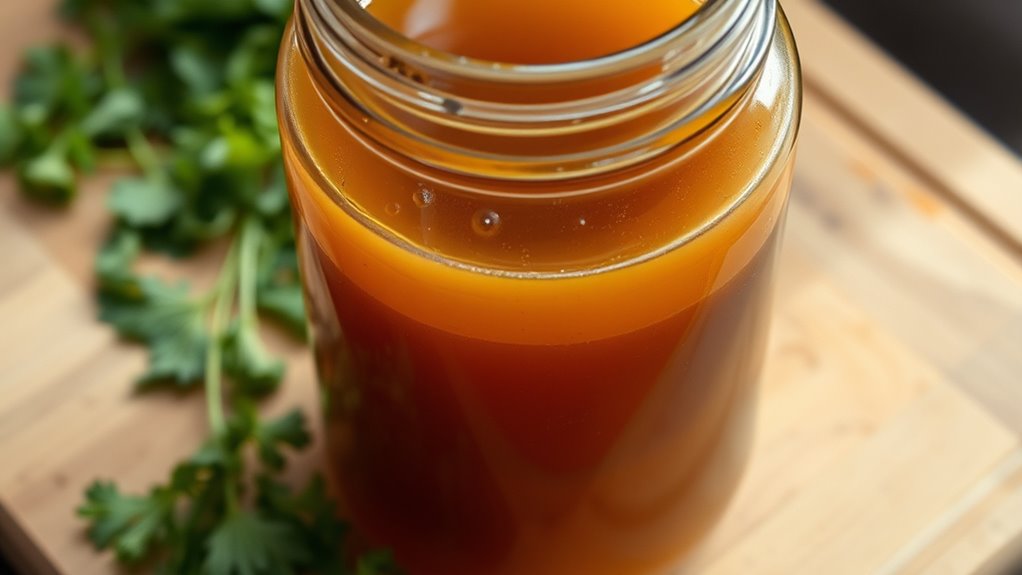
Even if you store your beef broth properly and use it within the recommended timeframe, it’s important to watch for signs that it’s no longer safe to consume. Key signs of spoilage include a sour or rancid odor that’s hard to miss. Check for any color change, such as darkening or cloudiness, which can indicate the broth is going bad.
You might also notice sediment, slime, or mold on the surface—clear red flags that it’s time to discard the broth. If you taste it and detect an off-taste or bitterness, don’t use it. These signs of spoilage mean your beef broth could cause foodborne illness, so always err on the side of caution and throw it out if you spot any of these warning signals.
Why Does Beef Broth Spoil Quickly?
Because beef broth contains rich nutrients and natural proteins from bones and connective tissues, bacteria find it an ideal place to thrive. This makes beef broth highly perishable. Once opened, bacteria quickly contaminate the broth, especially if storage conditions aren’t properly refrigerated.
Without preservatives, these bacteria multiply rapidly, accelerating spoilage. The broth’s nutrients serve as a perfect food source for bacterial growth, causing sour odors, discoloration, and even mold to develop fast. Exposure to air and moisture further encourages bacterial activity, compromising the broth’s safety and quality.
Proper storage is essential because even slight temperature fluctuations can speed up spoilage. Understanding why beef broth spoils quickly helps you recognize the importance of timely use and careful refrigeration.
How to Prevent Beef Broth Spoilage
To keep your beef broth fresh, store it in airtight containers and refrigerate it quickly at or below 40°F.
Always use clean utensils to avoid introducing bacteria each time you handle it.
Taking these steps helps prevent spoilage and keeps your broth safe to enjoy.
Proper Refrigeration Techniques
When you refrigerate beef broth promptly—within two hours of cooking or opening—you substantially reduce the risk of bacterial growth. For proper storage, always use an airtight container to limit air exposure and slow spoilage. Keep your fridge temperature at or below 40°F (4°C) and place the broth in the coldest spot, usually the back shelf, not the door.
Label the container with the storage date to ensure food safety and discard the broth after 3 to 5 days. These refrigeration techniques help maintain broth quality and prevent spoilage.
| Step | Action | Reason |
|---|---|---|
| Store promptly | Refrigerate within 2 hours | Limits bacterial growth |
| Use airtight container | Seal broth tightly | Minimizes air exposure |
| Optimal placement | Coldest fridge shelf | Maintains consistent cold temp |
Avoiding Contamination Risks
Although storing beef broth properly is essential, you also need to prevent contamination to keep it safe. Always use airtight containers to shield your broth from airborne bacteria and mold spores that increase contamination risks. Refrigerate the broth promptly—within two hours of cooking or opening—to slow microbial growth.
Make sure your refrigerator stays at or below 40°F (4°C) for effective refrigerated storage. When handling broth, use clean utensils and avoid double-dipping to prevent introducing new bacteria. Watch for spoilage signs like off smells, unusual color, or mold, and discard the broth immediately if you notice any.
How to Store Beef Broth Safely
To keep your beef broth safe, always store it in an airtight container and place it in the coldest part of your fridge at or below 40°F.
If you want to keep it longer, freezing is a great option, but make sure to thaw it properly before use.
Following these steps will help maintain freshness and prevent spoilage.
Proper Refrigeration Practices
Since beef broth can spoil quickly, you should refrigerate it within two hours of cooking or opening. For proper refrigeration, store the broth in an airtight container to prevent bacterial contamination and maintain freshness. Use clean utensils to transfer the broth, avoiding double-dipping to keep bacteria out.
Keep the container in the coldest part of your fridge—ideally the back—where the temperature stays at or below 40°F (4°C). This stable temperature is vital for food safety and helps slow bacterial growth. Don’t forget to label and date your broth’s container so you can track its storage time and guarantee you use it within the safe period.
Following these refrigeration and storage practices will keep your beef broth fresh and safe to enjoy.
Freezing And Thawing Methods
Refrigerating your beef broth properly helps keep it fresh for a few days, but freezing is the best way to extend its shelf life. To freeze beef broth effectively, cool it to room temperature first, then pour it into small, airtight containers or ice cube trays. Make sure to leave some headspace in each container to allow for expansion and prevent leaks.
Label each container with the date to keep track of storage time. Whether you’re freezing homemade broth or store-bought broth, use it within 3 to 6 months for the best quality.
When thawing, place the frozen broth in the refrigerator for 24-48 hours or warm it gently on the stove. Avoid refreezing thawed broth to maintain safety and flavor.
Can You Freeze Beef Broth to Extend Its Shelf Life?
If you want to extend the shelf life of your beef broth, freezing is an excellent option. To guarantee the best freezing storage, cool the broth properly before transferring it into airtight containers or ice cube trays. Leaving some space in the containers is important to allow for expansion and prevent cracking.
When frozen, beef broth can last up to six months while maintaining its flavor and nutritional quality. To thaw, simply place the broth in the refrigerator for 24 to 48 hours or warm it gently in a saucepan. Avoid refreezing thawed broth, as this can affect quality.
How to Safely Thaw and Reheat Frozen Beef Broth
When you’re ready to use frozen beef broth, thaw it slowly in the refrigerator for 24 to 48 hours to maintain quality and safety.
For faster thawing, use your microwave’s defrost setting but reheat immediately to prevent spoilage.
Always reheat broth in a saucepan over medium heat until it boils for at least one minute to ensure safety.
Avoid refreezing unless it’s boiled first. Check for off odors or unusual appearance before reheating or consuming.
| Thaw Method | Time Required | Safety Tip |
|---|---|---|
| Refrigerator | 24-48 hours | Slow thaw preserves quality |
| Microwave Defrost | Few minutes | Reheat immediately after thawing |
| Reheating | Until rolling boil | Boil at least 1 minute for safety |
Frequently Asked Questions
Does Beef Broth Go Bad in the Fridge?
Yes, beef broth does go bad in the fridge. You should use it within 3 to 5 days, and always check for sour smell or mold before using it.
If it seems off, toss it immediately.
What Are Signs of Spoilage in Beef Broth?
You expect savory aroma, but if beef broth smells sour or looks cloudy with mold or slime, don’t taste it.
Dark colors, sediment, or off flavors tell you it’s spoiled—time to toss it out immediately.
How to Tell if Beef Bone Broth Has Gone Bad?
You’ll know beef bone broth has gone bad if it smells sour, changes color, develops mold, feels slimy, or tastes off.
If you notice any of these signs, toss it to stay safe.
How to Tell if Broth Is Bad?
You might not want to take a chance—if your broth smells sour, looks cloudy, or has mold, it’s gone bad.
Don’t taste it if it looks off; trust your senses and toss it immediately.
Conclusion
Now that you know how long beef broth lasts and how to store it properly, you’re ready to keep your kitchen smelling like a five-star restaurant every day! Don’t let spoiled broth ruin your meals—watch for signs of spoilage and store it right to extend its life.
If you freeze it, you can enjoy that rich flavor anytime without worry. Trust me, with these tips, your beef broth will last longer than a superhero’s cape!
By following proper storage methods, you can maximize the shelf life of your beef broth in the fridge. Remember, keeping beef broth fresh not only enhances your dishes but also helps prevent food waste.