How Long to Soak Corned Beef to Remove Salt
You should soak corned beef in cold water for about 4 to 12 hours to remove excess salt effectively. Changing the water every few hours helps speed up the process. This is essential for achieving the right balance of flavor and tenderness in your corned beef.
Longer soaks are better for thicker or saltier cuts, while shorter soaks are sufficient if you plan to cook with added flavors. Avoid using hot water, as it can toughen the meat and diminish quality.
After soaking, rinse the corned beef thoroughly and dry it well before cooking. Keep reading to discover tips on timing, water changes, and how to maximize taste and texture for the best results.
Why Does Soaking Corned Beef Reduce Excess Salt?
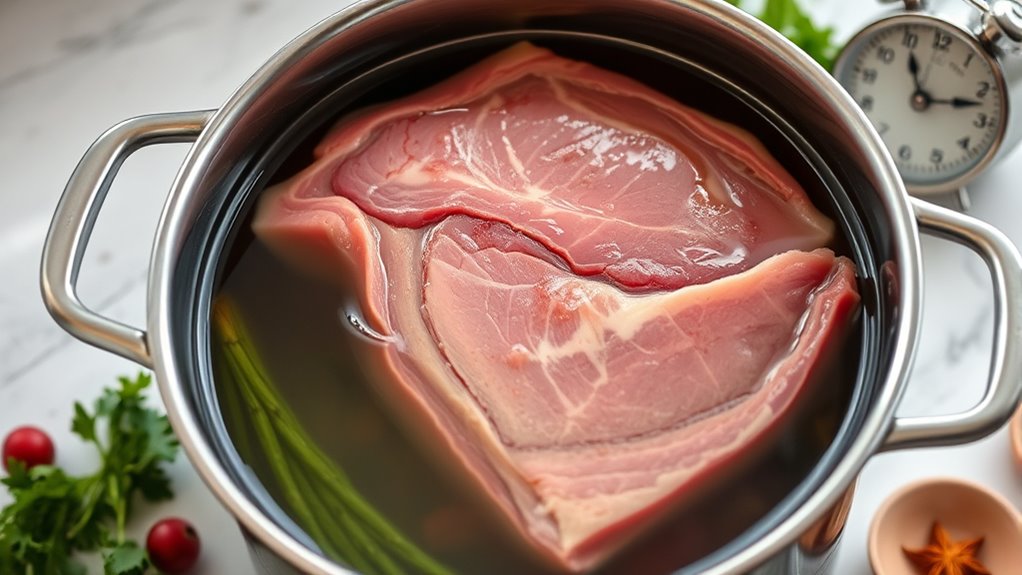
Because soaking corned beef in water creates a salt concentration difference, salt naturally moves out of the meat and into the water through diffusion and osmosis. When you soak the meat, the high concentration of salt inside it flows toward the lower-concentration water, reducing the overall salt content in the beef.
This process depends on maintaining that difference, so changing the water regularly helps keep salt moving out. Soaking not only lowers saltiness but also improves flavor and texture by removing excess salt that can overpower the taste.
How Long Should You Soak Corned Beef for Best Results?
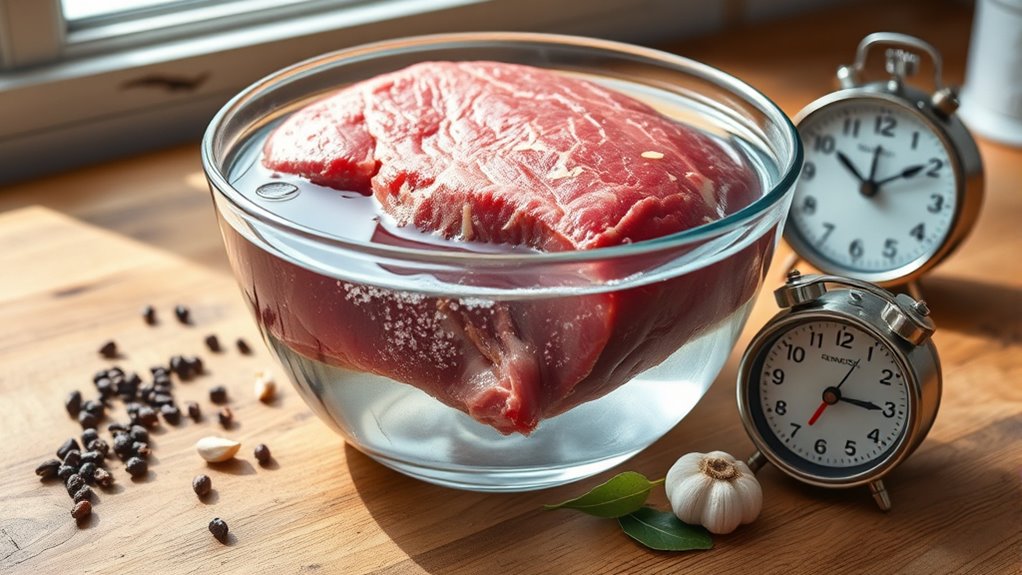
Soaking corned beef effectively depends on how long you leave it in water and how often you change that water. To achieve the best desalting results, you can soak the meat anywhere from 3 hours to overnight, depending on its thickness and initial saltiness. Here’s a simple guide:
| Soaking Time | Salt Reduction | Notes |
|---|---|---|
| 3-4 hours | Moderate | Suitable for thinner cuts |
| 8-12 hours | Significant | Ideal for thorough desalting |
| Up to 24 hours | Maximum | Requires refrigeration |
Remember to keep the meat refrigerated during longer soaks. Taste the water periodically to decide when your corned beef has reached the desired salt level before cooking. This ensures your corned beef is perfectly balanced in flavor.
How Often Should You Change the Water When Soaking Corned Beef?
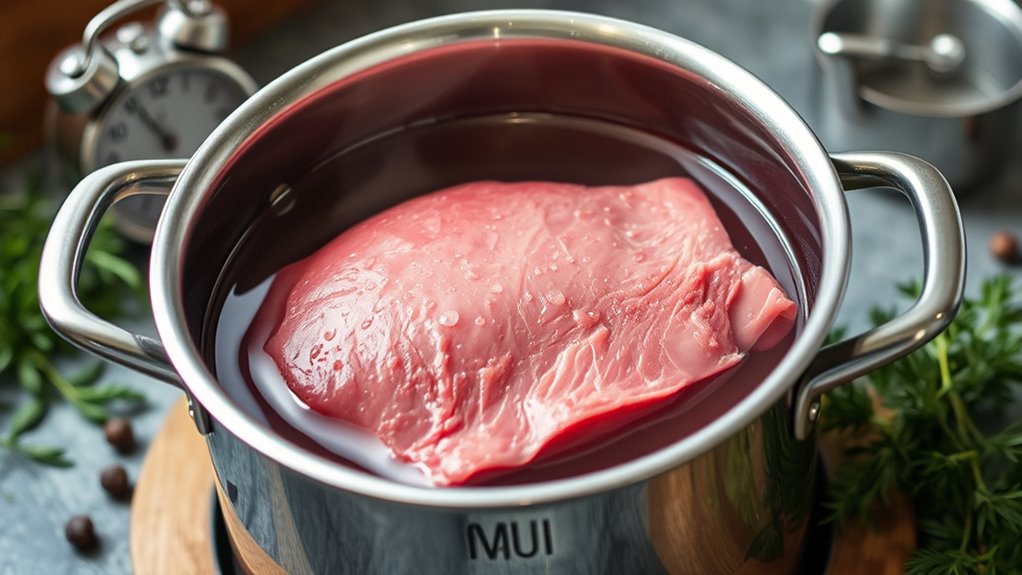
When you soak corned beef, changing the water regularly plays a key role in removing excess salt effectively. Frequent water changes maintain a concentration gradient that encourages salt to diffuse out of the meat.
Here’s how often you should change the water for ideal salt removal:
- Change the water every 1 to 2 hours during shorter soaking sessions.
- For overnight soaking, change the water at least 3 to 4 times.
- If using ice water, replace it every 2 to 3 hours to keep it cold and effective.
- More frequent water changes lead to better salt removal and a less salty final product.
How Can You Tell When Your Corned Beef Is Desalted Enough?
You can tell your corned beef is desalted enough when it looks less salty and tastes balanced. Try rinsing and soaking, then taste a small piece to check for leftover saltiness.
If it still tastes too salty, keep soaking and changing the water until the flavor is just right.
Visual Indicators Of Desalting
How can you tell if your corned beef has been desalted enough? While taste is key, visual cues during desalting can guide you. Look for these signs:
- The soaking water’s saltiness visibly lessens, turning clearer as salt diffuses from the meat.
- The surface of the beef appears less coated with brine crystals or salt residue.
- The meat’s color becomes more uniform, indicating even salt removal.
- No excessive bubbling or foaming in the water, which can signal ongoing salt leaching.
These visual indicators help you gauge desalting progress before taste testing. If the water remains cloudy or heavily salted and the meat looks coated, continue soaking and changing the water.
Proper visual monitoring ensures your corned beef won’t end up overly salty or with a harsh aftertaste.
Taste Testing Methods
Visual cues give a helpful starting point, but tasting the corned beef remains the most reliable method to determine if it’s desalted enough. For accurate taste testing, try rubbing a small slice with your finger and sampling it to judge the saltiness. If it still tastes too salty, soak it longer and change the water periodically.
Remember, saltiness decreases gradually, so taste testing throughout soaking helps you decide when to stop. However, don’t soak corned beef, especially nitrate-free, for too long to avoid bacterial risks or flavor loss. By consistently checking the flavor with quick salt taste tests, you’ll ensure the meat reaches your preferred saltiness without compromising safety or taste.
This hands-on approach guarantees perfectly balanced corned beef every time.
Does Water Temperature Affect Salt Removal When Soaking Corned Beef?
Although hot water can speed up salt diffusion initially, soaking corned beef in cold or ice water works better to remove salt without toughening the meat. Water temperature plays a key role in salt removal effectiveness.
Hot water may cause salt to penetrate deeper, making the meat tougher and unevenly desalinated. Conversely, cold water promotes gradual, controlled salt leaching and reduces bacterial risks.
To optimize salt removal, consider these points:
- Use cold or ice water for soaking.
- Change the water frequently to maximize salt extraction.
- Avoid warm or hot water to prevent toughening.
- Allow longer soaking times with colder water for best results.
How Do Soaking Times Differ for Nitrate-Free vs. Nitrated Corned Beef?
When soaking corned beef, the type of curing agent used greatly influences the soaking duration you’ll need. Nitrate-free corned beef typically requires about 12 hours of soaking to effectively remove excess salt. If you soak it for only 3-4 hours, the salt will remain more concentrated, resulting in a saltier final dish.
On the other hand, nitrated corned beef can handle much longer soaking times—up to 72 hours—because the nitrates help retain moisture and flavor while inhibiting bacterial growth. During soaking, especially for nitrate-free beef, you should change the water several times to maximize salt removal.
Can Soaking Affect Corned Beef’s Texture or Flavor?
When you soak corned beef, it can change both its texture and flavor. Soaking too long might make the meat softer or even mushy, while also washing out some of its saltiness and rich taste.
Finding the right soaking time helps keep the beef tender without losing its signature flavor.
Texture Changes During Soaking
If you soak corned beef, you’ll notice it loses some saltiness and becomes more tender as the water softens the meat’s fibers. Soaking directly impacts the texture, making it less firm over time.
Here’s what you should know about texture changes during soaking:
- Short soaking preserves the beef’s chewy, firm texture.
- Moderate soaking softens the meat, enhancing tenderness.
- Extended soaking risks turning the beef mushy, losing structure.
- Proper soaking balances salt removal with maintaining texture.
Flavor Impact Of Soaking
Although soaking corned beef primarily reduces its saltiness, it also affects the overall flavor and texture. When you soak the meat, the salt leaches out, but so do some of the spices and natural umami flavors. Over-soaking can leave the beef tasting milder and less robust.
To balance salt removal with flavor preservation, soak in cold water and change it frequently. This helps maintain the meat’s rich flavor while reducing saltiness.
| Soaking Duration | Flavor Impact | Texture Impact |
|---|---|---|
| 30 minutes | Slightly salty | Firm |
| 2 hours | Balanced salt/flavor | Slightly softer |
| 4+ hours | Mild flavor | Softer, less firm |
| Overnight | Bland, diluted | Much softer |
Soaking affects flavor and texture, so monitor soaking time carefully.
How Can You Combine Soaking With Other Salt-Reducing Techniques?
Because soaking alone might not fully remove salt from corned beef, you can combine it with other techniques to better control saltiness. This way, you manage the salt level more effectively without compromising flavor or texture.
Here’s how to enhance salt removal beyond soaking:
- Use ice water for soaking and change it frequently to maximize salt extraction.
- Add raw potatoes during cooking; they can absorb some residual salt.
- Opt for shorter soaking times paired with longer cooking or braising to balance salt reduction and tenderness.
- Incorporate fresh spices and adjust cooking liquids to mask or balance remaining saltiness.
What Are the Best Steps to Prepare Corned Beef After Soaking?
Once you’ve soaked your corned beef, start by rinsing it thoroughly under cold water to wash away any remaining brine and excess salt. Pat the meat dry with paper towels to ensure proper browning and to prevent steaming during cooking. Trim off any excess fat for a cleaner presentation and better flavor absorption.
Because soaking can reduce seasoning intensity, consider adding fresh spices or herbs to enhance the taste. You can then choose your preferred cooking method—boiling, braising, or roasting—to achieve ideal tenderness and flavor.
Following these steps after soaking ensures your corned beef is balanced in saltiness and rich in flavor, making your meal both satisfying and delicious.
Frequently Asked Questions
Can You Soak Corned Beef Too Long?
Yes, you can soak corned beef too long. Doing so risks bacterial growth, drains flavor, and makes the meat waterlogged, ruining texture and browning.
Limit soaking to 12 hours and keep an eye on it.
What Happens if You Don’t Rinse Corned Beef Before Cooking?
If you don’t rinse corned beef, you’ll enjoy a salt festival in every bite—perfect if you love over-seasoned meat.
But really, you’ll end up with a dish that’s way too salty and overwhelming.
How to Fix an Over Salted Brisket?
You can fix over-salted brisket by soaking it in cold water for 3-4 hours, changing the water occasionally.
Rinse it well afterward, then cook in fresh water or broth to help reduce saltiness further.
Does Rinsing Corned Beef Reduce Sodium?
Imagine you rinse corned beef for 10 minutes; yes, it reduces some sodium by washing off surface salt.
But don’t expect it to remove all salt, especially if it’s heavily cured or brined.
Conclusion
Soaking your corned beef isn’t just about time—it’s about finding that perfect balance between salty and savory. Change the water regularly, watch the clock, and trust your taste buds.
But here’s the twist: sometimes, a little saltiness is exactly what makes it unforgettable. So don’t rush the process—master the soak, combine it with smart prep, and get ready to savor a corned beef that’s just right.
Ready to take the plunge? Remember, knowing how long to soak corned beef to remove salt is key to achieving that ideal flavor.