How Long to Smoke Beef Ribs at 300 in 7 Essential Steps
To smoke beef ribs at 300°F, start by selecting quality ribs with good marbling. Trim any excess fat to ensure even cooking and better flavor. Season the ribs generously and allow them to rest before smoking.
Preheat your smoker to 300°F and place the ribs inside. Smoke the ribs for about 4.5 to 6 hours, keeping a close eye on their temperature. Manage the stall by wrapping the ribs if necessary to keep the cooking process steady.
Aim for an internal temperature between 206°F and 210°F for perfectly tender ribs. Once done, let the ribs rest before slicing to retain their juices.
Follow these essential steps carefully, and you’ll master juicy, tender beef ribs with rich flavor—there’s always more to explore to perfect your smoking technique.
Choose the Right Beef Ribs for Smoking at 300°F
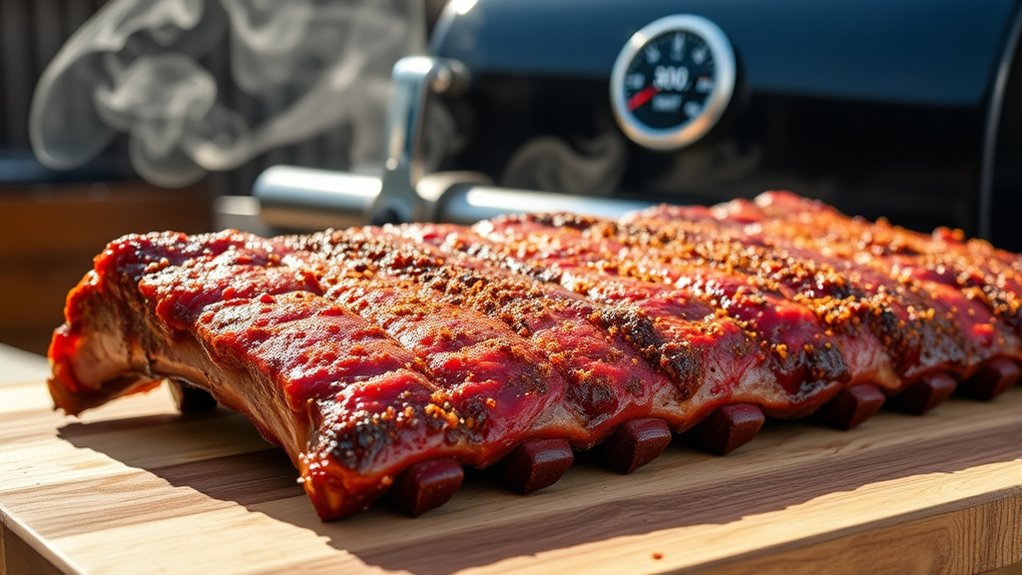
When you smoke beef ribs at 300°F, choosing the right cut is essential for the best results. Select beef plate ribs, also known as beef short ribs, since they offer excellent flavor and size for smoking. Avoid boneless or small bone-in short ribs, as they won’t hold up well during the long smoking process.
Look for ribs with a full plate of three large bones, typically ribs 6-8, to get the best meat-to-bone ratio. Make sure the ribs have a generous layer of meat on top without excess fat or silver skin, which can hinder smoke absorption.
Buying from a butcher or specialty meat shop is your best bet, as grocery store short ribs are often trimmed and less ideal for smoking.
Prepare and Season Your Beef Ribs Properly
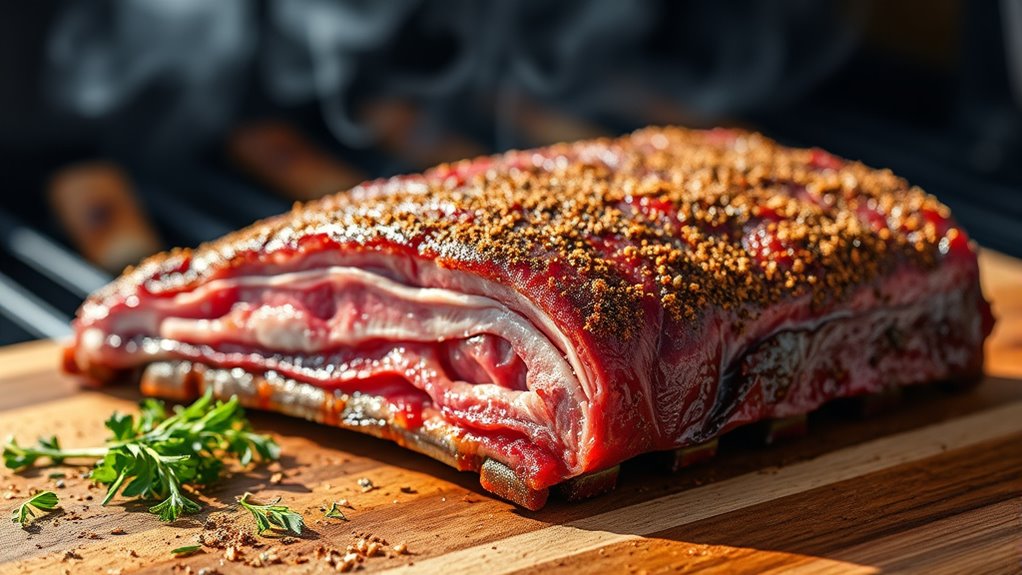
Before you start smoking, trim any excess fat and silver skin from your beef ribs to help the seasoning stick better. Then, apply a generous rub of coarse black pepper and salt or your favorite dry seasoning that can handle long smoking times.
Let the ribs rest for at least 30 minutes so the flavors really set before you smoke.
Selecting Quality Beef Ribs
Although choosing the right cut can seem overwhelming, selecting quality beef ribs sets the foundation for a delicious smoked meal. Opt for beef plate or chuck ribs—they’re larger, meatier, and perfect for smoking. Avoid boneless or small short rib cuts to guarantee excellent texture and flavor.
When prepping, trim excess hard fat, silverskin, and connective tissue from the meat side, but keep the membrane on the bone side intact to enhance taste and mouthfeel. Always source your beef ribs from a reputable butcher or specialty shop to guarantee quality meat with good marbling.
Before smoking, apply a robust dry rub seasoning with coarse black pepper, kosher salt, garlic powder, and paprika. Let the ribs rest at room temperature for 30 minutes to let the seasoning penetrate and promote even cooking.
Seasoning Techniques Overview
To unseal the full flavor potential of your beef ribs, you need to season them thoughtfully and thoroughly. Start by patting the ribs dry to help the dry rub stick and promote a crisp bark during smoking. Remove any silver skin or thin meat layers to ensure the seasoning contacts the meat directly.
Apply a thin layer of mustard or Hardcore Carnivore Black seasoning to enhance rub adhesion and bark formation. Then, generously coat the ribs with a dry rub made from coarse black pepper, kosher salt, garlic powder, and paprika. Spread the seasoning evenly on all sides, and let the ribs rest for at least 30 minutes.
This allows the flavors to deeply penetrate, setting the stage for perfectly smoked beef with rich, balanced flavor.
Set Up Your Smoker to Maintain 300°F
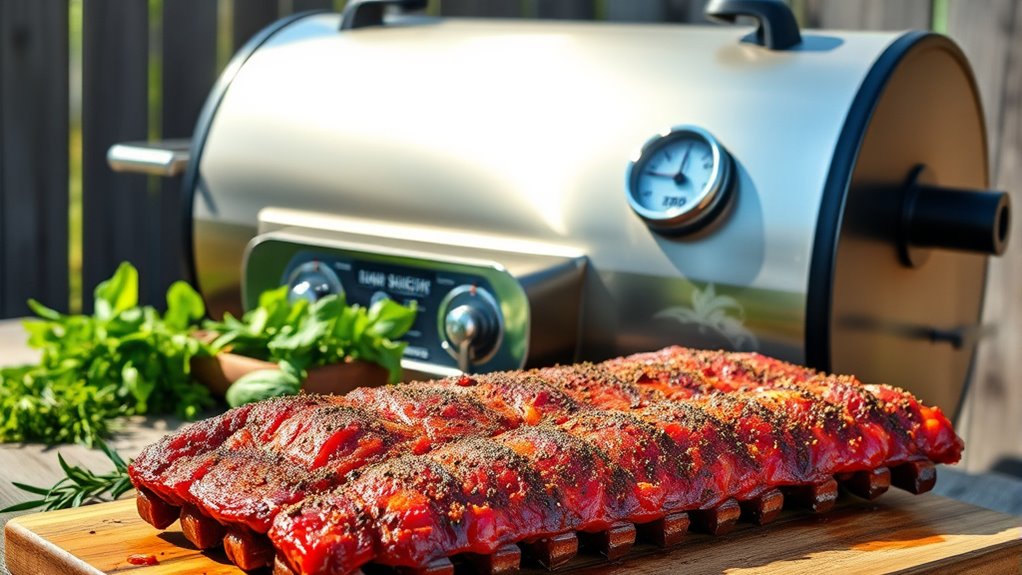
When you set your smoker to a steady 300°F, you create the perfect environment for smoking beef ribs evenly and thoroughly. Start by preheating your offset or pellet smoker and use a reliable smoker thermometer to confirm the temperature stays within ±10°F. For precise temperature control, monitor the heat consistently with a dedicated thermometer or probe set throughout the process.
Adjust the airflow vents to regulate oxygen flow, which helps stabilize the fire and maintain heat. If you’re using a pellet smoker, fine-tune the pellet feed rate to keep the temperature steady at 300°F. Before placing your ribs inside, ensure there’s enough space for proper air circulation.
Regularly check your smoker’s temperature, especially during the first hour, to prevent fluctuations and ensure consistent heat.
How Long Should You Smoke Beef Ribs at 300°F?
At 300°F, you’ll generally smoke beef ribs for about 4.5 to 6 hours, depending on their size and thickness.
It’s essential to watch the internal temperature, aiming for 206-210°F to guarantee tenderness while managing the stall phase carefully.
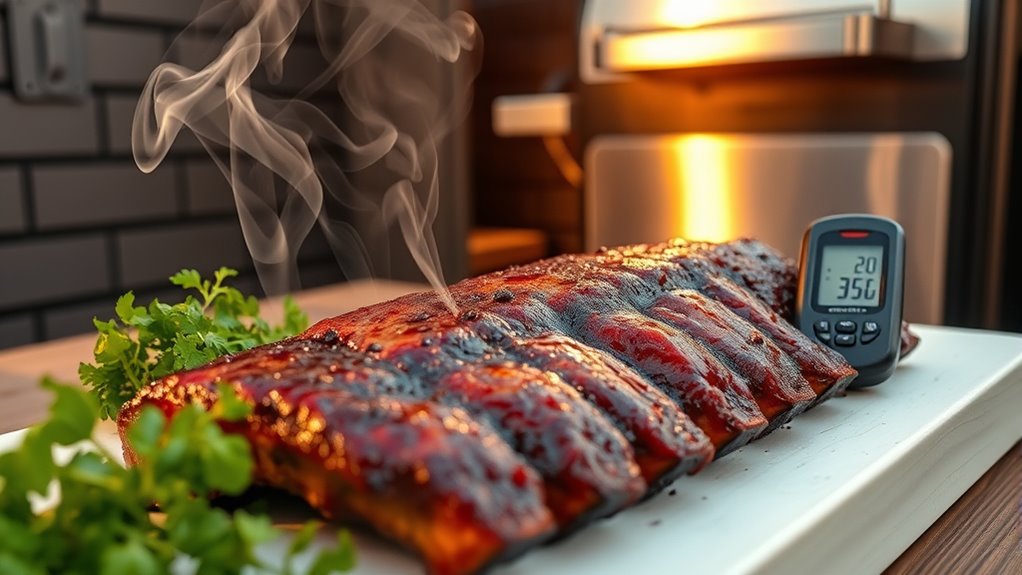
Using a probe thermometer helps you know exactly when your ribs have reached that perfect, tender finish.
Smoking Time Estimates
Although smoking beef ribs at 300°F generally takes between 4.5 to 6 hours, you’ll find that size and thickness play a big role in the exact timing. Smaller or thinner beef ribs may be ready in as little as 3 hours, while larger, bone-in cuts often need the full 6 hours to become probe tender.
The key is monitoring the internal temp, which should reach around 206-210°F for ideal tenderness. Keep in mind that wrapping your ribs or personal preference for tenderness can influence the total smoking time.
Temperature And Tenderness
Since smoking beef ribs at 300°F usually takes between 4.5 to 6 hours, you’ll want to focus on internal temperature rather than just time to guarantee perfect tenderness. The key is reaching an internal temperature of 206-210°F, where the meat achieves ideal doneness. At this point, the ribs should feel like warm butter when probed and easily pull away from the bones.
Managing The Stall Phase
Reaching the ideal internal temperature of 206-210°F is your goal when smoking beef ribs, but getting there isn’t always straightforward. You’ll likely hit the stall phase around 160-170°F, where the internal temperature plateaus for 1 to 2 hours as moisture evaporates.
To manage the stall, consider wrapping the ribs in foil or butcher paper, adding beef tallow or spritzing to retain moisture and push through faster. You can also increase your smoker temperature slightly from 300°F to 350°F to shorten the stall, but watch carefully to avoid overcooking.
What to Do When Your Ribs Hit the Stall
When your ribs hit the stall—usually around 160-170°F—you’ll notice the internal temperature stops rising as moisture evaporates and collagen melts.
To push through the stall, you can wrap the ribs tightly in foil or butcher paper, a technique known as the Texas crutch. This wrap traps moisture and heat, helping the internal temperature climb faster while keeping the meat juicy.
You might also increase your smoker’s temperature slightly or spritz the ribs with water or apple juice to add moisture.
Use heat-resistant gloves and a reliable meat thermometer to monitor progress carefully. Patience matters here—allow your ribs to stay wrapped or adjust heat gradually to ensure tender, moist beef ribs without drying them out.
Check Internal Temperature and Tenderness for Doneness
After pushing through the stall, it’s time to check your beef ribs for doneness by measuring their internal temperature and evaluating tenderness. Use a reliable thermometer, like a Thermapen, to get an accurate internal temperature reading without over-piercing the meat. Your target is 206°F to 210°F for perfect tenderness.
You can also test tenderness by sliding the probe through the meat—if it feels like warm butter, you’re close. The bend test is another method: the ribs should crack slightly but stay intact.
| Test Method | What to Look For |
|---|---|
| Internal Temp | 206°F to 210°F |
| Thermometer Type | Accurate, quick-read like Thermapen |
| Probe Resistance | Slides in like warm butter |
| Bend Test | Slight crack, ribs hold together |
| Doneness Indicator | Tender, no excessive resistance |
Rest and Serve Your Smoked Beef Ribs for Best Flavor
Although your smoked beef ribs have hit the perfect temperature, you’ll want to rest them in a well-insulated cooler for at least an hour. After reaching an internal temperature of 206-210°F, wrap the ribs in peach paper or foil to preserve the bark and retain the juices. Resting lets the juices redistribute throughout the meat, enhancing flavor and tenderness.
Keeping the ribs warm during this time prevents heat loss and helps the meat firm up, making slicing easier. Avoid cutting into the ribs immediately after resting; wait a few more minutes to let the meat settle for cleaner, more attractive portions. Proper resting ensures that every bite of your smoked beef ribs is juicy, flavorful, and perfectly tender.
Frequently Asked Questions
How Long Do Beef Ribs Take to Smoke at 300 Degrees?
You’ll smoke beef ribs at 300°F for about 4.5 to 6 hours. Use a thermometer to check for 206-210°F internal temp, and consider wrapping them after 2-3 hours to keep them moist and tender.
How Many Hours to Cook Ribs at 300 Degrees?
Like a slow-burning tale, you’ll cook ribs at 300°F for about 4.5 to 6 hours.
Don’t just watch the clock—use a thermometer and feel their tenderness to know when they’re perfectly done.
How Long to Cook Ribs at 300 on a Pellet Smoker?
You’ll want to smoke beef ribs at 300°F on your pellet smoker for about 3 to 4 hours.
Check for an internal temp of 206-210°F and consider wrapping them once they hit 165-170°F.
Is 300 Too High to Smoke Ribs?
You shouldn’t worry—300°F isn’t too high to smoke ribs. In fact, it cuts cook time nearly in half compared to 225°F.
Just watch closely to avoid drying out or burning the bark.
Conclusion
Now that you know how to smoke beef ribs at 300°F, the real magic is about to happen. Will your ribs come out perfectly tender and bursting with smoky flavor? Stick to these essential steps, keep an eye on that temperature, and be ready to tackle the stall like a pro.
Your patience will pay off in every juicy, mouthwatering bite. Get ready—your best smoked beef ribs are just moments away! Mastering the perfect smoke time and temperature will ensure your beef ribs are tender, flavorful, and delicious every time.