What Is the Most Expensive Beef Cut and Why
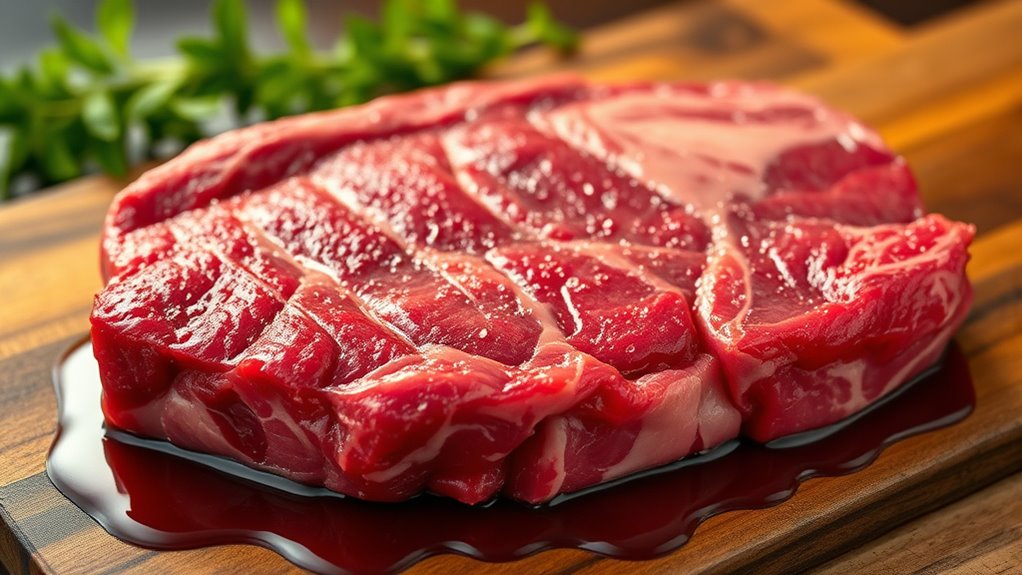
You’ll find the most expensive beef cut is usually Japanese A5 Wagyu, prized for its unmatched marbling that makes it incredibly tender, juicy, and flavorful. This premium beef cut stands out due to its rich fat content, which melts smoothly during cooking.
Unique genetics and specialized care, including stress-free rearing and special diets, contribute significantly to its quality.
Cuts like the Tomahawk ribeye and filet mignon add rarity through their size, tenderness, and aging methods. These luxury beef cuts command high prices not only because of their taste but also due to their meticulous preparation and limited availability.
Keep exploring to uncover how breed, rearing, and certification drive these luxury prices. Understanding these factors helps explain why some beef cuts are more expensive than others in the market.
What Makes the Most Expensive Beef Cuts So Costly?
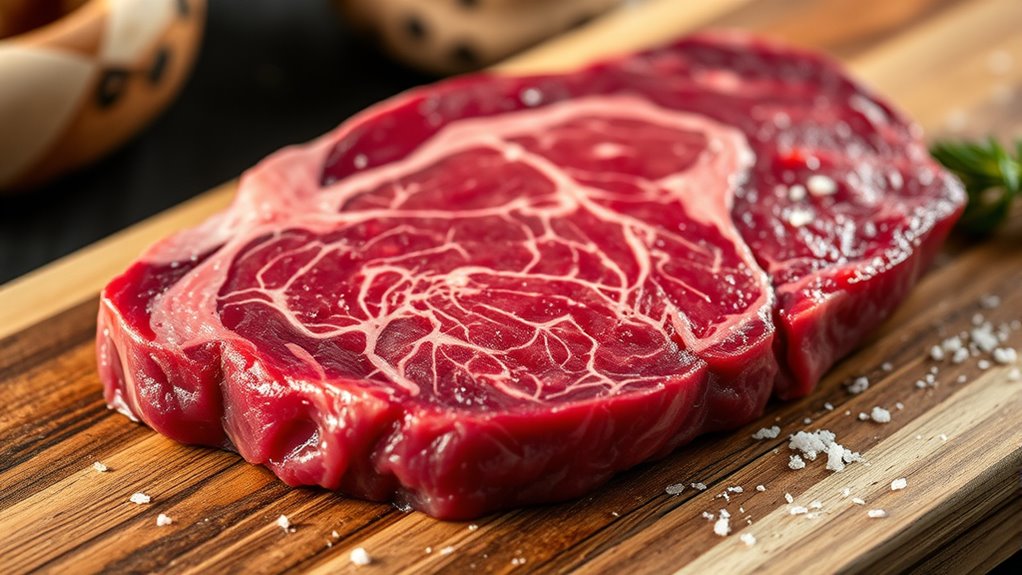
Because of their exceptional marbling, rare breeds like Japanese Black Wagyu, and meticulous rearing methods, the most expensive beef cuts command premium prices. You’ll notice that marbling—the intramuscular fat—creates unmatched tenderness and rich flavor, setting these cuts apart. Strict breed standards ensure only select cattle meet the criteria, making the beef rarer and harder to find.
The aging process, often lasting 28 days or more, further intensifies flavor and softens the texture, justifying the high cost. Plus, the careful care during the cattle’s life—special diets and stress reduction—adds to production expenses. When you choose these cuts, you’re paying for a combination of rareness, quality, and the time-intensive practices that elevate the beef far beyond ordinary steaks.
How Wagyu Beef Became the Gold Standard for Luxury Steaks
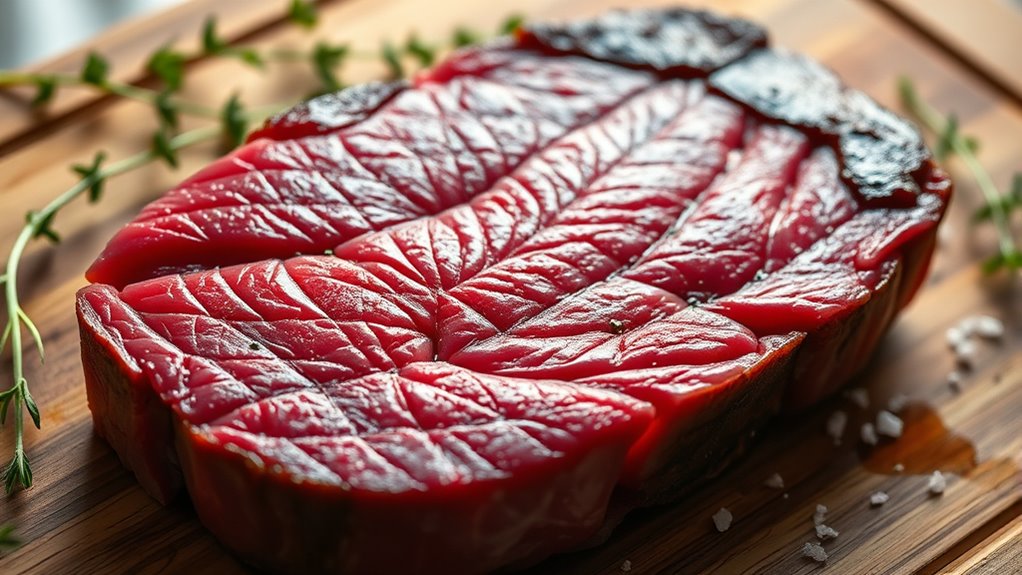
You’ll find that Wagyu beef’s reputation comes from its unique origins and carefully controlled rearing practices. The cattle’s genetics and special diet create that signature, melt-in-your-mouth marbling you can’t find anywhere else.
Understanding these factors helps explain why Wagyu sets the bar for luxury steaks worldwide.
Origins of Wagyu Excellence
When you taste Wagyu beef, you’re experiencing centuries of careful breeding and dedication that turned four Japanese cattle breeds into icons of luxury. The Black Wagyu, the most renowned among them, is famous for its extraordinary marbling, which gives the meat its signature tenderness and rich flavor.
This excellence didn’t happen by chance; strict standards govern every aspect of Wagyu cattle breeding and care. Genetic management ensures only the best traits pass on, while certification maintains quality across producers. These cattle receive specialized diets and care to enhance marbling, making Wagyu the benchmark for luxury steaks worldwide.
Unique Rearing Practices
Although Wagyu beef’s remarkable quality stems from its genetics, the unique rearing practices truly set it apart. You’ll find that these cattle receive a high-quality diet including rice straw, corn, and sake mash over 30 months. Farmers reduce stress through environmental control and even massage to improve marbling and tenderness.
Genetic selection complements this care, ensuring superior traits pass on.
| Aspect | Practice | Purpose |
|---|---|---|
| Diet | Rice straw, corn, sake mash | Enhance rich flavor |
| Stress management | Controlled environment | Promote even marbling |
| Genetic selection | Selective breeding | Maintain luxury standards |
These efforts increase costs but make Wagyu the gold standard for luxury steaks.
Exceptional Marbling Characteristics
Because of its unique genetics and meticulous care, Wagyu beef boasts exceptional marbling that sets it apart from all other beef. This marbling consists of fine, evenly dispersed intramuscular fat, which can make up over 40% of the meat’s weight in the highest grades.
When you savor Wagyu, you’ll notice how this intense marbling creates a melt-in-your-mouth texture and a rich, buttery flavor that other premium cuts simply can’t match. The specialized diets, stress-free environments, and precise aging methods used in raising Wagyu cattle all contribute to this unparalleled marbling quality.
This remarkable fat distribution not only elevates the flavor but also drives Wagyu’s reputation as the gold standard for luxury steaks and justifies its premium price.
Why Marbling and Fat Quality Drive Beef Prices Higher
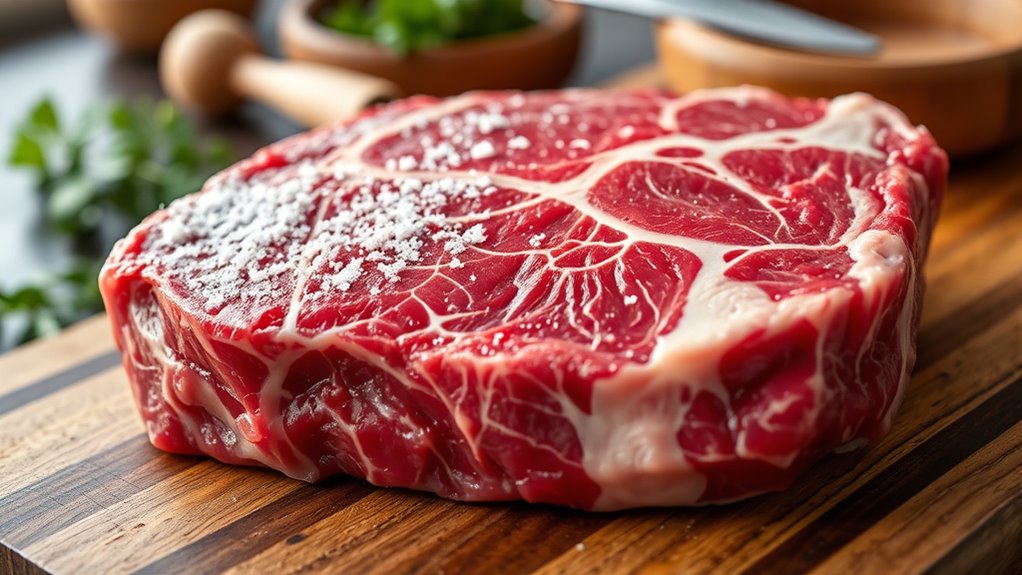
Since marbling directly impacts the tenderness, juiciness, and flavor of beef, it plays a crucial role in driving prices higher. When you choose expensive beef, you’re paying for superior marbling and fat quality that elevate your dining experience.
Here’s why marbling and fat quality push high prices:
- Marbling distributes fat within muscle, enhancing tenderness and flavor.
- Premium fat, rich in monounsaturated oleic acid like Wagyu’s, melts smoothly, creating a unique texture.
- Uniform, abundant marbling, especially in Japanese A5 Wagyu, commands top market value.
- Fat quality affects aging and cooking reactions, influencing taste development and cost.
How Cattle Breed and Rearing Affect Premium Beef Prices
When you choose premium beef, the breed of cattle and how they’re raised play a huge role in the price you pay. Japanese Black Wagyu cattle, prized for their superior marbling, command higher prices due to their genetic traits. The rearing process further influences cost—farmers follow strict regional standards to guarantee quality and exclusivity.
These cattle often enjoy stress-free environments, specialized diets, and extended care, including massages, all of which boost meat quality. Prioritizing animal welfare and genetic purity adds to production costs but results in exceptional flavor and texture.
Why Kobe and Matsusaka Wagyu Are So Rare and Expensive
You’ll find Kobe and Matsusaka Wagyu come from very specific regions in Japan, where breeding and feeding methods are tightly controlled. These exclusive practices, combined with limited regional production, keep their numbers low.
That’s why these beef cuts are so rare and command such high prices.
Exclusive Breeding Practices
Although many factors contribute to the rarity and high cost of Kobe and Matsusaka Wagyu, their exclusive breeding practices play a crucial role. You should know these cattle follow strict exclusive breeding standards that ensure their superior quality. Here’s why they’re so special:
- Genetic purity is maintained by carefully selecting breeding stock within designated regions.
- Regional certification restricts production to specific areas, like Hyōgo for Kobe and Mie for Matsusaka.
- Only about 3,000 Kobe cattle earn certification annually, limiting supply.
- These practices maximize marbling, enhancing flavor and tenderness.
Specialized Feeding Regimen
How do Kobe and Matsusaka Wagyu achieve their unmatched tenderness and flavor? It all comes down to their specialized feeding regimen. You’ll find that Wagyu cattle are fed carefully crafted diets including sake, beer, and high-quality grains, which boost marbling—the fine fat distribution that defines superior meat quality.
This regimen isn’t just about what they eat; these cattle often receive regular massages and live in stress-free environments, further enhancing tenderness. Raising Wagyu cattle this way takes over 30 months, substantially increasing costs compared to typical beef cattle.
This meticulous care ensures the marbling and flavor you experience are truly exceptional, making Kobe and Matsusaka Wagyu some of the rarest and most expensive beef cuts you can savor.
Limited Regional Production
Because Kobe and Matsusaka Wagyu come from strictly defined regions in Japan, their production remains incredibly limited. This limited regional production is key to their rarity and high price. When you seek authentic Kobe beef, you’re looking at cattle raised under strict breeding standards and meticulous care.
Here’s why they’re so rare:
- Only a small number—often fewer than 3,000 cattle annually—qualify for the Kobe or Matsusaka label.
- Cattle must meet rigorous grading criteria to ensure top quality.
- Limited land and traditional, labor-intensive rearing practices restrict supply.
- Certification and strict regulations guarantee authenticity but limit production.
This strict regional control creates the exclusivity that makes Kobe and Matsusaka Wagyu the most expensive beef cuts worldwide.
How Dry-Aging Enhances Flavor and Increases Beef Value
When you dry-age beef, you hang it in a carefully controlled environment where temperature and humidity work together to transform the meat. This process typically lasts from 28 to 120 days at 1-3°C with 80-85% humidity. During dry-aging, natural enzymes break down muscle fibers, enhancing tenderness and developing a richer, more complex flavor.
Moisture evaporation concentrates the beef’s natural flavors and intensifies marbling’s impact, resulting in a unique nutty, beefy aroma. The exterior forms a desirable crust, signaling premium quality. Because dry-aging requires time, space, and precise conditions, it increases production costs.
These factors elevate beef value, making dry-aged cuts highly sought after for their superior taste and texture. You get a more flavorful, tender experience that’s worth the premium price.
The Most Expensive Beef Cuts: What You Need to Know
Understanding the value that dry-aging adds to beef helps explain why certain cuts command sky-high prices. When you’re choosing the most expensive beef cuts, consider these key factors:
- Japanese Wagyu, especially A5 grade, stands out due to its exceptional marbling, which ensures unmatched tenderness and flavor.
- Prime cuts like ribeye and sirloin from Wagyu or Kobe beef are rare and highly sought after, reflecting their exclusivity.
- Aging, particularly dry-aging for 28 days or more, intensifies flavor and tenderness, boosting the cut’s value.
- Breed, feeding methods, and meticulous care during aging all contribute to the premium price tags you see.
Why the Tomahawk Ribeye Commands a Premium Price
You’ll notice the Tomahawk Ribeye stands out with its impressive size and signature long bone, creating a striking presentation that commands attention. Its extended aging process adds rich flavor and tenderness, making each bite worth the price.
When you combine its visual appeal, size, and enhanced taste, it’s clear why this cut carries a premium cost.
Distinctive Visual Presentation
Because the Tomahawk ribeye sports a long, exposed bone resembling a tomahawk axe, it instantly grabs your attention with its dramatic visual appeal. This distinctive visual presentation sets it apart and justifies its premium status. When you see it, you notice:
- The exposed bone creates a bold, theatrical look.
- Its large size signals generosity and luxury.
- The bone-in presentation adds heft and exclusivity.
- This impressive display makes it perfect for special occasions.
You can’t help but appreciate how these elements combine to elevate the Tomahawk ribeye above ordinary cuts. Its striking appearance not only enhances the dining experience but also contributes markedly to its higher market price.
The visual cues alone tell you this is a premium, indulgent choice.
Size And Bone Influence
Though the Tomahawk Ribeye’s striking bone grabs your eye first, its impressive size plays an equally essential role in driving up its price. This bone-in cut commands a premium cost because that long bone adds visual appeal and complexity during trimming and handling.
Plus, its substantial size means you get more meat, increasing its market value.
| Factor | Impact on Price |
|---|---|
| Bone-in Process | Higher production cost |
| Visual Appeal | Premium presentation |
| Size of Cut | More meat, higher cost |
| Handling & Trimming | Increased labor |
You’re paying extra for the craftsmanship and generous portion the Tomahawk offers, making it a true luxury beef cut.
Aging Enhances Flavor
Beyond its impressive size and striking bone, the Tomahawk Ribeye owes much of its luxury status to the aging process that amplifies its flavor. When you choose this cut, you’re paying for dry-aging, which boosts flavor enhancement and beef tenderness. Here’s why it commands a premium price:
- Dry-aging for 28 to 120 days breaks down muscle fibers, increasing beef tenderness.
- Moisture evaporation during aging concentrates complex flavors but reduces weight, raising cost per pound.
- Maintaining precise temperature, humidity, and airflow for dry-aging adds to production expenses.
- The process develops rich, nutty, and umami-rich complex flavors that steak lovers crave.
This meticulous aging transforms the Tomahawk Ribeye into a luxurious, flavorful experience worth every cent.
Why Filet Mignon’s Tenderness Makes It So Costly
When you choose filet mignon, you’re opting for a cut prized for its exceptional tenderness, thanks to its origin in the tenderloin—a muscle that rarely moves and has minimal blood flow. This limited activity means the meat contains very little connective tissue, giving it that melt-in-your-mouth texture you crave.
Because each cow yields only a small portion of this tenderloin, filet mignon is a rare find among expensive cuts of beef. Its premium quality and smooth consistency make it stand out, especially if you value tenderness above all.
When you savor filet mignon, you’re not just enjoying a meal; you’re experiencing one of the finest, most sought-after cuts available, justifying its higher price on any menu.
What Makes Porterhouse and T-Bone Steaks a Luxury Favorite?
If you appreciate variety in your steak, you’ll love porterhouse and T-bone cuts because they combine two premium muscles—the tenderloin and the strip steak—into one flavorful, luxurious experience. These luxury cuts stand out for several reasons:
- They feature two high-quality muscle groups, offering both tenderness and rich flavor.
- Their large, bone-in presentation enhances flavor and adds to the steak’s weight.
- Proper cooking techniques keep the tenderloin and strip steak perfectly done without overcooking.
- Combining two prized muscles makes porterhouse and T-bone steaks pricier than single-muscle cuts.
When you choose porterhouse or T-bone, you’re getting more than just a steak—you’re indulging in a premium dual-flavor luxury cut that’s hard to beat.
Frequently Asked Questions
Which Cut of Beef Is Most Expensive?
You’ll find the most expensive beef cut is Japanese Wagyu A5 Kobe beef because it boasts incredible marbling, tenderness, and flavor. Its rarity and strict grading make it cost far more than typical cuts you might buy.
What Steak Is the Poor Man’s Ribeye?
The poor man’s ribeye is the chuck eye steak. You’ll enjoy similar marbling and rich flavor at a lower price.
Just grill it right, and you’ll get a tasty, budget-friendly alternative to ribeye.
What Part of the Cow Is the Most Expensive Cut?
Ever wonder which part of the cow commands the highest price? You’ll find it in the tenderloin, especially Wagyu or Kobe.
Its exceptional marbling and tenderness make it the priciest and most sought-after cut.
How Much Is 10 Lb of Wagyu?
You’ll pay between $1,000 and $4,000 for 10 pounds of Wagyu, depending on the grade and cut.
Top-tier Japanese A5 Wagyu usually costs $2,000 or more for that amount, thanks to its exceptional marbling.
Conclusion
You might think the most expensive beef cut is all about luxury and exclusivity, but it’s no coincidence that those prized steaks—like Wagyu’s marbled perfection or the tender filet mignon—also tell a story of careful breeding, rare rearing, and unmatched flavor.
When you savor these cuts, you’re not just paying for a meal; you’re experiencing the art and tradition behind every bite, making each expensive steak truly worth it.
In conclusion, the most expensive beef cut reflects a combination of quality, rarity, and the intricate process involved in producing such exceptional flavor and texture.