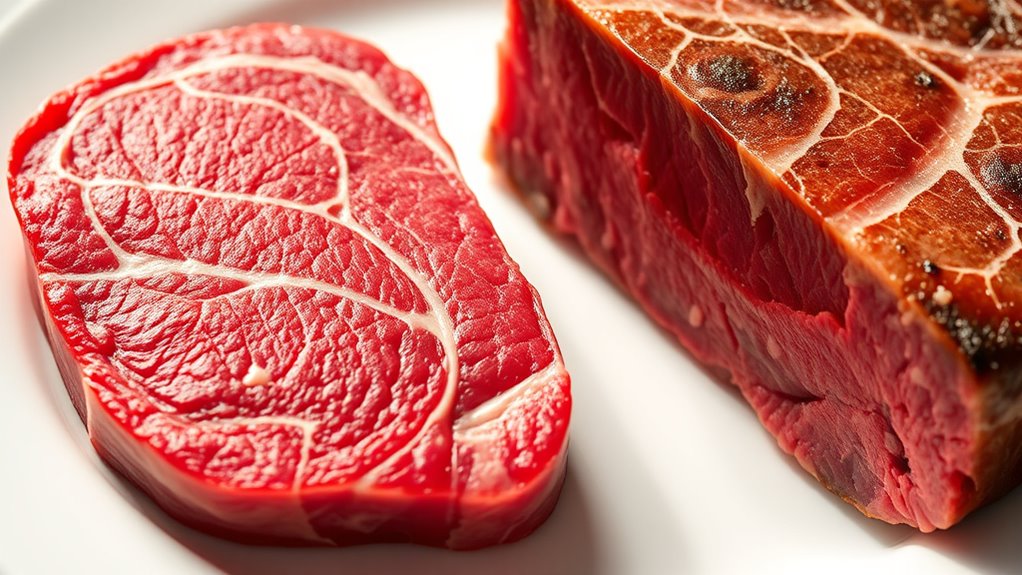
What Is the Difference Between Prime and Choice Beef?
You’ll notice USDA Prime beef has more marbling than Choice, making it richer, juicier, and more tender—perfect for grilling or special meals. Prime beef quality stands out due to its higher fat content, which enhances flavor and texture.
Prime beef comes from younger cattle and is rarer. It’s a great choice if you’re looking for the best quality and flavor.
Choice beef still offers good flavor and tenderness but has less fat, so it’s firmer and more affordable. It’s a great option for everyday meals without sacrificing quality.
If you want to understand how this affects flavor, texture, and cooking, there’s plenty more to explore.
Understanding USDA Prime and Choice Beef Grades
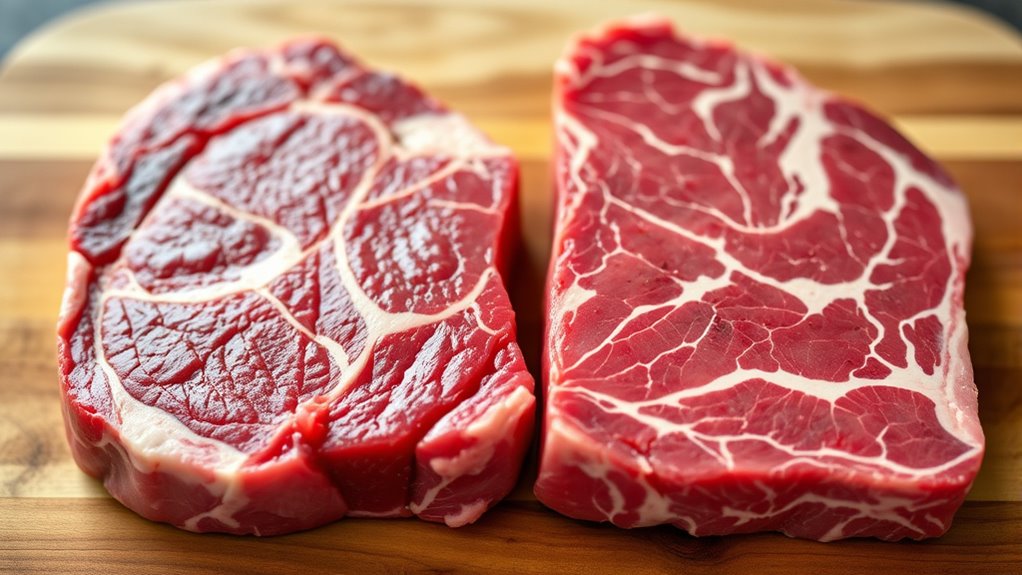
Although both USDA Prime and Choice beef are high-quality grades, they differ mainly in marbling—the intramuscular fat that enhances flavor and tenderness. USDA grades classify beef based on this marbling and other factors, helping you choose the right cut.
Prime beef, with the highest marbling, comes from younger cattle, making it exceptionally tender and flavorful. It accounts for less than 6% of all beef, so it’s rarer and often pricier.
Choice beef, on the other hand, has moderate marbling, offering a solid balance of tenderness and taste. It’s the most widely available quality grade and suits various cooking methods well.
Understanding these USDA grades lets you pick beef that matches your cooking style and flavor preference.
Marbling: The Key Difference Between Prime and Choice Beef
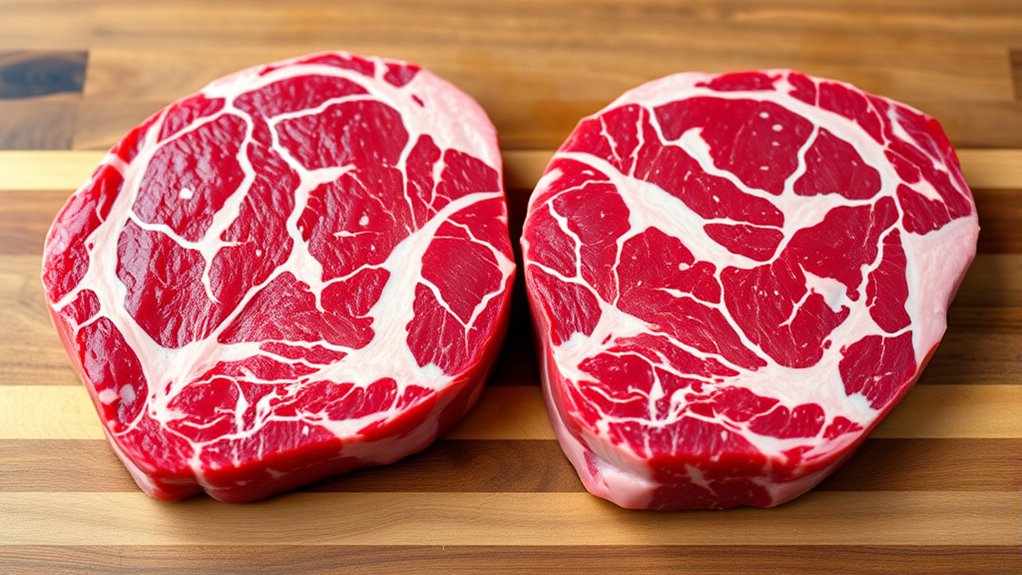
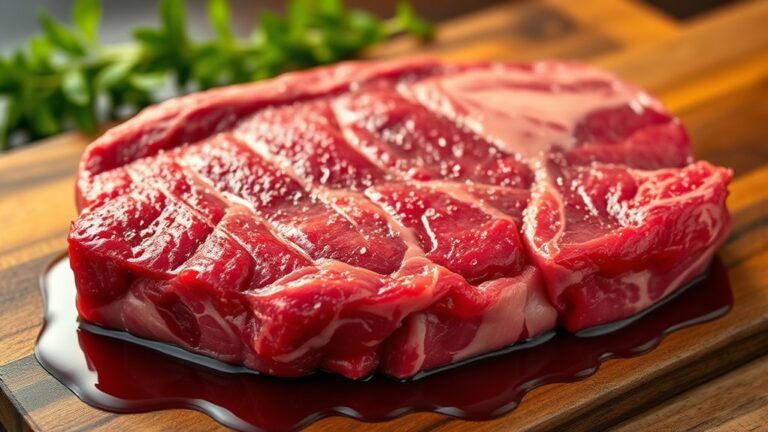
What truly sets Prime and Choice beef apart is marbling—the delicate streaks of fat woven through the muscle. When you choose Prime grade beef, you’re getting abundant marbling, with visible flecks of fat dispersed throughout. This higher marbling level makes Prime beef noticeably more tender, juicy, and flavorful.
On the other hand, Choice grade beef has moderate marbling; it contains less intramuscular fat but still enough to enhance taste and tenderness. USDA graders primarily use marbling to distinguish between these two grades. So, when you want a richer, melt-in-your-mouth experience, look for Prime grade beef.
If you prefer a leaner cut with good flavor, Choice grade is a solid choice. Understanding marbling helps you pick beef that matches your taste and cooking style.
How Animal Age Affects USDA Prime and Choice Beef Quality
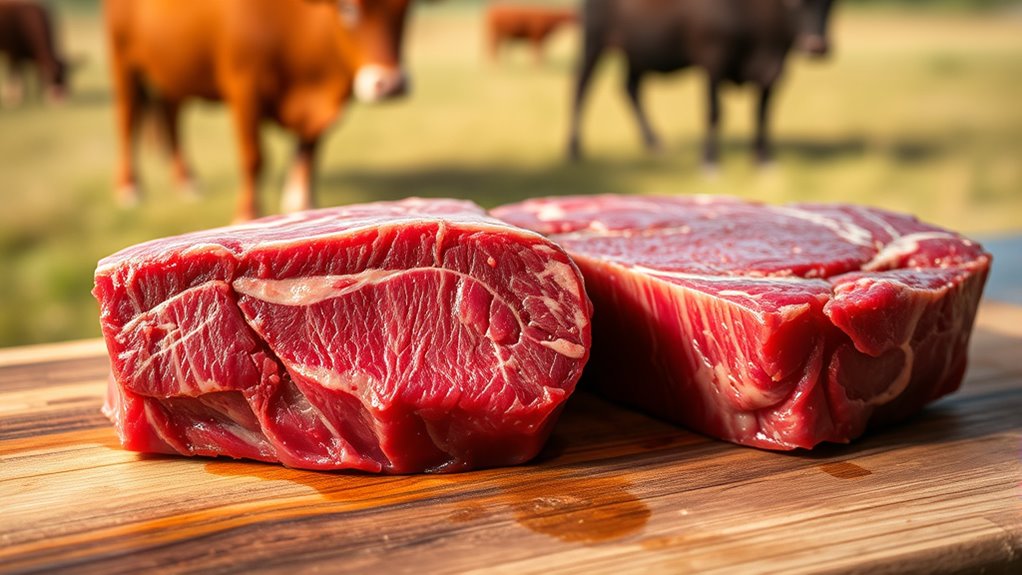
You’ll notice that younger cattle produce more tender beef with better marbling, which directly impacts quality. USDA Prime usually comes from cattle aged 30 to 42 months, giving it superior tenderness and flavor.
Choice beef also comes from relatively young animals but tends to have slightly less marbling and tenderness.
Age Impact On Tenderness
Since tenderness plays a key role in beef quality, the age of the animal substantially affects USDA Prime and Choice grades. Younger cattle, typically between 30 and 42 months, produce meat with greater tenderness due to less connective tissue and higher marbling. This marbling not only boosts flavor but also helps keep the meat juicy and tender when cooked.
As animals grow older, their meat becomes tougher and less appealing for Prime or Choice classification. The USDA grading system considers age alongside marbling because younger animals are more likely to meet the tenderness standards required for these grades.
Younger Cattle Yield Quality
Because younger cattle typically range between 30 and 42 months old, they produce beef that’s particularly more tender and flavorful, making it ideal for USDA Prime and Choice grades. When you choose beef from younger cattle, you’re getting meat with better marbling—the intramuscular fat that enhances juiciness and taste.
USDA Prime beef, known for its superior quality, mostly comes from these younger animals, boasting abundant marbling that sets it apart in tenderness and flavor. Choice beef also comes from younger cattle but offers a balance of moderate marbling and tenderness, providing great quality at a slightly lower grade.
Older cattle tend to have less marbling, resulting in tougher meat that rarely meets the standards for Prime or Choice. So, selecting beef from younger cattle ensures you enjoy top-quality marbling and taste.
Flavor and Tenderness Differences Between Prime and Choice Beef
When you choose Prime beef, you’re getting more marbling, which means richer flavor and a juicier texture. This extra fat melts during cooking, making the meat more tender and easier to enjoy.
Choice beef still offers good taste and tenderness, but you’ll notice a difference in how juicy and soft Prime cuts feel.
Marbling Effects
Although both Prime and Choice beef offer satisfying flavor, Prime stands out with its abundant marbling that boosts juiciness and tenderness. This marbling, or intramuscular fat, is more concentrated in USDA Prime cuts, giving you a richer, melt-in-your-mouth experience.
USDA Choice has moderate marbling, so it still delivers good flavor and tenderness but won’t match Prime’s luxurious profile. The even distribution of fat in Prime ensures every bite is flavorful. Here’s a quick comparison:
| Feature | USDA Prime |
|---|---|
| Marbling Level | Abundant |
| Flavor | Rich, intense |
| Tenderness | Very tender |
| Juiciness | High |
Choosing Prime means enjoying superior marbling that elevates your beef’s taste and texture.
Texture And Juiciness
Since Prime beef contains abundant marbling that melts during cooking, you’ll enjoy a more flavorful, juicy, and tender steak compared to Choice cuts. The higher intramuscular fat in Prime beef enhances juiciness and tenderness, giving you a melt-in-your-mouth experience with every bite.
In contrast, Choice beef has moderate marbling, which means it can still be tender and flavorful but often has a firmer texture and less natural juiciness. To get the best tenderness from Choice cuts, you’ll need to cook them carefully to avoid drying out the meat.
Availability and Price Differences of USDA Prime and Choice Beef
How often do you find USDA Prime beef at your local grocery store? Not very often, and that’s because USDA Prime accounts for less than 6% of all beef produced, making it quite rare.
USDA Prime beef is rare, comprising less than 6% of all beef produced nationwide.
Here’s what you should know about availability and price differences between USDA Prime and Choice Beef:
- Choice Beef is the most widely available grade, making up over 50% of beef sales in the U.S.
- USDA Prime’s scarcity means it’s usually found only at specialty butcher shops or high-end restaurants.
- Due to its higher marbling and tenderness, USDA Prime commands a premium price.
- Choice Beef offers consistent quality at a more affordable price, perfect for everyday meals.
Cooking Tips and Uses for Prime and Choice Beef
When cooking Prime beef, you’ll want to use high-heat methods like grilling or broiling to take advantage of its rich marbling, which delivers exceptional tenderness and flavor. This marbling helps lock in juices during quick searing, so aim for high temperatures.
Choice beef, with moderate marbling, is more versatile and suits various cooking techniques such as roasting, pan-frying, or braising. You can cook Choice cuts to your preferred doneness by carefully controlling the temperature.
Regardless of the grade, always let your beef rest after cooking to allow juices to redistribute, enhancing tenderness and flavor. By matching the right cooking techniques to the marbling and doneness levels, you’ll get the best taste and texture from both Prime and Choice beef.
How to Decide Between USDA Prime and Choice Beef for Your Meal
Deciding between USDA Prime and Choice beef depends largely on what you want from your meal and the occasion. Here’s how to decide:
- Occasion: Choose USDA Prime for special events due to its abundant marbling and superior tenderness.
- Budget: If you want quality without a high price, Choice beef offers good marbling at a more affordable cost.
- Flavor and Tenderness: Prime delivers a richer, juicier flavor thanks to its higher marbling, perfect for a luxurious meal.
- Availability: Choice beef is more widely available and versatile, suitable for everyday cooking styles.
Frequently Asked Questions
Which Is Better, Prime or Choice Beef?
Prime beef is better if you want superior tenderness and flavor for special occasions, but choice beef works great for everyday meals since it’s still high quality and more affordable.
You’ll pick based on your needs.
What Is a Poor Man’s Ribeye Called?
A poor man’s ribeye is called a chuck eye steak. You’ll enjoy similar marbling and flavor at a lower price.
Just grill or broil it high-heat to get that tender, juicy ribeye vibe.
What’s Better, 80/20 or 93/7 Ground Beef?
Choosing between 80/20 and 93/7 is like picking between a juicy steak and a salad—you’ll want 80/20 for flavor and tenderness, but 93/7 if you’re aiming for a leaner, healthier meal.
80/20 ground beef contains 80% lean meat and 20% fat, which makes it more flavorful and juicy when cooked. It’s ideal for burgers, meatloaf, and any recipe where moisture and richness are key.
On the other hand, 93/7 is leaner, with only 7% fat, making it a better choice for those watching their fat intake. It cooks up a bit drier but is perfect for healthier dishes and recipes where you can add moisture through other ingredients.
What Are the 7 Quality Grades of Beef?
You’ll find seven main beef quality grades: Prime, Choice, Select, Standard, Commercial, Utility, and Canner. Each grade reflects marbling, maturity, and quality, helping you choose the best beef for your cooking needs.
Conclusion
When choosing between Prime and Choice beef, picture a rich, marbled Prime steak melting with buttery tenderness versus a leaner, firmer Choice cut offering hearty flavor and value. Both have their place on your plate—Prime dazzles with luxurious juiciness, while Choice delivers reliable satisfaction without breaking the bank.
Whether you’re aiming for an indulgent feast or a practical meal, knowing these differences helps you savor every bite just the way you like it. Understanding the distinction between Prime and Choice beef ensures you select the perfect cut for your taste and budget. This knowledge enhances your dining experience, making each meal more enjoyable and tailored to your preferences.