How to Tell the Difference Between Corned Beef and Brisket
You can tell corned beef and brisket apart by their color and texture. Corned beef is cured, giving it a pinkish hue and a salty, spiced flavor. Brisket, on the other hand, is raw with a deep red color and a natural beef taste.
Corned beef is tender from curing and quick to cook. Brisket requires slow cooking to become tender.
If you want to understand how these differences affect cooking and health, there’s more to discover.
Corned Beef: Definition and Production
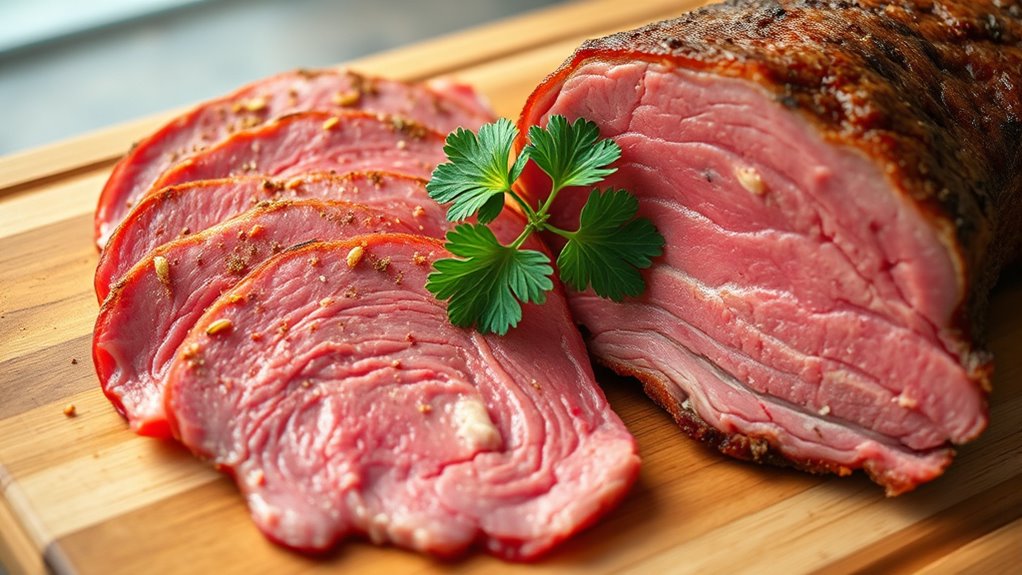
Although you might think corned beef is just another cut of meat, it’s actually beef—usually brisket—that’s been cured in a salt-based brine with spices for several days. This curing process is what sets corned beef apart, giving it a distinctive pink color and a salty, seasoned flavor you won’t find in plain brisket.
The brine typically includes salt, sugar, peppercorns, cloves, and mustard seeds, soaking into the meat to enhance flavor and preserve it. You can buy corned beef either raw or pre-cooked, but it’s usually prepared by boiling or simmering before serving.
Sometimes, after curing, corned beef is smoked to create pastrami, but the essential step is the brining, which transforms brisket into the classic corned beef you recognize.
Beef Brisket: Origin and Characteristics
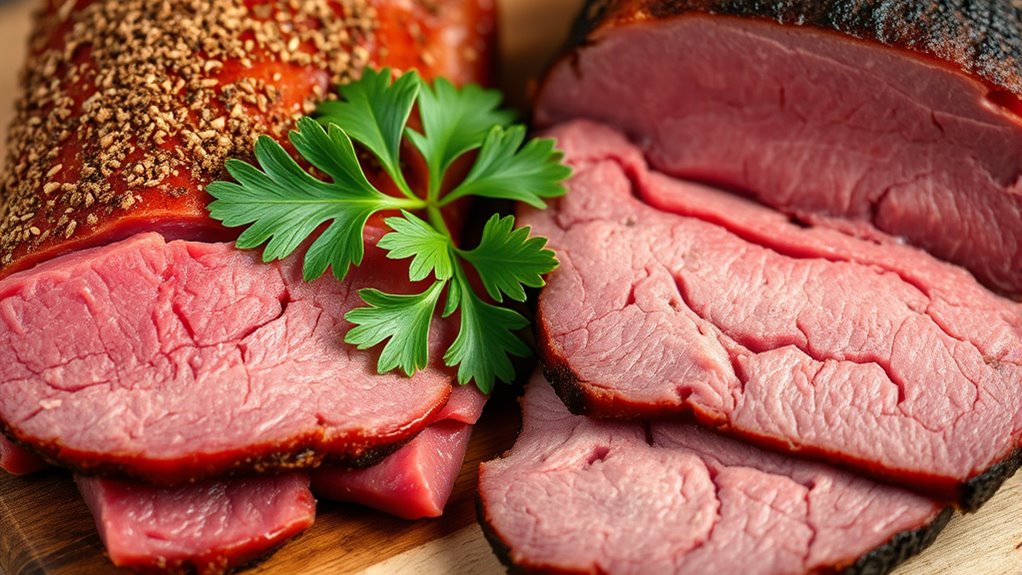
While corned beef starts as brisket, the unprocessed beef brisket itself has unique qualities worth understanding. This primal cut comes from the cow’s chest, a heavily worked area with dense, tough muscle. Because it supports much of the animal’s weight, beef brisket requires slow cooking methods like smoking or braising to tenderize.
It includes two parts: the leaner flat and the fattier point, each offering distinct textures and flavors. Typically weighing around 10 pounds, brisket boasts a deep red color and rich beefy flavor that intensifies with low, slow heat.
Unlike corned beef, brisket hasn’t undergone the curing process, so it maintains its natural, robust taste and texture, making it a favorite for barbecue and slow roasting.
How Corned Beef and Brisket Differ in Appearance
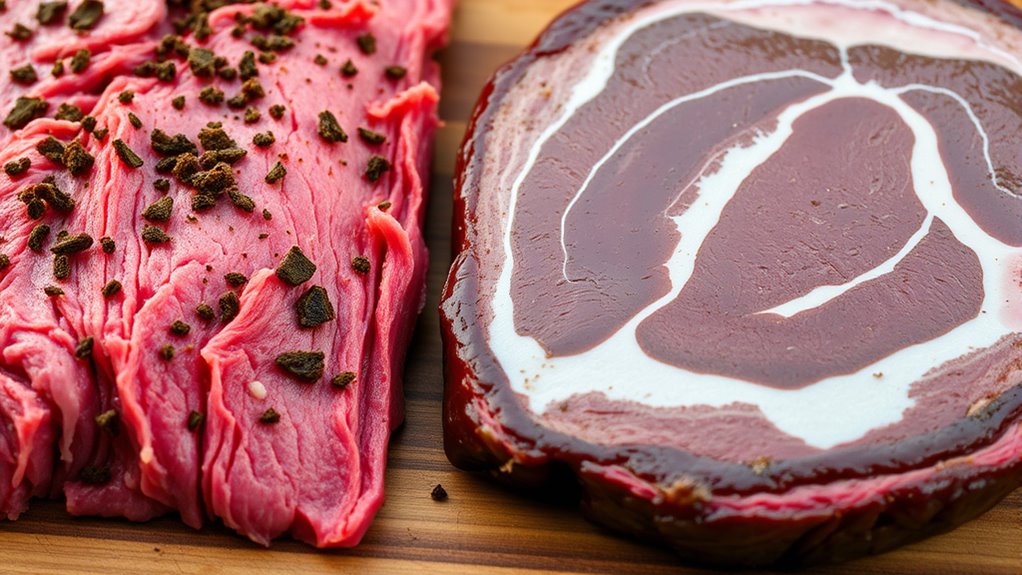
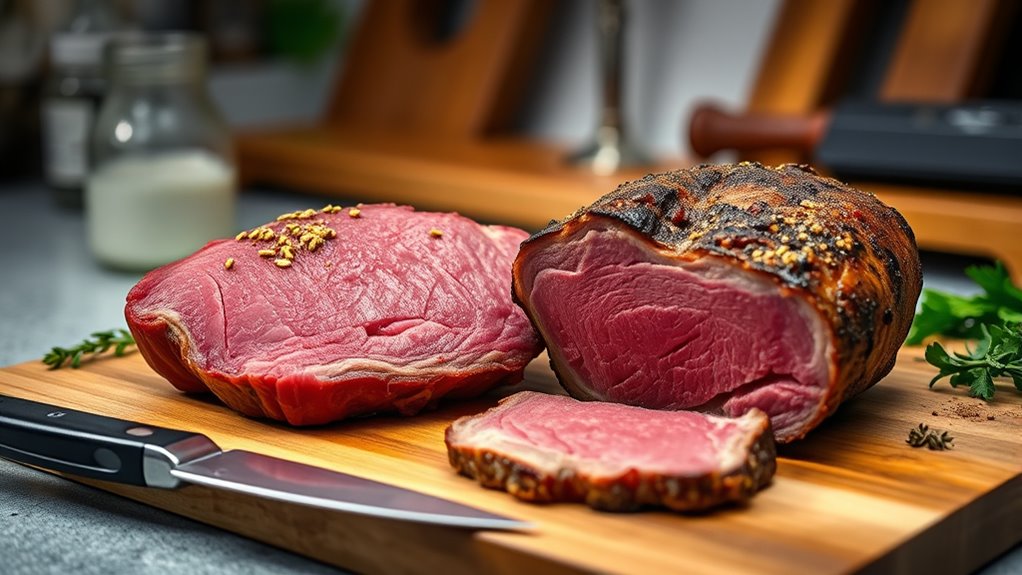
When you compare corned beef and brisket side by side, their appearances reveal key differences that reflect their distinct preparations. Corned beef typically shows a pink or reddish hue from curing, with a smooth, moist surface dotted with visible spice particles. It often comes pre-cooked or partially cooked in uniform, rectangular slices or whole pieces.
In contrast, raw brisket displays a deep red or purple color, a firmer, drier exterior, and a natural beef look without seasoning. It usually appears as a large, irregular cut with a noticeable fat cap and clear flat and point sections. These visual traits help you identify corned beef brisket from raw brisket quickly and confidently, even before tasting or cooking.
Flavor Profiles of Corned Beef Versus Brisket
If you want to understand the key flavor differences, start by tasting corned beef’s salty, tangy notes from its curing process, which contrast sharply with brisket’s rich, natural beef flavor. Here’s what sets them apart:
- Corned beef gets its distinctive savory saltiness from a spiced brine, while brisket remains naturally beefy without added salt.
- Aromatic spices like coriander and cloves in corned beef add complexity that brisket lacks.
- Smoking corned beef enhances its smoky, savory profile, differing from brisket’s straightforward meatiness.
- Brisket’s flavor can vary from deep beefy richness to smoky, depending on preparation, but it never has corned beef’s tang.
Texture Differences Between Corned Beef and Brisket
You’ll notice that corned beef feels much more tender and softer thanks to its curing process, while brisket tends to be chewier with visible fibers. If brisket isn’t cooked long enough, it can be tough and stringy, but corned beef usually melts in your mouth.
Paying attention to these texture differences helps you tell them apart easily.
Tenderness Variations
Although both corned beef and brisket come from the same cut of meat, their textures differ considerably due to how they’re prepared. The tenderness of each is influenced by curing and cooking methods:
- Corned beef’s curing process breaks down connective tissues, making it tender yet slightly chewy.
- Raw brisket is tough and needs slow cooking to become tender.
- When cooked low and slow, brisket melts in your mouth with exceptional tenderness.
- Corned beef remains firmer than fully cooked brisket, though it’s generally more tender than raw brisket.
Chewiness And Fibers
Because of its curing and cooking process, corned beef offers a softer, more tender chew by breaking down muscle fibers effectively. When you bite into corned beef, you’ll notice less chewiness and fewer stringy fibers, making it easier to enjoy.
In contrast, brisket has a denser, more fibrous texture that requires slow cooking to soften those tough muscle fibers. If brisket isn’t cooked long enough, its chewiness remains strong, with distinct fibrous strands that resist chewing.
Properly cooked brisket reveals visible fibers in each slice, giving it a firm but tender bite. However, if overcooked, brisket can become mushy. Understanding these differences helps you identify which cut you’re enjoying based on chewiness and the structure of the fibers.
Typical Cooking Methods for Corned Beef and Brisket
When preparing corned beef, you usually simmer it gently in water with spices for a couple of hours to keep it tender and flavorful. This method suits the cured cut of meat perfectly, preserving moisture and enhancing taste.
Brisket, on the other hand, is a different cut that thrives under slow, indirect heat to break down its connective tissue. Here are typical cooking methods for each:
- Corned beef: soaked, rinsed, then boiled or simmered in seasoned broth for 2-3 hours.
- Brisket: seasoned or marinated before smoking low and slow for several hours.
- Brisket: alternatively, slow-roasted or braised in liquid to develop crust and deep flavor.
- Corned beef: often cooked with vegetables and spices, ideal for dishes like Reuben sandwiches.
Each cut’s ideal cooking method highlights its unique qualities.
Can You Substitute Corned Beef for Brisket in Recipes?
You can substitute corned beef for brisket, but keep in mind the flavor and texture will change because corned beef is already seasoned and cured.
You’ll need to adjust cooking times since corned beef cooks faster and is saltier than raw brisket. Pay close attention to seasoning and cooking methods to avoid ending up with a dish that’s too salty or mushy.
Flavor Considerations
Although corned beef and brisket both come from the same cut of meat, their flavor profiles differ considerably due to corned beef’s curing process with salt and spices. When considering substituting corned beef for brisket, keep these flavor points in mind:
- Corned beef’s salt content is much higher, making the dish saltier than when using brisket.
- The curing adds a tangy, aromatic taste that changes the natural beef flavor you get from brisket.
- You might need to soak or rinse corned beef to reduce salt content before cooking.
- Because corned beef is often pre-cooked, its texture and flavor suit sandwiches or stews better than traditional brisket dishes.
Cooking Technique Adjustments
Since corned beef is already cured and often pre-cooked, it requires much less cooking time than raw brisket, which demands slow, prolonged heat to become tender. When substituting corned beef for brisket, you need to make cooking technique adjustments: reduce cooking time, avoid slow cooking, and adjust seasonings to balance its saltiness.
Corned beef is best reheated or quickly prepared, unlike brisket, which needs slow cooking to soften.
| Aspect | Brisket | Corned Beef |
|---|---|---|
| Cooking Time | Long, slow cooking | Minimal, mostly reheating |
| Preparation | Raw, needs seasoning | Pre-seasoned, cured |
| Flavor Profile | Mild, adaptable | Saltier, distinct taste |
| Texture | Tender after slow cooking | Firm, cured texture |
| Best Use | Stews, BBQ, slow roasts | Quick meals, sandwiches |
Health Differences: Corned Beef vs. Brisket
When comparing corned beef and brisket, you’ll notice significant differences in their sodium content and additives. Here’s what you should know:
- Corned beef contains higher sodium levels due to its curing process, which can impact blood pressure if you eat it often.
- Brisket, especially when unprocessed, has much less salt, offering a more natural beef flavor.
- Though corned beef is soaked and rinsed to reduce salt, it usually retains more sodium than fresh brisket.
- Corned beef often has preservatives and curing salts, while plain brisket doesn’t contain these additives.
If you’re aiming for a healthier choice, brisket is typically better because of its lower salt and absence of curing chemicals.
Choosing Corned Beef or Brisket for Your Dish
Understanding the health differences between corned beef and brisket helps you make smarter choices, but your dish’s requirements should guide your selection too.
Choose corned beef if you want pre-brined, seasoned meat ready for boiling, sandwiches, or traditional Irish dishes. It’s perfect when you need quick preparation, like during St. Patrick’s Day, because its curing process saves time.
On the other hand, opt for fresh brisket if you want to control seasoning and cook slowly through smoking, roasting, or braising. Brisket offers a natural beef flavor and lets you adjust salt and spice levels to your taste.
Always check labels carefully—corned beef is cured and seasoned, while brisket is raw, so pick based on what your recipe demands.
Frequently Asked Questions
Is There a Difference Between Corned Beef and Corned Beef Brisket?
Yes, there is a difference. Corned beef brisket specifically refers to the cut of brisket that’s been cured and seasoned, while corned beef can come from other cuts too.
You’ll notice the seasoning and pink color in both.
What Is Poor Man’s Brisket?
Poor Man’s Brisket? It’s your wallet’s best friend—cheap, tough cuts slow-cooked to taste like the real deal.
You won’t get fancy, but you’ll fool your taste buds and save cash. Who needs luxury anyway?
How to Identify Beef Brisket?
You can identify beef brisket by its large size, dense texture, and thick fat cap. It’s raw, deep red to purple, and fibrous, requiring slow cooking to tenderize.
Look for flat or point cuts labeled “beef brisket.”
Does Corned Beef Taste Like Brisket?
Corned beef doesn’t taste like brisket; it’s saltier, tangier, and spiced, while brisket’s richer, beefier, and less processed.
You’ll notice corned beef’s tender texture versus brisket’s dense chew, making each uniquely flavorful.
Conclusion
Whether you’re craving the salty tang of corned beef or the rich, smoky depth of brisket, knowing their differences helps you pick the perfect cut. It’s funny how both come from the same part of the cow yet offer such distinct experiences—like two sides of a flavorful coin.
Corned beef is cured with a brine that gives it a unique, salty flavor and tender texture, making it ideal for boiling or slow cooking. Brisket, on the other hand, is often smoked or slow-roasted, developing a deep, smoky taste with a satisfying chew.
So next time you cook, trust your taste and the dish you want to create; you might just discover a new favorite by coincidence. Understanding the difference between corned beef and brisket ensures you select the right cut to match your recipe and craving.