How to Tell If Lard Is the Same as Beef Tallow
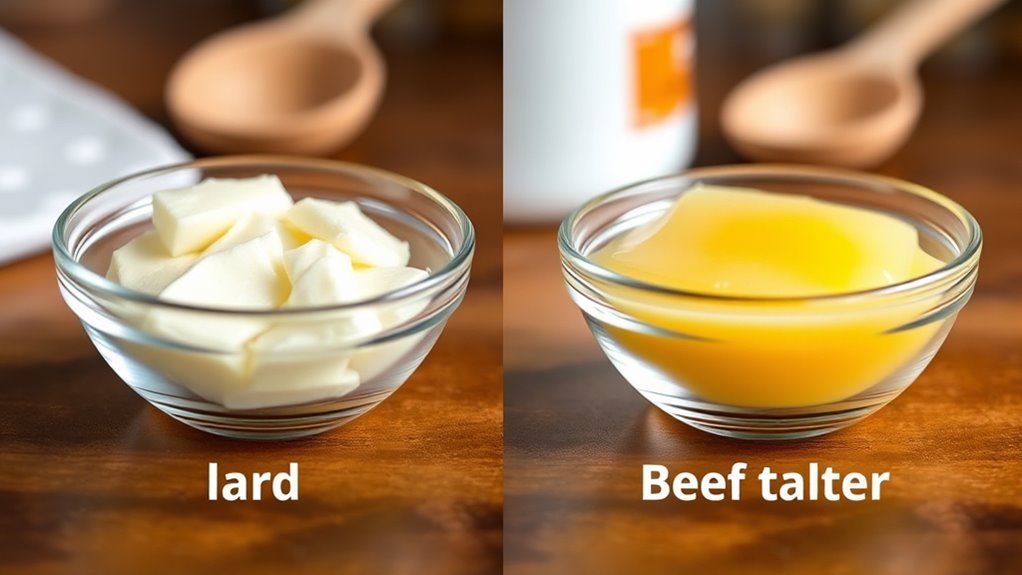
You can tell lard and beef tallow apart by their source, texture, and aroma. Lard, from pork fat, is pale, soft, and smooth with a mild, neutral flavor.
Beef tallow, made from cattle fat, looks firmer, yellowish, and waxy with a distinct beefy scent.
Both behave differently in cooking and nutrition, so knowing these differences helps you choose the right fat for your recipes.
To understand more nuances and uses, keep exploring further details.
What Is Lard and Where Does It Come From?

Lard comes from rendered pork fat, usually taken from the pork belly, shoulder, or butt. When you render this animal fat, you slowly melt it to separate the pure fat from impurities.
Lard is softer and more spreadable at room temperature compared to beef tallow, which is rendered fat from cows. Unlike beef tallow, lard has a mild, neutral flavor that won’t overpower your dishes. You’ll often find lard used in baking and frying because it tenderizes foods without altering their taste.
While both lard and beef tallow come from animal fat, they differ in texture and flavor due to their source. So, when you pick lard, you’re choosing rendered pork fat specifically, not beef tallow or any other animal fat.
What Is Beef Tallow and How Is It Made?

Beef tallow comes from rendered cattle fat, typically sourced from suet or subcutaneous layers. Rendering involves gently heating the fat to melt it, separating it from connective tissue and impurities. Once melted, the liquid fat is strained or clarified to produce a pure, solid form of beef tallow.
At room temperature, it has a firm, wax-like texture. You’ll notice its rich, beefy flavor, which varies based on the cattle’s diet and the quality of the fat used. This distinct flavor sets beef tallow apart from other animal fats.
Whether you’re using it for cooking, baking, or other purposes, understanding the rendering process helps you appreciate beef tallow’s unique characteristics and how it delivers a robust taste to your dishes.
Identifying Lard vs. Beef Tallow by Look and Feel
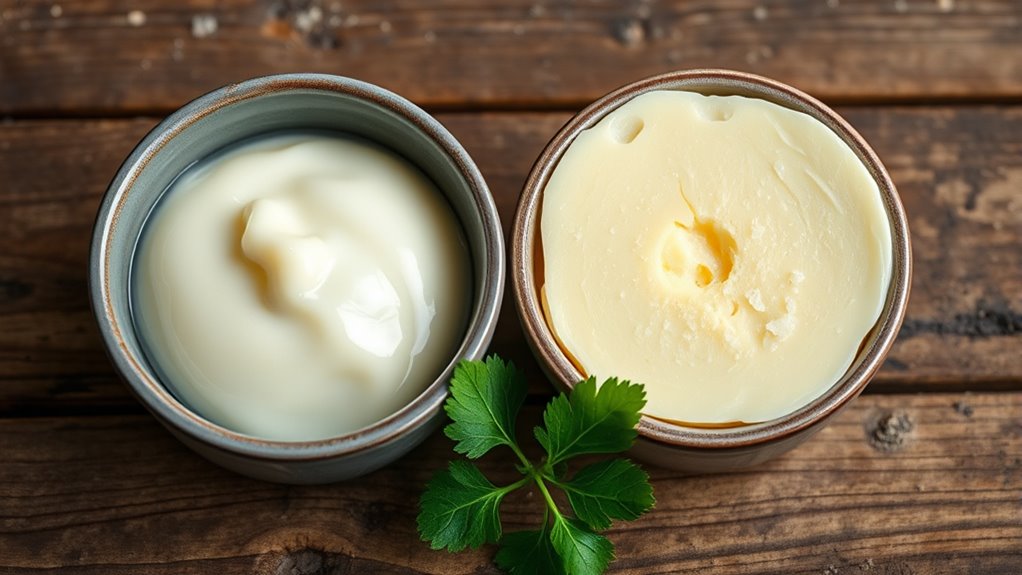
When you check the color and texture, you’ll notice lard is usually paler and softer, while beef tallow is firmer with a slight yellow tint.
Feel the hardness—tallow tends to be waxier and more brittle when chilled, whereas lard stays smooth and spreadable. These differences make it easier to tell them apart just by looking and touching.
Color And Texture
Although both fats come from animals, you can spot the difference by paying close attention to their color and texture. Beef tallow usually has a yellowish or cream-colored hue, while lard tends to be white or off-white. Their texture and appearance also set them apart, making it easier to tell which is which.
- Beef tallow has a firmer, more waxy texture at room temperature.
- Lard feels softer and more pliable when you press it.
- Tallow’s surface often looks slightly granular or crumbly.
- Lard appears smoother and more uniform in texture and color.
Hardness And Spreadability
If you press a small piece of fat, you’ll quickly notice that lard feels much softer and more spreadable at room temperature, while beef tallow is firmer and waxlike. This difference in hardness and spreadability comes down to their melting points: tallow has a higher melting point, making it denser and more brittle, whereas lard remains pliable and malleable.
The texture difference is clear—lard yields easily under pressure, while tallow holds its shape firmly. When chilled, lard stays relatively soft, but tallow becomes very hard and prone to cracking.
Flavor Differences Between Lard and Beef Tallow
You’ll notice that beef tallow carries a rich, beefy flavor, while lard tends to be much milder or slightly porky. This difference shapes how each fat interacts with your dishes, with tallow adding a robust taste and lard allowing other flavors to stand out.
Understanding these distinct profiles helps you choose the right fat for your cooking needs.
Distinct Flavor Profiles
How do lard and beef tallow differ in flavor? When rendered, beef tallow carries a rich, beefy aroma that’s quite distinct from lard’s more neutral flavor profile. You’ll notice that beef tallow often leaves a savory aftertaste, influenced by the cattle’s diet, adding subtle meaty notes to your dishes.
Lard, on the other hand, tends to be nearly flavorless, making it a versatile choice for baking and frying without altering the taste.
- Beef tallow has a pronounced, beefy aroma and flavor
- Lard is mild and mostly scentless
- Rendered beef tallow may vary in taste based on cattle feed
- Lard blends seamlessly into recipes without leaving a flavor
Understanding these profiles helps you choose the right fat for your cooking needs.
Culinary Impact
Although both lard and beef tallow serve as cooking fats, their distinct flavors shape how you’ll use them in the kitchen. Beef tallow has a rich, beefy flavor profile that enhances savory dishes, making it perfect for roasting or frying meats where a meaty depth is desired. Its flavor varies with the cattle’s diet, with grass-fed beef tallow offering a more pronounced aroma.
On the other hand, lard’s rendered fat is neutral, almost odorless, which makes it ideal for baked goods like pie crusts and cookies where you want the fat to contribute texture without altering taste. Understanding these flavor differences helps you choose the right fat for your culinary uses, whether you want to highlight beef tallow’s savory notes or lard’s subtle, unobtrusive quality.
Nutritional Differences Between Lard and Beef Tallow
When comparing lard and beef tallow, you’ll notice distinct nutritional differences that affect their health impacts. Their nutritional profiles vary mainly in fat composition and vitamin content, influenced by the animals’ diets. Here’s what you should know:
- Beef tallow contains more conjugated linoleic acid (CLA), which may help reduce body fat.
- Tallow has a higher saturated fat content, potentially impacting cholesterol levels differently than lard.
- Lard offers more vitamin D, especially from pasture-raised pigs, benefiting bone health.
- Lard generally melts at a lower temperature and has fewer antioxidants compared to beef tallow.
Understanding these differences helps you choose the right fat based on your dietary needs and health goals.
Best Cooking and Baking Uses for Lard and Beef Tallow
Understanding the nutritional differences between lard and beef tallow can guide your choices in the kitchen, but knowing their best cooking and baking uses helps you get the most flavor and texture from each. Lard’s soft texture and neutral flavor make it perfect for flaky pie crusts, tender pastries, cookies, and scones, enhancing tenderness without overpowering your baked goods.
On the other hand, beef tallow shines in high-heat cooking uses like frying and roasting, adding a rich, beefy flavor to savory dishes, hearty breads, and roasted vegetables. You can even combine lard and beef tallow to create a versatile fat that works well for both delicate baking and robust frying, maximizing flavor and texture in your recipes.
How to Store Lard and Beef Tallow for Longer Shelf Life
To keep lard and beef tallow fresh for longer, store them in airtight containers and place them in your refrigerator at around 40°F (4°C). This helps slow oxidation and microbial growth, extending their shelf life.
For ideal storage, follow these tips:
- Use airtight containers to prevent exposure to air and moisture.
- Label containers with the date of purchase or rendering to track freshness.
- Avoid light and heat, which speed up rancidity and degrade quality.
- Freeze lard or beef tallow in sealed, freezer-safe bags for even longer storage, thawing only when needed.
Can You Substitute Lard and Beef Tallow in Recipes?
You can often swap lard and beef tallow in recipes, but their distinct textures and flavors will influence your dish. Lard is softer with a neutral taste, making it perfect for baked goods that need tenderness. Beef tallow, firmer and with a beefy flavor, works best in savory cooking.
When you substitute, use equal amounts, but keep in mind tallow’s stronger taste might alter the flavor, especially in baking. Since tallow is harder at room temperature, you may need to soften or melt it before mixing.
Both are rendered animal fats—lard from pork and tallow from cattle—so their aroma and texture differ. Understanding these differences helps you decide when and how to substitute lard and beef tallow effectively in your cooking.
How to Buy Authentic Lard and Beef Tallow
Finding authentic lard and beef tallow starts with knowing what to look for on the label. You want to check that the product explicitly states “pork lard” or “beef tallow” and provides clear information about its source. Authentic fats often come from grass-fed or pasture-raised animals, so look for those terms too.
To guarantee quality, focus on trusted suppliers or local farmers who specialize in minimally processed animal fats.
Here’s how to buy authentic lard and beef tallow:
- Verify the label specifies pork lard or beef tallow
- Check for source details like grass-fed or pasture-raised
- Choose products with a firm, wax-like texture for beef tallow
- Buy from reputable suppliers or local farms known for purity
This approach helps you get genuine, high-quality fats every time.
Frequently Asked Questions
How to Tell the Difference Between Lard and Tallow?
You can tell lard from tallow by texture and smell: lard’s softer and milder with a pork scent, while tallow is firmer, crumbly, and beefy-smelling.
Color and source also help differentiate them.
Why Was Beef Tallow Banned in the US?
Beef tallow was banned because authorities linked its high saturated fat content to heart disease risks. They promoted vegetable oils as healthier alternatives, so you’d avoid potential health problems by steering clear of beef tallow back then.
Is Beef Tallow Actually Lard?
Imagine confusing a lion with a wolf—they’re different beasts. You won’t mistake beef tallow for lard because tallow comes from cows and lard from pigs; their taste, texture, and source clearly set them apart.
Can Lard Be Substituted for Tallow?
You can substitute lard for tallow, but expect a softer texture and milder flavor. Use lard for baking or frying, but know tallow’s richer taste suits savory dishes better.
Adjust cooking times slightly.
Conclusion
Now that you know what sets lard and beef tallow apart, you can spot the difference by look, feel, and flavor. You can choose lard for delicate baking, or beef tallow for rich frying.
You can store them properly to keep them fresh, and you can swap them wisely in your recipes. Understanding these fats lets you cook smarter, taste better, and enjoy every dish with confidence and flair.
Knowing how to tell if lard is the same as beef tallow helps you make better cooking choices. This knowledge enhances your culinary skills and ensures the best results in every meal.